
Football Formations and Coverages Explained: The Complete NFL Guide
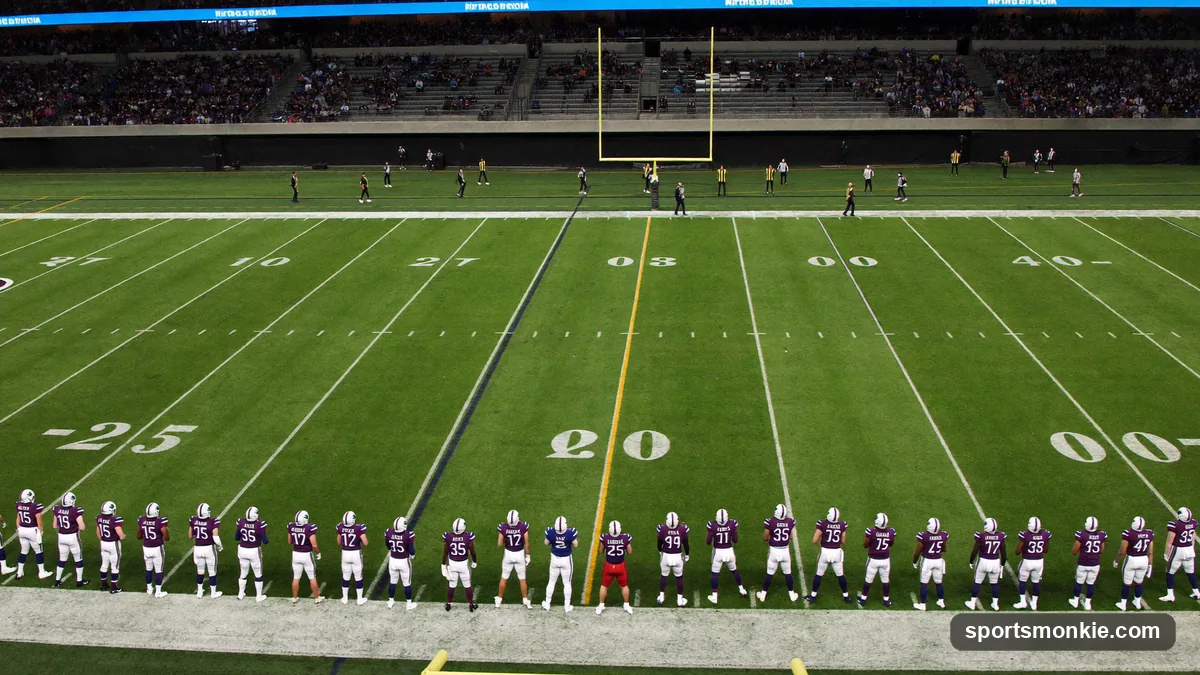
On this page7
Football formations and coverages are the two sides of every NFL play: formations are how an offense arranges its 11 players before the snap, and coverages are how a defense’s secondary and linebackers divide up responsibility for stopping the pass. Every snap in the American football / NFL rulebook boils down to this chess match — the offense picks a personnel grouping and backfield alignment to create an advantage, and the defense answers with a front and a coverage shell designed to take that advantage away. Understanding both vocabularies is the fastest way to actually read a football game instead of just watching it.
What Is a Formation in Football?
A formation is simply where the 11 offensive players stand relative to the ball and each other before the snap. Three things define a formation: the personnel grouping (how many running backs, tight ends, and receivers are on the field), the backfield alignment (where the quarterback and running backs line up), and the receiver splits (how far out the wideouts are positioned). Coaches choose formations to dictate tempo, disguise intent, and put stress on a specific part of the defense — a heavy formation with two tight ends signals run, while four wide receivers signals pass, though the best offenses use both looks to run and throw unpredictably.
The Core Offensive Formations
- Shotgun — the quarterback lines up 5–7 yards behind the center instead of under him, buying extra time to read the defense before the snap and after it. It’s now the default formation on early downs across the NFL because it speeds up passing decisions and still allows zone-read runs. See the full breakdown in the shotgun formation guide.
- I-formation — the fullback and running back stack directly behind the quarterback, who is under center. It’s the classic power-running formation, built for downhill runs and play-action. Full details: I-formation in football.
- Pistol — a hybrid that lines the quarterback up about 4 yards behind center (closer than shotgun) with the running back directly behind him instead of offset. It keeps the field-reading advantage of shotgun while preserving downhill handoff angles. More in the pistol formation guide.
- Wildcat — a running back or non-quarterback takes the direct snap, turning an extra player into an immediate rushing threat and forcing the defense to account for an unfamiliar ball-carrier. Details: wildcat formation in football.
- Pro-set — a two-back, under-center formation with the fullback and running back split slightly side by side instead of stacked, giving balanced run and play-action options. See the pro-set formation guide.
- Singleback — one running back behind the quarterback and no fullback, freeing an extra receiver or tight end while keeping a run threat. Details in the singleback formation guide.
Zoom out from individual alignments and many teams run a broader spread offense philosophy — spacing receivers wide from shotgun or pistol to stretch the defense horizontally.
Whatever the look, every legal formation has to satisfy the same alignment rules — at least seven players on the line of scrimmage and correct eligible-receiver numbering — or the offense draws an illegal formation penalty.
What Is a Coverage in Football?
A coverage is the defense’s plan for covering eligible receivers on a passing play. Every coverage falls into one of two families: zone coverage, where each defender is responsible for an area of the field and reacts to whoever enters it, or man coverage, where each defender is locked onto one specific offensive player for the whole play. Coverages are usually named by a number — the “Cover” number tells you how many defenders are playing deep, split-field zones behind everyone else.
The Cover 0–4 Family, Explained
| Coverage | Deep defenders | Style | Best used for |
|---|---|---|---|
| Cover 0 | 0 | All-out man, no deep safety, usually paired with a blitz | Short-yardage, obvious passing downs, high-risk pressure |
| Cover 1 | 1 | Man coverage underneath with one free safety deep in the middle | Balanced pressure with a safety net against the deep ball |
| Cover 2 | 2 | Two safeties split the field in half; corners jam receivers and drop to the flats | Stopping intermediate and deep outside throws |
| Cover 3 | 3 | Three deep defenders (usually two corners and one safety) each own a third of the field | Limiting explosive plays while keeping run support |
| Cover 4 | 4 | Four deep defenders each own a quarter of the field, often blending zone and match coverage | Taking away deep shots against spread passing offenses |
Cover 2’s most famous variant is the Tampa 2, which adds a middle linebacker dropping into the deep middle to close the gap between the two safeties — a wrinkle that made the scheme far tougher to attack over the top. Read the individual breakdowns for Cover 2 defense, Cover 3 defense, and Cover 4 / quarters defense for the full mechanics of each. Late in a half, a team protecting a lead may drop even deeper into a prevent defense, trading short completions for insurance against the big play.
Man, Zone, and Match: The Coverage Techniques
Beyond the Cover numbers, every defender’s individual technique matters. Press coverage has a cornerback line up within a yard or two of a receiver to jam him at the snap and disrupt his route before it starts. Man coverage assigns a defender to shadow one receiver everywhere he goes, which wins on discipline and athleticism but risks a blown play if the defender loses leverage. Zone coverage trades that risk for area responsibility — safer against scheme but more vulnerable to receivers who settle into soft spots. Match coverage is the modern hybrid: defenders align like they’re in a zone shell, then convert to man rules once a receiver’s route is identified, combining zone’s structure with man’s tight coverage.
Nickel, Dime, and Personnel Matchups
Defenses build their coverage packages around personnel — the specific football positions on the field dictate what’s possible. Base defenses like the 4-3 and 3-4 use four linebackers and four defensive backs, but modern NFL offenses spread the field with three or more receivers so often that defenses now default to lighter groupings. The nickel defense swaps a linebacker for a fifth defensive back, adding speed and coverage range for exactly this reason. Against even more receivers, or in clear passing situations, defenses go further with the dime defense, which uses six defensive backs. Both packages exist to keep pace with spread-out formations without sacrificing coverage integrity, and both are frequently combined with a blitz to pressure the quarterback before receivers can uncover down the field.
How Offense and Defense Counter Each Other
| Offensive move | Defensive answer |
|---|---|
| Spread formation with 3+ receivers | Nickel or dime personnel for extra coverage speed |
| Shotgun with play-action | Cover 1 or Cover 3 to keep a deep safety honest against the pass |
| Heavy formation, two tight ends | Base 4-3/3-4 front, run-focused zone coverage |
| Motion to identify man vs. zone | Match coverage or coverage rotation to disguise the defense’s intent |
| Quick game to beat the blitz | Cover 0 pressure with press-man on the outside |
This back-and-forth is the real engine of NFL strategy. An offensive coordinator picks a formation to create a numbers or leverage advantage; a defensive coordinator answers with a personnel grouping and coverage shell designed to erase it. Quarterbacks are trained to identify the coverage before the snap by counting deep safeties and reading corner leverage, while defenses disguise their calls — showing one look and rotating into another after the snap — specifically to keep that pre-snap read from being reliable. The result is the constant cat-and-mouse that defines every modern passing game.
Frequently Asked Questions
What are football formations and coverages? Formations are how an offense’s 11 players line up before the snap; coverages are how a defense’s secondary and linebackers divide responsibility for stopping the pass, either by zone or by man.
What’s the difference between zone and man coverage? Zone defenders guard an area of the field; man defenders shadow one specific offensive player for the entire play.
What do the Cover 0–4 numbers mean? They count how many defenders are playing deep, split-field zones — from zero (all-out man/blitz) up to four (quarters coverage).
What formation is best for running the ball? The I-formation and pro-set are the traditional power-running sets, while wildcat and pistol create additional running threats.
Why do defenses use nickel and dime personnel? To match offenses that spread the field with three or more receivers by trading a linebacker for extra defensive backs.
What is match coverage? A hybrid technique where defenders start in a zone-look alignment and convert to man rules once a receiver’s route is identified.
Frequently asked questions
What are football formations and coverages?+
Formations are how an offense's 11 players line up before the snap (personnel grouping, backfield alignment, receiver splits), and coverages are how a defense's secondary and linebackers divide responsibility for the pass — either zone (covering areas) or man (covering specific players). Every NFL play is really a formation on one side of the ball meeting a coverage on the other.
What is the difference between zone coverage and man coverage?+
In zone coverage, each defender guards a specific area of the field and reacts to whichever receiver enters it. In man coverage, each defender is assigned to shadow one specific offensive player for the entire play, regardless of where that player runs. Zone protects against big plays and confuses timing; man is more physical and better against yards after the catch, but leaves defenders isolated one-on-one.
What do Cover 0, Cover 1, Cover 2, Cover 3, and Cover 4 mean?+
The Cover number tells you how many defenders are playing deep, split-field zones. Cover 0 has zero deep safeties (all-out man with a blitz), Cover 1 has one deep safety with man coverage underneath, Cover 2 has two deep safeties splitting the field in half, Cover 3 has three deep defenders each covering a third of the field, and Cover 4 (quarters) has four deep defenders each owning a quarter of the field.
What formation is best for running the ball?+
The I-formation and pro-set are the traditional power-running formations because they stack a fullback and running back behind the quarterback for lead blocking, while the wildcat and pistol create running threats by putting a mobile ball-handler in position to attack immediately. Shotgun spread sets can still run effectively, but they're built primarily to open up the pass.
Why do defenses use nickel and dime personnel?+
Nickel (five defensive backs) and dime (six defensive backs) personnel groupings replace linebackers with extra defensive backs to match offenses that spread the field with three or more wide receivers. They give a defense more speed and coverage range at the cost of some size against the run.
What is match coverage?+
Match coverage (also called pattern-matching) is a hybrid technique where defenders line up in what looks like a zone shell but convert to man coverage once receivers declare their routes. It combines zone's protection against blown coverages with man's tighter, route-specific tracking.
How do offenses and defenses counter each other with formations and coverages?+
Offenses use formation and personnel to force a defense to reveal its coverage before the snap, then attack the weak spot — running at light boxes, throwing at soft zones, or isolating a favorable matchup in man coverage. Defenses disguise their coverage look until the snap, rotate safeties, and mix zone and man calls from the same personnel to keep the quarterback guessing.
Sources
Play & tools
Free browser games and tools — no account, no download.
- Play 17-0 — Draft nine and chase a flawless NFL regular season — the perfect 17-0 run, no playoffs.
- Play 20-0 — Draft nine and chase a perfect NFL season — regular season and playoffs, undefeated.
- Play 16-0 — Draft nine and chase a perfect 16-0 — the classic 16-game NFL regular season, no playoffs.
- Play Flawless Six — Draft five players and a head coach, then chase a perfect NFL season with the right chemistry.
- Play Guess the NFL Player — A new mystery NFL player every day. Eight guesses, with a clue on each — plus free unlimited mode.
- Play NFL Wordle — A Wordle for football — guess the daily NFL player in eight tries, with green-amber-grey feedback on every clue.
- Play NFL Connections — Sort sixteen football tiles into four hidden groups of four. A new daily puzzle, four mistakes allowed, plus unlimited mode.
- Explore all our games →
- Open the schedule simulator — Pick every 2026 NFL game and watch the standings and playoff seeds update live.
- Open the squares generator — Generate a randomized, printable Super Bowl squares grid for your party — free, no sign-up.
- Open the trade calculator — Weigh any fantasy football trade instantly — clear winner and value gap.
- Run the NFL predictor — Simulate the NFL bracket and see who your picks send to the Super Bowl.
- Open the passer rating calculator — Calculate the official NFL passer rating (0–158.3) from any passing line, with the formula shown.
- Explore all our free sports tools →
Related nfl guides
View all →
Offensive Positions in Football Explained: Every Role on the Unit
Offensive positions in football explained: QB, RB/FB, WR, TE, and the five offensive line spots (LT, LG, C, RG, RT) with duties and alignment.
Football Positions Explained: Every Offense, Defense & Special Teams Role
Football positions explained: every offense, defense, and special teams role in American football, what each one does, and how they fit together.
Prevent Defense in Football: What It Is and Why Coaches Get Criticized for It
A prevent defense drops extra defensive backs deep to stop the big play late in a half, trading short completions for protection against a game-changing bomb.
Quarterback Position in Football: Role, Skills, and Responsibilities Explained
The quarterback position leads the offense, calling plays, taking the snap, and throwing or handing off the ball. Learn the QB's full job in football.
What Is a Bootleg in Football?
A bootleg is a play where the quarterback fakes a handoff, then rolls out to the opposite side to pass or run. How it works vs play action.
What Is an Eligible Receiver in Football?
An eligible receiver is a player allowed to catch a forward pass — the QB, backs, tight ends and the two players on the ends of the line. Interior linemen are ineligible.