
Cover 3 Defense in Football: How It Works, Strengths & Weaknesses
On this page6
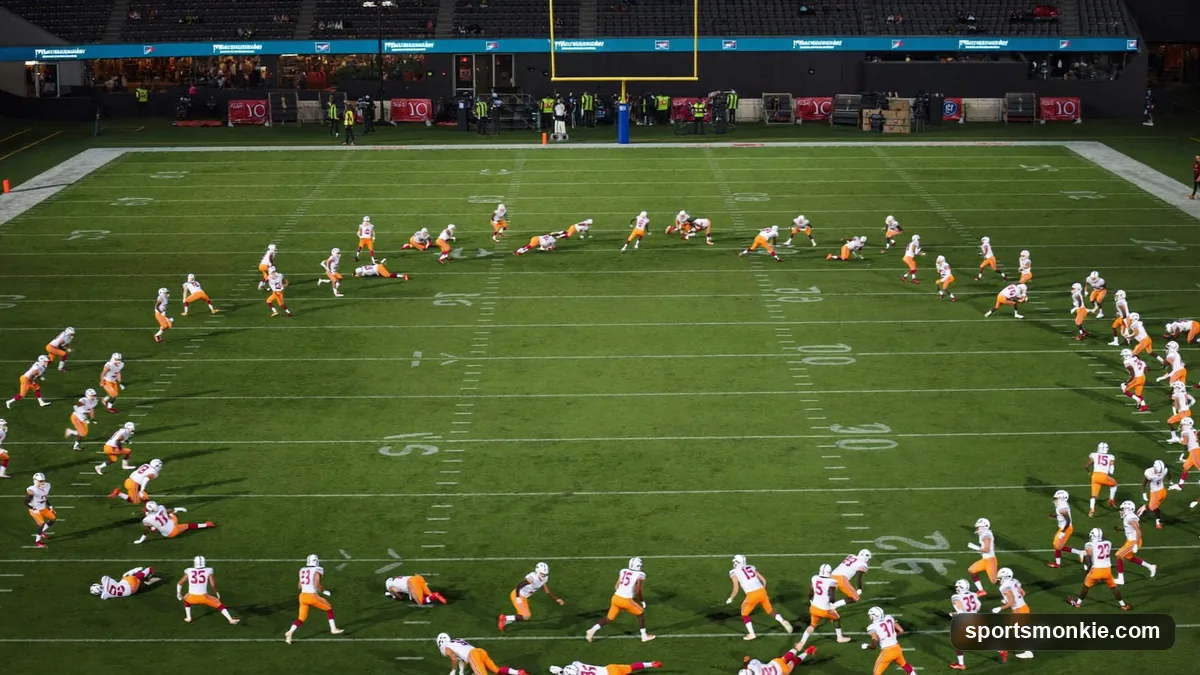
Cover 3 defense is a zone coverage scheme that splits the deep field into three equal thirds — typically played by the two cornerbacks on the outside and the free safety in the deep middle — while four remaining defenders divide the underneath area into shorter zones. It’s one of the most common base defenses in the NFL and college football because it defends the run and the deep pass at the same time, without asking any single defender to do too much.
How Cover 3 Is Structured
Cover 3 gets its name from the three defenders who drop into deep zone coverage. In a standard 4-3 or 3-4 alignment, that’s the left cornerback, the right cornerback, and the free safety. Each of them is responsible for one-third of the field, from sideline to sideline, and none of them can let anything get behind them — “stay over the top” is the cardinal rule of a deep-third defender.
Underneath those three deep zones, four defenders — usually the strong safety and three linebackers, or a linebacker and a slot corner/nickel defender in sub-packages — split the shallow and intermediate area into four zones: two flat zones near the sidelines and two hook/curl zones in the middle. That gives Cover 3 its full name in coaching rooms: three deep, four under, with four pass rushers up front on a standard four-man rush. This is one of the core building blocks covered in our broader guide to NFL formations and coverages.
Because it’s a zone coverage rather than man coverage, every defender reads the quarterback and route combinations developing in his area instead of locking onto one specific receiver. Many modern NFL defenses run “pattern-match” versions of Cover 3, where the underneath and deep defenders start in zone drops but convert to man principles once routes declare — a hybrid designed to combine zone discipline with man-to-man tightness.
Why Teams Use Cover 3 as a Base Defense
Cover 3 has stayed a foundational defense for decades because it solves two problems at once. First, it only commits three defenders deep, which means a defense can keep eight players in or near the box to support the run game. Second, because every third of the field has a defender responsible for staying on top, Cover 3 is very difficult to beat with a single deep shot — cornerbacks and the safety simply are not allowed to get beaten over the top in their zone.
That combination — solid run support plus protection against explosive plays — is exactly why Cover 3 remains a staple in the NFL as a first- and second-down defense, and why it’s often the base call teams return to after mixing in other coverages on passing downs.
The Weaknesses: Soft Flats and Vulnerable Seams
Every coverage has a trade-off, and Cover 3’s trade-off shows up underneath. With only four defenders covering six potential shallow zones (two flats, two hooks, and the space each cornerback vacates when he bails deep), the flats are consistently the softest part of the coverage. As the cornerbacks retreat into their deep thirds, they leave the flat area open for quick hitches, out routes, arrow routes, and swing passes — easy completions that offenses use to move the chains in small chunks.
The seams present the second major weak point. A seam route is a vertical release up the hash marks, and Cover 3 asks one free safety to defend the deep-middle third alone. When an offense sends two receivers up both seams at the same time, that single safety physically cannot get to both — he has to guess, and whichever seam he doesn’t help on becomes a big-play opportunity for the quarterback. This seam stress is the single most common way modern passing offenses attack Cover 3.
How Offenses Attack Cover 3
Offensive coordinators build entire game plans around exploiting these two soft spots. The most common answers include:
- Flood concepts — sending three receivers into the same third of the field at different depths (short, intermediate, deep) to overload one deep defender with more threats than he can cover.
- Seam routes — attacking the lone deep-middle defender with vertical routes from the slot or tight end position.
- Quick game and RPOs — hitches, stick routes, and bubble screens thrown into the flat before the underneath defenders can fully drop and settle into their zones.
- High-low reads on curl-flat combinations — putting a receiver in the flat and another in the curl/hook zone behind him, forcing the same underneath defender to choose between the two.
Cover 3 vs. Cover 2 vs. Cover 4
The easiest way to understand Cover 3 is to compare it against the other two most common zone shells, Cover 2 and Cover 4 (quarters). Each coverage moves the trade-off between deep protection and underneath protection to a different point on the field.
| Coverage | Deep defenders | Underneath defenders | Best against | Most vulnerable to |
|---|---|---|---|---|
| Cover 2 | 2 (both safeties) | 5 | Flats, run support with a robbing safety | Deep middle seam (fixed by Tampa 2’s rushing MLB) |
| Cover 3 | 3 (2 CBs + FS) | 4 | Deep balls, general run support | Flats and seams |
| Cover 4 (quarters) | 4 (2 CBs + 2 safeties) | 3 | Explosive pass plays, play-action shots | Underneath and run support (fewer box defenders) |
Cover 2 shifts more bodies underneath by using only two deep defenders, which shores up the flats but opens the deep middle — the exact opposite trade-off from Cover 3. Cover 4 goes the other direction from Cover 3, adding a fourth deep defender to blanket explosive plays even further at the cost of thinner underneath and run support. Cover 3 sits in the middle of that spectrum: three deep is enough to guard against most big plays while still leaving extra bodies to stop the run, which is exactly why it remains the most-played base coverage shell across NFL defenses.
The Bottom Line
Cover 3 defense earns its place as a base defense by balancing two priorities that usually pull in opposite directions: stopping the run with numbers in the box, and preventing big plays over the top. Its cost is real — the flats and seams are structurally softer than in Cover 2 or Cover 4 — but for defenses that want a simple, reliable, run-first zone shell they can play snap after snap, Cover 3 remains the standard against which every other coverage in football is measured.
Frequently asked questions
What is a Cover 3 defense in football?+
Cover 3 is a zone defense that divides the deep part of the field into three equal thirds. Typically the two cornerbacks cover the outside thirds and the free safety covers the deep middle third, while four other defenders play underneath zones to cover shorter routes.
Who covers what in Cover 3?+
The two cornerbacks bail into the deep outside thirds, the free safety rotates to the deep middle third, and the strong safety plus two linebackers (or a linebacker and a slot defender in nickel looks) split the underneath area into four zones: two flats and two hook/curl zones.
What are the strengths of Cover 3?+
Cover 3 lets a defense keep extra defenders near the line of scrimmage for run support since only three players are dropping deep, and it guards against big plays because every deep third is covered top-down. It's simple to teach, which is why it's a common base defense at every level.
What are the weaknesses of Cover 3?+
Cover 3 is vulnerable underneath because only four defenders cover six shallow zones, leaving the flats soft for hitches, outs, and swing passes. The seams are also a problem because the single deep-middle safety cannot cover two receivers running vertical seam routes at once.
How is Cover 3 different from Cover 2?+
Cover 3 uses three deep defenders and four underneath, while Cover 2 uses two deep safeties and five underneath defenders (often called Tampa 2 with a deep middle linebacker). Cover 2 is stronger against the flats but has a vulnerable deep middle, while Cover 3 is stronger deep but softer in the flats.
How is Cover 3 different from Cover 4 (quarters)?+
Cover 4 splits the deep field into four quarters instead of three thirds, using four defensive backs deep and only three underneath. Cover 4 gives even more protection against explosive pass plays but commits more defenders away from the run fit than Cover 3 does.
How do offenses beat Cover 3?+
Offenses attack Cover 3 with flood concepts that put three receivers into one deep third, seam routes that stress the lone deep-middle safety, and quick game throws like hitches and stick routes into the soft flat zones underneath the retreating cornerbacks.
Is Cover 3 a man or zone defense?+
Cover 3 is a zone defense. Every defender is responsible for an area of the field rather than a specific receiver, though some teams run pattern-matching versions of Cover 3 that blend man principles once routes declare.
Sources
Play & tools
Free browser games and tools — no account, no download.
- Play 17-0 — Draft nine and chase a flawless NFL regular season — the perfect 17-0 run, no playoffs.
- Play 20-0 — Draft nine and chase a perfect NFL season — regular season and playoffs, undefeated.
- Play 16-0 — Draft nine and chase a perfect 16-0 — the classic 16-game NFL regular season, no playoffs.
- Play Flawless Six — Draft five players and a head coach, then chase a perfect NFL season with the right chemistry.
- Play Guess the NFL Player — A new mystery NFL player every day. Eight guesses, with a clue on each — plus free unlimited mode.
- Play NFL Wordle — A Wordle for football — guess the daily NFL player in eight tries, with green-amber-grey feedback on every clue.
- Play NFL Connections — Sort sixteen football tiles into four hidden groups of four. A new daily puzzle, four mistakes allowed, plus unlimited mode.
- Explore all our games →
- Open the schedule simulator — Pick every 2026 NFL game and watch the standings and playoff seeds update live.
- Open the squares generator — Generate a randomized, printable Super Bowl squares grid for your party — free, no sign-up.
- Open the trade calculator — Weigh any fantasy football trade instantly — clear winner and value gap.
- Run the NFL predictor — Simulate the NFL bracket and see who your picks send to the Super Bowl.
- Open the passer rating calculator — Calculate the official NFL passer rating (0–158.3) from any passing line, with the formula shown.
- Explore all our free sports tools →
Related nfl guides
View all →
Cover 2 Defense in Football: Rules, Alignment, and Weaknesses Explained
Cover 2 defense explained: two deep safeties split the field, five underneath defenders, strengths vs. deep passes, weaknesses in the middle, and the Tampa 2 twist.
Match Coverage in Football: How Pattern-Match Defense Works
Match coverage is a zone/man hybrid where defenders read receiver routes and lock on man-to-man within zone rules. Full breakdown of pattern matching.
Tampa 2 Defense Explained: How the Cover 2 Variation Works
The Tampa 2 defense explained: how it modifies Cover 2 by dropping the middle linebacker deep, why Tony Dungy and Monte Kiffin built it, and its strengths and weaknesses.
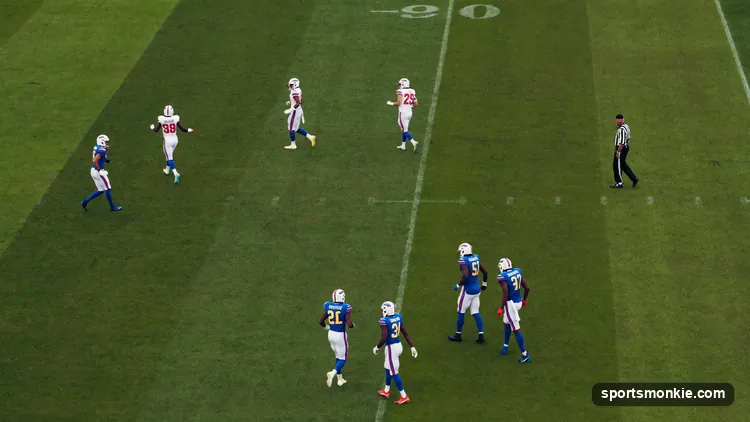
Zone Coverage in Football: How It Works, Shells, and Weaknesses
Zone coverage in football explained: defenders guard areas instead of players. Learn Cover 2, Cover 3, Cover 4, strengths, and soft-spot weaknesses.
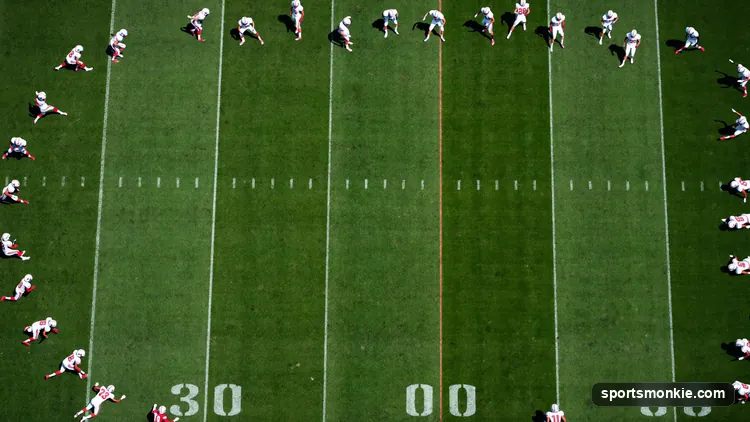
Cover 4 Defense (Quarters Coverage) in Football: Rules and Weaknesses
Cover 4 defense explained: four deep defenders split the field into quarters, pattern-match rules, run strengths, and how it differs from Cover 2/Cover 3.
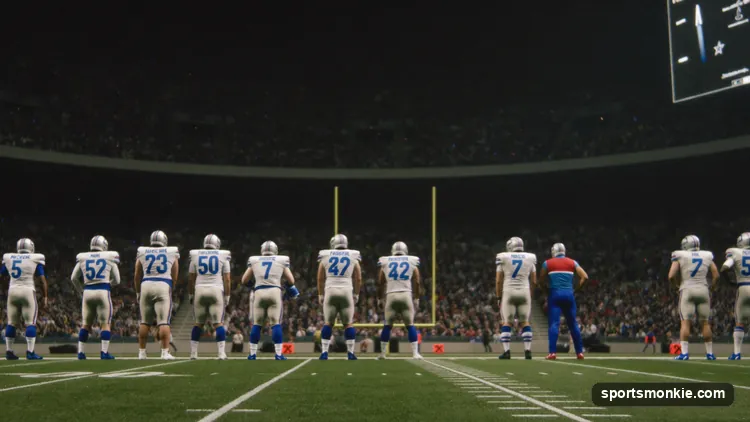
What Is a Blitz in American Football? Pressure Package Explained
A blitz sends more pass rushers than the standard rush, trying to pressure the quarterback before the offense can exploit the extra defender.