
What Is a Bootleg in Football?
On this page5
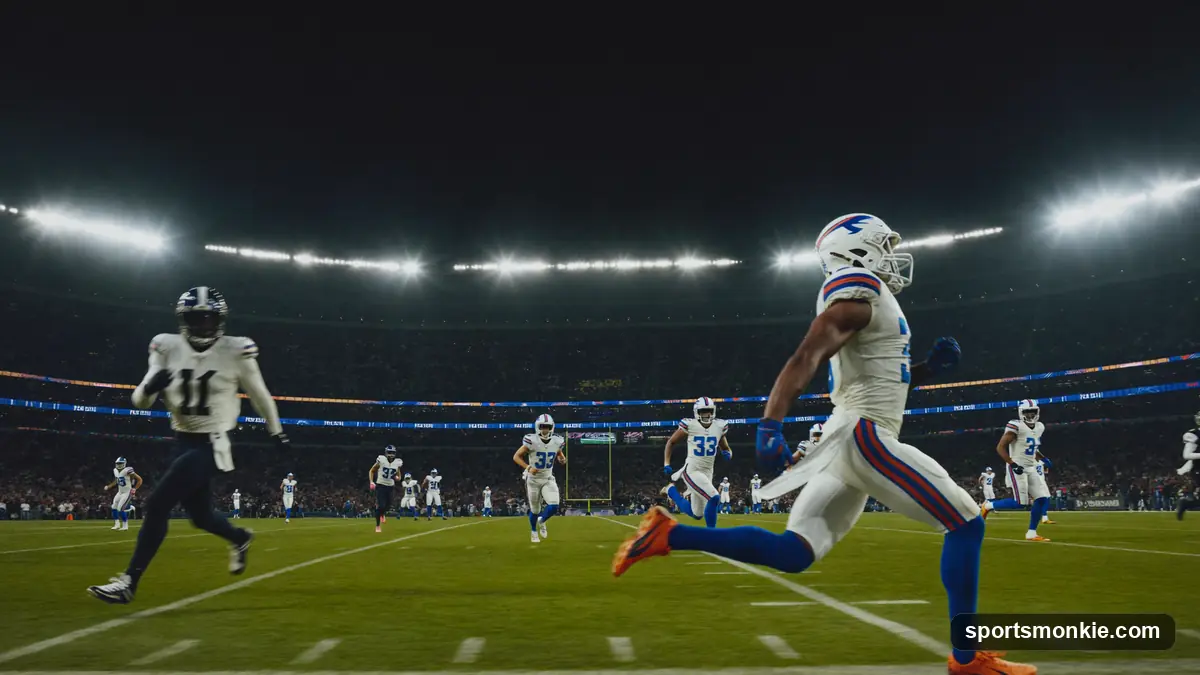
A bootleg in football is a play where the quarterback fakes a handoff to a running back, then hides the ball on his hip and rolls out to the opposite side of the field, either to throw or to run. The fake pulls the defense one way, and the quarterback escapes to the space the defense has just vacated.
It is one of the most effective counters to an aggressive defense, and it shows up everywhere from youth football to the NFL. Here is exactly how a bootleg works, how it differs from the play-action pass and the waggle it is often confused with, and where its unusual name comes from.
How a bootleg works
The bootleg is built on deception and misdirection. The sequence usually goes like this:
- The quarterback takes the snap and turns to fake a handoff to a running back heading in one direction.
- He keeps the ball, tucking it against his hip to sell the fake, and rolls out toward the opposite side.
- Receivers and a tight end run routes toward that bootleg side, often on crossing patterns.
- The quarterback reads the defense on the move: throw to an open receiver, or, if the defense has cleared out, tuck the ball and run.
Because the run fake and the quarterback’s movement both pull defenders toward the fake, the side the quarterback rolls to is frequently wide open. That built-in option to run makes the bootleg a dual threat, and a stalled defense can hand the offense easy yards or a fresh set of downs, valuable on any down but especially when chasing a first down.
Why the play is so effective
A bootleg is at its best against a defense that is worried about the run. The more a defense keys on stopping the running back, the harder its front seven flows toward the fake, and the more open the bootleg side becomes. It also changes the quarterback’s launch point: instead of throwing from a crowded pocket, he throws on the move from the edge, often with a clear view and shorter, higher-percentage throws to crossing receivers.
This is the same logic that makes an entire family of deception plays work, from play action to the run-pass option covered in our guide to what an RPO is: all of them punish a defense for committing too hard to one thing.
Bootleg vs play action vs waggle
These three terms get tangled together, so here is the clean distinction.
| Play | What the QB does | Key feature |
|---|---|---|
| Play action | Fakes a handoff, then usually drops back and throws from the pocket | Any pass that starts with a run fake |
| Bootleg | Fakes a handoff, then rolls out to the opposite side to throw or run | Play action plus a roll-out to a new launch point; often no blocker |
| Waggle | Same roll-out as a bootleg, but with a lead blocker in front | The “protected bootleg” |
The relationship is nested: every bootleg is a form of play action, but not every play action is a bootleg. And a waggle is really just a bootleg with an escort, a fullback or pulling lineman running ahead of the quarterback to buy time. A “naked” bootleg has no such blocker and relies entirely on the fake and deception, which is riskier but sells the misdirection even harder.
Where the name comes from
The word “bootleg” comes from the idea of concealment, the same sense as a bootlegger smuggling illegal liquor hidden in a boot during Prohibition. In football, the quarterback “bootlegs” the ball by hiding it on his hip and sneaking it away from where the defense expects it to go. The name captures the essence of the play: the ball is hidden, the defense is fooled, and the quarterback slips out the back door while everyone chases the decoy.
Who uses the bootleg
The bootleg is a favourite in run-heavy offenses and in the West Coast passing tradition, where quick, accurate throws on the move are prized. Mobile quarterbacks love it because it lets them use their legs as a genuine threat, but even less mobile passers use short bootlegs to escape pressure and simplify their reads. Coaches also like it as a change-up: a defense that has seen a lot of inside runs is primed to bite on the fake, making the bootleg a natural counterpunch.
Like most misdirection plays, its effectiveness depends on the offense having established the run first. A defense that respects the running back is the one that gets burned by the bootleg; a defense that ignores the run fake takes away the whole point of the play. That cat-and-mouse element is what makes the bootleg such a durable part of the football playbook, right alongside dramatic specialty calls like the Hail Mary.
The short version: a bootleg is a play where the quarterback fakes a handoff, hides the ball on his hip, and rolls out to the opposite side to throw or run, using misdirection to beat a defense that over-commits to the run. It is a specific type of play action (with a roll-out to a new launch point), differs from a waggle mainly in that a waggle adds a lead blocker, and takes its name from the old idea of hiding contraband, just as the quarterback hides the ball.
Frequently asked questions
What is an NFL bootleg?+
An NFL bootleg is a play in which the quarterback fakes a handoff to a running back going one way, then keeps the ball and rolls out to the opposite side, usually with the ball concealed on his hip. From there he can throw to a receiver, hit a tight end crossing the field, or tuck the ball and run if the defense has vacated that side. The point is deception: the run fake and the quarterback moving away from the flow of the play draw defenders the wrong way, leaving the bootleg side open. It is common in offenses built on a strong running game, because defenders who bite on the fake are exactly what the play needs.
What is the difference between a bootleg and play action?+
They overlap but are not the same. Play action is the broad category of any pass that starts with a fake handoff to freeze the defense. A bootleg is a specific type of play action where the quarterback, after the fake, rolls out to the opposite side of the field rather than staying in the pocket. So every bootleg is a form of play action, but not every play action is a bootleg, many play-action passes have the quarterback drop straight back and throw from the pocket. The bootleg adds the roll-out and the change of launch point to a play-action fake.
What is the difference between a bootleg and a waggle?+
The two are closely related and the terms are sometimes used loosely, but the usual distinction is blocking. A classic bootleg has the quarterback roll out on his own, often with no blocker in front of him, relying purely on the run fake and deception for protection. A waggle (or 'boot with protection') adds a lead blocker, typically a fullback or a pulling lineman, in front of the rolling quarterback to give him an escort and more time. In short: a bootleg is the naked roll-out, a waggle is the protected version.
Why do they call it a bootleg?+
The name comes from the old idea of concealment, the same sense as smuggling illicit liquor hidden in a boot during Prohibition. In football, the quarterback 'bootlegs' the ball by hiding it on his hip and sneaking it away from the direction the defense expects, so the term captures the deception at the heart of the play. Just as a bootlegger hid contraband, the quarterback hides the ball and slips out the opposite side while the defense chases the fake.
Sources
Play & tools
Free browser games and tools — no account, no download.
- Play 17-0 — Draft nine and chase a flawless NFL regular season — the perfect 17-0 run, no playoffs.
- Play 20-0 — Draft nine and chase a perfect NFL season — regular season and playoffs, undefeated.
- Play 16-0 — Draft nine and chase a perfect 16-0 — the classic 16-game NFL regular season, no playoffs.
- Play Flawless Six — Draft five players and a head coach, then chase a perfect NFL season with the right chemistry.
- Play Guess the NFL Player — A new mystery NFL player every day. Eight guesses, with a clue on each — plus free unlimited mode.
- Play NFL Wordle — A Wordle for football — guess the daily NFL player in eight tries, with green-amber-grey feedback on every clue.
- Play NFL Connections — Sort sixteen football tiles into four hidden groups of four. A new daily puzzle, four mistakes allowed, plus unlimited mode.
- Explore all our games →
- Open the schedule simulator — Pick every 2026 NFL game and watch the standings and playoff seeds update live.
- Open the squares generator — Generate a randomized, printable Super Bowl squares grid for your party — free, no sign-up.
- Open the trade calculator — Weigh any fantasy football trade instantly — clear winner and value gap.
- Run the NFL predictor — Simulate the NFL bracket and see who your picks send to the Super Bowl.
- Open the passer rating calculator — Calculate the official NFL passer rating (0–158.3) from any passing line, with the formula shown.
- Explore all our free sports tools →
Related nfl guides
View all →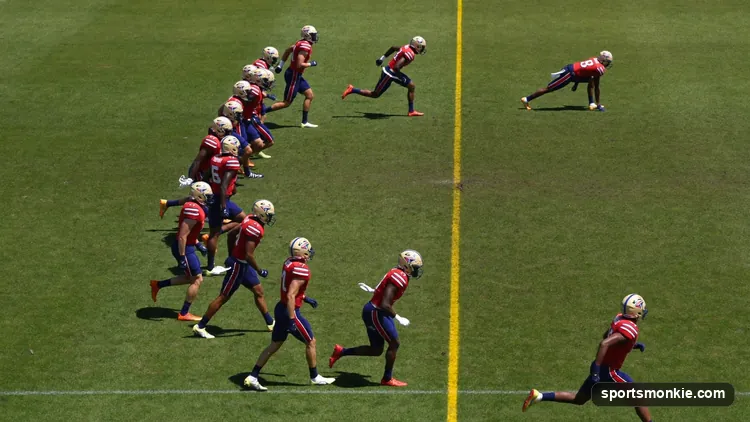
Offensive Positions in Football Explained: Every Role on the Unit
Offensive positions in football explained: QB, RB/FB, WR, TE, and the five offensive line spots (LT, LG, C, RG, RT) with duties and alignment.
Quarterback Position in Football: Role, Skills, and Responsibilities Explained
The quarterback position leads the offense, calling plays, taking the snap, and throwing or handing off the ball. Learn the QB's full job in football.
Football Formations and Coverages Explained: The Complete NFL Guide
Football formations and coverages explained: how NFL offenses line up, how defenses answer with zone and man coverage, and why each matchup wins or loses.
What Is a QB Sneak in Football?
A QB sneak is a short-yardage play where the quarterback takes the snap and dives straight ahead behind the line for a yard or two, ideal on 3rd- or 4th-and-1.
What Is a Sack in Football?
A sack is when the defense tackles the quarterback behind the line of scrimmage before they can throw, losing yards for the offense. It's a key pass-rush stat.
Roughing the Passer Rule Explained
Roughing the passer is an NFL penalty for illegal contact on the quarterback while he throws. What it covers, the 15-yard penalty and the debate.