
What Is a Hail Mary in Football? The Desperation Pass
On this page5
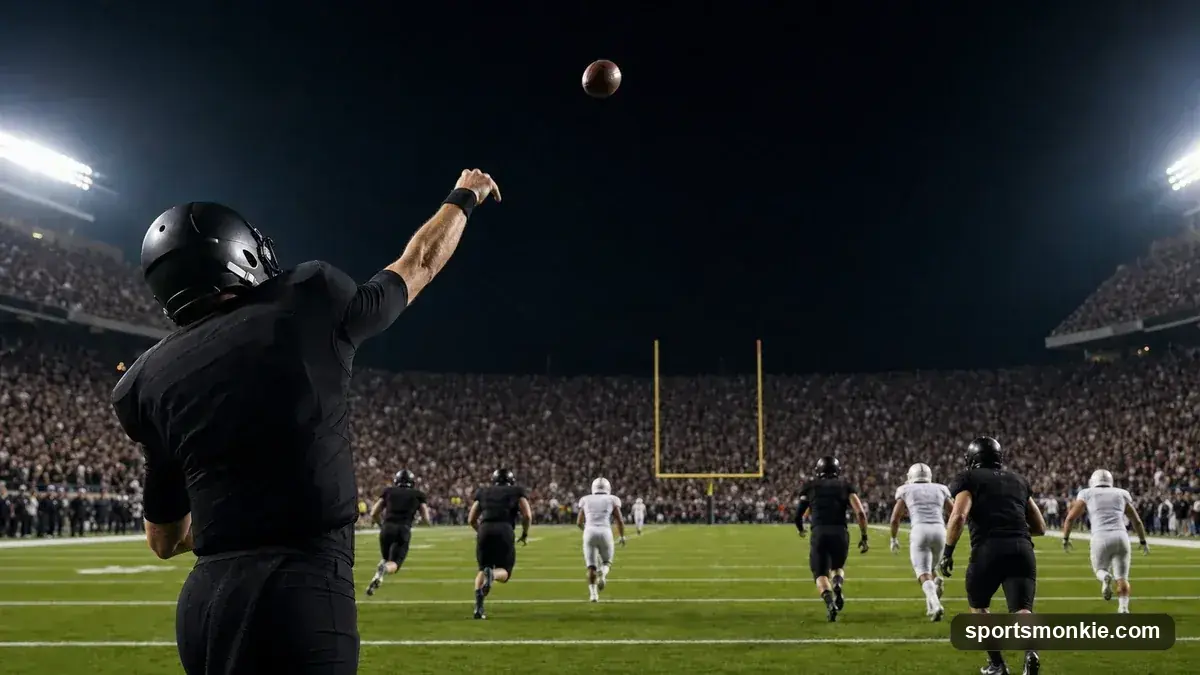
Every football fan knows the image: seconds left, the quarterback drops back, and instead of a normal throw he launches the ball as far as he can toward a scrum of players in the end zone. Everyone holds their breath. That desperate heave is the Hail Mary, football’s ultimate long shot.
What the play is
A Hail Mary is a long forward pass thrown when a team is out of time and out of options. The quarterback lofts the ball high and deep, usually toward the end zone, and sends every available receiver into the area to fight for it. The idea is not precision. It is to give the offense one chance for a receiver to out-jump or out-position the defenders and come down with the catch.
It shows up almost exclusively at the end of a half or the end of a game, when there is time for one final play and the team needs a touchdown to win or stay alive.
Where the name comes from
The term dates to a 1975 NFL playoff game. Cowboys quarterback Roger Staubach threw a long, last-second touchdown pass to Drew Pearson to beat the Vikings, and afterward Staubach famously said he “closed his eyes and said a Hail Mary.” The phrase, borrowed from the Catholic prayer, stuck, and it has described these desperation passes ever since.
Why it so rarely works
The Hail Mary is a low-percentage play on purpose. The defense knows exactly what is coming and floods the end zone with extra defenders, often dropping everyone deep to guard the goal line. That leaves receivers badly outnumbered in a crowded space where any defender can knock the ball down.
| Factor | Effect on the play |
|---|---|
| Defense expects it | Extra defenders sit deep in the end zone |
| Long throw distance | Ball hangs in the air, giving defenders time to react |
| Contested catch | Receiver must beat multiple defenders to the ball |
| No time left | No chance to set up a better play afterward |
Because so much has to go right at once, most Hail Marys fall incomplete or get intercepted. That difficulty is the whole point of why the rare successes are replayed for decades.
How teams run it
The setup is usually simple. The quarterback needs time, so the line blocks as long as possible while receivers sprint downfield. Coaches often send three or more receivers into a tight cluster near the goal line, hoping one wins the jump ball or a tipped ball falls to a teammate. A tall receiver with a strong vertical leap is a common target, since the play often comes down to who can go highest.
Some teams also use a shorter variation: rather than a pure end-zone bomb, the quarterback throws to a receiver near the sideline who can catch and get out of bounds to stop the clock, keeping a final Hail Mary in reserve.
Where it fits in a game
The Hail Mary is the last card an offense plays, which is why understanding late-game situations matters. Knowing how the clock, downs, and field position work turns a chaotic final second into something you can actually follow. It helps to understand the first down system that governs a whole drive, and how safer plays like play action set up the earlier downs before it ever comes to a prayer at the buzzer.
Frequently asked questions
What is a Hail Mary in football?+
A Hail Mary is a very long forward pass, usually thrown toward the end zone as time expires, in a last-ditch attempt to score. It has a low chance of success and relies on a receiver winning a contested catch in a crowd.
Why is it called a Hail Mary?+
The name comes from the Catholic prayer. It was popularized in the NFL in 1975 when Roger Staubach said he 'closed his eyes and said a Hail Mary' after a game-winning long touchdown pass.
How often does a Hail Mary work?+
Rarely. It is a low-percentage play by design, used only when a team has no better option and time is almost gone. Most attempts fail, which is what makes the successful ones so memorable.
Sources
Play & tools
Free browser games and tools — no account, no download.
- Play 17-0 — Draft nine and chase a flawless NFL regular season — the perfect 17-0 run, no playoffs.
- Play 20-0 — Draft nine and chase a perfect NFL season — regular season and playoffs, undefeated.
- Play 16-0 — Draft nine and chase a perfect 16-0 — the classic 16-game NFL regular season, no playoffs.
- Play Flawless Six — Draft five players and a head coach, then chase a perfect NFL season with the right chemistry.
- Play Guess the NFL Player — A new mystery NFL player every day. Eight guesses, with a clue on each — plus free unlimited mode.
- Play NFL Wordle — A Wordle for football — guess the daily NFL player in eight tries, with green-amber-grey feedback on every clue.
- Play NFL Connections — Sort sixteen football tiles into four hidden groups of four. A new daily puzzle, four mistakes allowed, plus unlimited mode.
- Explore all our games →
- Open the schedule simulator — Pick every 2026 NFL game and watch the standings and playoff seeds update live.
- Open the squares generator — Generate a randomized, printable Super Bowl squares grid for your party — free, no sign-up.
- Open the trade calculator — Weigh any fantasy football trade instantly — clear winner and value gap.
- Run the NFL predictor — Simulate the NFL bracket and see who your picks send to the Super Bowl.
- Open the passer rating calculator — Calculate the official NFL passer rating (0–158.3) from any passing line, with the formula shown.
- Explore all our free sports tools →
Related nfl guides
View all →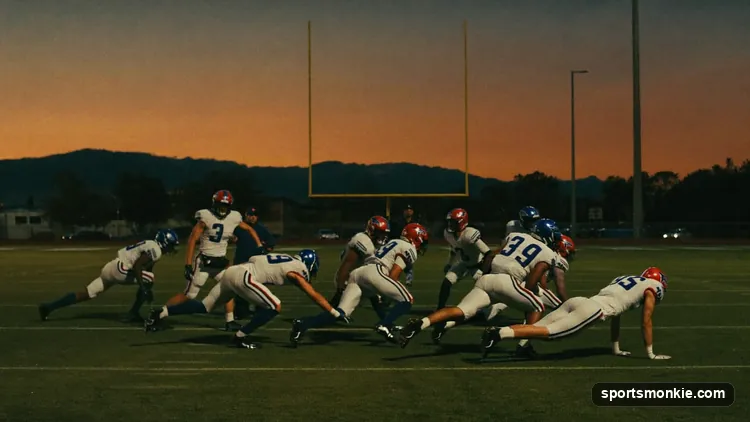
Prevent Defense in Football: What It Is and Why Coaches Get Criticized for It
A prevent defense drops extra defensive backs deep to stop the big play late in a half, trading short completions for protection against a game-changing bomb.
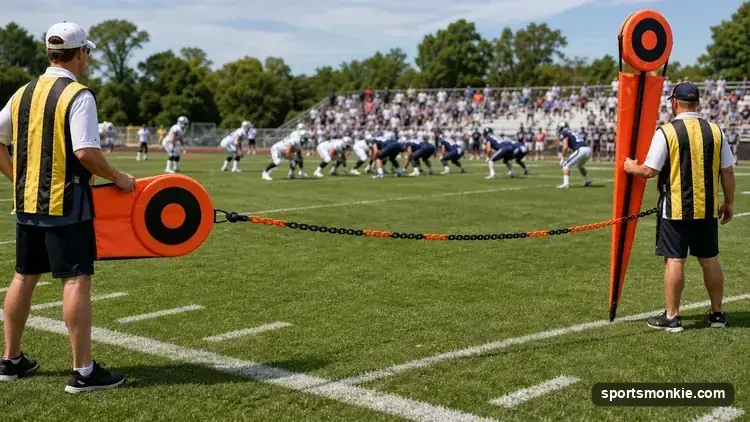
What Is a First Down in Football? The 10-Yard Rule Explained
A first down gives the offense four attempts to move the ball 10 yards. Gain the 10 and you earn a fresh set of downs. Here's how the core rule works.

Most Successful American Football Teams in NFL History
The Patriots, Steelers, and 49ers rank among the most successful NFL teams ever by Super Bowl wins, conference titles, and sustained dominance.
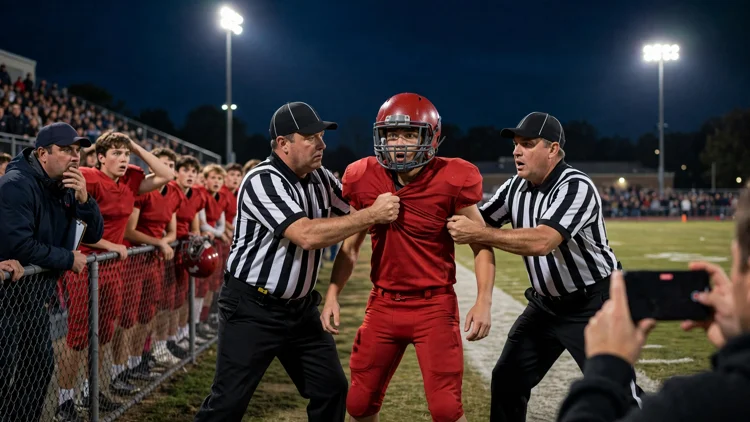
Missouri Referee Suspended Indefinitely After Grabbing a Glendale Player in Viral Video
A Missouri high school referee grabbed Glendale receiver Joelle Rover by the jersey after a touchdown, and the state association suspended him indefinitely.
Rugby vs American Football: Key Differences
Rugby vs American football: rugby has 15 players, no forward pass and light padding; American football has 11, forward passing, downs and full pads.
What Is a Screen Pass in Football?
A screen pass is a short throw to a receiver or back behind or near the line, with blockers set up ahead, designed to beat an aggressive pass rush and gain space.