
What Is a First Down in Football? The 10-Yard Rule Explained
On this page4
American football can look like organized chaos until one rule clicks into place, and this is the one: the down system. Almost everything an offense does is built around a simple goal of moving the ball 10 yards. Understand that, and the numbers on the broadcast suddenly make sense.
The core rule
When an offense gets the ball, it has four attempts, called downs, to advance it 10 yards. If they gain those 10 yards within four downs, they earn a first down, which resets the count. Now they have four fresh downs to gain the next 10 yards. As long as a team keeps picking up first downs, it keeps the ball and marches down the field.
If they fail to gain 10 yards after four downs, possession normally goes to the other team at that spot. This is why teams almost always punt on fourth down if they are not close, rather than risk handing the opponent good field position.
Reading “1st and 10”
Broadcasts show the down and distance as two numbers, like “1st and 10” or “3rd and 4.”
- The first number is the current down (1st, 2nd, 3rd, or 4th).
- The second number is how many yards are still needed for a new first down.
So “3rd and 4” means it is third down with 4 yards to go. “1st and 10” is the standard fresh start after a first down.
| Situation | What it means |
|---|---|
| 1st and 10 | Fresh set, 10 yards to go |
| 2nd and 6 | Gained 4 on first down, 6 to go |
| 3rd and 1 | Short yardage — prime QB sneak territory |
| 4th and 8 | Long way to go, team will likely punt or kick |
Why fourth down is the pressure point
Fourth down forces a decision. Convert it and the drive lives on. Fail and the ball flips to the opponent right there. Because of that risk, teams weigh three options on fourth down: go for it and try to gain the yards, punt the ball far downfield to pin the opponent back, or, if close enough, attempt a field goal for three points.
The closer a team is to needing just a yard or two, the more often they gamble and go for it. Long fourth downs almost always mean a punt.
The first down as the drive’s heartbeat
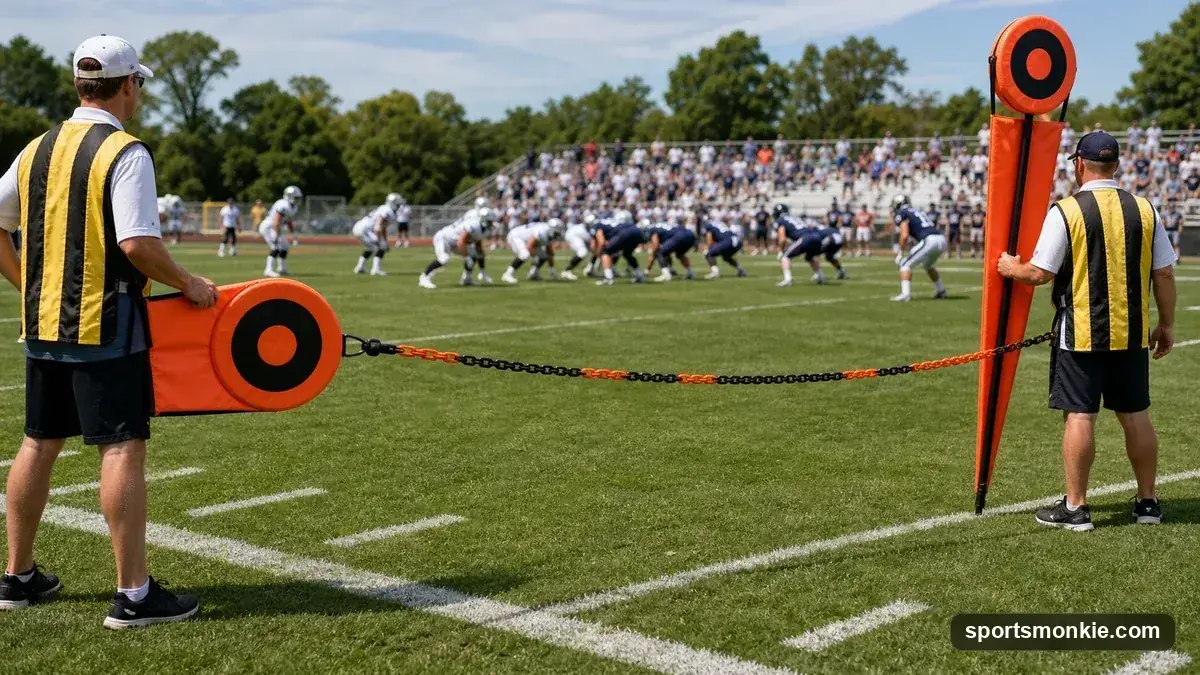
Every offensive series is really a chain of first downs. String them together and you get a long, clock-eating drive that matters most late in a half, especially inside the two-minute warning. Stall out, and you give the ball back. This is why commentators talk so much about “moving the chains,” a reference to the physical chain crew on the sideline that measures whether the offense gained its 10 yards — and on the closest spots, a coach can even demand a review with the challenge flag.
Once the down system makes sense, the rest of football’s playbook falls into place. Safer early-down calls like play action set up manageable distances, while a desperate Hail Mary is what happens when the downs and the clock both run out. It all traces back to the same simple question: did they get the 10 yards?
Frequently asked questions
What is a first down in football?+
A first down is when the offense gains at least 10 yards from where a set of downs began. Doing so resets the count and gives the offense a fresh set of four downs to gain another 10 yards.
How many downs does a team get?+
Four. The offense has four attempts (downs) to advance the ball 10 yards. If they succeed, they earn a new first down. If they fail, possession usually turns over to the other team.
What does 1st and 10 mean?+
It means it is first down with 10 yards to go for the next first down. The first number is the current down, and the second is the yards still needed.
Sources
Play & tools
Free browser games and tools — no account, no download.
- Play 17-0 — Draft nine and chase a flawless NFL regular season — the perfect 17-0 run, no playoffs.
- Play 20-0 — Draft nine and chase a perfect NFL season — regular season and playoffs, undefeated.
- Play 16-0 — Draft nine and chase a perfect 16-0 — the classic 16-game NFL regular season, no playoffs.
- Play Flawless Six — Draft five players and a head coach, then chase a perfect NFL season with the right chemistry.
- Play Guess the NFL Player — A new mystery NFL player every day. Eight guesses, with a clue on each — plus free unlimited mode.
- Play NFL Wordle — A Wordle for football — guess the daily NFL player in eight tries, with green-amber-grey feedback on every clue.
- Play NFL Connections — Sort sixteen football tiles into four hidden groups of four. A new daily puzzle, four mistakes allowed, plus unlimited mode.
- Explore all our games →
- Open the schedule simulator — Pick every 2026 NFL game and watch the standings and playoff seeds update live.
- Open the squares generator — Generate a randomized, printable Super Bowl squares grid for your party — free, no sign-up.
- Open the trade calculator — Weigh any fantasy football trade instantly — clear winner and value gap.
- Run the NFL predictor — Simulate the NFL bracket and see who your picks send to the Super Bowl.
- Open the passer rating calculator — Calculate the official NFL passer rating (0–158.3) from any passing line, with the formula shown.
- Explore all our free sports tools →
Related nfl guides
View all →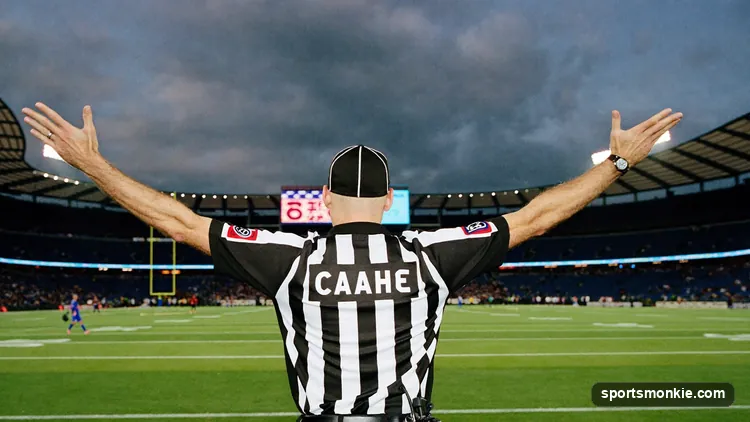
Football Referee Signals: The Complete NFL Hand Signal Chart
Football referee signals explained: touchdown, first down, holding, false start, pass interference, and every hand signal NFL officials use on the field.
Prevent Defense in Football: What It Is and Why Coaches Get Criticized for It
A prevent defense drops extra defensive backs deep to stop the big play late in a half, trading short completions for protection against a game-changing bomb.
What Is a Hail Mary in Football? The Desperation Pass
A Hail Mary is a long, low-percentage pass thrown toward the end zone as time runs out, hoping a receiver comes down with it. Here's how the play works.

Most Successful American Football Teams in NFL History
The Patriots, Steelers, and 49ers rank among the most successful NFL teams ever by Super Bowl wins, conference titles, and sustained dominance.
Missouri Referee Suspended Indefinitely After Grabbing a Glendale Player in Viral Video
A Missouri high school referee grabbed Glendale receiver Joelle Rover by the jersey after a touchdown, and the state association suspended him indefinitely.
Rugby vs American Football: Key Differences
Rugby vs American football: rugby has 15 players, no forward pass and light padding; American football has 11, forward passing, downs and full pads.