
What Is Play Action in Football?
On this page6
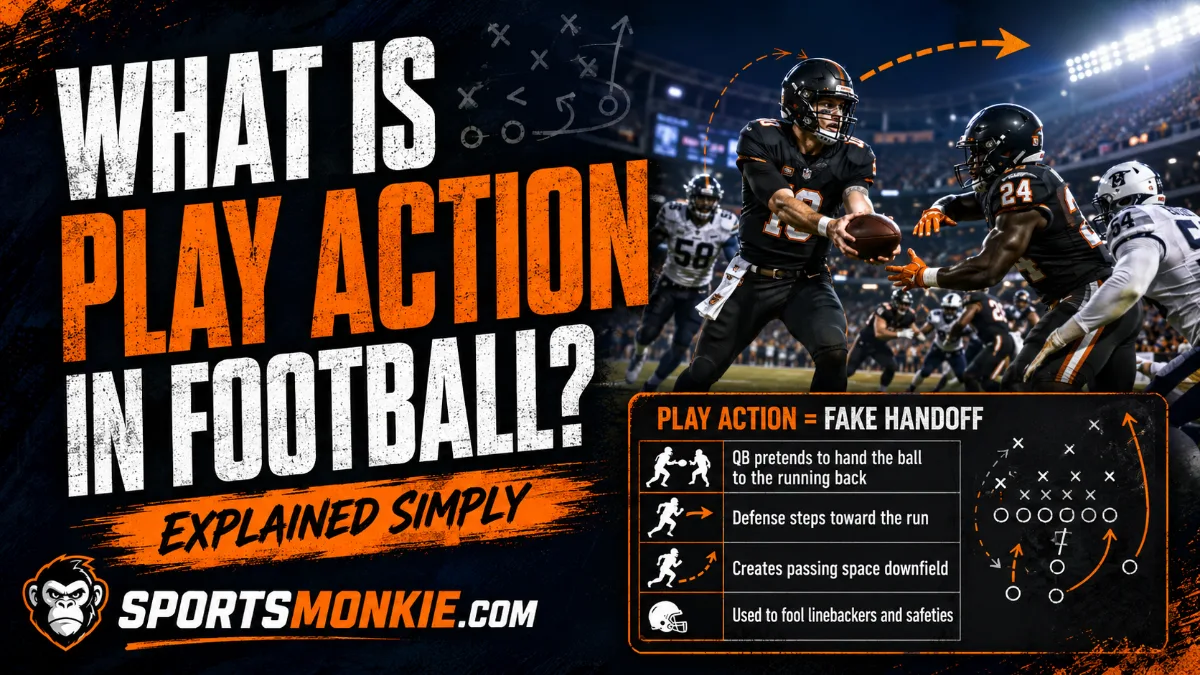
Play action is a pass play where the quarterback fakes a handoff to a running back before throwing. The fake pulls linebackers and safeties toward the line of scrimmage, and the space they vacate is where the eligible receivers are running. It consistently produces more yards per attempt than a standard dropback, and it works even for teams with a poor running game.
Defense in football is built on reading keys and reacting fast. Play action turns that instinct against the defense: it shows them a run, waits for them to commit, and throws over their heads.
What play action is
A play-action pass starts out looking exactly like a running play. The quarterback takes the snap, turns, and mimes handing the ball to a running back who charges into the line as if carrying it. But the quarterback keeps the ball, pulls it back, and looks to pass.
That brief fake is the whole point. It forces the defense to make a choice in a split second, and offenses profit when defenders guess wrong.
Why it fools defenders
Linebackers and safeties are coached to attack the run. When they see the handoff motion, their first step is often forward, toward the line of scrimmage. Every yard they move up is a yard of space that opens behind them, in the exact area where receivers are running their routes.
- Linebackers who step up leave the middle of the field exposed.
- Safeties who creep toward the run can get beaten deep.
- The pass rush can also be slowed, since a convincing fake makes the play develop like a run.
When teams use it
Play action is most dangerous when the defense already has a reason to fear the run:
| Situation | Why play action fits |
|---|---|
| After several successful runs | The defense is leaning toward the run, so the fake sells |
| Short-yardage downs | Defenses stack the box expecting a run |
| With a mobile QB | The threat of a scramble adds to the deception |
The myth about needing a running game
Coaches have said for decades that you must establish the run before play action works. The data does not support it. Analysts tracking play-action efficiency across the league have repeatedly found the yards-per-attempt advantage holds for teams that run badly, run rarely, or both, and it does not scale with rushing success the way the folk wisdom predicts.
The reason is mechanical. A linebacker’s run key fires in roughly a quarter of a second, triggered by the guard’s block and the back’s path. He is not consulting your season rushing average in that window; he is reacting to what his eyes tell him is happening right now. The fake works because it looks like a run, not because your runs have been good.
Play action vs the RPO
The two get confused constantly, and the distinction is the quarterback’s decision point:
| Play action | Run-pass option (RPO) | |
|---|---|---|
| Decision made | Before the snap; it’s always a pass | After the snap, reading a specific defender |
| The handoff | A fake, never real | Genuinely happens if the read says run |
| Where it develops | Downfield, deeper drops | At or behind the line, quickly |
| Line blocking | Pass protection | Run blocking, which is why linemen can’t go far downfield |
Play action is a lie told before the snap. An RPO is an honest question answered during it.
The catch
Play action takes time. Because the quarterback has to carry out the fake before looking downfield, the play develops more slowly than a quick throw like a screen pass, so the offensive line has to hold its blocks longer. Called at the right moment, though, it is one of the most efficient ways to create a big play in football.
This connects to another question fans ask a lot: What Is a Bootleg in Football?.
Frequently asked questions
What is a play-action pass?+
A play-action pass is a play where the quarterback fakes handing the ball to a running back, then keeps it and throws. The fake is designed to make linebackers and safeties step toward the run, opening throwing lanes behind them for receivers running downfield.
Why does play action work?+
It works because defenders, especially linebackers and safeties, are coached to read run keys and react instantly. When they step toward the fake handoff, they vacate the middle of the field. Every yard they move forward is a yard of coverage space the offense gains behind them.
Does play action need a good running game?+
Less than coaches assume. Analysts have repeatedly found that play action produces more yards per attempt than standard dropbacks even for teams that run poorly or rarely. Defenders react to the run action itself, since their keys fire before they can weigh your rushing statistics.
What is the difference between play action and an RPO?+
Timing and decision point. On play action the quarterback commits to passing before the snap and the run fake is theatre. On a run-pass option he genuinely reads a defender after the snap and chooses run or pass based on that reaction. RPOs happen behind the line and develop far faster.
Is play action used more on first down?+
Yes, because first-and-10 is when defenses most expect a run and their keys are least skeptical. Play action on obvious passing downs like third-and-long fools almost nobody, since defenders have already dropped into coverage and no longer honour run action.
What is the downside of play action?+
Time. The quarterback must turn his back to the defense to sell the fake, which delays his read and forces the offensive line to hold blocks longer. Against a defense that ignores the fake, the offense has simply given the pass rush an extra beat for nothing.
Sources
Play & tools
Free browser games and tools — no account, no download.
- Play 17-0 — Draft nine and chase a flawless NFL regular season — the perfect 17-0 run, no playoffs.
- Play 20-0 — Draft nine and chase a perfect NFL season — regular season and playoffs, undefeated.
- Play 16-0 — Draft nine and chase a perfect 16-0 — the classic 16-game NFL regular season, no playoffs.
- Play Flawless Six — Draft five players and a head coach, then chase a perfect NFL season with the right chemistry.
- Play Guess the NFL Player — A new mystery NFL player every day. Eight guesses, with a clue on each — plus free unlimited mode.
- Play NFL Wordle — A Wordle for football — guess the daily NFL player in eight tries, with green-amber-grey feedback on every clue.
- Play NFL Connections — Sort sixteen football tiles into four hidden groups of four. A new daily puzzle, four mistakes allowed, plus unlimited mode.
- Explore all our games →
- Open the schedule simulator — Pick every 2026 NFL game and watch the standings and playoff seeds update live.
- Open the squares generator — Generate a randomized, printable Super Bowl squares grid for your party — free, no sign-up.
- Open the trade calculator — Weigh any fantasy football trade instantly — clear winner and value gap.
- Run the NFL predictor — Simulate the NFL bracket and see who your picks send to the Super Bowl.
- Open the passer rating calculator — Calculate the official NFL passer rating (0–158.3) from any passing line, with the formula shown.
- Explore all our free sports tools →
Related nfl guides
View all →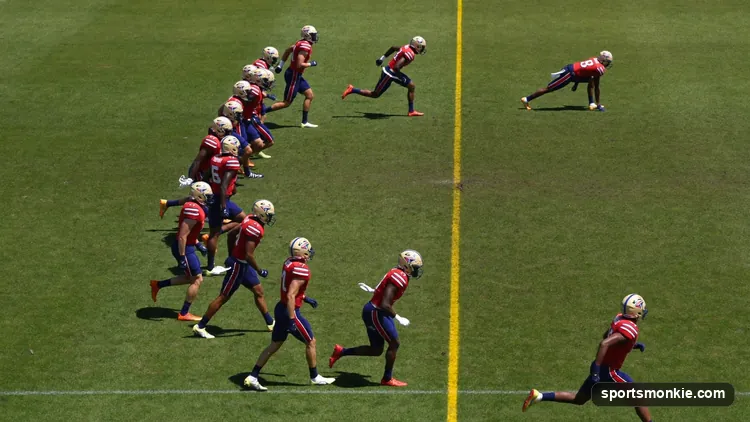
Offensive Positions in Football Explained: Every Role on the Unit
Offensive positions in football explained: QB, RB/FB, WR, TE, and the five offensive line spots (LT, LG, C, RG, RT) with duties and alignment.
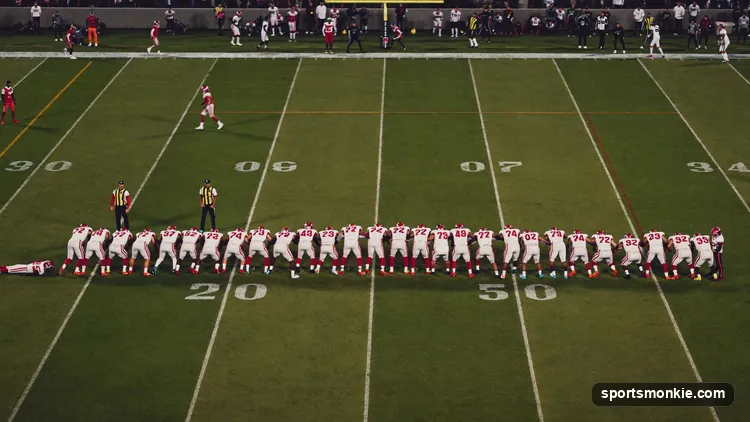
Football Positions Explained: Every Offense, Defense & Special Teams Role
Football positions explained: every offense, defense, and special teams role in American football, what each one does, and how they fit together.
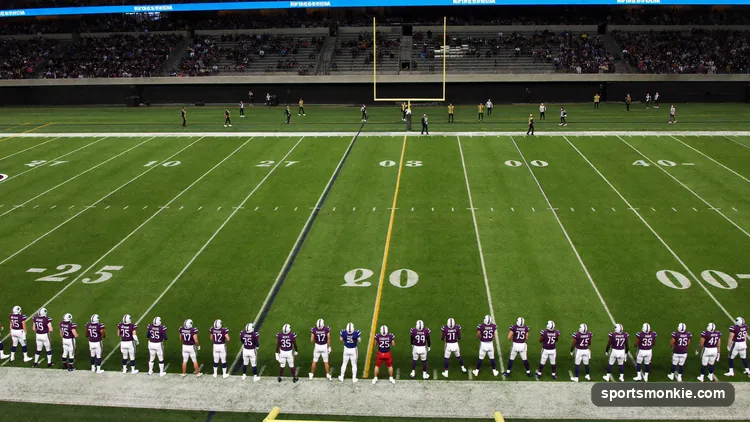
Football Formations and Coverages Explained: The Complete NFL Guide
Football formations and coverages explained: how NFL offenses line up, how defenses answer with zone and man coverage, and why each matchup wins or loses.
Quarterback Position in Football: Role, Skills, and Responsibilities Explained
The quarterback position leads the offense, calling plays, taking the snap, and throwing or handing off the ball. Learn the QB's full job in football.
Running Back Position in Football: Role, Skills & Types Explained
The running back position carries the ball, catches passes, and pass-blocks. Learn the halfback vs. fullback split, key skills, and top RB examples.
What Is a Derby in Football? Local Rivalry Matches
A derby in football is a match between two rival clubs, usually from the same city or region. Think the Manchester derby, El Clasico or the Merseyside derby.