
Running Back Position in Football: Role, Skills & Types Explained
On this page7
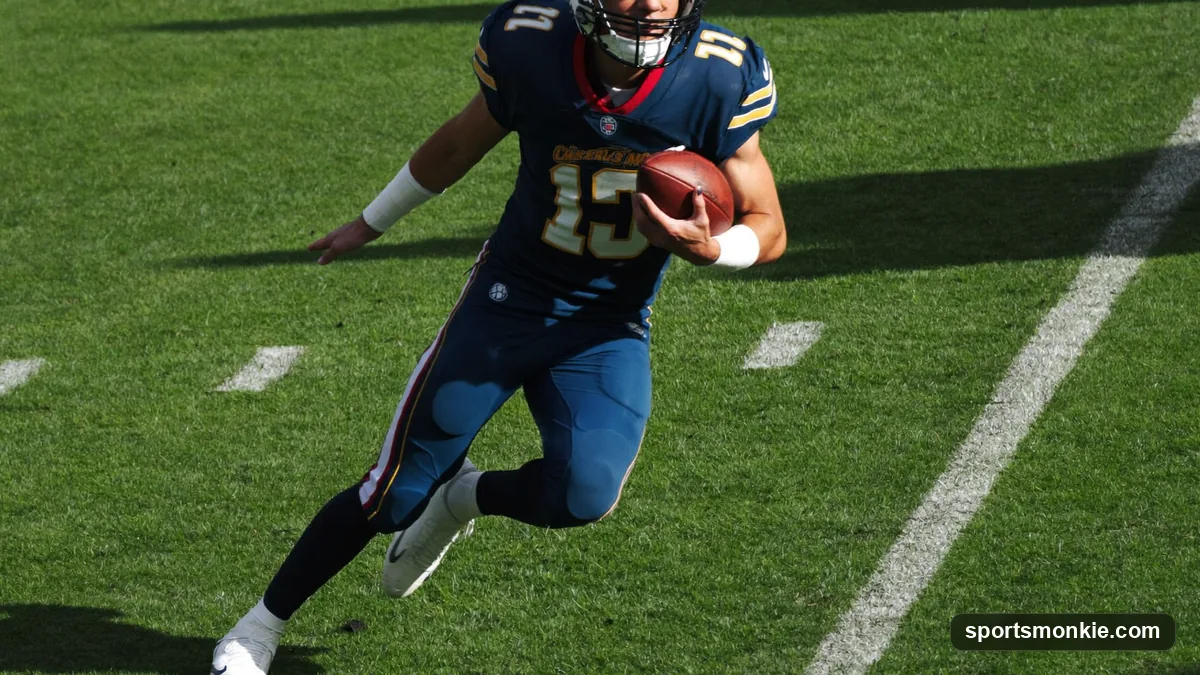
The running back (RB) is the offensive skill player who lines up behind the quarterback to run the ball on handoffs, catch passes out of the backfield, and block for the passer. It’s one of the most physically demanding jobs in football, splitting into two related roles — halfback and fullback — that together make up the backfield. For a full breakdown of how running backs fit alongside every other position, see our guide to football positions explained, and for the passing-game counterpart, check out the quarterback position in football.
What Does a Running Back Do?
On any given play, a running back has three possible jobs, and the best ones can do all three well.
- Run the ball. The quarterback hands off or pitches the ball to the running back, who reads his offensive line’s blocks, finds a gap, and tries to gain positive yardage.
- Catch passes. Running backs release out of the backfield on check-downs, screen passes, and route combinations, functioning as a fourth or fifth receiving option.
- Pass-block. When the quarterback drops back to throw, the running back often stays in to block, picking up blitzing linebackers or defensive backs the offensive line can’t reach.
Because the role touches every phase of the offense, running back is one of the sport’s most complete positions — see how it connects to the rest of the unit in our football offensive positions explained guide.
Why Is It Called “Running Back”?
The name is straightforward: the player runs the ball from a position “back” off the line of scrimmage, unlike linemen who play directly on it. Older football terminology grouped these backfield players under names like halfback, tailback, and wingback depending on where they lined up relative to the quarterback and line.
Halfback vs. Fullback: Roles Compared
The two primary types of running back split responsibilities by size, alignment, and job description.
| Attribute | Halfback (Tailback) | Fullback |
|---|---|---|
| Primary job | Carry the ball, main ball carrier | Lead-block, clear running lanes |
| Typical alignment | Deeper, often 6-7 yards behind QB | Closer to the line, ahead of the halfback |
| Body type | Leaner, built for speed and cuts | Bigger, built for contact and blocking |
| Carries per game | High (primary rusher) | Low (occasional short-yardage runs) |
| Receiving role | Screens, check-downs, routes | Safety-valve passes, limited routes |
| Modern usage | Every offense features one | Increasingly rare; many teams run without a true fullback |
A halfback is usually the team’s featured back — the player fans think of when they picture a “running back.” A fullback lines up ahead of him in the backfield and blocks first, seldom touching the ball himself in most modern NFL and college schemes.
Skills and Physical Traits of a Great Running Back
Running back requires a specific blend of athleticism and instinct:
- Vision — the ability to read blocks pre-snap and in real time, identifying the cutback lane before it fully opens.
- Elusiveness and agility — quick, sharp cuts that make defenders miss in the open field.
- Contact balance — staying on his feet through arm tackles and glancing hits.
- Speed — the burst to turn a small crease into a long touchdown run.
- Hands — reliable catching ability, since drops out of the backfield kill drives.
- Pass-protection technique — picking up a blitzing linebacker without giving up a sack is often the hardest skill for young backs to learn.
Most NFL running backs stand between 5’9” and 6’2” and weigh 190-235 pounds, prioritizing an athletic, compact build over pure size.
The Modern Pass-Catching, Committee Back
Today’s NFL offenses increasingly build around backs who function as receivers, not just runners. Spread formations and run-pass-option (RPO) concepts reward a running back who can line up in the slot, run a route, and stay on the field on third down instead of being substituted out for a passing-down specialist.
This has pushed most teams toward a running back committee: a power back for short yardage, a speed back for outside runs, and a pass-catching specialist for third downs, splitting the workload instead of feeding one player 300-plus touches. The rare “three-down back” who can do everything — rush, catch, and block — remains one of the most valuable non-quarterback assets in football because he lets a coordinator keep his personnel and play-calling unpredictable.
Famous Running Backs to Know
A short list of names that define the position’s history and its modern evolution:
- Jim Brown — widely regarded as the greatest pure runner ever, dominant in the 1950s-60s.
- Walter Payton — over 16,000 career rushing yards, a model of durability and all-around ability.
- Barry Sanders — led the league in rushing four times despite standing just 5’8”, famous for elite elusiveness.
- Emmitt Smith — the NFL’s all-time leading rusher and a four-time Super Bowl champion.
- LaDainian Tomlinson — one of the best three-down backs ever, combining elite rushing with dangerous receiving skills.
Understanding running back is also easier in context — the halfback, fullback, quarterback, and offensive line all work together, which is why it helps to study the full American football NFL picture rather than one position in isolation.
Bottom Line
The running back position is the offense’s do-everything backfield role: run the ball, catch it, and block for the quarterback when needed. Halfbacks carry the load as primary rushers while fullbacks clear the way as lead blockers, and the modern game increasingly rewards versatile, pass-catching backs who can stay on the field on every down.
Frequently asked questions
What is the running back position in football?+
The running back (RB) is an offensive skill-position player who lines up in the backfield behind the quarterback. Running backs run the ball on handoffs and pitches, catch passes out of the backfield as receivers, and block to protect the quarterback or another ball carrier on passing and running downs.
What is the difference between a halfback and a fullback?+
A halfback, also called a tailback, is typically the team's primary ball carrier, valued for speed, vision, and elusiveness. A fullback is usually bigger and lines up closer to the line of scrimmage as a lead blocker, clearing running lanes for the halfback and picking up blitzes, with the ball rarely handed to him directly.
What skills does a running back need?+
Elite running backs combine vision (reading blocks to find running lanes), quickness and agility (making defenders miss), contact balance (staying upright after hits), speed (breaking away in open space), soft hands (catching passes cleanly), and pass-protection technique (picking up blitzing linebackers).
Why are pass-catching running backs so valuable today?+
Modern NFL offenses use spread and RPO concepts that rely on backs who can stay on the field for every down. A running back who catches passes out of the backfield keeps the defense guessing, extends drives on third down, and prevents opponents from simply substituting a run-stopping defense whenever he lines up.
What is a three-down back?+
A three-down back is a running back trusted to play on early downs (rushing), passing downs (as a pass-catcher and blocker), and short-yardage or goal-line situations. Three-down backs are rarer and more valuable than committee backs because offenses do not need to substitute personnel based on down and distance.
Who are some of the best running backs in NFL history?+
Jim Brown, Walter Payton, Barry Sanders, Emmitt Smith, and LaDainian Tomlinson are widely regarded among the greatest running backs ever, combining rushing production with (in Tomlinson's case especially) receiving versatility.
How is the running back position changing in modern offenses?+
Teams increasingly use running back committees that split carries between a power back, a speed back, and a pass-catching specialist, rather than feeding one workhorse back 300-plus touches a season. This spreads workload, reduces injury risk, and lets coordinators match personnel to matchups.
Sources
Play & tools
Free browser games and tools — no account, no download.
- Play 17-0 — Draft nine and chase a flawless NFL regular season — the perfect 17-0 run, no playoffs.
- Play 20-0 — Draft nine and chase a perfect NFL season — regular season and playoffs, undefeated.
- Play 16-0 — Draft nine and chase a perfect 16-0 — the classic 16-game NFL regular season, no playoffs.
- Play Flawless Six — Draft five players and a head coach, then chase a perfect NFL season with the right chemistry.
- Play Guess the NFL Player — A new mystery NFL player every day. Eight guesses, with a clue on each — plus free unlimited mode.
- Play NFL Wordle — A Wordle for football — guess the daily NFL player in eight tries, with green-amber-grey feedback on every clue.
- Play NFL Connections — Sort sixteen football tiles into four hidden groups of four. A new daily puzzle, four mistakes allowed, plus unlimited mode.
- Explore all our games →
- Open the schedule simulator — Pick every 2026 NFL game and watch the standings and playoff seeds update live.
- Open the squares generator — Generate a randomized, printable Super Bowl squares grid for your party — free, no sign-up.
- Open the trade calculator — Weigh any fantasy football trade instantly — clear winner and value gap.
- Run the NFL predictor — Simulate the NFL bracket and see who your picks send to the Super Bowl.
- Open the passer rating calculator — Calculate the official NFL passer rating (0–158.3) from any passing line, with the formula shown.
- Explore all our free sports tools →
Related nfl guides
View all →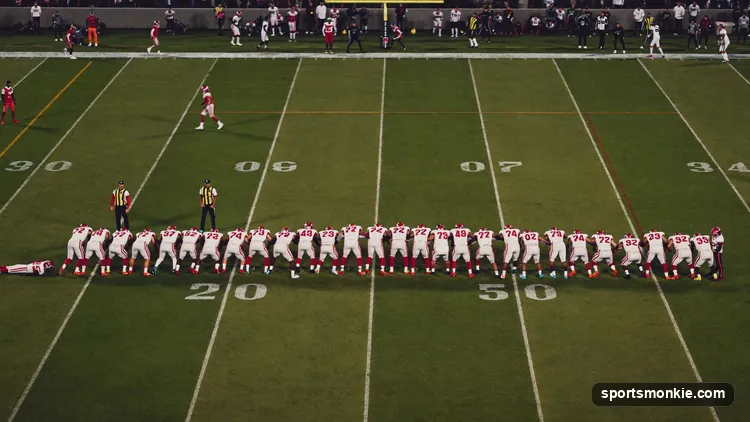
Football Positions Explained: Every Offense, Defense & Special Teams Role
Football positions explained: every offense, defense, and special teams role in American football, what each one does, and how they fit together.
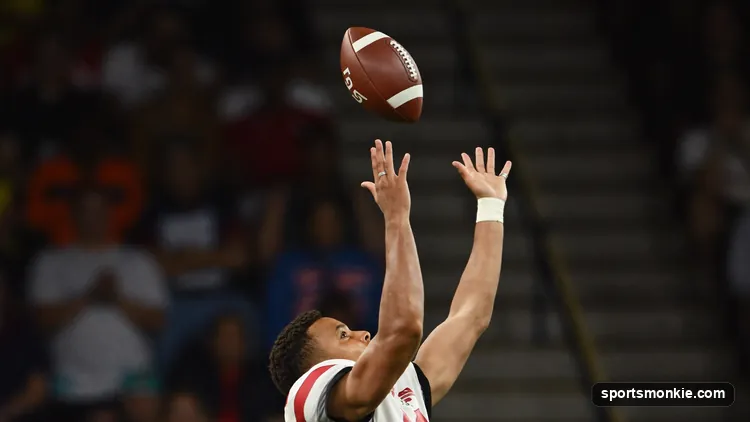
Quarterback Position in Football: Role, Skills, and Responsibilities Explained
The quarterback position leads the offense, calling plays, taking the snap, and throwing or handing off the ball. Learn the QB's full job in football.
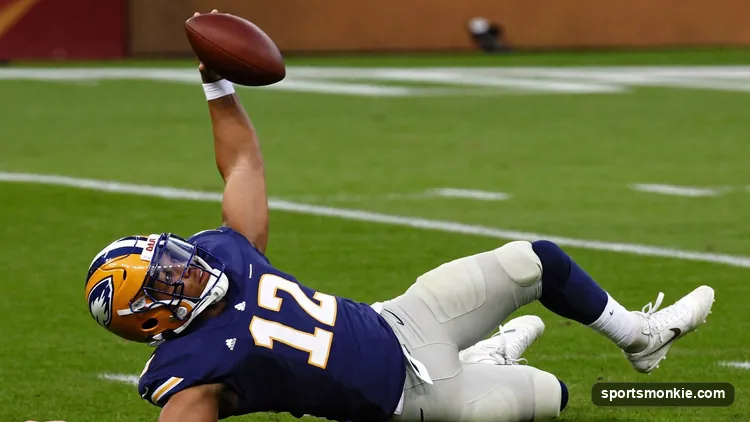
Tight End Position in Football Explained: Role, Skills, and Famous TEs
The tight end position in football is a hybrid blocker-receiver lined up beside the tackle. Learn its rules, responsibilities, skills, and top examples.
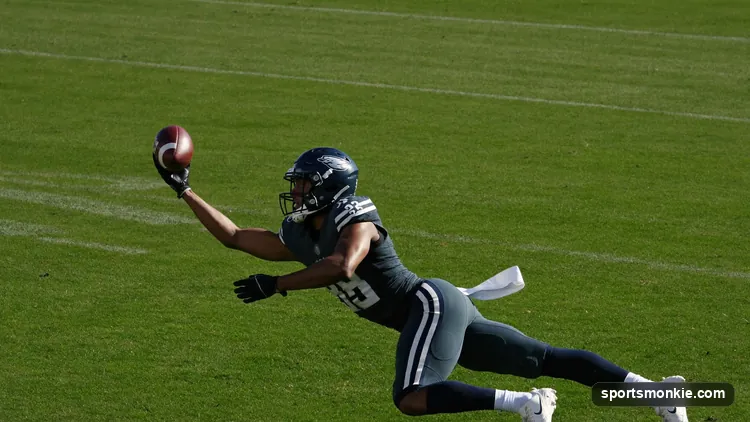
Wide Receiver Position Explained: Role, Routes & Types
The wide receiver position is the primary pass-catcher split wide from the line; learn WR roles, routes, skills, and stats here.
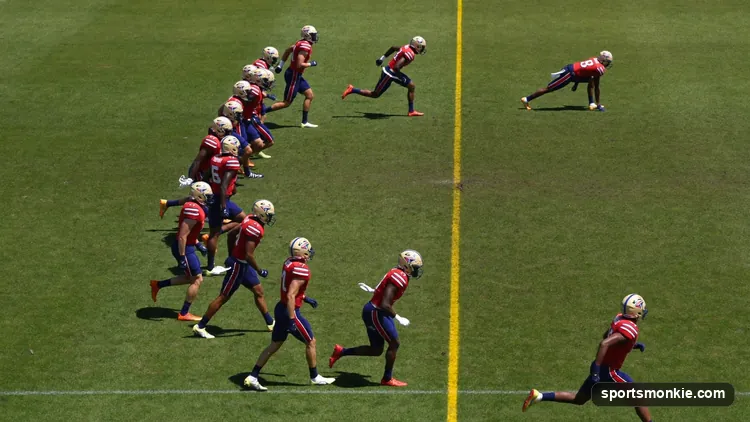
Offensive Positions in Football Explained: Every Role on the Unit
Offensive positions in football explained: QB, RB/FB, WR, TE, and the five offensive line spots (LT, LG, C, RG, RT) with duties and alignment.
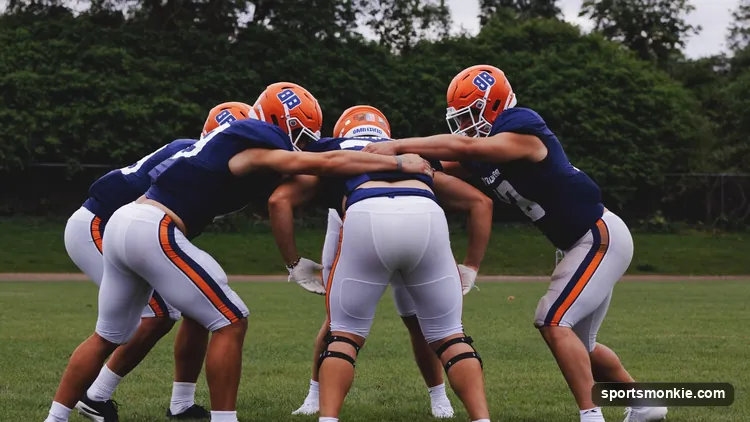
I-Formation in Football: Alignment, Strengths, and Modern Use
The I-formation lines up QB under center with fullback and running back stacked behind him. See its alignment, strengths, weaknesses, and NFL use.