
Tight End Position in Football Explained: Role, Skills, and Famous TEs
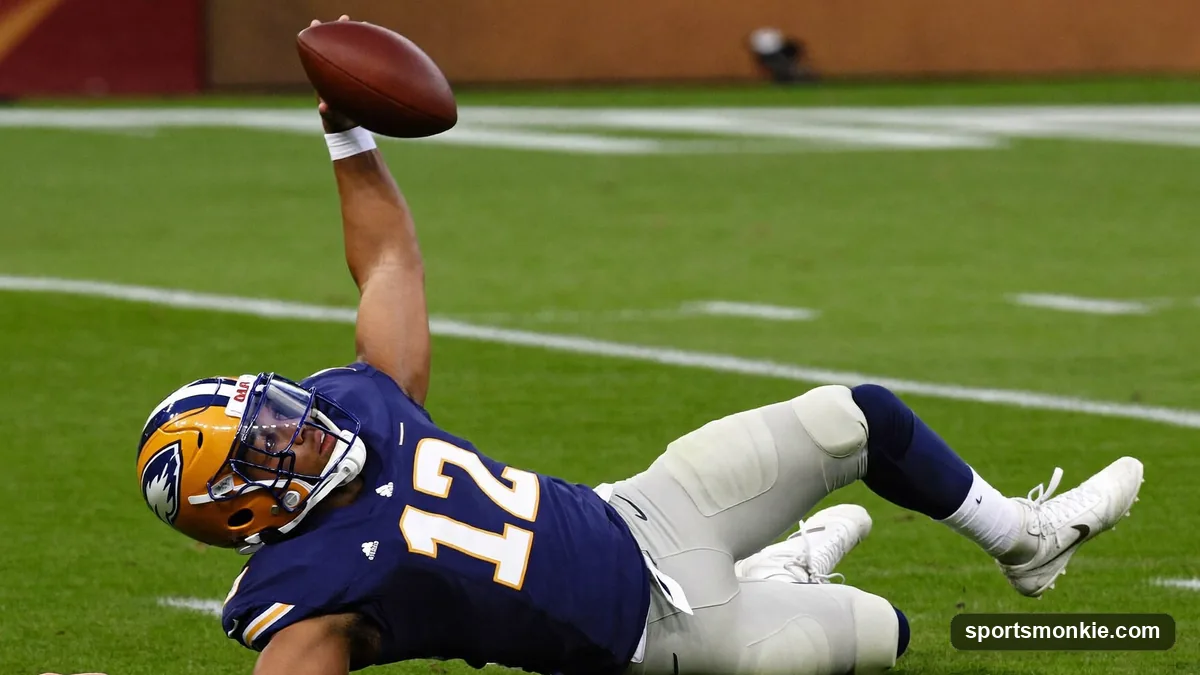
On this page8
- 01What Is a Tight End in Football?
- 02Where Does a Tight End Line Up?
- 03Tight End Responsibilities: Blocking and Receiving
- 04Skills and Physical Traits of an Elite Tight End
- 05Types of Modern Tight Ends
- 06Tight End vs. Other Positions
- 07Famous Tight Ends Who Redefined the Position
- 08Why the Tight End Position Matters
The tight end position in football is a hybrid role: the player lines up on the line of scrimmage next to the offensive tackle (or in the slot) and is asked to block like a lineman on one play and catch passes like a wide receiver on the next. No other spot on the field demands that dual skill set, which is why tight end is often called the most physically demanding job in American football.
What Is a Tight End in Football?
A tight end (TE) is an offensive skill position that sits at the intersection of the offensive line and the receiving corps. Like linemen, tight ends are big — typically 6’3” to 6’6” and 240 to 260 pounds — and are expected to physically move defenders at the point of attack. Like receivers, they are eligible to catch forward passes, which linemen are not, and they run real pass routes rather than simply releasing downfield.
The name itself comes from formation terminology: receivers who lined up at the outer edge of the formation were historically called “ends.” Those split wide became split ends (today’s wide receivers); those who stayed close to the tackle became tight ends. That positioning is still the anchor of the role — even as offenses have stretched what a tight end is asked to do. For a full breakdown of every spot on the field, see our guide to football positions explained.
Where Does a Tight End Line Up?
The traditional, “in-line” tight end sets up shoulder to shoulder with the tackle, on either side of the offensive line. That alignment lets the TE chip a pass rusher, seal an edge on a run play, or release into a route — all from the same stance, which keeps the defense guessing about the play call.
Modern offenses rarely stop there. Coordinators now flex tight ends into the slot, split them out wide like a big receiver, or drop them into the backfield as an H-back — a “move” tight end who lines up off the ball and can motion across the formation before the snap. That pre-snap flexibility is a major reason tight end has become such a valuable piece within the broader family of offensive positions in football.
Tight End Responsibilities: Blocking and Receiving
A tight end’s job splits into two halves that rarely overlap in any other position.
Blocking duties:
- Run blocking — sealing defensive ends, outside linebackers, or safeties to open running lanes, often working a combo block with the tackle before climbing to the second level.
- Pass protection — chipping or fully blocking edge rushers and blitzing linebackers to buy the quarterback time.
- Sixth offensive lineman — lining up in-line on early downs to disguise run-pass intent without tipping the defense.
Receiving duties:
- Route running — working seam routes, drags, flats, and option routes against linebackers and safeties who often can’t match a tight end’s size or speed.
- Safety valve — giving the quarterback a reliable checkdown when the primary reads are covered.
- Mismatch creation — using size against smaller defensive backs or speed against slower linebackers to win one-on-one matchups.
The best tight ends switch between these roles snap to snap without tipping off which one is coming, which is exactly what makes the position so hard to defend and so hard to play.
Skills and Physical Traits of an Elite Tight End
Because the job description is really two jobs, the skill set is unusually broad:
- Size and functional strength to hold up against 280-pound defensive ends in the run game.
- Strong, reliable hands to win contested catches in traffic, since tight ends are frequently targeted in tight coverage windows.
- Athleticism and enough long speed to threaten the seam and stress a defense vertically, not just underneath.
- Balance and body control to adjust routes mid-play when the middle of the field is crowded.
- Football IQ to identify blitzes, sight-adjust routes, and know when to stay in and block versus release.
Coaches often say a tight end needs a lineman’s mentality with a receiver’s hands — a combination few athletes at any level can genuinely offer, which is part of why standout tight ends are rarer than standout wide receivers.
Types of Modern Tight Ends
Not every tight end plays the position the same way. Offenses generally deploy three archetypes:
- In-line/blocking tight end — a traditional Y-TE who lines up on the line, blocks first, and catches as a secondary function (think a classic short-yardage or goal-line specialist).
- Move tight end / H-back — lines up off the ball, motions pre-snap, and mixes lead-blocking with receiving out of the backfield.
- Receiving/joker tight end — flexed out or in the slot on most snaps, built to win routes like an oversized wide receiver with limited in-line blocking responsibility.
Most NFL rosters now carry a mix of all three, using personnel groupings to signal — or disguise — what’s coming.
Tight End vs. Other Positions
| Position | Primary Role | Where They Line Up | Key Trait |
|---|---|---|---|
| Tight End (TE) | Block and catch (hybrid) | On the line, next to the tackle, or flexed into the slot | Size + hands |
| Wide Receiver (WR) | Catch passes, stretch the field | Split wide, off the line | Speed + route running |
| Fullback / H-back | Lead block, occasional catch | Backfield, offset behind the line | Power blocking |
| Offensive Tackle (OT) | Pass and run block only | On the line, edge of formation | Size + technique (not an eligible receiver) |
Famous Tight Ends Who Redefined the Position
A handful of players turned tight end from a blocking-first job into one of the NFL’s most explosive weapons. Tony Gonzalez retired as the most productive tight end in league history and set the template for receiving volume at the position. Rob Gronkowski paired that receiving upside with dominant blocking, helping the New England Patriots win multiple Super Bowls. Travis Kelce has been the league’s most reliable route-runner at the position for the better part of a decade with the Kansas City Chiefs. Antonio Gates and Shannon Sharpe proved that tight ends could rack up Pro Bowl-caliber receiving numbers years before it became common, and George Kittle has carried the blend of elite blocking and big-play receiving into the modern era with the San Francisco 49ers.
Each of these players shares the same throughline: they never stopped blocking well even as their receiving numbers climbed, which is still the standard every tight end prospect is measured against today.
Why the Tight End Position Matters
Few spots on the field reward versatility the way tight end does. A team that can trust its tight end to block a 280-pound edge rusher on one snap and beat a 220-pound linebacker on a seam route the next has an answer for almost any defensive look. That flexibility is exactly why modern offenses build entire game plans around a great tight end, and why the position remains one of the most closely scouted in football at every level.
Frequently asked questions
What is the tight end position in football?+
The tight end (TE) is an offensive position that lines up on the line of scrimmage, usually just outside the offensive tackle, and combines the blocking duties of a lineman with the route-running and catching duties of a receiver. Tight ends are eligible pass-catchers, unlike guards, centers, and tackles.
Where does a tight end line up on the field?+
Traditionally a tight end lines up tight to the tackle on either side of the offensive line (an 'in-line' alignment). Modern offenses also flex tight ends into the slot, out wide, or in the backfield as an H-back to create mismatches before the snap.
What does a tight end do in the running game?+
In the run game, a tight end blocks defensive ends, outside linebackers, or safeties to create running lanes, often working combination blocks with the tackle before releasing to the second level.
What does a tight end do in the passing game?+
In the passing game, a tight end runs routes such as seams, drags, and flats, serves as a quarterback's short-yardage safety valve, and uses size to shield defenders on contested catches, in addition to pass-protecting on blitz pickups.
What skills make a good tight end?+
Elite tight ends combine size (typically 6'3" to 6'6", 240-260 lbs), strong hands, functional strength for blocking, enough speed to threaten the seam, and the football IQ to read coverage and adjust routes in real time.
How is a tight end different from a wide receiver?+
A tight end is bigger and stronger, lines up on the line of scrimmage attached to the formation, and is expected to block defensive linemen and linebackers, while a wide receiver is smaller, faster, lines up off the line, and rarely blocks defensive linemen.
Who are the most famous tight ends in NFL history?+
Tony Gonzalez, Rob Gronkowski, Travis Kelce, Antonio Gates, Shannon Sharpe, and George Kittle are among the most famous tight ends, each redefining how much receiving production the position could produce without sacrificing blocking value.
What is an H-back or move tight end?+
An H-back, or move tight end, lines up off the line of scrimmage in the backfield or offset behind a tackle, giving offenses flexibility to use the player as a lead blocker, extra pass protector, or a receiver who motions across the formation before the snap.
Sources
Play & tools
Free browser games and tools — no account, no download.
- Play 17-0 — Draft nine and chase a flawless NFL regular season — the perfect 17-0 run, no playoffs.
- Play 20-0 — Draft nine and chase a perfect NFL season — regular season and playoffs, undefeated.
- Play 16-0 — Draft nine and chase a perfect 16-0 — the classic 16-game NFL regular season, no playoffs.
- Play Flawless Six — Draft five players and a head coach, then chase a perfect NFL season with the right chemistry.
- Play Guess the NFL Player — A new mystery NFL player every day. Eight guesses, with a clue on each — plus free unlimited mode.
- Play NFL Wordle — A Wordle for football — guess the daily NFL player in eight tries, with green-amber-grey feedback on every clue.
- Play NFL Connections — Sort sixteen football tiles into four hidden groups of four. A new daily puzzle, four mistakes allowed, plus unlimited mode.
- Explore all our games →
- Open the schedule simulator — Pick every 2026 NFL game and watch the standings and playoff seeds update live.
- Open the squares generator — Generate a randomized, printable Super Bowl squares grid for your party — free, no sign-up.
- Open the trade calculator — Weigh any fantasy football trade instantly — clear winner and value gap.
- Run the NFL predictor — Simulate the NFL bracket and see who your picks send to the Super Bowl.
- Open the passer rating calculator — Calculate the official NFL passer rating (0–158.3) from any passing line, with the formula shown.
- Explore all our free sports tools →
Related nfl guides
View all →
Wide Receiver Position Explained: Role, Routes & Types
The wide receiver position is the primary pass-catcher split wide from the line; learn WR roles, routes, skills, and stats here.
Running Back Position in Football: Role, Skills & Types Explained
The running back position carries the ball, catches passes, and pass-blocks. Learn the halfback vs. fullback split, key skills, and top RB examples.
Football Positions Explained: Every Offense, Defense & Special Teams Role
Football positions explained: every offense, defense, and special teams role in American football, what each one does, and how they fit together.
Quarterback Position in Football: Role, Skills, and Responsibilities Explained
The quarterback position leads the offense, calling plays, taking the snap, and throwing or handing off the ball. Learn the QB's full job in football.
What Is a Cornerback in Football? Position, Role & Skills Explained
A cornerback in football is the defensive back who covers wide receivers in man or zone coverage. Learn the role, skills, and famous CBs.
What Is an RPO in Football? Run-Pass Option
An RPO is a run-pass option: one play where the QB reads a defender after the snap and decides to hand off or throw. How it works, explained.