
What Is an RPO in Football? Run-Pass Option
On this page5
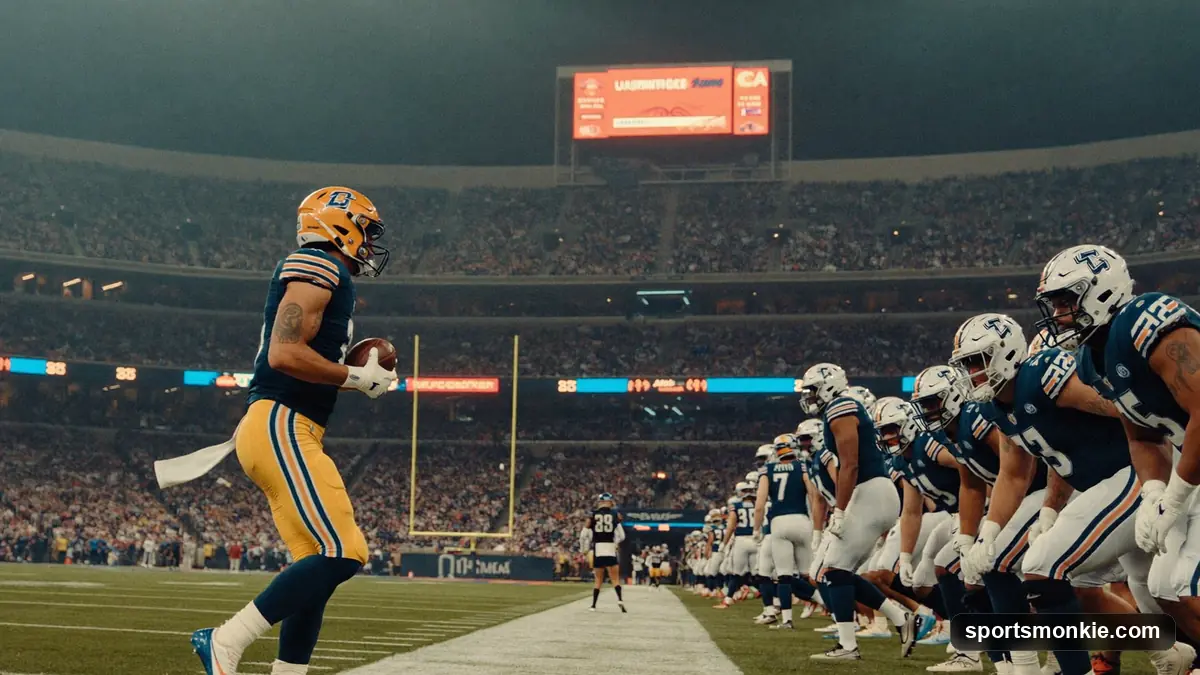
An RPO in football is a run-pass option: a single play in which the quarterback reads one specific defender after the snap and decides on the spot whether to hand the ball off for a run or pull it and throw a quick pass. Both options are built into the same play, and the quarterback’s read, not a pre-snap script, determines which one actually happens.
That real-time choice is what makes the RPO different from almost everything else in an offense’s playbook. It forces a defender to be wrong no matter what he does, and it has become one of the defining concepts of modern offensive football. Here is how it works, how it differs from play action, and why the NFL version is more restricted than the one you see on Saturdays.
How an RPO works, step by step
An RPO combines a run play and a pass play into one snap. The mechanics are the same every time:
- The line blocks for the run. Offensive linemen fire off low and drive as if it is a straightforward handoff.
- The back runs his track. The running back attacks the line of scrimmage exactly as he would on a designed run.
- A receiver runs a quick route. Usually a slant, hitch, bubble screen or quick out, something that comes open fast.
- The quarterback reads one defender. He watches a single “conflict” defender, most often a linebacker or safety who has responsibility for both the run gap and the pass zone.
- He decides at the mesh point. If that defender crashes toward the run, the quarterback pulls the ball and throws to the now-open receiver. If the defender drops to cover the pass, the quarterback completes the handoff.
The genius is that one defender cannot do both jobs. Whatever he chooses, the offense takes the other option. This is why RPOs are described as putting a defender “in conflict.”
RPO vs play action: the key difference
RPOs and play-action passes look similar for a split second, but they are opposites in intent. On a play-action pass, the offense has already decided to throw; the fake handoff exists only to freeze the linebackers and open space downfield. The quarterback is going to pass no matter what the defense does.
On an RPO, nothing is decided until the read. The run is a real run and the pass is a real pass, and the quarterback genuinely picks between them based on the defender’s movement. If you want a mental shortcut, remember that play action fakes a run to set up a pass, while an RPO actually chooses between the two. The deep shot down the sideline on a fake handoff, closer to a Hail Mary in feel, is play action; the one-second slant thrown off a live handoff read is an RPO.
Why NFL RPOs are more limited
The biggest reason RPOs look tamer in the NFL than in college comes down to a single rule about ineligible receivers downfield. Offensive linemen are ineligible receivers, and on a pass play they are restricted in how far past the line of scrimmage they can travel before the ball is thrown.
| Element | Explanation |
|---|---|
| Core idea | One play with a live run and a live pass option |
| Quarterback’s job | Read one conflict defender after the snap |
| Typical read | Linebacker or safety with run and pass duties |
| Common pass routes | Slant, bubble screen, hitch, quick out |
| Key constraint | Ineligible linemen downfield rule limits pass depth |
| NFL limit | Ineligible linemen restricted to roughly 1 yard downfield |
| College limit | Ineligible linemen allowed further downfield (about 3 yards) |
Because linemen block aggressively for the run on an RPO, they tend to drift downfield. The NFL’s tighter allowance, per the league’s official playing rules on ineligible players downfield, means NFL RPOs rely on very quick throws released almost instantly, before the linemen get too far. College’s more generous cushion lets offenses run RPOs with slightly deeper developing routes. Linemen who grab defenders while run-blocking on these plays also risk a flag, which our guide to holding in football breaks down.
Where RPOs came from
The run-pass option is often treated as a modern invention, but it is really the latest branch of a long tree. It descends from decades of option football, where a quarterback reads a defender to decide whether to keep, pitch or hand off, and from the college spread offense, which spent the 2000s and 2010s stretching defenses horizontally and forcing linebackers into impossible run-or-pass decisions.
As those spread principles migrated to the NFL, RPOs became a staple, featuring prominently in high-profile playoff and Super Bowl runs by pass-friendly offenses. That is also why the “who invented it” question has no clean answer. It was refined by many coaches rather than created by one player. Its rise tracks the broader shift toward quarterbacks who make fast, decisive reads, the same trait that shows up on the résumés of the league’s most successful Super Bowl quarterbacks.
Why defenses hate them
RPOs are hard to defend because they attack a defense’s structure rather than its athletes. A defender who is disciplined against the run gives up the pass; a defender who guards the pass gives up the run. Blitzing can backfire, because vacating a zone hands the quarterback an easy completion into the space the blitzer left.
The counter is disciplined, gap-sound defense with defenders who can play their assignment without over-committing, plus disguised coverages that make the quarterback’s read harder before the snap. But even a perfect defensive call only limits the damage; by design, the RPO ensures the offense usually has a correct answer available.
The short version: an RPO is one play with a live run and a live pass, decided by the quarterback reading a single defender after the snap. It differs from play action, which is always a pass off a fake, and it is more restricted in the NFL than in college because of how far ineligible linemen may travel downfield.
Frequently asked questions
How does an RPO work in football?+
On an RPO the offensive line blocks as if for a run and the running back runs a normal handoff track, while one or more receivers run a quick passing route. The quarterback takes the snap and reads a single 'conflict' defender, usually a linebacker or safety. If that defender commits to stopping the run, the quarterback pulls the ball and throws the pass; if the defender drops to cover the pass, the quarterback hands it off. The whole decision happens in about a second based on what that one defender does.
How can you tell if a play is an RPO?+
Watch the quarterback's hands and eyes at the mesh point, the moment the ball is near the running back's belly. On an RPO the quarterback pauses briefly, reads a defender, and either completes the handoff or pulls the ball out to throw. Two other tells: the offensive linemen fire out low in run-blocking posture rather than setting back to pass protect, and any throw comes out almost immediately as a short, quick route. If the line pass-blocks and the quarterback drops back, it is a standard pass, not an RPO.
What is the difference between an RPO and play action?+
On play action the play is designed as a pass from the start; the handoff is a fake meant to freeze the defense, and the quarterback always intends to throw. On an RPO both the run and the pass are genuinely live, and the quarterback only decides which one to execute by reading a defender after the snap. Put simply, play action fakes a run to set up a pass, while an RPO actually chooses between the two.
Did Brett Favre invent the RPO?+
No. The run-pass option grew out of decades of option football and the college spread offense, and it was popularized by coaches such as those in the early-2010s college and NFL spread movements, not by any single quarterback. Brett Favre is a Hall of Fame passer, but he is not credited with inventing the RPO. The concept is a play-design evolution, so it has no single inventor.
Sources
Play & tools
Free browser games and tools — no account, no download.
- Play 17-0 — Draft nine and chase a flawless NFL regular season — the perfect 17-0 run, no playoffs.
- Play 20-0 — Draft nine and chase a perfect NFL season — regular season and playoffs, undefeated.
- Play 16-0 — Draft nine and chase a perfect 16-0 — the classic 16-game NFL regular season, no playoffs.
- Play Flawless Six — Draft five players and a head coach, then chase a perfect NFL season with the right chemistry.
- Play Guess the NFL Player — A new mystery NFL player every day. Eight guesses, with a clue on each — plus free unlimited mode.
- Play NFL Wordle — A Wordle for football — guess the daily NFL player in eight tries, with green-amber-grey feedback on every clue.
- Play NFL Connections — Sort sixteen football tiles into four hidden groups of four. A new daily puzzle, four mistakes allowed, plus unlimited mode.
- Explore all our games →
- Open the schedule simulator — Pick every 2026 NFL game and watch the standings and playoff seeds update live.
- Open the squares generator — Generate a randomized, printable Super Bowl squares grid for your party — free, no sign-up.
- Open the trade calculator — Weigh any fantasy football trade instantly — clear winner and value gap.
- Run the NFL predictor — Simulate the NFL bracket and see who your picks send to the Super Bowl.
- Open the passer rating calculator — Calculate the official NFL passer rating (0–158.3) from any passing line, with the formula shown.
- Explore all our free sports tools →
Related nfl guides
View all →
What Is a Screen Pass in Football?
A screen pass is a short throw to a receiver or back behind or near the line, with blockers set up ahead, designed to beat an aggressive pass rush and gain space.
What Is a QB Sneak in Football?
A QB sneak is a short-yardage play where the quarterback takes the snap and dives straight ahead behind the line for a yard or two, ideal on 3rd- or 4th-and-1.
Defensive Positions in Football Explained
Defensive positions in football fall into three groups: the defensive line (ends, tackles, nose tackle), linebackers, and the secondary (corners, safeties).
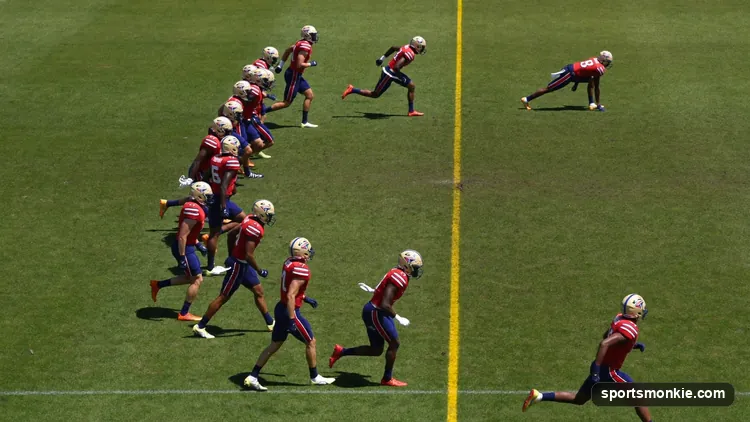
Offensive Positions in Football Explained: Every Role on the Unit
Offensive positions in football explained: QB, RB/FB, WR, TE, and the five offensive line spots (LT, LG, C, RG, RT) with duties and alignment.
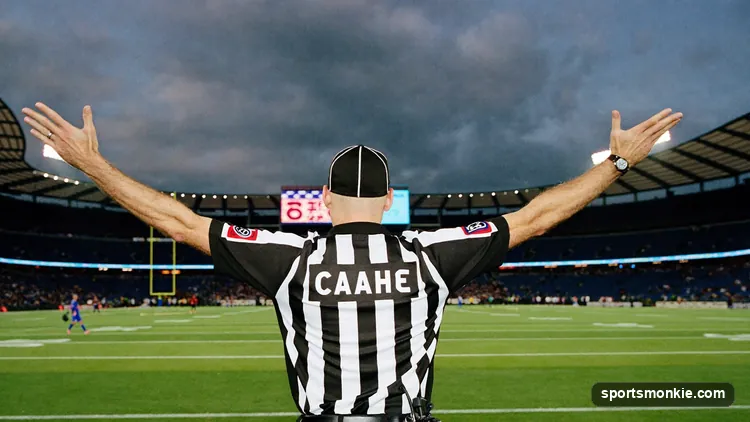
Football Referee Signals: The Complete NFL Hand Signal Chart
Football referee signals explained: touchdown, first down, holding, false start, pass interference, and every hand signal NFL officials use on the field.
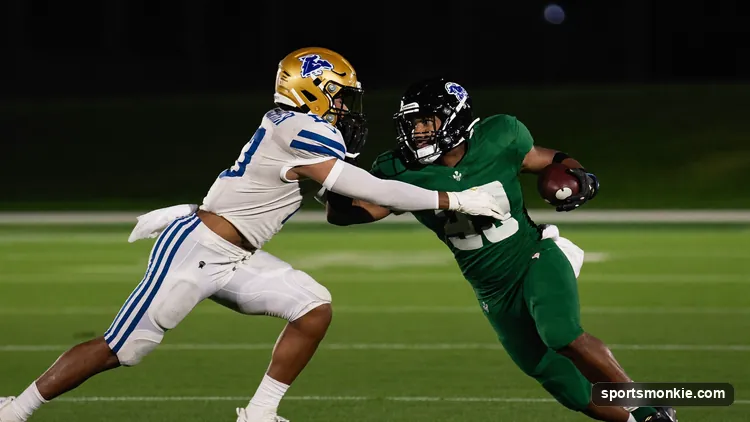
Man Coverage in Football: How It Works, Cover 0 vs Cover 1
Man coverage in football has each defender guard one specific receiver, not a zone. Cover 0 vs Cover 1, strengths, weaknesses, and how it differs from zone.