
Defensive Positions in Football Explained
On this page6
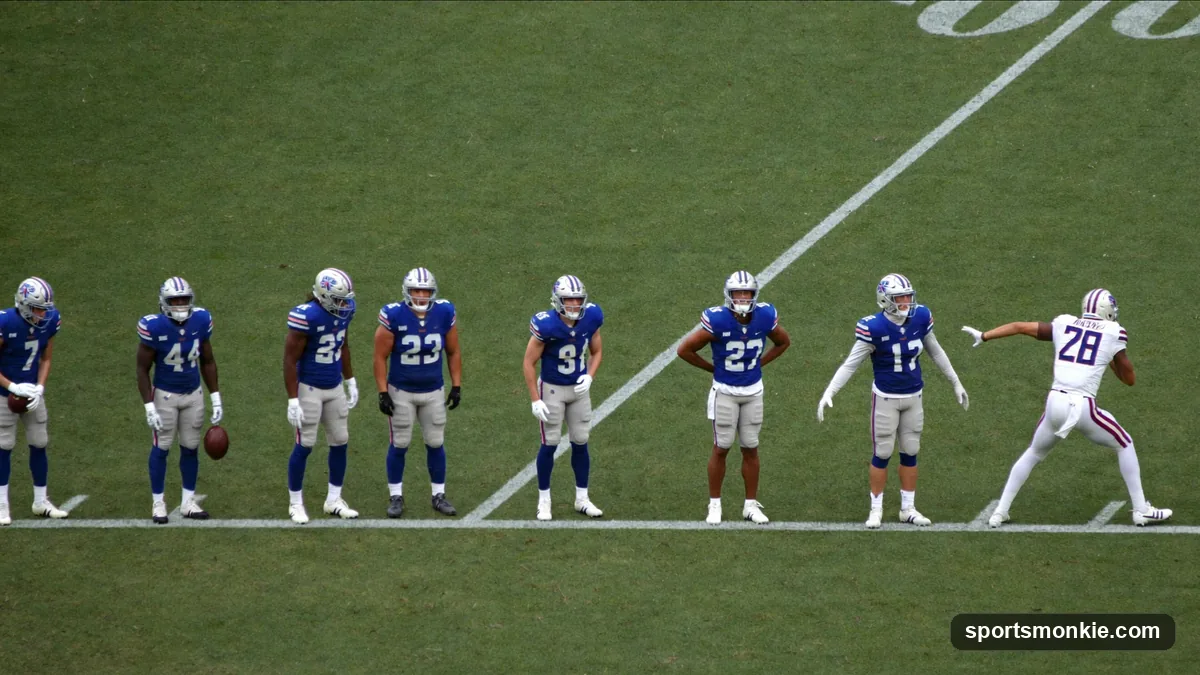
Defensive positions in football fall into three groups: the defensive line, the linebackers, and the secondary — 11 players total, each with a distinct job in stopping the run, pressuring the quarterback, and covering receivers. Understanding what each group does is the fastest way to actually follow a defense instead of just watching the ball.
The defensive line: ends, tackles, and nose tackle
The defensive line is the first wall an offense has to get through. It is made up of defensive ends, defensive tackles, and, in some schemes, a nose tackle.
Defensive ends (DE) line up on the outside edges of the line, closest to the sidelines. Their main job is rushing the passer around the offensive tackle, though they also have to contain outside runs so a ball carrier cannot simply bounce the play wide. Elite edge rushers like Myles Garrett and Micah Parsons build entire careers off this position, combining speed off the snap with the strength to shed a blocker.
Defensive tackles (DT) line up inside, between the ends, closer to the center and guards. They rely on power rather than pure speed, driving into interior blockers to collapse the pocket and stuff runs between the tackles. A disruptive interior lineman like Aaron Donald can wreck an offense’s timing before the quarterback even sets his feet.
Nose tackle (NT) is a specialized role, most common in a 3-4 front, where one massive defensive lineman lines up directly over the center. The nose tackle’s job is almost entirely about occupying blockers — drawing a double team so the linebackers behind him can run freely to the ball. It is a thankless position statistically but essential structurally, part of the broader football positions puzzle.
Linebackers: the middle and outside
Linebackers play a few yards behind the line of scrimmage, giving them the widest range of responsibilities on defense.
The middle linebacker (MLB), sometimes called the “Mike,” is frequently described as the quarterback of the defense. They read the offensive formation before the snap, relay the play call and adjustments to teammates, and then have to fill run gaps, drop into coverage over the middle, or blitz — often all in the same game. Legends like Ray Lewis and Luke Kuechly built Hall of Fame résumés at this spot.
Outside linebackers (OLB) line up wider, closer to the edge. Their exact job depends heavily on scheme: in a 4-3 defense they are more likely to cover running backs and tight ends or spy mobile quarterbacks, while in a 3-4 defense one outside linebacker is often a designated pass rusher, functioning almost like a stand-up defensive end. That flexibility is why teams value versatile outside linebackers so highly in the modern NFL.
The secondary: cornerbacks and safeties
The secondary, or defensive backfield, is the last line of defense against the pass.
Cornerbacks line up across from wide receivers, usually near the line of scrimmage, and either mirror their route in man coverage or protect an area of the field in zone coverage. Their job requires speed, quick hips, and the discipline to stay in phase with a receiver stride for stride without drawing a penalty.
Safeties play the deepest and are split into two roles. A free safety typically lines up as the deepest defender on the field, reading the quarterback’s eyes and helping over the top on any deep throw — the classic “center fielder” role. A strong safety usually lines up closer to the line of scrimmage, supporting run defense and matching up against tight ends, who are often too big for a cornerback to handle alone.
4-3 vs. 3-4: how the front changes everything
The two most common defensive structures in football are named for how many down linemen and linebackers they use.
A 4-3 defense fields four down linemen (two ends, two tackles) and three linebackers. It relies on the defensive line to generate pressure with just a four-man rush, which frees up linebackers and the secondary to focus on coverage.
A 3-4 defense fields three down linemen (two ends and a nose tackle) and four linebackers, with two of those linebackers standing up on the edge as extra rushers. This front is built around disguise — with two “extra” linebackers who can rush, drop, or blitz, offenses have a harder time identifying who is coming after the quarterback before the snap.
Neither structure is objectively better; teams choose based on the personnel they can recruit and draft, particularly whether they have enough space-eating interior linemen for a 3-4 nose tackle.
Nickel, dime, and sub-packages
Modern NFL offenses throw the ball far more than they run it, so defenses rarely stay in their base 4-3 or 3-4 look for an entire game. Instead, they substitute in extra defensive backs on likely passing downs.
A nickel defense removes one linebacker for a fifth defensive back — typically an extra cornerback — giving the defense better matchups against three-receiver sets. A dime defense goes further, swapping in a sixth defensive back for obvious passing situations like third-and-long. These sub-packages have become so common that many teams treat nickel as closer to their true “base” defense than the old-school 4-3 or 3-4.
Defensive positions at a glance
| Group | Position | Primary job |
|---|---|---|
| Defensive line | Defensive end (DE) | Edge rush, contain outside runs |
| Defensive line | Defensive tackle (DT) | Collapse pocket, stop inside runs |
| Defensive line | Nose tackle (NT) | Occupy center/guard, clog A-gaps |
| Linebacker | Middle linebacker (MLB) | Calls defense, fills run gaps, covers middle |
| Linebacker | Outside linebacker (OLB) | Edge rush, contain, coverage |
| Secondary | Cornerback (CB) | Covers receivers man or zone |
| Secondary | Free safety (FS) | Deepest defender, reads QB, help over top |
| Secondary | Strong safety (SS) | Run support, covers tight ends |
Frequently asked questions
What are the defensive positions in football? They split into three groups: the defensive line (ends, tackles, nose tackle), linebackers (middle and outside), and the secondary (cornerbacks and safeties).
What is the difference between a 4-3 and a 3-4 defense? A 4-3 uses four down linemen and three linebackers; a 3-4 uses three down linemen and four linebackers, with two rushing the edge.
What is a nickel defense? A sub-package that adds a fifth defensive back in place of a linebacker, used to defend against pass-heavy sets.
Whatever the front, the same 11 defenders always have to cover the same core jobs — rush the passer, fill the run gaps, and defend the pass — just distributed across the defensive line, linebackers, and secondary in slightly different ratios.
Frequently asked questions
What are the defensive positions in football?+
Football defenses use three position groups. The defensive line (defensive ends, defensive tackles, and sometimes a nose tackle) lines up on the line of scrimmage to rush the passer and clog running lanes. Linebackers (middle and outside) play a few yards back, filling run gaps, blitzing, and covering the middle of the field. The secondary, made up of [cornerbacks](/what-is-a-cornerback-in-football/) and safeties, defends receivers and the deep field. Together they form the standard 11-man defense.
What is the difference between a defensive end and a defensive tackle?+
Defensive ends line up on the outside edge of the defensive line, using speed and quickness to get around the offensive tackle and pressure the quarterback while also containing outside runs. Defensive tackles line up inside, closer to the center, and rely on power to push through interior blockers, collapse the pocket, and stop runs between the tackles. Ends are typically leaner and faster; tackles are bigger and stronger.
What does a nose tackle do?+
A nose tackle lines up directly over the center, most often in a 3-4 defense, and is usually the biggest player on the roster. Their job is to occupy two blockers at the snap, controlling the gaps on either side of the center so linebackers behind them can flow freely to the ball. A good nose tackle rarely racks up big stats, but frees up everyone else to make plays.
What is the difference between a middle linebacker and an outside linebacker?+
The [middle linebacker](/what-is-a-linebacker-in-football/) (MLB) plays in the box, calls the defensive signals, and is often described as the 'quarterback of the defense' because of the pre-snap adjustments they make. Outside linebackers (OLB) line up wider, near the edge, and can rush the passer, defend the run on the perimeter, or drop into pass coverage depending on the scheme — in a 3-4 defense, one OLB is often a full-time pass rusher.
What is the difference between a cornerback and a safety?+
Cornerbacks line up across from wide receivers near the line of scrimmage and cover them man-to-man or in zone. Safeties play deeper, as the last line of defense. A [free safety](/safety-position-in-football/) is usually the deepest defender, reading the quarterback and helping over the top on passes, while a strong safety lines up closer to the line, supports against the run, and covers tight ends.
What is the difference between a 4-3 and a 3-4 defense?+
A 4-3 defense uses four down linemen (two ends, two tackles) and three linebackers. A 3-4 defense uses three down linemen (two ends and a nose tackle) and four linebackers, with two of those linebackers rushing the edge like extra pass rushers. Both fielded 11 defenders total; the difference is how many stand up versus put a hand on the ground, which changes how a defense disguises blitzes and coverages.
What is a nickel or dime defense?+
Nickel and dime are sub-packages that swap linebackers for extra defensive backs on likely passing downs. A [nickel defense](/what-is-a-nickel-defense/) uses five defensive backs (one more than base), and a dime defense uses six. Both trade a bit of run-stopping size for better coverage against three- and four-receiver sets, which is why they show up so often in the modern pass-heavy NFL.
How many defensive positions are on the field at once?+
A defense always has 11 players on the field, same as the offense. In a base 4-3 or 3-4 look that is 4 or 3 down linemen, 3 or 4 linebackers, and 4 defensive backs (2 cornerbacks, 2 safeties). Nickel and dime packages keep the total at 11 but shift the mix toward more defensive backs and fewer linebackers.
Sources
Play & tools
Free browser games and tools — no account, no download.
- Play 17-0 — Draft nine and chase a flawless NFL regular season — the perfect 17-0 run, no playoffs.
- Play 20-0 — Draft nine and chase a perfect NFL season — regular season and playoffs, undefeated.
- Play 16-0 — Draft nine and chase a perfect 16-0 — the classic 16-game NFL regular season, no playoffs.
- Play Flawless Six — Draft five players and a head coach, then chase a perfect NFL season with the right chemistry.
- Play Guess the NFL Player — A new mystery NFL player every day. Eight guesses, with a clue on each — plus free unlimited mode.
- Play NFL Wordle — A Wordle for football — guess the daily NFL player in eight tries, with green-amber-grey feedback on every clue.
- Play NFL Connections — Sort sixteen football tiles into four hidden groups of four. A new daily puzzle, four mistakes allowed, plus unlimited mode.
- Explore all our games →
- Open the schedule simulator — Pick every 2026 NFL game and watch the standings and playoff seeds update live.
- Open the squares generator — Generate a randomized, printable Super Bowl squares grid for your party — free, no sign-up.
- Open the trade calculator — Weigh any fantasy football trade instantly — clear winner and value gap.
- Run the NFL predictor — Simulate the NFL bracket and see who your picks send to the Super Bowl.
- Open the passer rating calculator — Calculate the official NFL passer rating (0–158.3) from any passing line, with the formula shown.
- Explore all our free sports tools →
Related nfl guides
View all →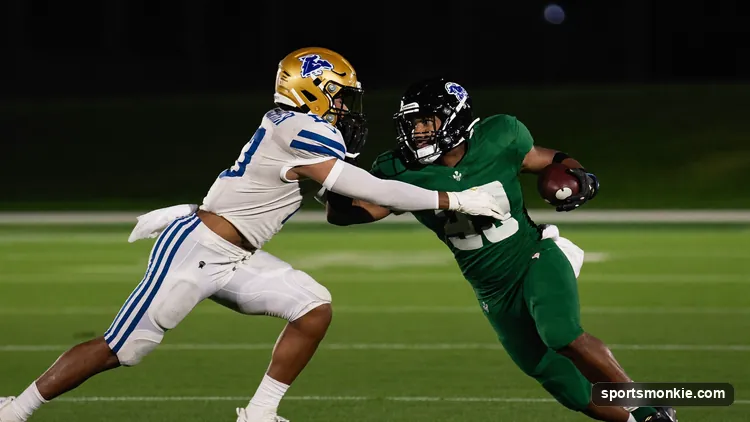
Man Coverage in Football: How It Works, Cover 0 vs Cover 1
Man coverage in football has each defender guard one specific receiver, not a zone. Cover 0 vs Cover 1, strengths, weaknesses, and how it differs from zone.
What Is a Blitz in Football? The Defensive Gamble
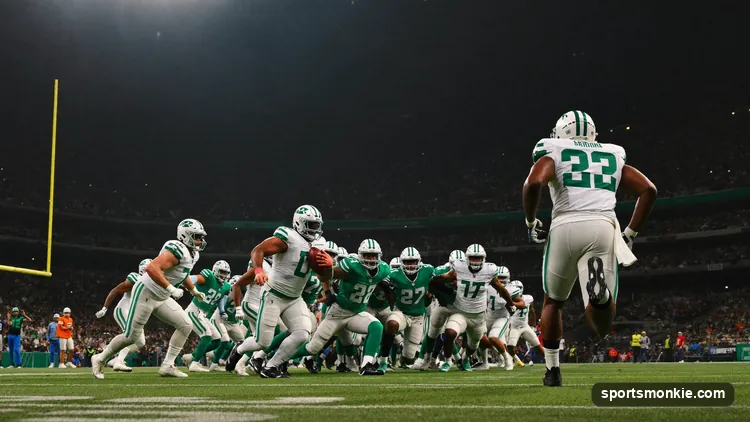
A blitz in football is when the defense sends extra rushers — more than the usual four — to pressure the quarterback, trading coverage for speed to the passer.
What Is a Nickel Defense in Football?
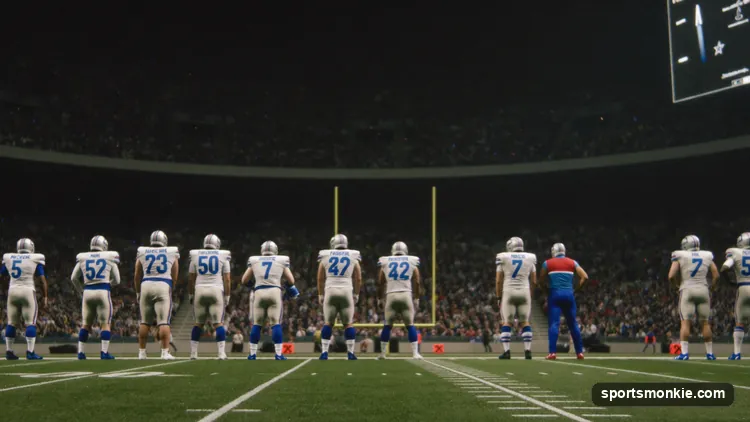
A nickel defense uses five defensive backs instead of the usual four, swapping a linebacker for an extra cornerback to defend the pass on obvious passing downs.
What Is a Sack in Football?
A sack is when the defense tackles the quarterback behind the line of scrimmage before they can throw, losing yards for the offense. It's a key pass-rush stat.
What Is a Dime Defense in Football?
A dime defense uses six defensive backs to stop the pass, one more than a nickel. How it works, where the name comes from, and dime vs nickel vs quarter.
Offensive Positions in Football Explained: Every Role on the Unit
Offensive positions in football explained: QB, RB/FB, WR, TE, and the five offensive line spots (LT, LG, C, RG, RT) with duties and alignment.