
Safety Position in Football: Free Safety vs. Strong Safety Explained
On this page8
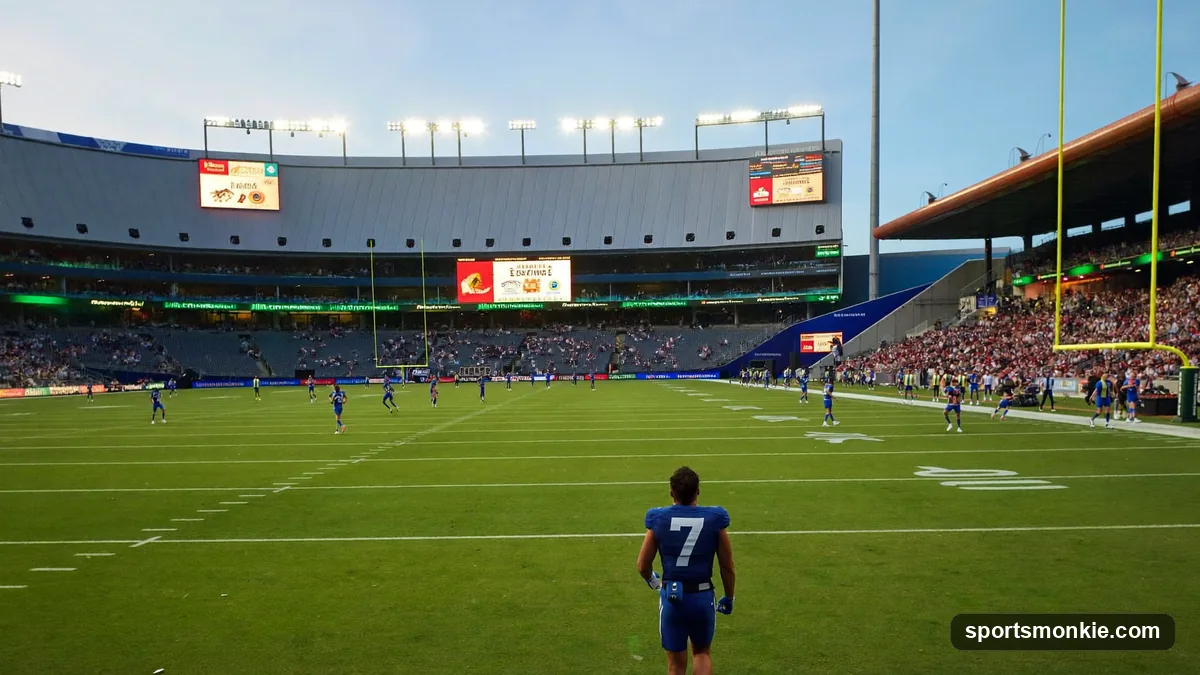
The safety is the deepest defensive back on the field, positioned 10-15 yards off the line of scrimmage as the last line of defense against deep passes and breakaway runs; the position splits into the free safety, who covers the deep middle, and the strong safety, who supports the run and covers tight ends. Every NFL defense builds its secondary around this pairing, and understanding how the two roles differ is essential to understanding modern defensive football. For a broader look at how safeties fit alongside cornerbacks and linebackers, see our guide to football defensive positions explained.
What Is the Safety Position in Football?
Safeties are members of the defensive backfield, joining cornerbacks as the players responsible for defending the pass. What separates safeties from cornerbacks is depth and scope: while cornerbacks typically line up across from a specific wide receiver near the line of scrimmage, safeties play deeper and more centrally, giving them a wider view of the entire formation before the snap. That vantage point is why safeties are frequently the ones calling out adjustments and shifting the rest of the secondary into position.
Because they play so far from the line, safeties are the defense’s insurance policy. If a cornerback gets beaten deep or a running back breaks through the front seven, the safety is often the only defender left who can prevent a touchdown. This “last line of defense” responsibility is what defines the position across every level of the sport, from high school to the NFL. To see where safety fits among all 22 starters on the field, check out our overview of football positions explained.
Free Safety: Range and Deep Coverage
The free safety (FS) is named for the freedom the role provides: rather than being locked onto a single receiver or gap, the free safety is often given a “free” read on the quarterback and the football. Free safeties typically line up on the weak side of the formation, away from the tight end, and prioritize speed and range over size.
Core free safety responsibilities include:
- Playing the deep middle of the field in single-high (Cover 1 or Cover 3) coverage
- Reading the quarterback’s eyes to anticipate where the ball is going
- Providing help over the top so cornerbacks can play tighter coverage underneath
- Making open-field tackles to prevent runners and receivers from scoring after a big gain
Because of this responsibility, the free safety is frequently called the “quarterback of the defense,” directing pre-snap alignment and post-snap rotations.
Strong Safety: Run Support and Tight End Coverage
The strong safety (SS) lines up on the “strong side” of the offensive formation, generally the side with the tight end, and plays a role that blends safety and linebacker duties. Strong safeties are usually bigger and more physical than free safeties, built to take on blockers, fill run gaps, and match up with tight ends and running backs in the passing game.
Core strong safety responsibilities include:
- Providing an extra run defender near the line of scrimmage
- Covering tight ends and backs who release into pass routes
- Supporting the cornerback on the strong side against play-action and screens
- Delivering physical, sure tackles in short-yardage and goal-line situations
This hybrid skill set is why strong safeties are sometimes described as “in-the-box” defenders who split time between the secondary and the front seven.
Free Safety vs. Strong Safety at a Glance
| Category | Free Safety (FS) | Strong Safety (SS) |
|---|---|---|
| Alignment | Weak side, deep middle | Strong side, closer to line |
| Primary skill | Speed and range | Size and physicality |
| Main job | Deep pass coverage | Run support, tight end coverage |
| Coverage style | Single-high, deep zone | Underneath zone, man on tight ends |
| Body type | Leaner, cornerback-like | Bigger, linebacker-like |
| Nickname | ”Defense’s quarterback" | "In-the-box hybrid” |
Skills and Traits Every Safety Needs
Regardless of which side of the position they play, elite safeties share a common toolkit:
- Range and closing speed – the ability to cover large portions of the field and close on the ball quickly.
- Football IQ – recognizing formations, tendencies, and route concepts before the snap.
- Tackling in space – safeties routinely make open-field tackles that keep short gains from becoming touchdowns.
- Ball skills – interceptions and pass breakups are a major part of a safety’s value, especially for free safeties.
- Coverage disguise – shifting alignment before the snap to hide whether the defense is in man, zone, one-high, or two-high shells, which keeps quarterbacks guessing.
- Physical toughness – strong safeties in particular need the strength to shed blocks and tackle bigger ball carriers.
Safeties who combine range with physicality are especially valuable because they let a defense disguise its coverage without sacrificing either deep protection or run support.
The Modern Hybrid Safety
The traditional free-safety/strong-safety split has blurred significantly in recent NFL defenses. Offenses now use spread formations, multiple tight ends, and pass-catching running backs on nearly every snap, which forces safeties to be interchangeable rather than locked into one job. Many current defenses use the terms “single-high safety” and “two-high safety” instead of strictly free and strong, reflecting where a player lines up on a given play rather than a fixed role.
This evolution has produced safeties who can blitz off the edge, cover slot receivers, and still play deep centerfield within the same game plan. It has also increased the value of versatile defensive backs, a trend closely tied to how offenses attack through the air; for context on how safeties fit into the passing game battle, see our explainer on what a cornerback does in football.
Famous Safeties in NFL History
A handful of safeties have defined the position and shaped how teams build their secondaries:
- Ronnie Lott – A punishing tackler whose physicality set the standard for strong safety play and influenced how the position blends with linebacker responsibilities.
- Ed Reed – Widely regarded as one of the greatest ball-hawking free safeties ever, known for elite range and instincts that produced a then-record number of interception return yards.
- Troy Polamalu – A hybrid safety whose unpredictable pre-snap movement and blitzing ability showed how far the position could stretch beyond a traditional deep-coverage role.
- Tyrann Mathieu – A modern example of the position’s flexibility, moving seamlessly between deep safety, slot coverage, and box run support within the same defense.
These players illustrate the two poles of the position, and the growing middle ground, that define safety play in the American football (NFL) landscape today.
Bottom Line
The safety position exists to protect against the worst-case outcome: a missed tackle or blown coverage turning into a touchdown. Free safeties do that with range and anticipation in the deep middle, while strong safeties do it with physicality near the line of scrimmage. As offenses have modernized, the two roles have converged into a hybrid skill set, but the core mission of the position, being the last line of defense, has never changed.
Frequently asked questions
What is the safety position in football?+
The safety is a defensive back who lines up 10-15 yards off the line of scrimmage, deeper than any other defender. Safeties are the last line of defense against deep passes and breakaway runs, and the position splits into two roles: free safety and strong safety.
What is the difference between a free safety and a strong safety?+
A free safety usually lines up on the weak side (away from the tight end), relies on speed and range to cover the deep middle of the field, and is often called the defense's quarterback. A strong safety lines up on the strong side (near the tight end), plays closer to the line, and takes on more run-support and tight-end coverage duties, similar to a hybrid linebacker.
Is free safety or strong safety more important?+
Neither role outranks the other; they are complementary. The free safety's range prevents deep touchdowns, while the strong safety's physicality stops the run and neutralizes tight ends. Modern NFL defenses often need both to be excellent for the secondary to function.
What skills does a safety need in football?+
Elite safeties combine deep-field speed and range, reliable open-field tackling, quick recognition of run versus pass, strong football IQ to read quarterbacks and disguise coverage, and enough physicality to support the run near the line of scrimmage.
How is a safety different from a cornerback?+
Cornerbacks primarily line up across from wide receivers near the line of scrimmage in man coverage, while safeties play deeper and more centrally, providing help over the top and cleaning up plays that get past the front seven and cornerbacks.
What does it mean when a safety 'disguises' coverage?+
Disguising coverage means a safety lines up or moves before the snap to hide whether the defense is playing man, zone, single-high, or two-high coverage, making it harder for the quarterback to read the defense and identify open receivers.
Who are some famous NFL safeties?+
Hall of Famers Ronnie Lott, Ed Reed, and Troy Polamalu are among the most influential safeties in NFL history, known respectively for physical tackling, ball-hawking range, and versatile, unpredictable alignment.
Can a safety play both free safety and strong safety?+
Yes. Many modern NFL safeties are hybrid players who rotate between free and strong safety duties depending on the defensive call, personnel package, and matchup, reflecting how the position has evolved beyond a strict two-role split.
Sources
Play & tools
Free browser games and tools — no account, no download.
- Play 17-0 — Draft nine and chase a flawless NFL regular season — the perfect 17-0 run, no playoffs.
- Play 20-0 — Draft nine and chase a perfect NFL season — regular season and playoffs, undefeated.
- Play 16-0 — Draft nine and chase a perfect 16-0 — the classic 16-game NFL regular season, no playoffs.
- Play Flawless Six — Draft five players and a head coach, then chase a perfect NFL season with the right chemistry.
- Play Guess the NFL Player — A new mystery NFL player every day. Eight guesses, with a clue on each — plus free unlimited mode.
- Play NFL Wordle — A Wordle for football — guess the daily NFL player in eight tries, with green-amber-grey feedback on every clue.
- Play NFL Connections — Sort sixteen football tiles into four hidden groups of four. A new daily puzzle, four mistakes allowed, plus unlimited mode.
- Explore all our games →
- Open the schedule simulator — Pick every 2026 NFL game and watch the standings and playoff seeds update live.
- Open the squares generator — Generate a randomized, printable Super Bowl squares grid for your party — free, no sign-up.
- Open the trade calculator — Weigh any fantasy football trade instantly — clear winner and value gap.
- Run the NFL predictor — Simulate the NFL bracket and see who your picks send to the Super Bowl.
- Open the passer rating calculator — Calculate the official NFL passer rating (0–158.3) from any passing line, with the formula shown.
- Explore all our free sports tools →
Related nfl guides
View all →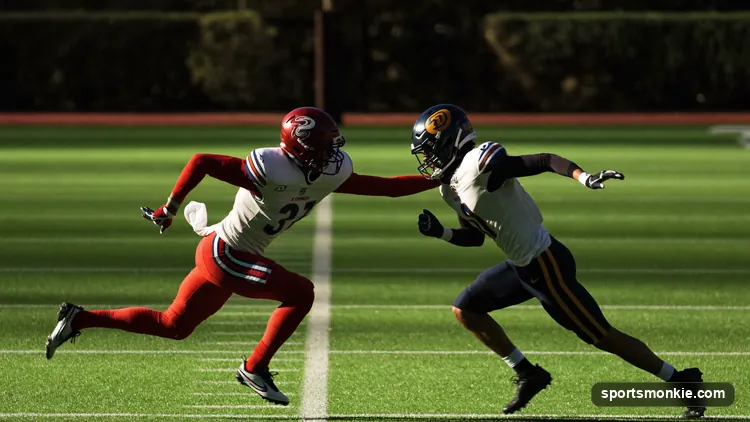
What Is a Cornerback in Football? Position, Role & Skills Explained
A cornerback in football is the defensive back who covers wide receivers in man or zone coverage. Learn the role, skills, and famous CBs.
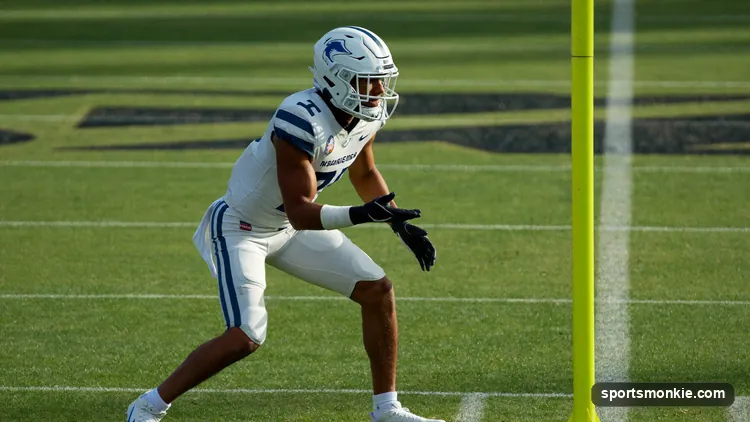
What Is a Linebacker in Football? Position, Roles & Types Explained
A linebacker (LB) is a defensive player who lines up behind the line to stop the run, cover receivers, and blitz the quarterback. Full breakdown here.
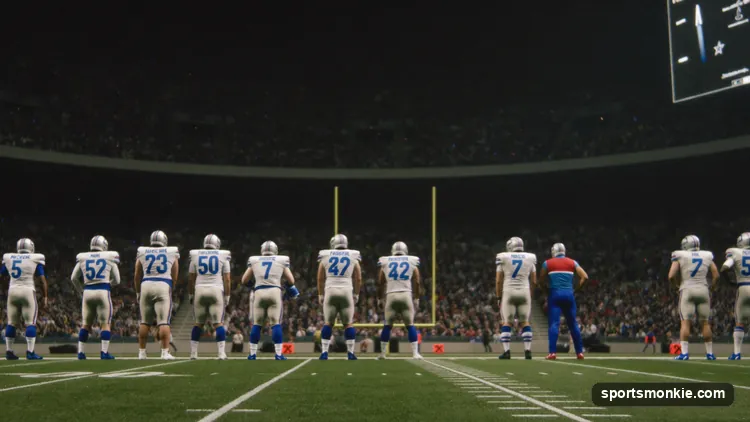
What Is a Blitz in American Football? Pressure Package Explained
A blitz sends more pass rushers than the standard rush, trying to pressure the quarterback before the offense can exploit the extra defender.
Cover 3 Defense in Football: How It Works, Strengths & Weaknesses
Cover 3 defense explained: three deep defenders split the field into thirds while four underneath defenders play zone. Strengths, weaknesses, and how to beat it.
Cover 4 Defense (Quarters Coverage) in Football: Rules and Weaknesses
Cover 4 defense explained: four deep defenders split the field into quarters, pattern-match rules, run strengths, and how it differs from Cover 2/Cover 3.
Cover 2 Defense in Football: Rules, Alignment, and Weaknesses Explained
Cover 2 defense explained: two deep safeties split the field, five underneath defenders, strengths vs. deep passes, weaknesses in the middle, and the Tampa 2 twist.