
Illegal Formation in Football: The Full Rule Explained
On this page8
- 01The seven-men-on-the-line rule
- 02Eligible and ineligible receivers, explained by numbering
- 03Covered-up receivers and the reporting requirement
- 04Motion, the seven-man exception, and last-second adjustments
- 05The yardage and how the penalty is enforced
- 06Why illegal formation calls spiked in 2024
- 07How it lines up: legal vs. illegal formation
- 08Common examples on Sundays
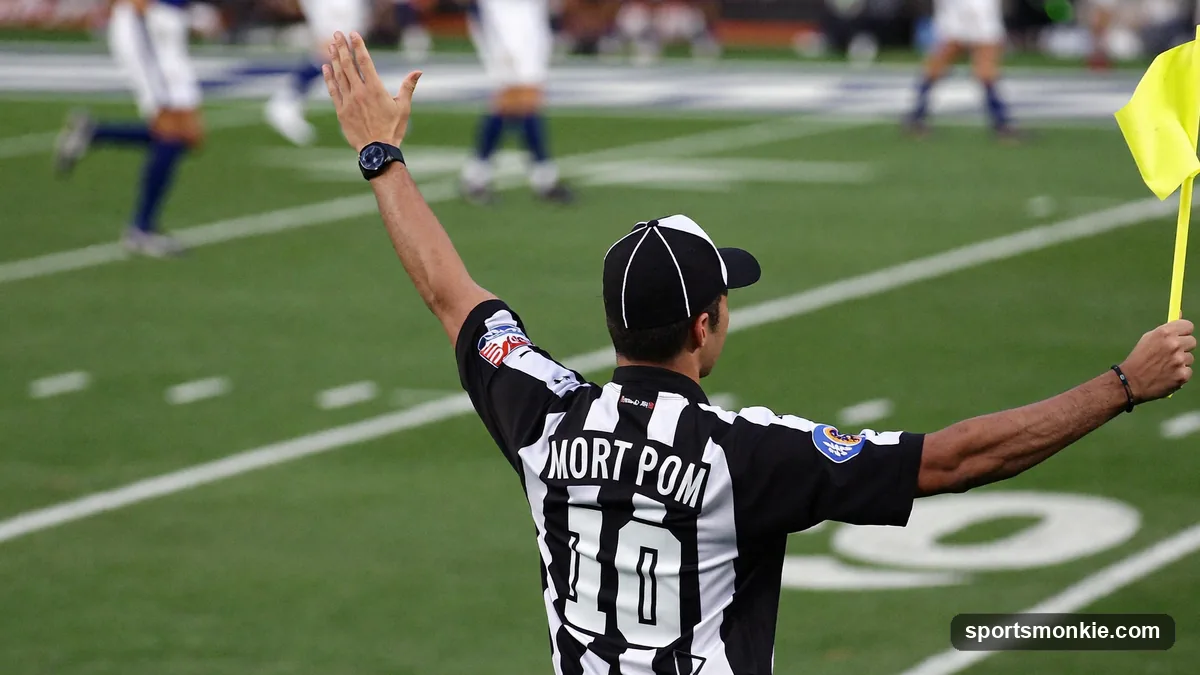
Illegal formation is a 5-yard penalty called when a team’s pre-snap alignment violates the rulebook, most commonly the offense failing to put at least seven players on the line of scrimmage or lining up an eligible receiver anywhere other than the end of the line. It is one of the most frequently debated flags in football because the violation happens before the ball is even snapped, and it has become a bigger storyline since the NFL made stricter enforcement a point of emphasis in 2024.
Illegal formation sits alongside the other pre-snap fouls in nfl-formations-and-coverages-explained, but it deserves its own breakdown because the rule has several interlocking parts: headcount, eligibility, numbering, and the “covered up” wrinkle that trips up even veteran fans.
The seven-men-on-the-line rule
Every legal offensive formation in american football, from the shotgun formation to the classic I-formation, starts with the same baseline: at least seven of the eleven offensive players must be on the line of scrimmage at the snap. The remaining four players can line up in the backfield.
Of the seven on the line, five are typically the interior offensive linemen (center, two guards, two tackles), all of whom are ineligible to catch a pass by rule. That leaves two spots on the line, usually filled by tight ends or wide receivers, who are the only players on the line legally allowed to catch a forward pass. If the offense snaps the ball with only six players on the line, that’s an automatic illegal formation flag, regardless of who those six players are.
Eligible and ineligible receivers, explained by numbering
The NFL assigns jersey numbers by eligibility. Running backs, tight ends, and wide receivers wear numbers 1-49 or 80-89, which mark them as eligible-receiver numbers. Offensive linemen wear 50-79 or 90-99, which are inherently ineligible numbers. A player can change his eligibility for a single play by reporting to the referee before the snap, who then announces the change to both benches and the crowd.
This numbering system is what lets officials police the rule quickly: if a player wearing an ineligible number lines up on the end of the formation without reporting as eligible, or an eligible-numbered player is buried in the middle of the line, it’s an illegal formation.
Covered-up receivers and the reporting requirement
One of the more misunderstood pieces of illegal formation is the “covered up” receiver. An offense can legally align a tackle-eligible player, extra tight end, or lineman outside a receiver, pushing that receiver off the end of the line. As long as an eligible player still occupies the very end spot on each side, the formation itself is legal.
The receiver who gets covered simply becomes ineligible for that play. He cannot catch a pass unless he reports as eligible to the referee before the snap. If he does not report and still touches a forward pass, that’s a separate foul called illegal touching, not illegal formation. Teams that run tackle-eligible plays or heavy jumbo packages lean on this distinction constantly, and it’s a common source of confusion for casual viewers watching a broadcast without the all-22 view.
Motion, the seven-man exception, and last-second adjustments
Pre-snap motion adds a wrinkle. If a player who is lined up on the line goes in motion before the snap, another player, typically a receiver stepping up from the backfield, must fill that line spot to keep the head count at seven. Offenses that shift from an empty backfield into a tighter set, or from a shotgun formation into an under-center look, have to re-set their seven-man line before the snap or risk the flag. This is also where the officiating crew’s judgment matters most, since it’s a headcount and alignment check made in real time as players are still moving.
The yardage and how the penalty is enforced
Illegal formation costs the offending team 5 yards, assessed from the previous spot. There is no loss of down attached to it for the offense, which separates it from more severe pre-snap fouls. As with most pre-snap penalties, the defense can decline it if the outcome of the play, such as a sack, interception, or big offensive gain that would otherwise be erased, works out better for them without the flag.
The rule is not offense-only. A defense is flagged for illegal formation if it lines up more than six players on either side of the center at the snap, or if a player is out of bounds when the ball is snapped. It’s rarer than the offensive version but carries the same 5-yard cost.
Why illegal formation calls spiked in 2024
Illegal formation went from a rarely-called foul to a headline storyline in 2024. Only 55 offensive illegal formation penalties were called across the entire 2023 season, but the NFL’s officiating department made it a formal point of emphasis starting in the 2024 preseason, sending a memo to all 32 teams. The specific target was offensive tackles lining up too far off the ball; by rule, a lineman’s helmet must be roughly even with the center’s waist. Officials had reportedly been letting the violation slide with verbal warnings rather than flags, and tackles had crept backward as a result. Once the crackdown began, penalty counts jumped immediately, with entire offensive lines picking up multiple flags in a single game during the preseason rollout.
How it lines up: legal vs. illegal formation
| Scenario | Legal or illegal | Why |
|---|---|---|
| 7 players on the line, eligible players on both ends | Legal | Meets the minimum headcount and end-man eligibility rule |
| 6 players on the line at the snap | Illegal formation | Fails the seven-man minimum |
| Eligible receiver lined up one spot inside the end of the line | Illegal formation | End-man eligibility violated |
| Receiver covered up by a tackle-eligible, without reporting, but not thrown the ball | Legal | Covering is allowed; no foul unless he touches a pass |
| Covered receiver catches a pass without reporting | Illegal touching (not illegal formation) | Different foul, same family of pre-snap/eligibility rules |
| Defense with 8 players on one side of the center | Illegal formation (defense) | Exceeds the six-per-side defensive limit |
| Offensive tackle’s helmet clearly behind the center’s waist at the snap | Illegal formation | Violates the line-of-scrimmage depth standard emphasized since 2024 |
Common examples on Sundays
The most frequent illegal formation flag in the modern NFL is an offensive tackle setting up too deep off the ball on passing downs, effectively giving himself a running start against the pass rusher. The second most common is a tight end or receiver misaligned by a few inches inside the last lineman on the end of the formation, especially on hurry-up or no-huddle snaps when players are getting set quickly. Both are officiated the same way: a chain of officials scans the full line before the snap, and any player out of position, regardless of how the rest of the formation looks, triggers the flag.
Understanding illegal formation ultimately comes down to three checkpoints: headcount (seven on the line), position (eligible players on the ends), and depth (linemen set even with the center). Get any one of those wrong, and the yellow flag follows.
Frequently asked questions
What is an illegal formation penalty in football?+
Illegal formation is a 5-yard penalty called when a team's pre-snap alignment breaks the rulebook's lineup requirements. Most often it's the offense failing to have at least seven players on the line of scrimmage, or an eligible receiver not lining up on the end of the line. Defenses can also be flagged for having too many players stacked on one side of the center.
How many players must be on the line of scrimmage?+
The offense must have at least seven players on the line of scrimmage at the snap. The other four players line up in the backfield. Of the seven on the line, only the players at each end (the widest players on the left and right) are eligible to catch a forward pass unless they report as eligible before the snap.
How many yards is an illegal formation penalty?+
Illegal formation costs 5 yards, assessed from the previous spot of the ball. It does not carry a loss of down for the offense, and the defense can decline it if the play result is more favorable to them, such as a sack or a turnover.
What is the difference between illegal formation and illegal motion?+
Illegal formation is about where players are positioned before the snap, such as not having seven men on the line. Illegal motion involves a player moving illegally right before or at the snap, such as moving forward toward the line instead of parallel to it, or two players in motion at the same time. Both are 5-yard penalties, but they are called for different reasons.
Can an eligible receiver be legally covered up?+
Yes. An offense can align a tackle-eligible or extra tight end outside a receiver, which makes that receiver an ineligible, covered player for the play as long as the offense still has an eligible player on the very end of the line. The formation itself remains legal. The covered receiver simply cannot catch a pass unless he reports as eligible to the referee before the snap; if he does not report and touches the ball, that is illegal touching, a separate penalty.
What jersey numbers count as eligible receivers in the NFL?+
Running backs, tight ends, and wide receivers can wear numbers 1-49 or 80-89, all of which are eligible-receiver numbers. Offensive linemen wear 50-79 or 90-99 and are inherently ineligible unless they report as an eligible receiver before the snap, which changes their status for that play only.
Why did illegal formation penalties increase in the NFL in 2024?+
The NFL made illegal formation a point of emphasis starting in the 2024 preseason after officials were found to be under-enforcing it in 2023. The focus centered on offensive tackles lining up too far off the ball, specifically requiring a lineman's helmet to be roughly even with the center's waist, which had been drifting out of compliance league-wide.
Does illegal formation apply to the defense too?+
Yes. A defense is flagged for illegal formation if it lines up more than six players on either side of the center at the snap, or if a player is out of bounds when the ball is snapped. It carries the same 5-yard penalty as the offensive version of the foul.
Sources
Play & tools
Free browser games and tools — no account, no download.
- Play 17-0 — Draft nine and chase a flawless NFL regular season — the perfect 17-0 run, no playoffs.
- Play 20-0 — Draft nine and chase a perfect NFL season — regular season and playoffs, undefeated.
- Play 16-0 — Draft nine and chase a perfect 16-0 — the classic 16-game NFL regular season, no playoffs.
- Play Flawless Six — Draft five players and a head coach, then chase a perfect NFL season with the right chemistry.
- Play Guess the NFL Player — A new mystery NFL player every day. Eight guesses, with a clue on each — plus free unlimited mode.
- Play NFL Wordle — A Wordle for football — guess the daily NFL player in eight tries, with green-amber-grey feedback on every clue.
- Play NFL Connections — Sort sixteen football tiles into four hidden groups of four. A new daily puzzle, four mistakes allowed, plus unlimited mode.
- Explore all our games →
- Open the schedule simulator — Pick every 2026 NFL game and watch the standings and playoff seeds update live.
- Open the squares generator — Generate a randomized, printable Super Bowl squares grid for your party — free, no sign-up.
- Open the trade calculator — Weigh any fantasy football trade instantly — clear winner and value gap.
- Run the NFL predictor — Simulate the NFL bracket and see who your picks send to the Super Bowl.
- Open the passer rating calculator — Calculate the official NFL passer rating (0–158.3) from any passing line, with the formula shown.
- Explore all our free sports tools →
Related nfl guides
View all →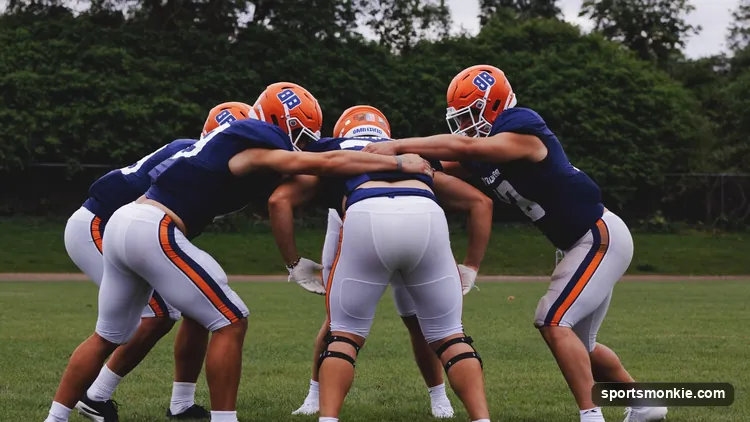
I-Formation in Football: Alignment, Strengths, and Modern Use
The I-formation lines up QB under center with fullback and running back stacked behind him. See its alignment, strengths, weaknesses, and NFL use.
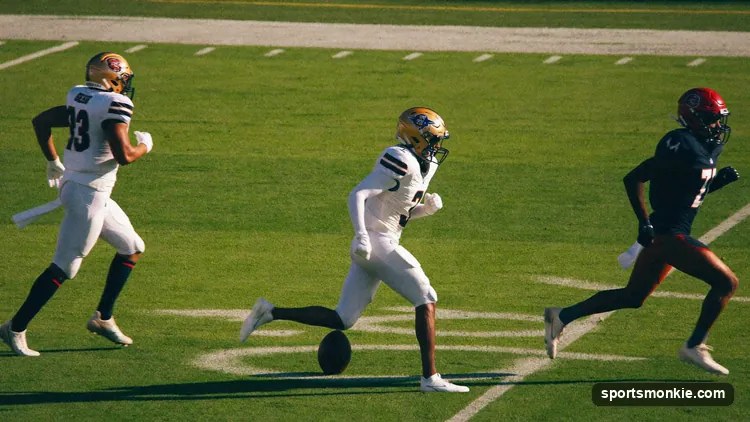
Pistol Formation in Football: What It Is and Why NFL Teams Use It
The pistol formation lines the QB ~4 yards behind center with the RB directly behind him, blending shotgun passing with a hidden run threat.
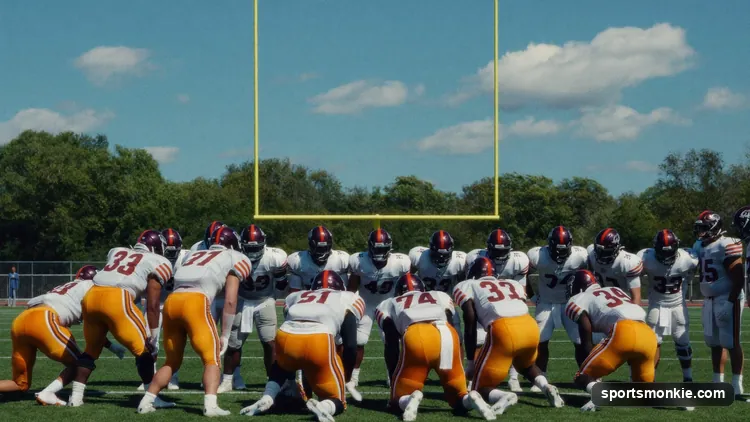
Pro Set Formation in Football Explained: Alignment, Uses, and Fade
The pro set formation lines up the QB under center with a halfback and fullback side by side, two WRs, and a TE. Here's how it works and why it faded.
Shotgun Formation in Football: How It Works, Why Teams Use It
The shotgun formation lines the QB 5-7 yards back for a snapped pass. Learn its alignment, personnel, strengths, weaknesses, and history.
Singleback Formation in Football: How the Ace Set Works
The singleback formation lines up one running back behind a QB under center, no fullback, for balanced run-pass disguise. Full breakdown here.
Wildcat Formation in Football: What It Is and How It Works
The wildcat formation snaps the ball to a non-QB, usually a running back, while the QB splits out wide. Learn its rules, strengths, weaknesses, and history.