
Prevent Defense in Football: What It Is and Why Coaches Get Criticized for It
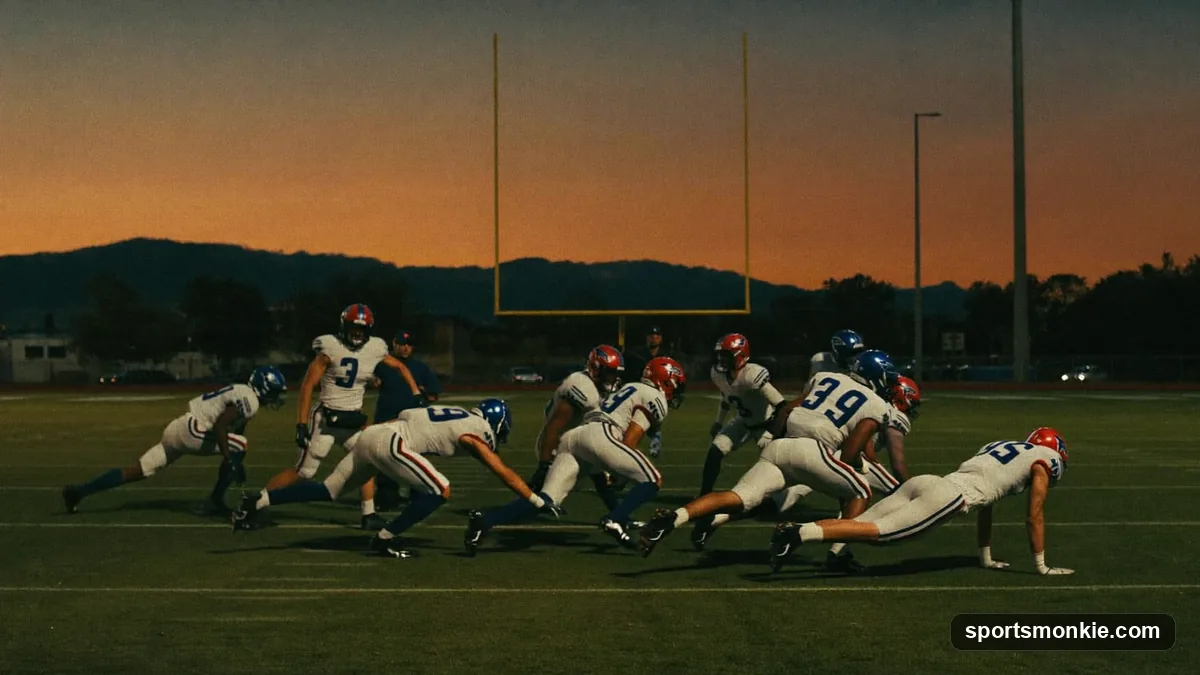
On this page7
A prevent defense is a deep, soft zone coverage that drops extra defensive backs well off the line of scrimmage to take away the long touchdown pass, deliberately conceding short and medium gains in exchange for protecting a lead. Coaches turn to it in the final minutes of a half or a game, and few defensive calls generate as much sideline second-guessing.
What the prevent defense actually is
A prevent defense swaps out linebackers and sometimes a defensive lineman for extra defensive backs, often putting five, six, or even seven defensive backs on the field at once. Instead of the usual mix of man coverage, blitzes, and a four-man rush, the defense plays almost entirely zone, with only three or four rushers going after the quarterback.
The defensive backs line up much deeper than normal. Cornerbacks and underneath safeties sit five to ten yards off the ball, while the deepest safety can play 15 to 20 yards back, well beyond where he would normally align. Every defender’s job is simple: stay on top of any receiver and never let anyone get behind you. Short throws in front of the defense are accepted as the cost of doing business.
When teams call it
The prevent defense shows up in a handful of recurring situations. The most common is late in the fourth quarter, or late in the first half, when a team is ahead by more than a touchdown and wants to run the clock while denying any single play that could erase the lead. It also appears on the last snap of a half, when the defense knows the offense needs a touchdown immediately and has no next play to worry about, so surrendering a 15-yard completion in the middle of the field is harmless. Some coaches also lean on it in third-and-very-long situations earlier in a game, since a short completion still leaves the offense short of the first down.
The category most closely tied to this kind of situational call is the broader world of American football and NFL strategy, where clock, score, and down all shape which defense gets called.
Strengths: what it is genuinely good at
The prevent defense does one thing well: it makes a single explosive play very hard to complete. With defensive backs already deep and reading the quarterback’s eyes, a receiver rarely gets behind the last line of coverage. That single deep shot, the kind of play that can flip a two-score game in one snap, is the exact threat the alignment is built to erase. For a defense that is nursing a lead and simply needs to bleed the clock, taking away the fastest way to lose the game is a rational trade.
Weaknesses: why the criticism sticks
The tradeoff is real. Because the coverage sits so far off the ball, receivers running short and intermediate routes are often wide open. An offense with a capable quarterback can complete pass after pass for four, six, eight yards, moving the chains and eating into the clock advantage the defense thought it had. Worse, if the offense is in a hurry-up situation with timeouts remaining, those short completions can add up into a full-field scoring drive without the defense ever being tested on the deep ball it was built to stop.
This is the heart of the famous criticism from coach and broadcaster John Madden, who said that all a prevent defense does is prevent you from winning. The idea is that a defense so passive invites the offense to methodically pick it apart, turning what should be a comfortable close-out into a stressful, chippable drive. Defenders themselves can also lose discipline in a prevent look, and a single blown deep assignment, a safety who breaks the wrong way or loses a receiver in his zone, can still surrender the exact touchdown the defense was designed to prevent.
How it relates to Cover 4 and quarters
Prevent defense is not its own coverage shell so much as an exaggerated, situational cousin of standard deep-zone principles. It borrows heavily from concepts used in Cover 4, or quarters coverage, where four defensive backs each own a deep quarter of the field and pattern-read receivers before committing. The difference is depth and personnel: Cover 4 is played from a normal, balanced alignment on any down, while a prevent defense pushes those same deep defenders even further back and adds extra defensive backs to the field, sacrificing run support and underneath tackling entirely for pass-defense depth.
Both are built around a version of zone coverage in football, where defenders read the quarterback and cover space rather than a specific man. Understanding how a defense typically organizes its coverages and fronts, covered in a broader breakdown of NFL formations and coverages, makes it easier to see why prevent defense is really a situational extreme rather than a base defense any team runs on a regular first down.
Prevent defense vs. a normal deep zone
| Element | Standard Cover 4 / zone defense | Prevent defense |
|---|---|---|
| Personnel | Base defense, often 4 DBs | 5–7 defensive backs |
| Depth of coverage | 8–12 yards for deep defenders | 10–20+ yards, safety very deep |
| Pass rush | Standard 4-man rush, blitzes possible | Light rush, 3–4 defenders, rarely blitzes |
| Run defense | Solid, linebackers in the box | Very weak, few box defenders |
| Primary goal | Balance run/pass, limit big plays | Stop only the deep touchdown |
| Used on | Any down, any situation | Clock-protection, last play of a half |
The bottom line
The prevent defense is a specialized tool, not a flaw in the sport. It succeeds quietly most of the time, since offenses rarely convert a full field of short completions into a game-tying score under real time pressure. But when it fails, it fails memorably, letting an offense march down the field on the exact underneath throws the coverage was designed to allow. That gap between its quiet successes and its loud, replayed failures is why, decades after Madden’s line, coaches still get second-guessed every time they call it.
Frequently asked questions
What is a prevent defense in football?+
A prevent defense is a deep, soft zone coverage that drops five or more defensive backs 10 to 20 yards off the ball to stop a long touchdown pass. It gives up short and medium completions on purpose, trading yardage for time and safety against the big play.
When do teams use a prevent defense?+
Most often late in the second or fourth quarter when a team is protecting a lead of more than one score, or on a final untimed play where only a touchdown beats the clock. It also appears on obvious long-yardage passing downs earlier in a game.
Why do people say the prevent defense prevents you from winning?+
Because it can let an offense drive the length of the field on cheap underneath completions with almost no time pressure, then score late anyway. John Madden's line, that all a prevent defense does is prevent you from winning, captures that fear that soft coverage trades a big loss for a slow, steady one.
Is the prevent defense the same as Cover 4?+
No. Cover 4 (quarters) is a standard four-deep zone played from a normal alignment used on any down. Prevent defense borrows the same deep-zone principle but adds extra defensive backs, drops the safeties much further back, and is only used in clock-protection situations.
What is the biggest weakness of a prevent defense?+
It surrenders easy completions that let the clock run and field position improve for the offense without ever testing the deep coverage. A team with a good hurry-up offense can chain together several short gains and reach scoring range before the defense adjusts.
Does the prevent defense actually work?+
It works at its one job, stopping the 60-yard bomb, most of the time. It fails more visibly when it lets an offense drive down the field methodically, which is why broadcasters remember its blown coverages more than its many quiet successes.
What personnel does a prevent defense use?+
Teams typically play five, six, or even seven defensive backs, replacing linebackers and sometimes a defensive lineman. Only a light rush, often just three or four pass rushers, comes after the quarterback, since the priority is coverage depth, not a sack.
Sources
Play & tools
Free browser games and tools — no account, no download.
- Play 17-0 — Draft nine and chase a flawless NFL regular season — the perfect 17-0 run, no playoffs.
- Play 20-0 — Draft nine and chase a perfect NFL season — regular season and playoffs, undefeated.
- Play 16-0 — Draft nine and chase a perfect 16-0 — the classic 16-game NFL regular season, no playoffs.
- Play Flawless Six — Draft five players and a head coach, then chase a perfect NFL season with the right chemistry.
- Play Guess the NFL Player — A new mystery NFL player every day. Eight guesses, with a clue on each — plus free unlimited mode.
- Play NFL Wordle — A Wordle for football — guess the daily NFL player in eight tries, with green-amber-grey feedback on every clue.
- Play NFL Connections — Sort sixteen football tiles into four hidden groups of four. A new daily puzzle, four mistakes allowed, plus unlimited mode.
- Explore all our games →
- Open the schedule simulator — Pick every 2026 NFL game and watch the standings and playoff seeds update live.
- Open the squares generator — Generate a randomized, printable Super Bowl squares grid for your party — free, no sign-up.
- Open the trade calculator — Weigh any fantasy football trade instantly — clear winner and value gap.
- Run the NFL predictor — Simulate the NFL bracket and see who your picks send to the Super Bowl.
- Open the passer rating calculator — Calculate the official NFL passer rating (0–158.3) from any passing line, with the formula shown.
- Explore all our free sports tools →
Related nfl guides
View all →
Football Formations and Coverages Explained: The Complete NFL Guide
Football formations and coverages explained: how NFL offenses line up, how defenses answer with zone and man coverage, and why each matchup wins or loses.
What Is a Nickel Defense in Football?
A nickel defense uses five defensive backs instead of the usual four, swapping a linebacker for an extra cornerback to defend the pass on obvious passing downs.
What Is a First Down in Football? The 10-Yard Rule Explained
A first down gives the offense four attempts to move the ball 10 yards. Gain the 10 and you earn a fresh set of downs. Here's how the core rule works.
What Is a Hail Mary in Football? The Desperation Pass
A Hail Mary is a long, low-percentage pass thrown toward the end zone as time runs out, hoping a receiver comes down with it. Here's how the play works.
What Is a Pick Six in Football? Meaning and Origin
A pick six is an interception returned for a touchdown, worth six points for the defense. Here is where the term comes from and why it swings games so hard.

Most Successful American Football Teams in NFL History
The Patriots, Steelers, and 49ers rank among the most successful NFL teams ever by Super Bowl wins, conference titles, and sustained dominance.