
Hockey Terminology Glossary: 60+ NHL Terms Explained
On this page6
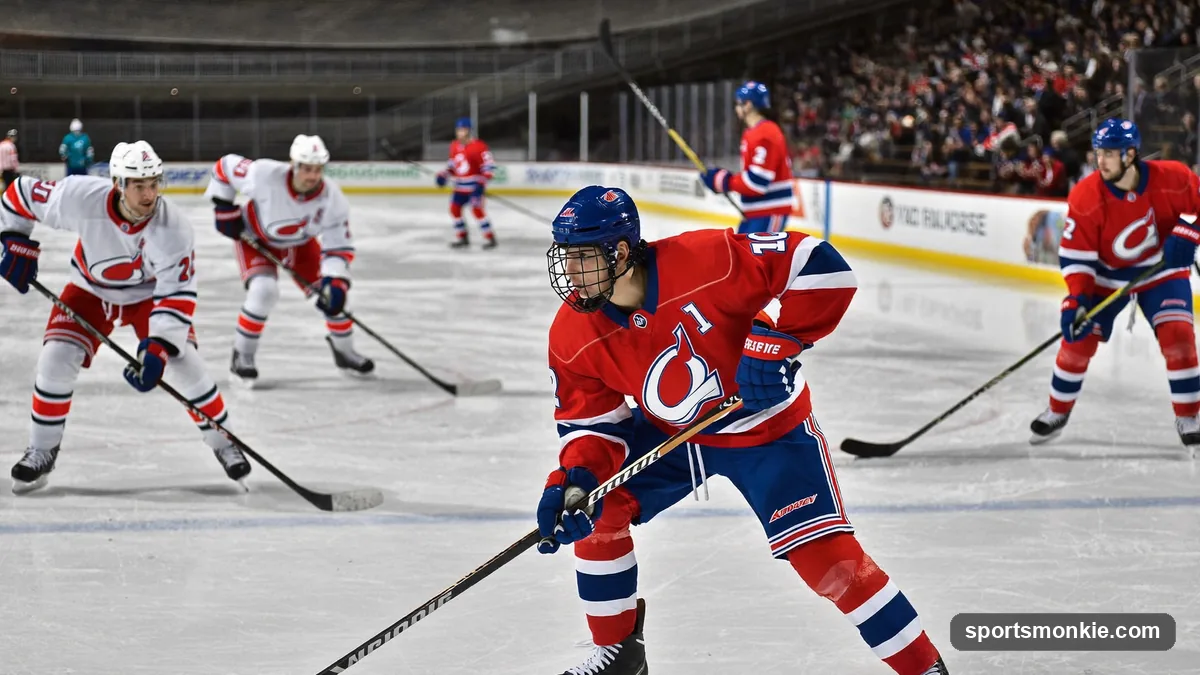
Hockey terminology is the shared vocabulary of official rule words (icing, offside, power play, crease) and player slang (deke, dangle, five-hole) that describe every stoppage, strategy, and stat in ice hockey. Whether you’re watching your first NHL broadcast or trying to make sense of a box score, this glossary breaks down every essential term by category so nothing slows you down.
Rink and Game Structure Terms
Before the penalties and shots make sense, you need the geography and the clock.
- Period: One of three 20-minute segments of regulation play. See how many periods are in a hockey game for the full breakdown of regulation, overtime, and shootouts.
- Zones: The rink is split into a defensive zone, neutral zone, and offensive zone, separated by two blue lines. See the full hockey rink dimensions guide for NHL, IIHF and Olympic-size ice.
- Faceoff: How play restarts: two opposing players battle for a puck dropped by an official at one of nine faceoff dots.
- Overtime: Extra time played when regulation ends tied. The NHL regular season uses 3-on-3 sudden death; the playoffs use full 5-on-5 sudden-death periods with no shootout.
- Shootout: A skills-competition tiebreaker used only in the regular season, where players take alternating penalty shots after overtime ends scoreless.
- Hub reading: for the full sport overview, visit our Ice Hockey / NHL hub.
Rules and Violation Terms
These are the words you’ll hear every time a referee’s whistle blows.
| Term | What It Means |
|---|---|
| Icing | Shooting the puck from your own half across the opponent’s goal line untouched; play stops and resets in your zone. |
| Offside | An attacking player enters the offensive zone ahead of the puck. |
| Crease | The blue semicircle in front of each net where goaltenders get extra protection from contact. Full explainer at what is the crease in hockey. |
| High-sticking | Making contact with an opponent above shoulder height with the stick blade; see what is high sticking in hockey for penalty details. |
| Cross-checking | Checking an opponent using the shaft of the stick held in both hands; read the full rule at what is cross-checking in hockey. |
| Minor penalty | A two-minute penalty served in the box, most often for tripping, hooking, or slashing. |
| Major penalty | A five-minute penalty for more serious infractions like fighting or boarding. |
| Penalty shot | A free attempt on an empty defense, awarded for specific fouls like a breakaway takedown. |
Shooting and Offensive Terms
Scoring vocabulary covers everything from the wind-up to the finish.
- Slap shot: The hardest, most powerful shot in hockey, generated by winding up and driving the stick through the ice and puck; see what is a slap shot in hockey for mechanics.
- One-timer: Shooting a pass directly without first receiving and controlling the puck, prized for its quick release; full detail at what is a one-timer in hockey.
- Wrist shot and snap shot: Quicker, more accurate releases than a slap shot; part of the broader shot family covered in types of shots in hockey.
- Deke: A puck-handling fake meant to get a defender or goalie moving the wrong way; see what is a deke in hockey for examples.
- Breakaway: A clear scoring chance where an attacker has beaten every defender except the goaltender.
- Five-hole: The gap between a goaltender’s pads; a common shooting target.
- Hat trick: Three goals by the same player in one game.
- Empty net goal: A goal scored after the trailing team pulls its goaltender for an extra attacker, leaving the net undefended; see what is an empty net goal in hockey for strategy.
Team Strategy and Positioning Terms
These describe how teams attack and defend as units rather than as loose individual plays.
- Forechecking: Pressuring the puck carrier in the offensive zone to force a turnover before they can set up; full breakdown at what is forechecking in hockey.
- Backchecking: Forwards sprinting back to help defend after losing possession, usually to slow an opponent’s rush; see what is backchecking in hockey.
- Neutral zone trap: A defensive system that clogs the middle of the ice to force turnovers before opponents reach the offensive zone; explained fully at what is the neutral zone trap in hockey.
- Power play: The man-advantage situation created when an opponent is in the penalty box.
- Penalty kill: The shorthanded team’s effort to prevent a goal while a teammate serves a penalty.
- Pinch: A defenseman skating deep into the offensive zone to keep the puck in, risking a odd-man rush if it fails.
Stats and Scoring Terms
Box scores lean on a handful of abbreviations you’ll want memorized.
- Goal (G): A puck fully crossing the goal line between the posts and under the crossbar.
- Assist (A): Credit given to up to two teammates who touched the puck on the sequence leading to a goal.
- Plus-minus (+/-): A rating that rises when a player is on ice for an even-strength or shorthanded goal for their team, and falls when the opponent scores.
- Save percentage (SV%): The share of shots on goal a goaltender stops.
- Power-play percentage (PP%): How often a team converts its man-advantage chances into goals.
Quick-Reference Glossary Table
| Term | Category | One-Line Definition |
|---|---|---|
| Icing | Rule | Puck shot the length of the ice untouched |
| Offside | Rule | Attacker enters the zone ahead of the puck |
| Crease | Rink | Blue semicircle protecting the goaltender |
| Power play | Strategy | Man-advantage after an opponent’s penalty |
| Forecheck | Strategy | Offensive-zone pressure to win the puck |
| Backcheck | Strategy | Forwards defending on the way back |
| Neutral zone trap | Strategy | Mid-ice defensive system |
| Deke | Skill | Puck-handling fake move |
| Slap shot | Shooting | Hardest, wind-up shot |
| One-timer | Shooting | Shot taken directly off a pass |
| Five-hole | Shooting | Gap between the goalie’s pads |
| Empty net goal | Scoring | Goal scored with the goalie pulled |
| Hat trick | Scoring | Three goals by one player, one game |
| Plus-minus | Stats | On-ice goal differential rating |
Knowing this vocabulary turns a confusing whistle-fest into a game you can actually follow play by play. It is the same language you need for every strategy and rules explainer in our Ice Hockey / NHL hub.
Frequently asked questions
What is hockey terminology?+
Hockey terminology is the collection of official rule words and player slang used to describe ice hockey, including icing, offside, power play, deke, and five-hole. Broadcasters, coaches, and box scores all use this shared vocabulary, so knowing it is the fastest way to actually follow a game.
What does 'icing' mean in hockey?+
Icing happens when a team shoots the puck from its own half of the ice all the way across the opponent's goal line without anyone touching it, and it isn't a legal scoring attempt. Officials stop play, and the ensuing faceoff happens in the offending team's defensive zone.
What is the difference between offside and icing?+
Offside is an attacking-zone violation: a player enters the opponent's zone before the puck does. Icing is the opposite-end violation: a defending player fires the puck the length of the ice untouched. Both stop play and move the faceoff, but they involve different zones and different rule numbers.
What does 'power play' mean?+
A power play is a stretch of play where one team has more skaters on the ice than the other because an opponent is serving a penalty in the box. The team with the extra skater is 'on the power play'; the shorthanded team is 'killing a penalty.'
What is a deke in hockey?+
A deke is a puck-handling fake, usually a quick shift of the puck, body, or head, used to get a defender or goaltender to commit the wrong way. See our full breakdown at /what-is-a-deke-in-hockey/.
What is the five-hole in hockey?+
The five-hole is the gap between a goaltender's leg pads. Shooters aim there because it's often the fastest opening to close, especially against a butterfly-style goalie whose pads flare outward.
How many periods are in a hockey game?+
An NHL game has three periods of 20 minutes of running clock each, plus intermissions. Our dedicated guide at /how-many-periods-in-a-hockey-game/ covers overtime and shootout formats too.
What is a hat trick in hockey?+
A hat trick is three goals scored by the same player in a single game. Fans traditionally throw hats onto the ice when a home player completes one, giving the term its name.
Sources
Play & tools
Free browser games and tools — no account, no download.
- Play 98-0 — Draft a 12-player all-time NHL roster and chase a perfect 98-0 — 82 regular-season wins plus a swept Cup.
- Explore all our games →
Related ice hockey guides
View all →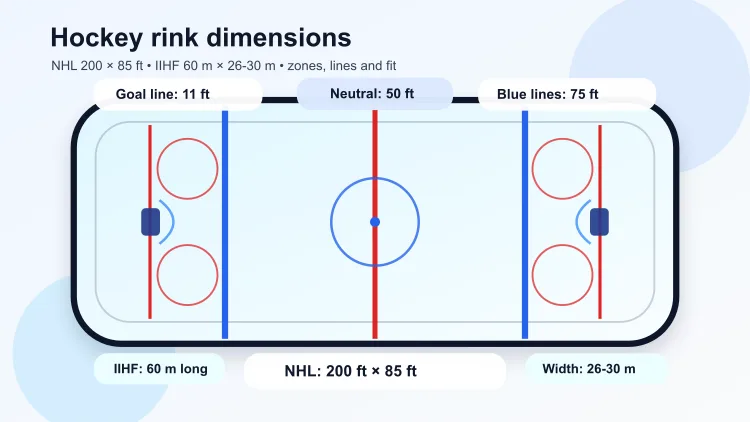
What Is a Check in Hockey? Body Check and Legal Contact
A hockey check is legal contact used to separate an opponent from the puck, but league rules limit where, how, and when contact is allowed.
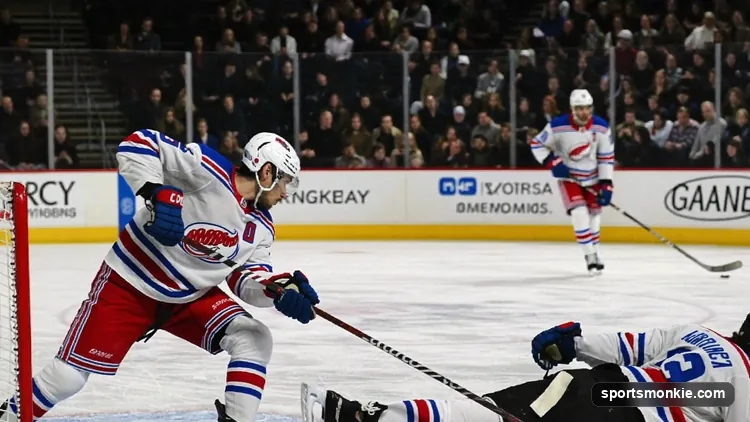
What Is Cross-Checking in Hockey? NHL Rule Explained
Cross-checking in hockey is using the stick shaft with both hands to shove an opponent; learn the NHL rule, penalties, and how it differs from slashing.
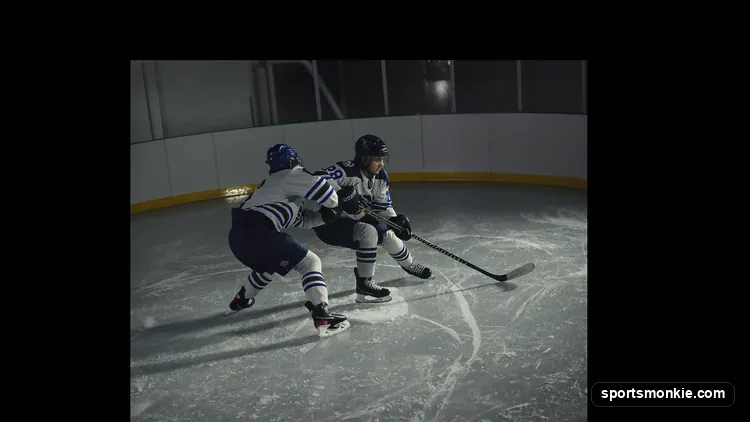
What Is a Deke in Hockey? Meaning, Types, and Examples
A deke in hockey is a fake move used to skate past a defender or goalie. Learn the term's origin, the main types of dekes, and how they're used.
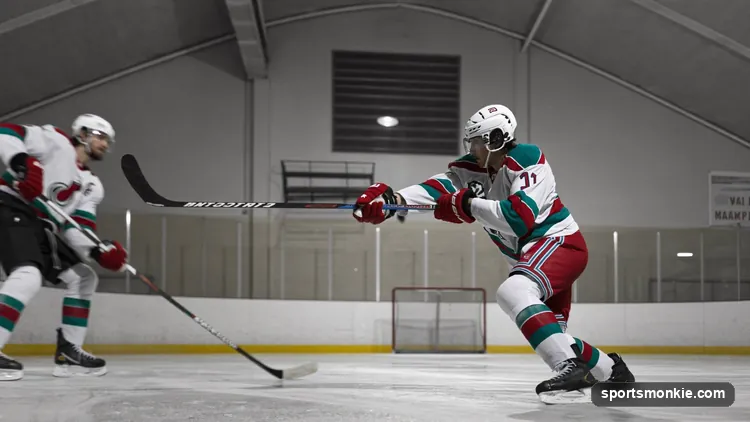
What Is a One-Timer in Hockey? Definition & How It Works
A one-timer in hockey is a shot fired directly off a teammate's pass with no puck control first. How it works, why it's hard to stop, and how to practice one.
What Is an Empty Net Goal in Hockey? Rules, Strategy, and Records
An empty net goal in hockey is scored when the net has no goaltender in it. Learn when teams pull the goalie, the delayed-penalty rule, and NHL records.
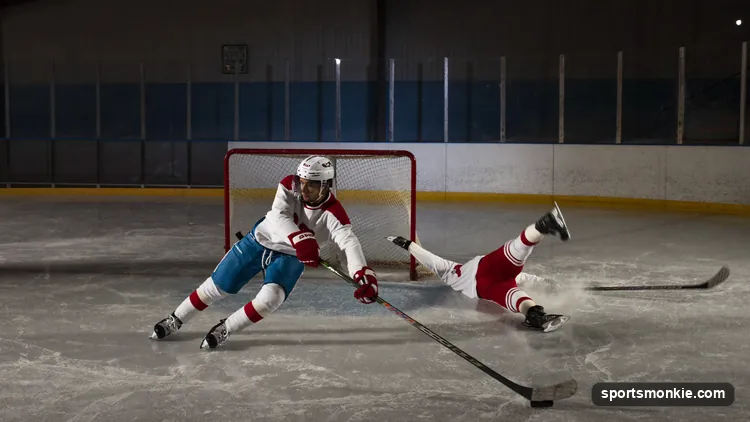
What Is Backchecking in Hockey? Meaning, Purpose & Technique Explained
Backchecking in hockey is when a player skates hard back to their own zone to defend after losing the puck. Learn the rules, technique, and why it matters.