
What Is a Deke in Hockey? Meaning, Types, and Examples
On this page5
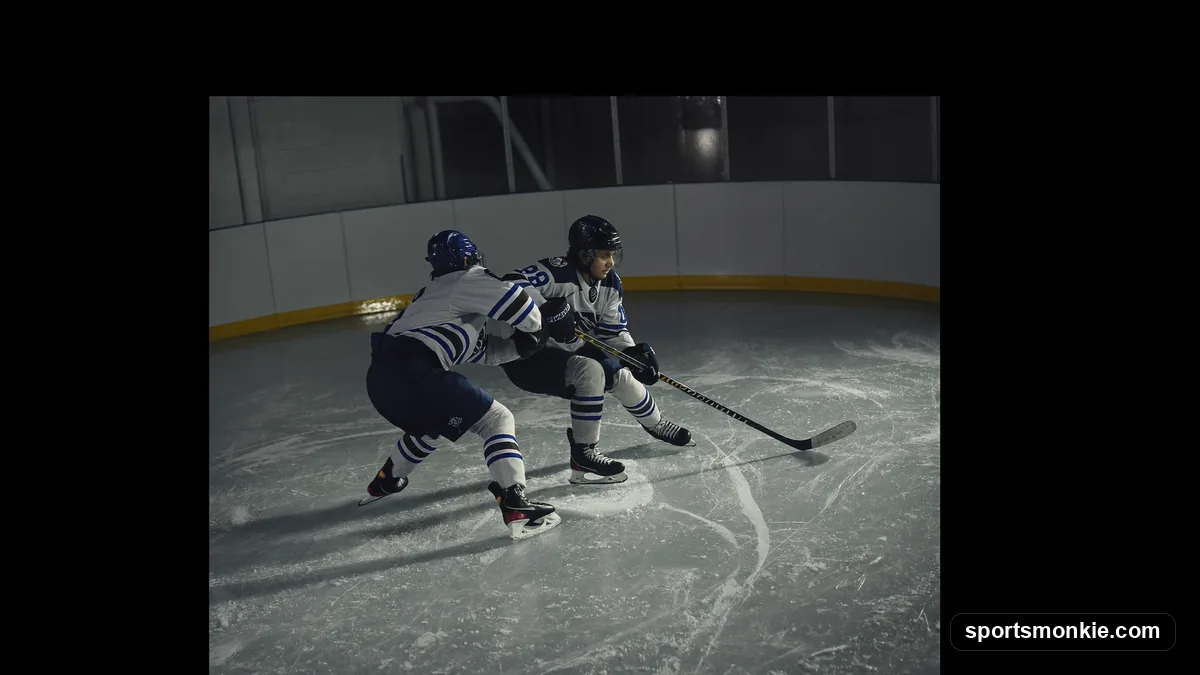
A deke in hockey is a fake or feint move a puck carrier uses to trick a defender or goaltender out of position while keeping full control of the puck. The word is short for “decoy,” and that’s exactly what it does: it decoys the defense into committing to the wrong direction, opening a lane to skate past them or fire a shot they’re no longer positioned to stop.
Where the term “deke” comes from
Deke is a Canadianism, a shortened form of “decoy.” Hockey writers in Canada were using the term by the 1940s to describe a player luring an opponent out of position, the same way a hunting decoy lures an animal into a trap, and it had settled into everyday hockey vocabulary by the 1960s. The word predates its hockey use, too: American writer Ernest Hemingway used “deke” as a noun for a hunting decoy in his 1950 novel Across the River and Into the Trees, before the hockey-specific meaning took over in common usage.
Today “deke” is hockey’s answer to what football and basketball call a “juke.” Both describe the same core idea, a fake that sells a false direction, but deke stayed a hockey word while juke spread through other American sports.
How a deke actually works
A deke depends entirely on the relationship between the puck carrier and the player trying to stop them. The attacker uses a change of direction, a change of speed, a fake with the head or shoulders, or specific stickwork, often combined, to make the defender or goaltender commit to covering the wrong lane or poking at the wrong spot. Once that commitment happens, the puck carrier goes the other way.
Dekes aren’t limited to breakaways against a goalie, even though that’s where they’re most visible. A forward dekes a defenseman at the blue line to gain the offensive zone, dekes a forechecker along the boards to escape pressure, and dekes a backchecker to protect the puck through the neutral zone. Any one-on-one moment on the ice is a chance to deke.
The main types of dekes
Here’s a breakdown of the dekes you’ll see most often, from beginner-level to advanced.
| Deke | What it is | Best used against |
|---|---|---|
| Head fake | Using head or shoulder movement to sell a fake direction before cutting the other way | Aggressive defenders who react to body language |
| Toe drag | Pulling the puck toward the body with the toe of the stick blade, out of poke-check range | Defenders reaching in with a poke check |
| Backhand toe drag | Same pulling motion, done on the backhand using the heel of the blade | Tight spaces near the net |
| Double deke | Two fakes back to back before the real move | Defenders who overcommit to the first fake |
| Forehand-to-backhand switch | Moving the puck across the body from one side of the blade to the other | Goalies squared up to the shooter’s forehand |
| Spin-o-rama | A full 360-degree spin with the puck while approaching the net | Goaltenders and defenders in shootouts or breakaways |
Toe drag
The toe drag is the deke most players learn first because it directly counters the most common defensive tool, the poke check. The puck carrier brings the puck forward on the forehand, then rotates the stick blade and drags the puck back toward their own body using the toe of the blade, pulling it out of the defender’s reach right as the defender pokes for it. Done at speed, it’s also one of the best setups for a quick shot before a goalie can reset.
Head fake
A head fake sells the fake with the eyes, head, or shoulders instead of the stick. The puck carrier looks or leans one way, gets the defender or goalie to shift their weight to cover it, then goes the other direction. It works especially well on reactive defenders and on goalies who track a shooter’s eyes to anticipate where the shot is going.
Spin-o-rama
The spin-o-rama is the most visually dramatic deke: a full 360-degree turn with the puck while closing in on the net, used to shield the puck from a defender’s stick or to freeze a goaltender who has to guess which way the shooter will emerge. Under the NHL rulebook, the move is legal on breakaways, penalty shots, and in shootouts as long as the puck stays in continuous motion throughout the spin. If the puck comes to a complete stop at any point, the attempt is stopped and no goal counts, which is exactly why the move faded from shootouts once every goaltending coach started coaching against it.
Dekes vs. other stickhandling terms
It helps to separate a deke from a few terms it often gets confused with:
- Deke vs. dangle: “Dangling” someone is slang for successfully deking them, especially with flashy stickhandling. Every dangle involves a deke, but the words aren’t perfectly interchangeable, deke is the move itself, dangle is more often used to describe the highlight-reel result.
- Deke vs. juke: Same underlying idea (a fake to beat a defender out of position), different sport. Deke belongs to hockey; juke is the equivalent term in football, basketball, and general American slang.
- Deke vs. shot fake: A shot fake is one specific type of deke, faking a shot to draw a goaltender or shot-blocker out of position before actually shooting or passing. Not every deke involves faking a shot.
Understanding these distinctions matters if you’re building out broader hockey vocabulary; our hockey terminology glossary covers the rest of the terms you’ll hear announcers use during a broadcast.
When and why players use a deke
Dekes show up constantly across a game, but three situations make them especially valuable:
- Breakaways. A lone attacker against the goaltender is the classic deke scenario. Without a defender to worry about, the shooter can commit fully to selling a fake, whether that’s a toe drag to the backhand or a full spin-o-rama.
- Shootouts and penalty shots. Same one-on-one setup as a breakaway, but with more time to plan the move and a goaltender who has scouted the shooter’s tendencies. This is where the flashiest, most rehearsed dekes get used.
- Zone entries and one-on-ones during regular play. Dekes aren’t just a shootout highlight. Beating a single defender at the blue line with a quick head fake or toe drag is one of the most common ways a team turns a neutral-zone rush into a real scoring chance, and it connects directly to the types of shots in hockey a player can pull off once they’ve created that separation, including a clean one-timer off a give-and-go.
A deke by itself is not a penalty. It’s a fully legal offensive move, and officials never whistle a player simply for faking well. The only time a deke draws a call is if it’s paired with something illegal on top of it, like using a hand to control the puck, which is rare and almost never intentional.
Want more explainers like this one? Visit the Ice Hockey hub for the full library of NHL rules and terminology breakdowns.
Frequently asked questions
What is a deke in hockey?+
A deke in hockey is a fake or feint move a puck carrier uses to trick a defender or goaltender out of position while keeping control of the puck. It usually combines a quick change of direction or speed with stick or body movement to sell the fake, opening a lane to skate past the defender or shoot on a goalie who has committed the wrong way.
Where does the word deke come from?+
Deke is a Canadianism, a shortened form of the word 'decoy.' The term started appearing in Canadian hockey writing in the 1940s to describe luring an opponent out of position the way a hunting decoy lures game, and it was in common hockey use by the 1960s.
What is the difference between a deke and a juke?+
They describe the same basic idea, faking an opponent out of position, but 'deke' is the hockey-specific term while 'juke' is used more broadly in American football, basketball, and everyday speech. Canadian hockey culture popularized deke; juke has separate, older roots in American slang.
What is a toe drag in hockey?+
A toe drag is a deke where the puck carrier pulls the puck toward their body using the toe of the stick blade, dragging it out of an opponent's stick-checking range while changing direction. It's one of the most common dekes used to beat a defender's poke check or to set up a shot in a shootout.
What is the spin-o-rama in hockey?+
The spin-o-rama is a deke where the puck carrier makes a full 360-degree turn with the puck while approaching the goal, using the spin to shield the puck from a defender or freeze a goaltender. It's legal in the NHL as long as the puck stays in continuous motion; if it comes to a complete stop during a shootout or penalty shot attempt, the shot is disallowed.
Is a deke only used against goalies?+
No. Dekes are used against any defender, not just goaltenders. Skaters deke defensemen at the blue line to gain the offensive zone, deke forecheckers along the boards to escape pressure, and deke goalies specifically on breakaways, shootouts, and penalty shots, where beating one defender decides the whole play.
What are the most common types of dekes in hockey?+
The most common dekes are the toe drag (pulling the puck in with the blade's toe), the head fake (using head or shoulder movement to sell a fake direction), the backhand-to-forehand or forehand-to-backhand deke, the double deke (two fakes in quick succession), and the spin-o-rama (a full spin move, most common in shootouts).
Can a deke be considered a penalty in hockey?+
No, a deke by itself is a completely legal offensive move and is not penalized. It only becomes a problem if it's paired with an illegal action, like using a hand pass to control the puck or making contact that draws a tripping, hooking, or interference call against the deking player, which is rare.
Sources
Play & tools
Free browser games and tools — no account, no download.
- Play 98-0 — Draft a 12-player all-time NHL roster and chase a perfect 98-0 — 82 regular-season wins plus a swept Cup.
- Explore all our games →
Related ice hockey guides
View all →
What Is an Empty Net Goal in Hockey? Rules, Strategy, and Records
An empty net goal in hockey is scored when the net has no goaltender in it. Learn when teams pull the goalie, the delayed-penalty rule, and NHL records.
What Is Backchecking in Hockey? Meaning, Purpose & Technique Explained
Backchecking in hockey is when a player skates hard back to their own zone to defend after losing the puck. Learn the rules, technique, and why it matters.
What Is Cross-Checking in Hockey? NHL Rule Explained
Cross-checking in hockey is using the stick shaft with both hands to shove an opponent; learn the NHL rule, penalties, and how it differs from slashing.
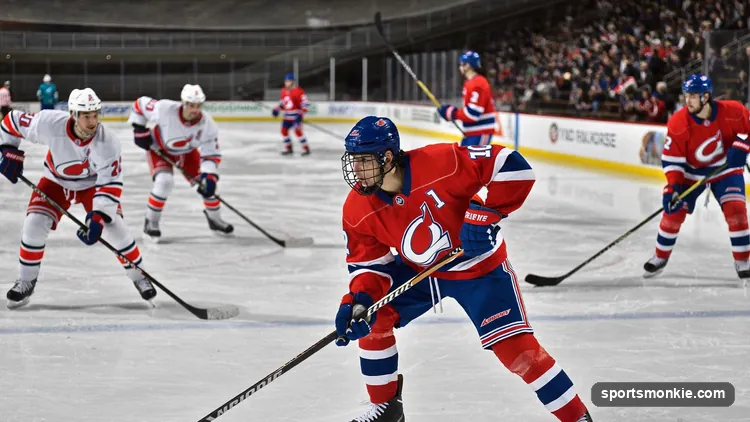
Hockey Terminology Glossary: 60+ NHL Terms Explained
A complete hockey terminology glossary covering NHL rules, positions, penalties, and slang terms every fan needs to know.
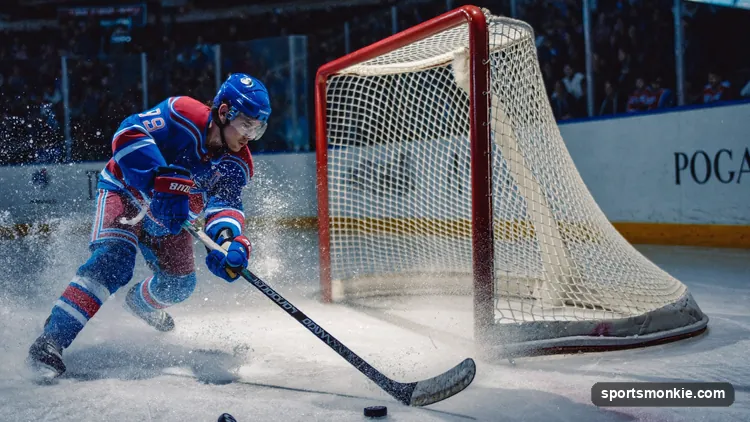
Types of Shots in Ice Hockey: Every Shot Explained
The main types of shots in ice hockey are the wrist shot, slap shot, snap shot, backhand, one-timer, wraparound, and deflection. Full breakdown here.
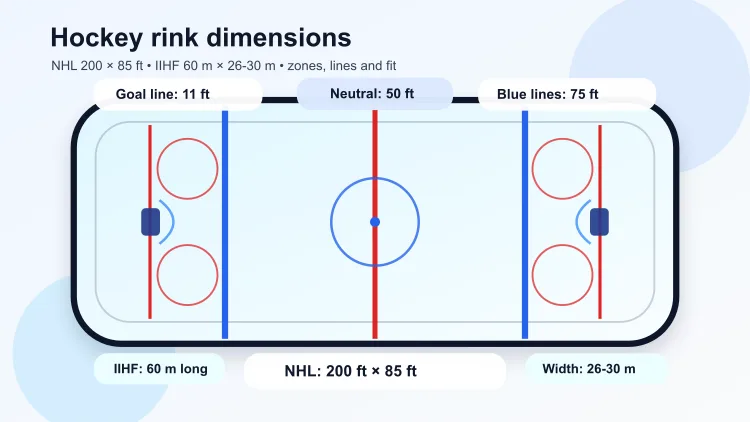
Hockey Rink Dimensions: NHL, IIHF and Youth Sizes
Official hockey rink dimensions for NHL, North American, IIHF and Olympic ice, with rink lines, zones, goal lines, boards and a fit calculator.