
What Is Backchecking in Hockey? Meaning, Purpose & Technique Explained
On this page7
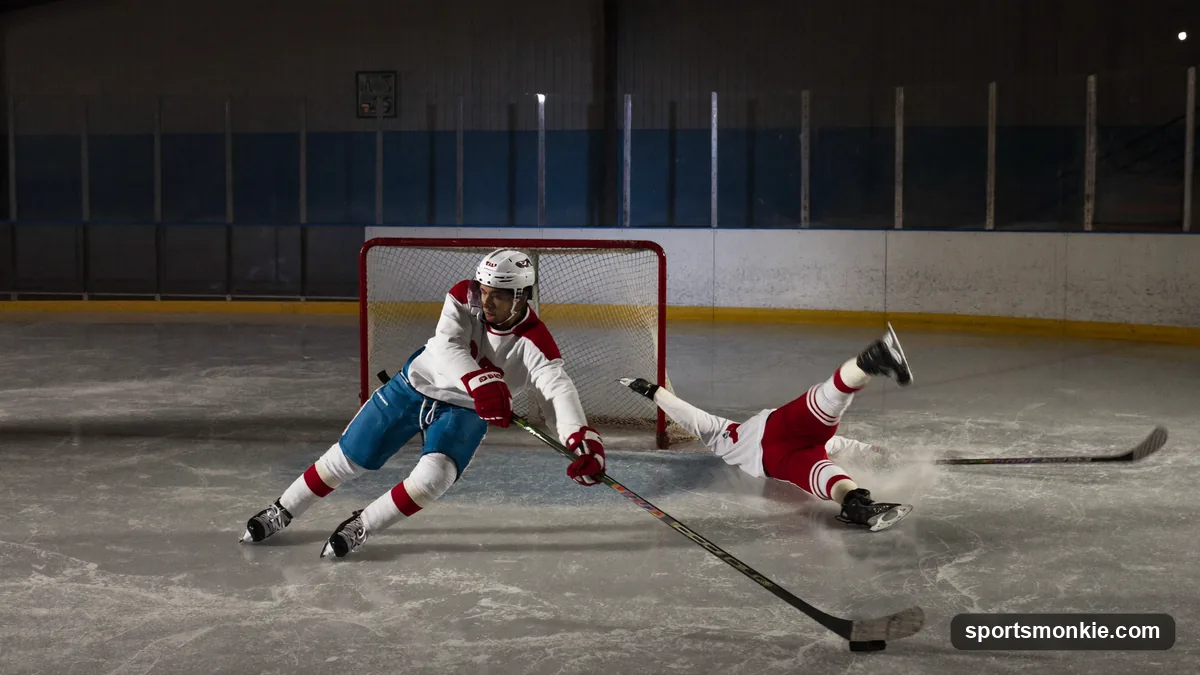
Backchecking in hockey is when a player, usually a forward, sprints back toward their own defensive zone after losing the puck to disrupt the opponent’s attack before it becomes a scoring chance. It is one of the most important, if least glamorous, defensive habits in the sport - the difference between a controlled defensive-zone entry and a dangerous odd-man rush often comes down to how hard and how smart a player backchecks.
What Backchecking Actually Means
The moment a team loses the puck - whether on a blocked shot, an intercepted pass, or a turnover at the opponent’s blue line - every player on the ice who is now out of defensive position has a job: get back. That sprint back toward your own net, combined with the effort to slow down, angle, or strip the puck carrier along the way, is backchecking.
It is not simply “skating back fast.” A true backcheck involves reading the developing rush, picking a route that cuts off passing lanes or the middle of the ice, and either engaging the puck carrier or picking up an open attacker before the play reaches the slot. Forwards are the most frequent backcheckers because they are typically the furthest up ice when possession changes, but any skater - including a defenseman who pinched deep and got caught - can find themselves in a backcheck situation.
Backchecking vs. Forechecking
Backchecking and forechecking are two halves of the same defensive coin, separated only by which zone the action happens in.
| Forechecking | Backchecking | |
|---|---|---|
| Zone | Opponent’s (offensive) zone | Own (defensive) zone approach |
| When it starts | Immediately after dumping the puck in or losing it near the opponent’s net | Immediately after losing possession anywhere and needing to recover |
| Goal | Regain possession before the opponent breaks out | Prevent the opponent from generating a rush or scoring chance |
| Who does it | Usually forwards pressuring defensemen | Usually forwards racing back, supported by defensemen |
For more on the offensive-zone side of this equation, see our guide to forechecking in hockey, and for how teams use structured backchecking to clog the middle of the ice as a system, see the neutral zone trap.
Why Backchecking Matters So Much
A single missed backcheck can turn into a 2-on-1 or 3-on-2 rush, two of the most dangerous scoring situations in hockey. Effective backchecking:
- Prevents odd-man rushes by ensuring the defense is not outnumbered as the puck comes back the other way.
- Relieves pressure on the goaltender and defensemen, who otherwise have to defend a rush without full support.
- Forces rushed decisions from the puck carrier, often leading directly to turnovers.
- Sets up counterattacks, since a well-timed backcheck that strips the puck can immediately flip the play back the other direction.
Coaches at every level, from youth hockey through the NHL, treat backchecking effort as a measure of a player’s overall commitment and hockey IQ. A skilled offensive player who refuses to backcheck is often benched in favor of a less skilled player who tracks back every shift.
The Technique: How to Backcheck Well
Good backchecking is a skill, not just a burst of speed. The core technique includes:
- Instant recognition - noticing the turnover the moment it happens rather than a stride later.
- Angling, not chasing - skating a route that cuts toward the middle of the ice or the passing lane instead of taking a straight line directly at the puck carrier, which lets the attacker slip around.
- Active stick - keeping the stick blade low and moving to poke-check passes or shots rather than simply gliding alongside the play.
- Body positioning - staying between the puck and the net (inside position) so the attacker has to go through you to get a clean look.
- Communication - calling out switches and coverage with defensemen so no attacker is left unmarked in the slot.
Common Backchecking Mistakes
Even experienced players fall into predictable traps on the backcheck:
- Straight-line chasing instead of angling, which surrenders the middle of the ice.
- Puck-watching, where a player fixates on the puck carrier and loses track of an open attacker drifting into a scoring lane.
- Late recognition, reacting a half-second slow to the turnover and never fully closing the gap.
- No communication, leading to two players covering the same attacker while a third goes untouched.
Backchecking at the NHL Level
At the professional level, backchecking is often the separator between a good defensive forward and an elite one. Analysts frequently point to a forward’s backcheck as a hidden driver of team defensive results, since raw shot-blocking or hit totals do not capture the value of preventing a rush before it starts. Teams that backcheck consistently tend to allow fewer high-danger scoring chances and rely less on their goaltender to bail them out, which is a big reason it is covered alongside other core defensive concepts on the ice hockey (NHL) hub.
Backchecking in Youth and Amateur Hockey
Coaches introduce backchecking early because it builds the habit of two-way play. Youth programs often use small-area games specifically designed to force players to transition from offense to defense quickly, reinforcing the instinct to turn and sprint the moment possession is lost rather than admiring a shot or lingering in the offensive zone. This habit, formed early, is one of the clearest indicators of a player’s long-term defensive potential.
Related Hockey Terms
Backchecking is one piece of a much larger vocabulary that describes how hockey is actually played. For definitions of related defensive and offensive concepts, including forechecking, the neutral zone trap, checking types, and more, visit the full hockey terminology glossary.
Frequently asked questions
What is backchecking in hockey?+
Backchecking in hockey is when a player, typically a forward, skates back toward their own defensive zone immediately after their team loses possession of the puck, working to disrupt the opponent's attack, close passing lanes, and support teammates before the other team can generate a scoring chance.
Who is responsible for backchecking, forwards or defensemen?+
Forwards carry the main backchecking responsibility since they are usually the ones deepest in the offensive zone when possession is lost, but defensemen also backcheck when caught up ice on a pinch or a failed offensive-zone play.
What is the difference between backchecking and forechecking?+
Forechecking happens in the offensive zone when a team tries to regain the puck right after dumping it in or losing it near the opponent's net, while backchecking happens on the way back to a team's own defensive zone after losing possession, usually further from the attacking net.
Why is backchecking important in hockey?+
Backchecking is important because it prevents odd-man rushes (like 2-on-1s or 3-on-2s), takes pressure off the goaltender and defensemen, forces the opposing puck carrier into rushed decisions, and can turn a defensive breakdown into a turnover or even a counterattack.
What does a good backcheck look like?+
A good backcheck features quick recognition of the turnover, an angled skating route that cuts off the middle of the ice rather than a straight chase, active stick positioning to block passing and shooting lanes, and verbal communication with teammates about coverage assignments.
What is a common mistake players make while backchecking?+
A common backchecking mistake is skating in a straight line directly at the puck carrier instead of angling toward the middle of the ice, which lets the attacker cut to open space; other errors include watching the puck instead of covering an open man, and failing to communicate switches with defensemen.
Does backchecking apply only to forwards near their own blue line?+
No. Backchecking can start anywhere a player is caught out of defensive position after a turnover, including deep in the offensive zone, and it continues until the backchecking player either regains the puck, checks the attacker, or gets back into a defensive-zone position.
Is backchecking a rule or a strategy?+
Backchecking is not a codified rule in the NHL rulebook; it is a defensive strategy and hustle play that coaches teach and expect from every skater, and lack of effective backchecking is a common reason teams give up odd-man rushes and goals.
Sources
Play & tools
Free browser games and tools — no account, no download.
- Play 98-0 — Draft a 12-player all-time NHL roster and chase a perfect 98-0 — 82 regular-season wins plus a swept Cup.
- Explore all our games →
Related ice hockey guides
View all →
What Is a Deke in Hockey? Meaning, Types, and Examples
A deke in hockey is a fake move used to skate past a defender or goalie. Learn the term's origin, the main types of dekes, and how they're used.
What Is an Empty Net Goal in Hockey? Rules, Strategy, and Records
An empty net goal in hockey is scored when the net has no goaltender in it. Learn when teams pull the goalie, the delayed-penalty rule, and NHL records.
What Is Cross-Checking in Hockey? NHL Rule Explained
Cross-checking in hockey is using the stick shaft with both hands to shove an opponent; learn the NHL rule, penalties, and how it differs from slashing.
Hockey Referee Signals Explained: Every Penalty Arm Signal
Hockey referee signals decoded: the exact arm signal for hooking, tripping, slashing, cross-checking, high-sticking, holding, interference, and more.
Hockey Terminology Glossary: 60+ NHL Terms Explained
A complete hockey terminology glossary covering NHL rules, positions, penalties, and slang terms every fan needs to know.
Hockey Rink Dimensions: NHL, IIHF and Youth Sizes
Official hockey rink dimensions for NHL, North American, IIHF and Olympic ice, with rink lines, zones, goal lines, boards and a fit calculator.