
What Is the Neutral Zone Trap in Hockey? Rule and Strategy Explained
On this page7
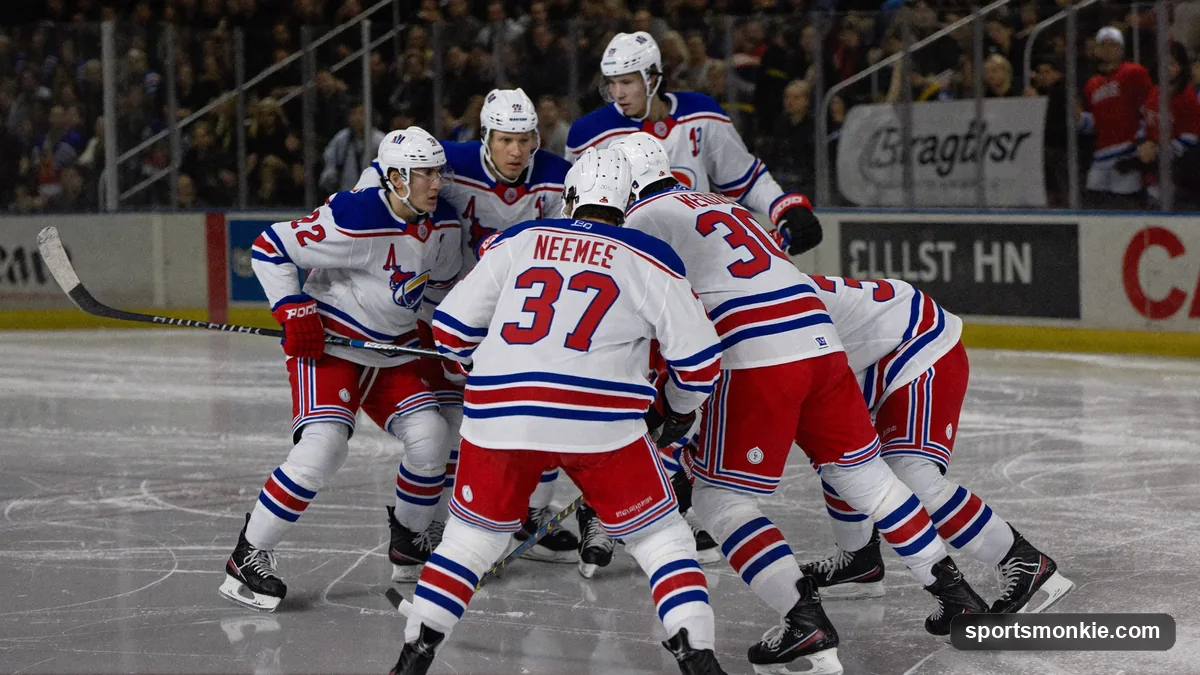
The neutral zone trap is a defensive system in hockey where a team stacks four or five skaters across the neutral zone to clog passing and skating lanes, forcing turnovers before the opponent can carry the puck into the offensive zone. Only one forward pressures the puck deep; the rest of the team sits back, patient, waiting for the puck carrier to make a mistake in the crowded middle of the ice.
How the Neutral Zone Trap Works
The neutral zone is the open ice between the two blue lines, and it is the one area of the rink a team must cross with control to generate offense. The trap exploits that chokepoint. Instead of pressuring the puck in all three zones, a trapping team concedes the offensive zone almost entirely, sends a single forechecker to apply light pressure, and packs the remaining four skaters into the neutral zone in a tight, structured shape.
That shape closes every easy passing lane. The puck carrier is funneled toward the boards, where a winger is waiting to pin the play, or forced to dump the puck in deep and give up possession without ever threatening the net. It is not a penalty-killing system and it is not run only when short-handed; teams trap at even strength, often to protect a lead or to slow down a faster, more skilled opponent.
The 1-2-2 Trap Formation
The classic version of the trap is the 1-2-2. One forward forechecks in the offensive zone, applying just enough pressure to prevent an easy breakout pass. Two forwards sit in the neutral zone, usually stationed near the red line and angled toward the boards, ready to step up and challenge the puck carrier the moment they cross center ice. Two defensemen hold their positions near the blue line as the final layer, ready to step up and force a dump-in if the puck gets past the forwards.
The 1-2-2 gives up a lot of ice in both end zones in exchange for a numbers advantage in the middle. It is simple to teach and effective against teams that like to carry the puck through the neutral zone with speed and skill rather than dump and chase.
The 1-3-1 Trap Formation
The 1-3-1 is a more modern, tighter variation that many NHL teams still use in some form. One forward still pressures deep, but instead of two forwards and two defensemen, the middle of the ice is a flat line of three skaters, typically two wingers on the boards and a center (or the weak-side defenseman) covering the middle lane, with a single defenseman staying back near the blue line.
The 1-3-1 leaves less open ice than the 1-2-2 and is harder to skate through cleanly, but it asks more of the middle player, who has to read whether to jump the puck carrier or hold the lane. Because it concentrates numbers in a narrower band, a good stretch pass or a puck moved quickly side to side can unravel it faster than the older 1-2-2.
| Formation | Deep forecheck | Neutral zone | Back line | Best used against |
|---|---|---|---|---|
| 1-2-2 | 1 forward | 2 forwards near the red line | 2 defensemen at the blue line | Puck-carrying, speed-first teams |
| 1-3-1 | 1 forward | 3 skaters in a flat line (2 wingers + center) | 1 defenseman | Teams that cycle and look for cross-ice plays |
History: How the New Jersey Devils Popularized the Trap
The neutral zone trap existed in various forms before the 1990s, but it became a league-wide phenomenon under New Jersey Devils head coach Jacques Lemaire. Lemaire installed a disciplined, structured trap in New Jersey in 1993-94, and the system helped an underdog Devils roster win the Stanley Cup in 1995. Other franchises, especially those without top-end offensive talent, copied it through the rest of the decade because it was cheap, effective, and hard to prepare for on short rest during a long regular season.
The side effect was a steep decline in scoring across the NHL. By the early 2000s, low-event, trap-heavy hockey had become common enough that fans and media openly criticized the league for games clogged with obstruction and dump-and-chase hockey rather than skill and speed.
How the NHL’s 2005 Rule Changes Weakened the Trap
The 2004-05 lockout wiped out an entire season, and when the NHL returned in 2005-06 it came back with rule changes aimed directly at the trap. Officials were instructed to call obstruction penalties, hooking, holding, and interference, far more strictly, which made it much riskier for a trapping defender to grab or slow down a puck carrier without a whistle. The league also legalized the two-line pass, letting a team pass the puck from inside its own blue line all the way to a streaking forward past center ice, something that had been illegal (offside) for decades.
That single change did more than any other to blunt the trap’s effectiveness. A packed neutral zone can smother short, controlled passes, but it cannot easily defend a long stretch pass that skips over the crowd entirely and hits a winger in full stride. Scoring rose noticeably in the years after the rule changes took effect, and the pure, suffocating 1-2-2 trap became far less common as a full-game strategy.
How to Beat the Neutral Zone Trap
Attacking teams have a few reliable counters to a trap. Quick, direct passes beat it far more often than trying to stickhandle through a crowd, since the trap is built to swarm a puck carrier who tries to skate the puck through the middle. Chipping the puck past the trapping forwards into open ice, then chasing it with speed, forces the defense to turn and skate rather than stand and wait. Cycling the puck low in the defensive zone can also drag the forecheck out of position before the breakout even starts.
The legal two-line pass is the single biggest weapon against a trap today: a stretch pass from the defensive zone to a streaking forward can beat the entire neutral zone structure in one play, which is exactly why the 2005 rule change is credited with reducing how often teams trap for a full 60 minutes.
Neutral Zone Trap vs. Forechecking and Backchecking
The trap is a neutral zone system, which puts it in a different category from the pressure systems teams use in the other two zones. Aggressive forechecking is about hunting the puck deep in the offensive zone right after a shot or a dump-in; the trap deliberately does the opposite, sending only one forward to apply light pressure so the rest of the team can set up in the middle. Disciplined backchecking is what allows a team to get back into trap position in the first place, since all five skaters need to be north of the puck before the neutral zone wall can form.
Together, these systems make up the structural side of the modern game covered across our NHL rules and terminology hub. For definitions of related terms like zone entries, dump-and-chase, and the two-line pass, see our full hockey terminology glossary.
Frequently asked questions
What is the neutral zone trap in hockey?+
The neutral zone trap is a defensive system where a team packs four or five skaters into the neutral zone (the area between the two blue lines) to clog passing and skating lanes, forcing the puck carrier into a turnover or a dump-in rather than a clean zone entry. Only one player, the forechecker, pressures the puck in the offensive zone; everyone else sits back and waits.
Why is it called a 'trap'?+
It is called a trap because the defending team deliberately gives up ice in the offensive and defensive zones to bait the opponent into carrying the puck through a crowded neutral zone, where four or five defenders are waiting to close passing lanes and pin the puck carrier along the boards.
What is the 1-2-2 neutral zone trap?+
The 1-2-2 is the classic trap formation: one forward forechecks deep in the offensive zone, two forwards sit in the neutral zone near the red line to challenge the puck carrier and cut off outlet passes, and two defensemen hold the blue line as the last line of defense before the offensive zone.
What is the 1-3-1 trap?+
The 1-3-1 is a modern variation with one forechecker up front, three players spread across the neutral zone in a flat line (usually two wingers on the boards and a center in the middle), and one defenseman staying back. It gives up less time and space than the 1-2-2 but relies on the middle player reading the play correctly.
Who popularized the neutral zone trap in the NHL?+
The New Jersey Devils, under head coach Jacques Lemaire, popularized the modern neutral zone trap in the mid-1990s. The system helped the Devils win the Stanley Cup in 1995, and other low-budget or defense-first franchises copied it through the rest of the decade, dragging league-wide scoring down with it.
Did the NHL ban the neutral zone trap?+
No, the trap was never banned outright. Instead, the NHL's 2005 rule changes after the lockout made it much harder to execute: officials began strictly calling obstruction penalties like hooking and holding, and the league legalized the two-line pass, letting attacking teams stretch the ice with long breakout passes that a packed neutral zone can no longer cut off as easily.
How do you beat a neutral zone trap?+
Teams beat the trap with quick, direct passes rather than skating the puck through traffic, by chipping pucks past the trapping forwards to open ice for a teammate to chase, and by cycling the puck low in their own zone to draw the forecheck out before attacking with speed. Since 2005, the legal two-line pass lets a team hit a streaking winger in one long pass over the trap entirely.
Is the neutral zone trap still used today?+
Yes, though rarely in its purest mid-1990s form. Modern NHL teams use trap-influenced structures, most often a version of the 1-3-1, especially when protecting a third-period lead or facing a faster, more skilled opponent, but rule changes and the emphasis on speed have made a full-time trap much less common than it was 25 years ago.
Sources
Play & tools
Free browser games and tools — no account, no download.
- Play 98-0 — Draft a 12-player all-time NHL roster and chase a perfect 98-0 — 82 regular-season wins plus a swept Cup.
- Explore all our games →
Related ice hockey guides
View all →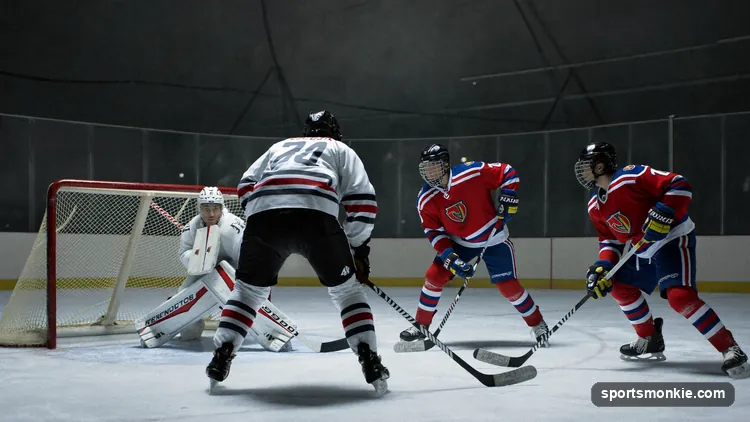
What Is Forechecking in Hockey? Systems and Roles Explained
Forechecking in hockey is pressuring the puck carrier in the offensive zone to force a turnover. Learn the F1-F2-F3 roles and the 1-2-2, 2-1-2, and 1-3-1 systems.
What Is an Empty Net Goal in Hockey? Rules, Strategy, and Records
An empty net goal in hockey is scored when the net has no goaltender in it. Learn when teams pull the goalie, the delayed-penalty rule, and NHL records.
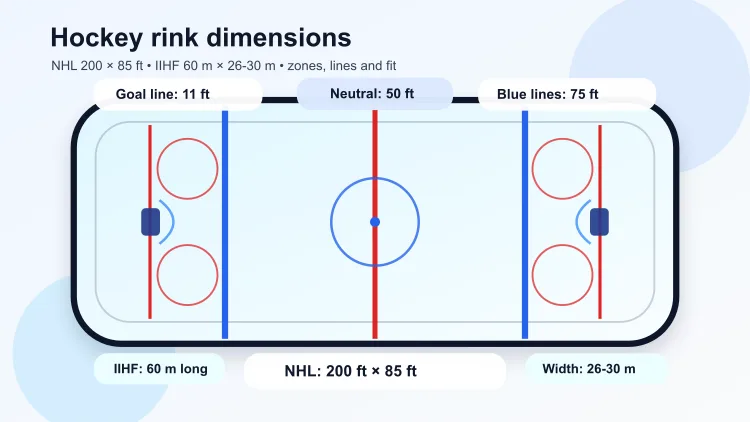
Hockey Rink Dimensions: NHL, IIHF and Youth Sizes
Official hockey rink dimensions for NHL, North American, IIHF and Olympic ice, with rink lines, zones, goal lines, boards and a fit calculator.
How Many Periods Are in a Hockey Game? NHL Rules Explained
How many periods are in a hockey game: three 20-minute periods, how long intermissions last, and how NHL overtime and shootouts settle ties.
Types of Shots in Ice Hockey: Every Shot Explained
The main types of shots in ice hockey are the wrist shot, slap shot, snap shot, backhand, one-timer, wraparound, and deflection. Full breakdown here.
What Is a Deke in Hockey? Meaning, Types, and Examples
A deke in hockey is a fake move used to skate past a defender or goalie. Learn the term's origin, the main types of dekes, and how they're used.