
What Is an Empty Net Goal in Hockey? Rules, Strategy, and Records
On this page7
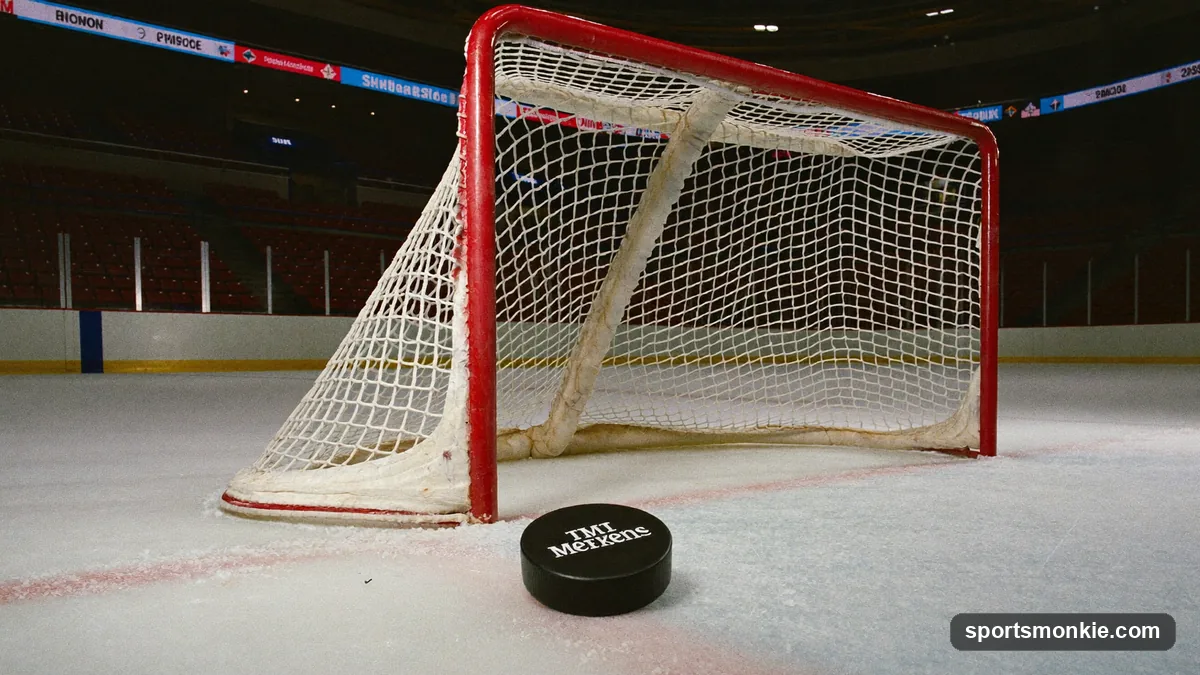
An empty net goal in hockey is a goal scored into a net with no goaltender guarding it, almost always because the goalie has been pulled for an extra attacker late in a close game. It’s one of the most common ways a two-goal lead becomes a three-goal final score, and it comes with its own strategy, statistics, and even its own hat trick trivia.
When and why teams pull the goalie
By the rules, a team can have up to six players on the ice at once, and nothing says one of them has to be a goaltender. Coaches use that freedom late in games. When a team is trailing in the third period, usually inside the final one to three minutes, the coach calls the goalie to the bench and sends out an extra skater, going from a 5-skaters-plus-goalie lineup to 6 skaters and an open net.
The math is simple: with the score already lost if nothing changes, a coach accepts the risk of conceding an empty net goal in exchange for one extra body pressuring the opponent’s zone. Modern NHL coaching has pushed this earlier than it used to be. Analytics departments across the league found that the extra-attacker advantage is worth more time on the ice than older conventional wisdom assumed, so pulls with over two minutes left are now common, and some teams pull the goalie down just one goal with well over two minutes remaining.
Goalie pulls aren’t limited to desperate, game-ending situations. Two other common triggers are covered below.
The delayed penalty connection
A delayed penalty is called when an infraction happens but the non-offending team still has possession of the puck. The referee raises an arm and lets play continue, because stopping it immediately would erase the advantage the fouled-against team just earned. Play only stops the moment the offending team touches the puck, at which point the whistle blows and the penalty is assessed.
This creates a free window for the team on the man advantage. Since the opponent legally cannot play the puck without stopping the whistle, there’s no danger in leaving the net open. So the non-offending team frequently pulls its own goaltender for a sixth attacker the instant a delayed penalty is signaled, then sends the goalie back to the net as soon as the whistle blows or the penalty is over. It’s a completely safe empty-net situation, unlike the late-game version.
Two-man advantage pulls
Less common, but part of the same logic: a team already on a two-man advantage (a 5-on-3 power play) will sometimes pull its goaltender too, turning it into a 6-on-3. This isn’t about running out of time, it’s about maximizing a short window of overwhelming numbers, and it can happen at any point in the game, not just the closing minutes.
How empty net goals are scored and tracked
Once the net is empty, any shot that crosses the goal line from anywhere on the ice counts, including a shot fired the length of the rink into an unguarded net after a clean defensive-zone clearance. That’s the most common empty net goal: a defenseman just chips the puck out and it slides untouched into the net 180 feet away.
Statistically, these goals are tracked with the abbreviation EN or ENG (empty net goal). They’re excluded from a goaltender’s save percentage and goals-against average, since the goalie wasn’t on the ice to have a chance at the save. That does create an odd wrinkle: a goaltender can be charged with the loss in the final box score even if their opponent’s only goals that period came after the goalie was already on the bench.
| Situation | Goalie pulled by | Typical timing | Risk level |
|---|---|---|---|
| Trailing late in the game | Losing team | Final 1-3 minutes of period 3 | High (net fully exposed) |
| Delayed penalty | Team with possession | Any point in the game | None (opponent can’t legally touch puck) |
| Two-man advantage | Team already on 5-on-3 | Any point in the game | Low (opponent has only one skater to clear it) |
Can a goalie score one?
Yes. Nothing in the rules stops a goaltender from shooting the puck the length of the ice into an empty net, and if it goes in, it’s credited to them as a full goal. Legendary New Jersey Devils goaltender Martin Brodeur is the most famous example: all three of his career NHL goals were empty netters, launched from his own crease after opponents cleared the way by pulling their goalie.
Empty net goals and hat tricks
Because an empty net goal counts the same as any other goal in the box score, a player’s third goal of the night, completing a hat trick, can absolutely be an empty netter. It happens fairly often in blowouts: a player scores twice against a goaltender, then adds an empty net goal in the final minutes to seal the hat trick. In rarer cases, all three goals of a hat trick have come into an empty net across separate stretches of a single dominant game, though most empty-net hat tricks mix in at least one goal scored on a goaltender.
Empty net goal vs. other late-game hockey terms
An empty net goal is closely tied to a handful of other situational terms that show up in the same late-game stretch. The “extra attacker” is the sixth skater added when the goalie is pulled. A “delayed penalty” is one of the two safe windows described above. And the crease, the blue-painted area in front of the net, is still governed by its usual rules even once the goalie is off the ice, since goal-crease interference calls apply to the goaltender’s replacement position, not just the goalie in net.
For the full breakdown of terms like these, see our hockey terminology glossary, and check our explainer on the crease in hockey for how that zone works even when it’s unguarded. Empty net situations are also shaped by clock management, so pairing this with how many periods are in a hockey game helps explain why the final minutes matter so much. For more rules explainers like this one, visit our Ice Hockey hub.
Frequently asked questions
What is an empty net goal in hockey?+
An empty net goal in hockey is a goal scored while the opposing team's net has no goaltender in front of it. It happens because a team has voluntarily pulled its goalie, usually to add an extra skater while trailing late in the game, leaving the net open for the other team to score into from anywhere on the ice.
Why do teams pull the goalie in hockey?+
A team pulls its goalie to substitute an extra attacking skater in the goaltender's place, going from five skaters plus a goalie to six skaters and no goalie. This trades defensive coverage for more offensive pressure, which only makes sense when a team is losing and running out of time, since the risk of conceding an empty net goal is outweighed by the need to score.
When do teams typically pull the goalie?+
Most goalie pulls happen in the final one to three minutes of the third period when a team trails by one or two goals. NHL coaches have trended toward pulling earlier than in past decades, sometimes with over two minutes left, because analytics show the extra-attacker advantage is worth more ice time than once assumed. Goalies are also pulled during delayed penalties and, occasionally, to create a two-man advantage on a 5-on-3 power play.
What is the delayed penalty rule for pulling the goalie?+
When an official signals a delayed penalty against a team, play continues until that team touches the puck, at which point the whistle blows and the penalty is assessed. Since the offending team cannot legally touch the puck without stopping play, the non-offending team can pull its own goaltender for a free extra attacker with no real risk, because the other side is prohibited from shooting at the empty net during a delayed penalty in that situation.
Do empty net goals count against a goalie's stats?+
No. Empty net goals are recorded separately using the abbreviation EN or ENG and are excluded from a goaltender's goals-against average and save percentage, since the goalie was not on the ice to make a save. A goaltender can still be charged with the loss in the box score even if every goal scored against their team came after they were pulled.
Can a goalie score an empty net goal?+
Yes. Goaltenders are allowed to shoot the puck into an empty net from anywhere on the ice, including their own end, and it counts as a full empty net goal credited to them. It's rare, but several NHL goalies have scored this way, most famously Martin Brodeur, who scored three career goals, all into empty nets.
How many goals can be scored in one empty net situation?+
There's no limit. As long as the trailing team keeps the goalie pulled and keeps losing possession, the leading team can score multiple empty net goals in the same stretch. It's uncommon but not rare for a team to add two or even three empty netters in the closing minutes of a lopsided game.
What is a hat trick made entirely of empty net goals?+
It's extremely rare, but a player can theoretically score all three goals of a hat trick into an empty net if their team keeps controlling the puck against a team that leaves its goalie pulled or keeps getting beaten to loose pucks. In practice, most empty-net hat tricks involve at most one or two empty netters combined with goals scored against a goaltender.
Sources
Play & tools
Free browser games and tools — no account, no download.
- Play 98-0 — Draft a 12-player all-time NHL roster and chase a perfect 98-0 — 82 regular-season wins plus a swept Cup.
- Explore all our games →
Related ice hockey guides
View all →
What Is a Deke in Hockey? Meaning, Types, and Examples
A deke in hockey is a fake move used to skate past a defender or goalie. Learn the term's origin, the main types of dekes, and how they're used.
What Is Backchecking in Hockey? Meaning, Purpose & Technique Explained
Backchecking in hockey is when a player skates hard back to their own zone to defend after losing the puck. Learn the rules, technique, and why it matters.
What Is Cross-Checking in Hockey? NHL Rule Explained
Cross-checking in hockey is using the stick shaft with both hands to shove an opponent; learn the NHL rule, penalties, and how it differs from slashing.
Hockey Terminology Glossary: 60+ NHL Terms Explained
A complete hockey terminology glossary covering NHL rules, positions, penalties, and slang terms every fan needs to know.
What Is a Slap Shot in Hockey? Mechanics, Speed & Records
A slap shot in hockey is a full wind-up shot built for maximum puck speed. Learn the technique, how it compares to a wrist shot, and NHL speed records.
What Is the Neutral Zone Trap in Hockey? Rule and Strategy Explained
The neutral zone trap in hockey is a defensive system that clogs the neutral zone to force turnovers, run as a 1-2-2 or 1-3-1 formation.