
What Is a Slap Shot in Hockey? Mechanics, Speed & Records
On this page7
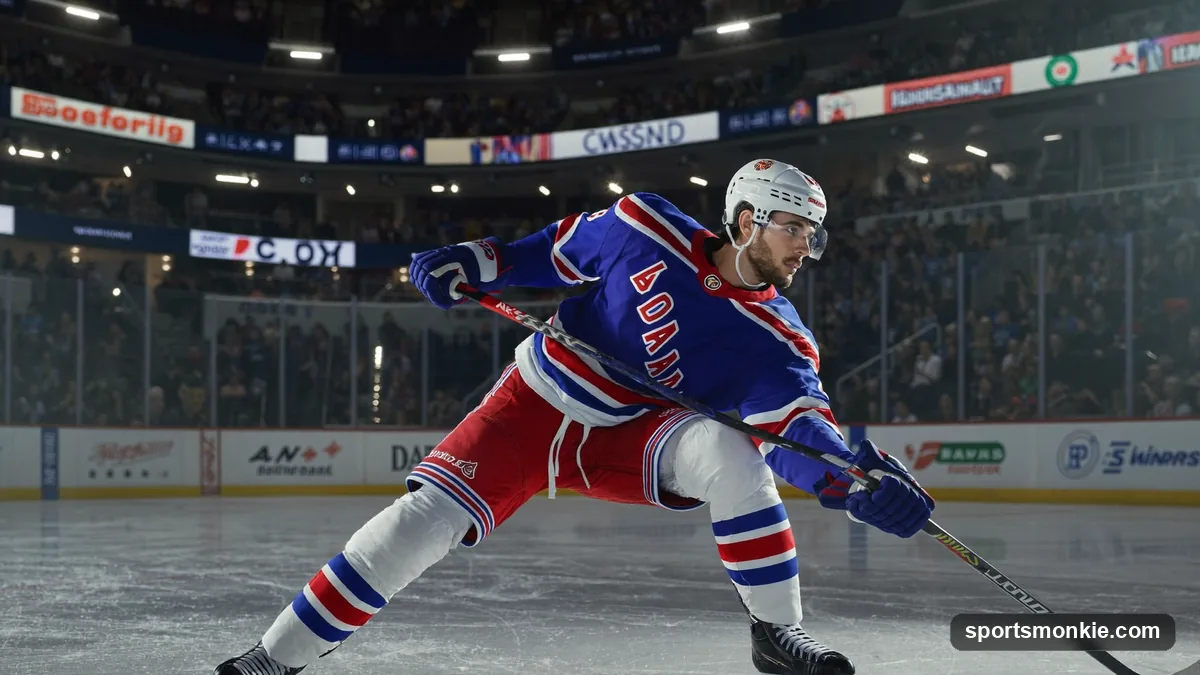
A slap shot in hockey is a shot taken with a full backswing that raises the stick to shoulder height or higher, then strikes the ice just behind the puck to bend and load the stick before releasing that stored energy into the puck. It’s the hardest, fastest shot in the sport, capable of pushing the puck past 100 mph in NHL play, but that power comes at a cost: a slow, telegraphed windup and lower accuracy than every other shot type in a player’s arsenal.
What Is a Slap Shot in Hockey?
The slap shot gets its name from the audible “slap” of the stick striking the ice an instant before it strikes the puck. Unlike a wrist shot, where the puck stays cradled on the blade throughout the motion, a slap shot briefly separates the stick from the puck entirely during the backswing. That separation is what allows the stick to build so much speed on the way down, and it’s also what makes the shot so easy to spot coming from across the ice.
The mechanic that actually generates the extra power is stick flex. Modern composite sticks are engineered to bend like a diving board when the blade strikes the ice just behind the puck. That bend stores kinetic energy the same way a bow stores energy when it’s drawn, and as the shaft snaps back straight a fraction of a second later, that stored energy transfers into the puck on top of the raw speed of the swing itself.
How to Take a Slap Shot: The Mechanics
A slap shot breaks down into three connected phases, and missing any one of them is usually why an attempt sails wide or loses most of its power.
- The wind-up. Raise the stick to shoulder height or higher, with the top hand near the butt end and the bottom hand sliding partway down the shaft for leverage. Position the puck a few inches in front of and slightly behind your back foot, not directly beside it.
- The load and strike. Drive the stick down and forward so the blade contacts the ice just behind the puck, not directly on it. That brief ice contact is what bends the shaft and loads it with energy; hitting the puck cleanly with no ice contact at all is actually a different shot, closer to a snap shot.
- The release and follow-through. As the stick straightens and the blade meets the puck, roll your wrists over the shot to close the blade face, which keeps the puck low and adds accuracy. Transfer your weight from your back leg to your front leg and rotate your hips and shoulders toward the target, finishing with the stick pointed at where you want the puck to go.
Slap Shot vs. Wrist Shot vs. Snap Shot
Hockey players choose between three primary shot types depending on how much time, space, and accuracy the situation calls for. A slap shot is one entry in a much larger shooting toolkit; see the full rundown at types of shots in hockey for backhands, snap shots, and more.
| Shot Type | Windup | Release Speed | Shot Power | Accuracy |
|---|---|---|---|---|
| Slap Shot | Full backswing, shoulder height+ | Slowest to release | Highest | Lowest |
| Snap Shot | Short, quick backswing | Fast | Moderate-high | Moderate |
| Wrist Shot | No backswing, puck stays on blade | Fastest to release | Lowest | Highest |
A wrist shot keeps the puck on the stick blade the entire time, generating power purely from a fast wrist snap rather than a swing, which makes it the quickest shot to get off and the hardest for a goaltender to read early. A snap shot sits in between: a short, compact backswing that still uses a bit of ice-load flex, but nowhere near the full windup of a slap shot. The tradeoff is consistent across all three: more windup means more raw power, and less windup means a quicker, more accurate release.
Average and Record Slap Shot Speeds in the NHL
The average NHL slap shot travels around 100 mph, though that number swings widely based on the shooter’s technique, stick flex rating, and how much time they have to load the shot. Game-tracked shots tend to run somewhat lower than competition numbers, since players rarely get a completely clean, unpressured windup during live play.
The record book has a few different entries depending on the setting:
- Zdeno Chara – 108.8 mph (2012): Still the official NHL All-Star Skills Competition record for Hardest Shot.
- Martin Frk – 109.2 mph (2020): The hardest shot ever recorded in professional hockey, set at the AHL All-Star Skills Competition rather than an NHL event.
- Shea Weber – 108.5 mph (2015): The closest anyone has come to Chara’s NHL mark.
- Bobby Hull – reportedly around 118 mph (1960s): Measured with far less precise equipment than today’s radar tracking, so it’s treated as a historical claim rather than a verified record.
When Players Use a Slap Shot
Because the windup takes so long, a slap shot is easiest to pull off when a defender isn’t closing in fast, which is why it’s most associated with defensemen firing from the point at the blue line, especially on the power play, where the extra skater buys extra time and space. Forwards use it too, most commonly from the top of the faceoff circles or when they rotate up into a point role on a power-play unit.
The other major use case is the one-timer: shooting a slap shot directly off an incoming pass without stopping the puck first. It’s significantly harder to time than shooting off a stationary puck, since the shooter has to match the stick swing to the puck’s arrival, but it removes the pause a goaltender would otherwise get to read a normal slap shot’s windup. For the full mechanics of timing that shot, see what a one-timer is in hockey.
In tight to the net, most players avoid the slap shot entirely. The long backswing gets blocked or poke-checked away too easily at close range, so a quicker wrist or snap shot is the standard choice once a player is inside the scoring area.
Common Slap Shot Mistakes
- Hitting the ice too far behind the puck. This kills power before the stick ever reaches the puck, since the flex has already released by the time contact happens.
- Overcommitting to the backswing. A stick raised too high or too early telegraphs the shot and gives defenders and the goaltender extra time to react.
- Not rolling the wrists through contact. Skipping this step tends to send the puck flying high off the ice instead of driving it toward the net.
- No weight transfer. Power comes from the whole body shifting from the back leg to the front leg, not from the arms alone; a shot taken flat-footed loses most of its speed.
Where the Slap Shot Fits in Hockey’s Rulebook and Vocabulary
The slap shot itself isn’t governed by a rule the way icing or offside are, but it interacts with plenty of terms that are. For the complete rundown of every rule, position, and piece of slang used around the rink, start with the hockey terminology glossary. And for how a big point shot fits into the bigger picture of an actual NHL game, from power plays to line changes, the Ice Hockey / NHL hub rounds up SportsMonkie’s full library of rules explainers.
A slap shot will always be the shot fans remember, the one that rattles the glass or blows past a goaltender clean, but it’s really just one tool among several. Knowing when a player should reach for it, and when a quick wrist shot is the smarter play, is most of what separates a good shooting decision from a wasted one.
Frequently asked questions
What is a slap shot in hockey?+
A slap shot in hockey is a shot taken with a full backswing, raising the stick to shoulder height or higher before striking the ice just behind the puck to bend the stick and store energy, which then releases into the puck on contact. It's the hardest, fastest shot in hockey, but also the slowest to load and the least accurate.
How fast is an average NHL slap shot?+
The average NHL slap shot travels around 100 mph, though it varies by player, stick flex, and ice conditions. Wrist shots and snap shots are typically slower but far quicker to release.
What is the fastest slap shot ever recorded?+
Zdeno Chara holds the NHL All-Star Skills Competition record at 108.8 mph, set in 2012. Martin Frk topped that with a 109.2 mph shot at the 2020 AHL All-Star Skills Competition, the hardest shot ever recorded in professional hockey, though it came at an AHL rather than NHL event. Bobby Hull was reportedly clocked around 118 mph in the 1960s using a curved wooden stick, though that measurement used far less precise equipment than modern tracking.
How do you take a slap shot?+
Raise the stick to shoulder height or higher on the backswing, then drive it down so the blade strikes the ice a few inches behind the puck. That contact bends, or 'loads,' the stick shaft, storing energy that releases into the puck as the blade straightens and makes contact. Roll your wrists through the shot and transfer your weight from your back foot to your front foot as you follow through toward the target.
What is the difference between a slap shot and a wrist shot?+
A slap shot uses a full backswing and stick-flex loading to maximize speed, at the cost of a slow, telegraphed release and lower accuracy. A wrist shot keeps the puck on the blade the entire time, using a quick wrist snap instead of a backswing, which sacrifices some raw speed for a much faster release and tighter accuracy.
Why do defensemen take most slap shots?+
Defensemen at the blue line have more time and space than forwards working in tight around the net, which matters because a slap shot's long windup makes it easy to block or intercept under pressure. That extra room is also why slap shots from the point are a staple of power-play offense.
What is a one-timer slap shot?+
A one-timer is when a player slap-shoots a puck directly off a teammate's pass without stopping it first, timing the stick swing to meet the puck in stride. It's harder to execute than shooting off a stationary puck but far harder for a goaltender to read, since there's no pause between the pass and the shot. See our full breakdown of what a one-timer is in hockey for the mechanics.
Can forwards take slap shots too?+
Yes, though less often than defensemen. Forwards typically use slap shots from the top of the faceoff circles or the point when they rotate up during a power play, or as a one-timer finishing a cross-ice pass. In tight to the net, most forwards switch to a quicker wrist or snap shot instead.
Sources
Play & tools
Free browser games and tools — no account, no download.
- Play 98-0 — Draft a 12-player all-time NHL roster and chase a perfect 98-0 — 82 regular-season wins plus a swept Cup.
- Explore all our games →
Related ice hockey guides
View all →
Types of Shots in Ice Hockey: Every Shot Explained
The main types of shots in ice hockey are the wrist shot, slap shot, snap shot, backhand, one-timer, wraparound, and deflection. Full breakdown here.
What Is an Empty Net Goal in Hockey? Rules, Strategy, and Records
An empty net goal in hockey is scored when the net has no goaltender in it. Learn when teams pull the goalie, the delayed-penalty rule, and NHL records.
Hockey Rink Dimensions: NHL, IIHF and Youth Sizes
Official hockey rink dimensions for NHL, North American, IIHF and Olympic ice, with rink lines, zones, goal lines, boards and a fit calculator.
How Many Periods Are in a Hockey Game? NHL Rules Explained
How many periods are in a hockey game: three 20-minute periods, how long intermissions last, and how NHL overtime and shootouts settle ties.
What Is a Deke in Hockey? Meaning, Types, and Examples
A deke in hockey is a fake move used to skate past a defender or goalie. Learn the term's origin, the main types of dekes, and how they're used.
What Is a One-Timer in Hockey? Definition & How It Works
A one-timer in hockey is a shot fired directly off a teammate's pass with no puck control first. How it works, why it's hard to stop, and how to practice one.