
Types of Shots in Ice Hockey: Every Shot Explained
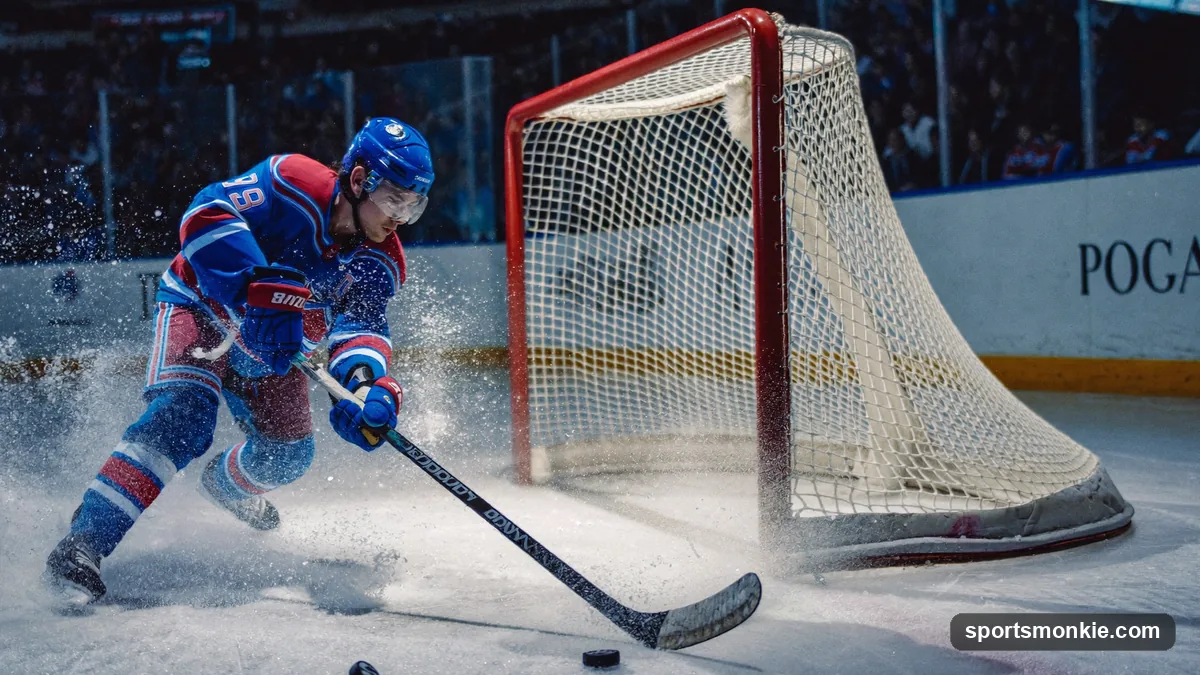
On this page9
The main types of shots in ice hockey are the wrist shot, slap shot, snap shot, backhand shot, one-timer, wraparound, and deflection (tip-in). Each one trades off power, accuracy, and release speed differently, which is why NHL players carry several of them and choose the right one for the situation rather than relying on just one.
Shooting is the skill that turns offensive pressure into goals, and understanding the hockey terminology around it makes watching the NHL a lot easier to follow. Here is every shot type explained, how they differ, and when players use each one.
Wrist shot
The wrist shot is the most commonly used shot in hockey and is widely considered the most accurate. The player cups the puck against the stick blade, rolls it slightly back, then sweeps forward and snaps the wrists through contact in one smooth motion, with no backswing. Because the puck stays on the blade through the whole release, the shooter can aim precisely and pick a corner.
Wrist shots typically travel 60-90 mph in the NHL. They’re the default shot for most scoring chances because they can be released quickly from almost any body position, including while skating at full speed or receiving a pass on the move.
Slap shot
The slap shot is the hardest and most powerful shot in ice hockey. The shooter raises the stick well above the ice in a full backswing, then drives it down and through the puck, striking the ice just behind it so the shaft flexes and whips the blade through contact like a loaded spring. That flex is what generates the extra speed compared to a wrist shot.
NHL slap shots commonly reach 90-100+ mph, and the official hardest-shot record belongs to former Boston Bruins defenseman Zdeno Chara, who registered 108.8 mph at the 2012 NHL All-Star Skills Competition. The tradeoff is time and accuracy: the long windup is easier for a goaltender and defenders to read, and the extra moving parts make it less precise than a wrist shot. It’s most often used by defensemen on the power play or from the point, where there’s more time and space to load up.
Snap shot
The snap shot sits between the wrist shot and slap shot. The player takes a short, quick backswing — just a few inches, not the full slap shot wind-up — then snaps the wrists through the puck. That short backswing adds pop compared to a pure wrist shot while keeping the release fast enough that a goaltender has little time to react.
Snap shots also run roughly 60-90 mph, similar to wrist shots, but with a heavier, more compact strike. Elite modern scorers, including players like Auston Matthews, are known for turning the snap shot into a primary weapon because of how difficult the quick release is to time against.
Backhand shot
The backhand shot is struck with the back (convex) side of the stick blade rather than the front. It’s normally the weakest and least accurate shot of the three main techniques, usually landing in the 50-70 mph range, but it has one big advantage: it lets a shooter score from an angle or body position where a forehand shot isn’t possible, such as when the puck ends up on the wrong side of the body in tight to the net.
Because goaltenders expect forehand shots more often, a well-placed backhand can also catch them off guard, especially in close.
One-timer
A one-timer isn’t a separate shooting motion — it’s any shot (usually a slap shot or snap shot) struck directly off a pass, with no stop to receive and control the puck first. The shooter has to time their swing to arrive exactly when the puck does, which is a much harder skill than shooting off a stationary or controlled puck.
One-timers are especially dangerous on the power play, where a cross-ice pass to an open shooter in the slot gives the goaltender almost no time to shift across and set up before the shot arrives.
Wraparound
A wraparound is a short-range, low-power play rather than a hard shot. An attacking player carries the puck from behind the net around one of the posts, trying to tuck it in before the goaltender can slide across and seal that side. It depends on quick hands, a tight turn, and catching the goalie still moving from the other post — not on shot velocity.
Deflection (tip-in)
A deflection, or tip-in, happens when an attacking player stationed in front of the net redirects a teammate’s shot with their stick blade as it passes by, changing its speed and direction just enough to beat the goaltender. Because the goalie has already committed to tracking the original shot, a well-timed deflection is one of the hardest plays in hockey to stop — even a shot the goaltender had lined up can be unrecoverable once it changes direction a foot or two in front of the net.
Comparing the main shot types
| Shot type | Relative speed | Relative accuracy | Best used for |
|---|---|---|---|
| Wrist shot | Moderate-high (60-90 mph) | Highest | Quick release, general scoring |
| Slap shot | Highest (90-100+ mph) | Lowest | Power play, shots from distance |
| Snap shot | Moderate-high (60-90 mph) | High | Fast release with added power |
| Backhand | Lowest (50-70 mph) | Moderate | Awkward angles, close-in surprise |
| One-timer | Depends on technique used | Low-moderate | Power play, cross-ice passes |
| Wraparound | Low (not power-based) | High if timed well | Tight-angle finishes off the net |
| Deflection | Depends on original shot | Low (redirect-based) | Screens and net-front traffic |
Why shot variety matters
NHL forwards and defensemen carry more than one shot type for the same reason a pitcher carries more than one pitch: predictability gets stopped. A player who only ever shoots a slap shot telegraphs it with a long windup goaltenders learn to read, while a player who mixes a quick-release wrist shot with an occasional one-timer off a pass forces the goalie to prepare for multiple releases at multiple speeds. Coaches at every level, from youth hockey up through the NHL, drill all four core techniques — wrist, slap, snap, and backhand — because each one covers a situation the others don’t.
Frequently asked questions
What are the types of shots in ice hockey?
The main types are the wrist shot, slap shot, snap shot, backhand shot, one-timer, wraparound, and deflection (tip-in). The first four are distinct shooting techniques, while the last three describe the game situation a shot is taken in.
What is the hardest shot in hockey?
The slap shot, thanks to its full backswing and stick flex. Zdeno Chara set the NHL Skills Competition record at 108.8 mph in 2012.
What is the most accurate shot in hockey?
The wrist shot, because the puck stays cupped against the blade through a smooth, controlled release rather than being struck.
For more rules and terminology explainers like this one, visit SportsMonkie’s Ice Hockey hub or browse the full hockey terminology glossary.
Frequently asked questions
What are the types of shots in ice hockey?+
The main types of shots in ice hockey are the wrist shot, slap shot, snap shot, backhand shot, one-timer, wraparound, and deflection (or tip-in). The wrist shot, snap shot, and slap shot are true shooting techniques, while the backhand describes which side of the blade is used, and the one-timer, wraparound, and deflection describe the situation the shot is taken in rather than a distinct wind-up.
What is the hardest shot in hockey?+
The slap shot is the hardest shot in hockey because the long backswing and full-body rotation let a player transfer maximum energy into the puck. NHL slap shots regularly top 90-100 mph, and hardest-shot competition records have topped 108 mph, set by Zdeno Chara at the 2012 NHL All-Star Skills Competition.
What is the most accurate shot in hockey?+
The wrist shot is generally considered the most accurate shot in hockey because the puck rolls off the blade in a single, controlled wrist motion rather than being struck with the full swing of a slap shot. It also has a quick release, which is why it is the most frequently used shot in the NHL.
What is the difference between a wrist shot and a snap shot?+
A wrist shot uses a smooth, sweeping motion with no backswing, cupping the puck the whole way through the release for accuracy. A snap shot adds a short, quick backswing before the wrist snaps through the puck, trading a bit of that accuracy for extra pop and a release that's harder for a goaltender to read.
What is a one-timer in hockey?+
A one-timer is a shot taken directly off a pass, with no stop to control the puck first. The shooter times their swing to meet the puck as it arrives, which makes the shot faster to release and much harder for a goaltender to track, since there's no puck-handling pause to signal the shot is coming.
What is a wraparound shot in hockey?+
A wraparound is a short-range shot where a player skates from behind the net and tucks the puck around the goal post and past the goaltender before the goalie can slide across to seal the post. It relies on quick hands and a tight turn rather than shot power.
What is a deflection or tip-in in hockey?+
A deflection, or tip-in, happens when a player standing in front of the net redirects a teammate's shot or pass with their stick blade, changing its direction and often its speed just before it crosses the goal line. It counts as a shot on goal for the player who redirects it, not for the original shooter.
Sources
Play & tools
Free browser games and tools — no account, no download.
- Play 98-0 — Draft a 12-player all-time NHL roster and chase a perfect 98-0 — 82 regular-season wins plus a swept Cup.
- Explore all our games →
Related ice hockey guides
View all →
What Is a Slap Shot in Hockey? Mechanics, Speed & Records
A slap shot in hockey is a full wind-up shot built for maximum puck speed. Learn the technique, how it compares to a wrist shot, and NHL speed records.
Types of Basketball Shots: Every Shot Explained
The main types of basketball shots are the layup, jump shot, three-pointer, dunk, floater, hook shot, bank shot, fadeaway, step-back, and euro-step.
What Is a Deke in Hockey? Meaning, Types, and Examples
A deke in hockey is a fake move used to skate past a defender or goalie. Learn the term's origin, the main types of dekes, and how they're used.
Hockey Rink Dimensions: NHL, IIHF and Youth Sizes
Official hockey rink dimensions for NHL, North American, IIHF and Olympic ice, with rink lines, zones, goal lines, boards and a fit calculator.
Types of Shots in Basketball: 10 Every Player Needs
The 10 essential types of shots in basketball, from layups and jump shots to floaters, hooks, fadeaways and dunks, with coaching cues and when to use each.
Hockey Referee Signals Explained: Every Penalty Arm Signal
Hockey referee signals decoded: the exact arm signal for hooking, tripping, slashing, cross-checking, high-sticking, holding, interference, and more.