
How Many Periods Are in a Hockey Game? NHL Rules Explained
On this page6
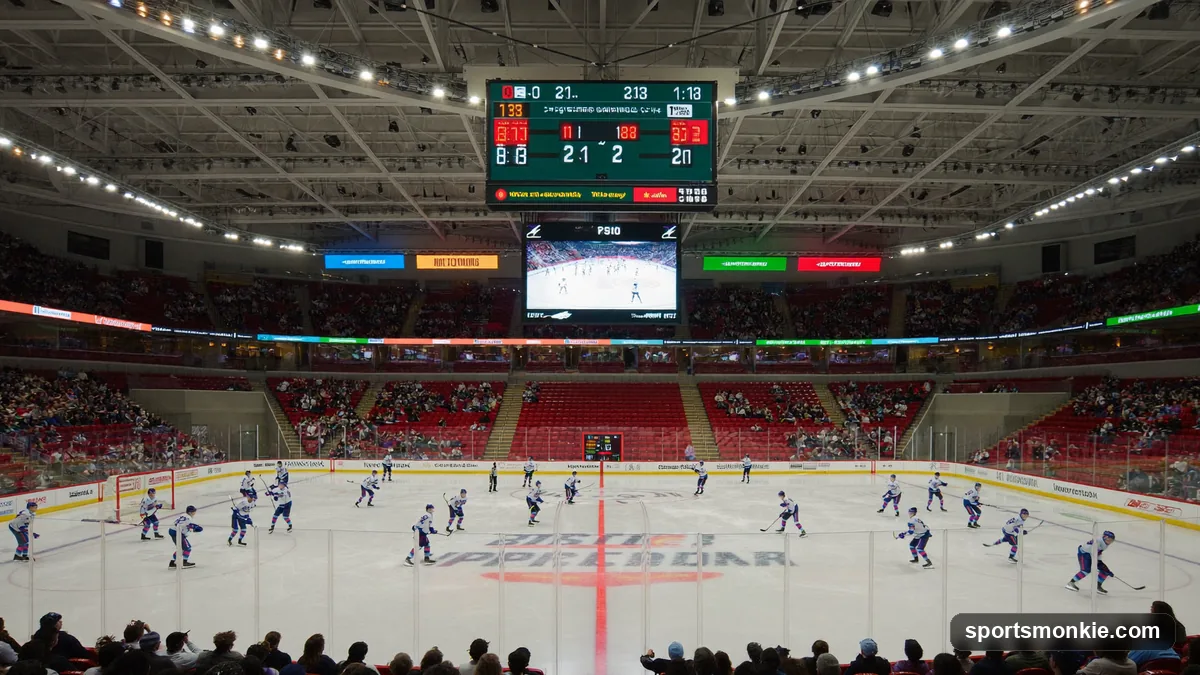
A hockey game is divided into three periods, each 20 minutes of actual playing time, with two intermissions in between. The clock stops on every whistle, so those three periods plus breaks and stoppages add up to roughly two and a half hours of real time for a full NHL game.
How Many Periods Are in a Hockey Game?
Every level of organized ice hockey, from the NHL down to international tournaments and college play, uses three periods per game. That’s different from sports like soccer or basketball’s traditional halves and quarters, and it’s a structure hockey has used for well over a century. Between the first and second periods, and again between the second and third, the teams switch ends of the rink and take a break while the ice gets resurfaced.
Some youth and recreational leagues shorten this format to fit tighter ice-time schedules, but the three-period skeleton itself almost never changes. If you want the full vocabulary that goes with a hockey broadcast, from icing to power plays, our hockey terminology glossary breaks down every term you’ll hear announcers use during those three periods.
How Long Is Each Period, and How Long Is Intermission?
Each period runs 20 minutes on a stop-time clock, meaning the game clock only ticks while the puck is actually in play. The instant an official blows the whistle for a penalty, an offside, icing, a goal, or any other stoppage, the clock freezes until play resumes. That’s why a “20-minute period” routinely takes 30 to 40 minutes of real time to complete, especially in penalty-heavy or high-scoring games.
Intermissions between periods give crews time to resurface the ice, which by itself takes about 10 minutes, plus time for players to rest, adjust strategy, and for broadcasters to run commercial breaks.
| League/Level | Period length | Intermission length |
|---|---|---|
| NHL | 20 minutes (stop time) | 18 minutes |
| NCAA (college) | 20 minutes (stop time) | 15 minutes |
| IIHF / Olympics (international) | 20 minutes (stop time) | 15 minutes |
| Youth / amateur leagues | Often 12–15 minutes, sometimes running time | Varies by rink schedule |
What Happens If the Score Is Tied After Three Periods?
If regulation ends in a tie, what happens next depends entirely on the level of play and whether it’s the regular season or the playoffs.
NHL regular season: Teams play one additional five-minute overtime period at 3-on-3, sudden death — the first goal wins and the game ends immediately. If nobody scores in those five minutes, the game moves to a shootout, where three skaters per team alternate penalty shots against the opposing goalie. If the shootout is still tied after three rounds, it becomes sudden death, one shooter at a time, until a winner is decided.
NHL playoffs: There is no shootout in the postseason. A tied playoff game goes straight to full 20-minute, 5-on-5 sudden-death overtime periods, repeated as many times as needed until a team scores. Some of the NHL’s most famous games have stretched to five or more overtimes before ending, and every extra period counts toward that team’s total ice time for the series.
International play (IIHF): Overtime length depends on the tournament stage. Group-stage games typically use a five-minute sudden-death period followed by a shootout if still tied, while medal-round and gold-medal games use longer sudden-death overtimes (10 or even 20 minutes) before a shootout comes into play, per the IIHF’s official rule book.
Late in a close game, expect the trailing team to pull its goalie for an extra attacker; if that backfires, you’ll see what’s called an empty net goal put the result away.
Why Does Hockey Use Three Periods Instead of Two Halves?
Hockey didn’t always play three periods. Early organized games used two 30-minute halves, matching the format of sports like soccer and rugby that influenced the game’s early rules. That changed in the 1910-11 season, when brothers Frank and Lester Patrick, who ran the Pacific Coast Hockey Association, pushed to split the game into three 20-minute segments instead.
The change solved two problems at once. Ice back then deteriorated quickly under skate blades with no modern resurfacing equipment, so a shorter break every 20 minutes, instead of one long halftime, let crews smooth the surface more often and kept play faster and safer. It also gave players more frequent recovery time in a sport that demands short, explosive bursts of skating rather than sustained aerobic effort. The three-period format spread through professional and amateur hockey afterward and has remained the standard ever since, according to the NHL’s official rulebook.
How Long Does a Full Hockey Game Actually Take?
Add it all up and a typical NHL broadcast runs about two and a half to three hours from puck drop to final horn. That covers 60 minutes of regulation playing time (three 20-minute periods), two 18-minute intermissions, TV commercial breaks within each period, stoppages for penalties and injuries, and — if the score is still tied — overtime or a shootout on top of that.
Play near the goal crease tends to produce the most stoppages of any part of the ice, since collisions and disputed goals around the hockey crease frequently draw a whistle for review. A game with several long video reviews or a multi-overtime playoff thriller can easily stretch well past the three-hour mark.
The Bottom Line on Hockey Periods
A hockey game is built around three 20-minute periods of stop-time play, separated by intermissions that run 18 minutes in the NHL and slightly shorter at the college and international level. If regulation ends tied, the rules branch: regular-season NHL games use 3-on-3 overtime and a shootout, while the playoffs skip the shootout entirely and just keep playing sudden-death overtime until somebody scores. For the full rulebook on how NHL games are structured, officiated, and scored, visit our Ice Hockey hub.
Frequently asked questions
How many periods are in a hockey game?+
A hockey game has three periods. Each period is 20 minutes of actual playing time, and the game clock stops during whistles, penalties, and other stoppages, so a period almost always takes longer than 20 minutes of real-world time to complete.
How long is each period in hockey?+
Each period is 20 minutes of stop-time game clock, meaning the clock only runs while the puck is in play. Because of stoppages for penalties, offside calls, icing, and TV timeouts, a single 20-minute period typically takes 30 to 40 minutes of real time to finish.
How long is the intermission between hockey periods?+
NHL intermissions last 18 minutes, mostly to let the Zamboni resurface the ice and give players a break. College and international games often use shorter intermissions, commonly 15 minutes, while youth and amateur leagues vary depending on the rink's schedule.
What happens if a hockey game is tied after three periods?+
In the NHL regular season, a tied game after three periods goes to a five-minute, 3-on-3 sudden-death overtime; if it's still tied, the game is decided by a shootout. In the NHL playoffs there is no shootout — teams play full 20-minute, 5-on-5 sudden-death overtime periods until someone scores, no matter how many periods that takes.
How long does a full hockey game take to watch?+
A typical NHL broadcast runs about two and a half to three hours from puck drop to final horn. That covers 60 minutes of regulation playing time, two 18-minute intermissions, TV timeouts, penalty stoppages, and any overtime or shootout needed to settle a tie.
Do college and youth hockey games also use three periods?+
Yes. NCAA hockey and international competitions like the IIHF World Championship and Olympics all use three 20-minute periods, matching the NHL structure. Youth and beginner leagues often shorten periods to 12–15 minutes and may use a running clock instead of stop time to fit more games into limited ice time.
Why does hockey use three periods instead of two halves?+
Hockey switched from two 30-minute halves to three 20-minute periods in 1910-11 at the urging of brothers Frank and Lester Patrick. The extra break gave crews time to resurface fast-deteriorating ice and gave players more frequent recovery time, and the three-period format has been standard ever since.
Is there a shootout in NHL playoff overtime?+
No. Shootouts only happen in the NHL regular season. Playoff games that are tied after regulation go straight to sudden-death overtime, and if the first overtime period ends scoreless, teams keep playing additional full 20-minute overtime periods until a goal is scored, sometimes well into multiple overtimes.
Sources
Play & tools
Free browser games and tools — no account, no download.
- Play 98-0 — Draft a 12-player all-time NHL roster and chase a perfect 98-0 — 82 regular-season wins plus a swept Cup.
- Explore all our games →
Related ice hockey guides
View all →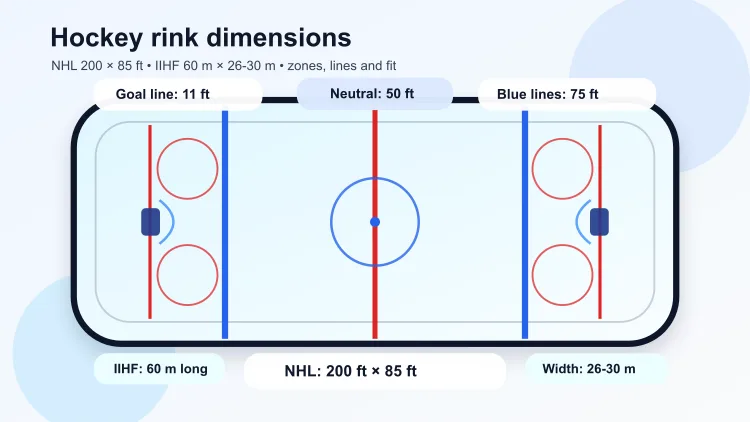
Hockey Rink Dimensions: NHL, IIHF and Youth Sizes
Official hockey rink dimensions for NHL, North American, IIHF and Olympic ice, with rink lines, zones, goal lines, boards and a fit calculator.
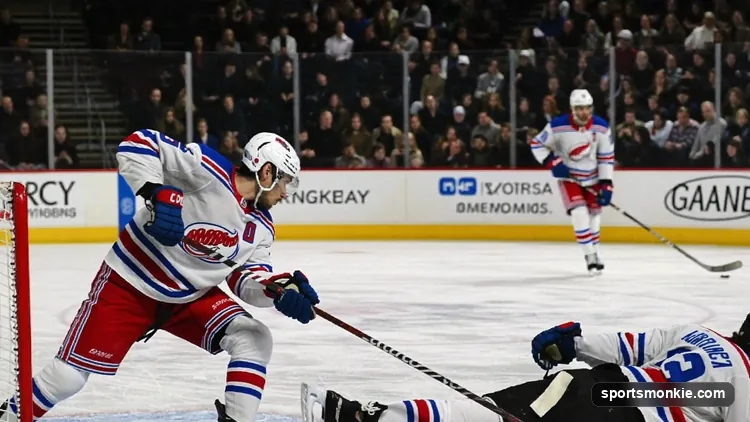
What Is Cross-Checking in Hockey? NHL Rule Explained
Cross-checking in hockey is using the stick shaft with both hands to shove an opponent; learn the NHL rule, penalties, and how it differs from slashing.
NHL Pulls 'Hot for Hockey' Romance Audio Series From Spotify Less Than a Week After Launch
The NHL has removed its 'Hot for Hockey' romance-style audio stories from Spotify and will make no more, less than a week after launching the series.
Hockey Terminology Glossary: 60+ NHL Terms Explained
A complete hockey terminology glossary covering NHL rules, positions, penalties, and slang terms every fan needs to know.
How Many Innings Are in a Baseball Game? (9 in MLB)
A baseball game has nine innings in MLB, the minors, and college. High school plays seven and Little League six. Here's every level, plus how long games last.
Types of Shots in Ice Hockey: Every Shot Explained
The main types of shots in ice hockey are the wrist shot, slap shot, snap shot, backhand, one-timer, wraparound, and deflection. Full breakdown here.