
Icing in Hockey Explained: The Rule, Simply

On this page6
Icing in hockey is when a player shoots the puck from their own half of the ice all the way across the opponent’s far goal line, untouched, and doesn’t score. Play stops, the puck comes back down the ice, and the team that iced it can’t change its tired skaters before the ensuing faceoff. In the NHL, officials don’t wait for someone to touch the puck to make that call. They judge a race to the faceoff dots instead, and that one detail, called hybrid icing, is where most of the confusion starts.
What is icing in hockey, exactly?
Under Rule 81 of the NHL’s official rulebook, icing happens when a team that is “equal or superior in numerical strength” to its opponent shoots, bats, or deflects the puck from its own half of the ice across the opposing goal line, without a goal being scored and without an opponent touching it first. Say a defenseman flips the puck the length of the ice from his own blue line with no one else near it. If it slides untouched all the way past the other team’s goal line, that’s icing.
Two conditions matter as much as the shot itself. First, the puck has to travel from the shooting team’s own half; a puck shot from inside the offensive zone can never be iced. Second, the rule only applies at even strength or when the shooting team has the man advantage. A team down a skater on the penalty kill gets to clear the puck the full length of the ice with no penalty at all, which matters more than it sounds. See our breakdown of how a power play works in hockey for just how much cushion that shorthanded exception buys a penalty-killing unit.
What is hybrid icing, and why does the NHL use it?
For decades the NHL used touch icing: the whistle didn’t blow until a player actually reached the puck near the end boards. That meant two skaters, one trying to touch the puck to keep it alive and one trying to touch it first to kill the play, sprinting full speed into the corner together. It produced real injuries, and the NHL adopted hybrid icing for the 2013-14 season after a string of board collisions, most notably Carolina defenseman Joni Pitkänen’s career-ending injury chasing an icing call.
Hybrid icing keeps the payoff of touch icing (a team can still beat the whistle and keep play alive by winning the race) without forcing two players to collide at full speed to prove it. The faceoff dots in each zone, roughly even with the top of the circles, became the new finish line for judging that race safely.
How hybrid icing actually gets called
This is where reader confusion is loudest, and it’s worth clearing up properly: hybrid icing is not a rule about which skate blade crosses a painted dot first. The dot is a reference point, not a finish line with a sensor. The linesman is judging, in real time, who would win the race to the puck, and the moment that outcome looks settled, the whistle goes, even if the defending player hasn’t physically reached the dot yet.
That judgment call is exactly why hybrid icing calls look inconsistent from game to game. Some linesmen blow the whistle the instant a defenseman is clearly going to arrive first, well behind the dot. Others let the race play out closer to the dot itself before deciding. Neither is wrong under the rule, because Rule 81 asks for a judgment, not a photo finish, but it’s why a fast forechecker can occasionally look like he had a real shot at the puck and still get waved off. The forecheck itself is legitimate: if the attacking player is clearly going to win the race, hybrid icing rewards that speed and keeps play live exactly like touch icing did.
When is icing waved off?
Icing gets called off, meaning play continues, in a handful of specific situations:
- The icing team is shorthanded. A team on the penalty kill can clear the puck the length of the ice without being whistled.
- An opposing player could have played the puck. If the linesman judges a defender was in position to touch it before the goal line and simply chose not to, icing is waved off, not rewarded.
- The goaltender plays it or moves to play it. A goalie stopping, redirecting, or even skating out to challenge for the puck kills the icing call outright.
- The puck deflects off any player, stick, or official before fully crossing the goal line, since deflected pucks were never “shot” cleanly in the first place.
- The puck goes in as a goal. An iced puck that somehow beats the goaltender still counts.
How the icing rule differs: NHL vs IIHF vs NCAA vs youth hockey
The good news for anyone trying to learn the rule once: the top levels of the sport have converged on the same standard.
| League / level | Icing type | Adopted | Shorthanded team exempt? |
|---|---|---|---|
| NHL | Hybrid (race to the dot) | 2013-14 season | Yes |
| IIHF (international, incl. Olympics) | Hybrid | Switched after the 2014 World Championship, from no-touch | Yes |
| NCAA (college) | Hybrid | Long-standing; NCAA is further aligning other rules with the NHL for 2026-27 | Yes |
| USA Hockey (youth, below 15U) | No-touch (automatic) | Current through the 2025-29 rulebook cycle | Age-dependent: 15U and Girls 16U and up may ice while shorthanded; younger divisions may not |
The IIHF ran no-touch icing from 1990, adopted after a Czechoslovak league player died from a boards collision chasing an icing call, until it switched to hybrid icing following the 2014 World Championship, bringing international play in line with the NHL. That means the 2026 Milano-Cortina Olympic tournament was called under the same hybrid standard NHL fans already know. The one real gap left is youth hockey: USA Hockey still runs no-touch icing below the 15U level specifically because it removes the race entirely, which matters more for developing skaters than it does for the professionals racing to the dot on Original Six ice on a Saturday night.
Icing vs. offside: what’s the difference?
Icing and offside get lumped together because both are whistled dead for a faceoff, but they’re unrelated calls watching completely different parts of the ice. Icing is about the puck traveling the length of the rink from the shooting team’s own half, uncontested, into the opponent’s end. Offside is about player position at the blue line: an attacking player’s skates cannot fully cross into the offensive zone before the puck does, or the play is dead and comes back for a faceoff outside that zone.
Different officials even watch for them: the two linesmen straddle the blue lines for offside, while either linesman can judge an icing race down at the far end. If you remember one distinction, make it this: icing is a puck problem in the neutral and defensive zones, offside is a positioning problem at the attacking blue line. To see exactly where those blue lines, goal lines and faceoff dots sit, use our hockey rink dimensions diagram.
Ready to see hybrid icing called live instead of just reading about it? It happens dozens of times a night in the highest-stakes hockey there is. Grab seats for the Eastern Conference Finals and watch the linesman’s arm go up before the defenseman even reaches the dot. And if you want to know exactly what the sport was trying to prevent when it built this rule, our list of the biggest hits in NHL history shows how physical this game already is without adding a full-speed race to an empty corner. For more rules explainers like this one, visit our Ice Hockey hub.
Frequently asked questions
What is icing in hockey?+
Icing is when a player shoots the puck from their own half of the ice all the way across the opponent's goal line, untouched, without scoring. Play stops for a faceoff in the offending team's defensive zone. It only applies at even strength or on the power play; a shorthanded team can clear the puck freely.
What is hybrid icing?+
Hybrid icing is the NHL's version of the rule, used since the 2013-14 season. Instead of waiting for a player to physically touch the puck near the boards, the linesman stops play the instant a defending player is judged to be first to the faceoff dots, cutting out dangerous board-crash races entirely.
What happens when icing is called in hockey?+
The linesman blows the whistle, and the puck is brought back for a faceoff in the zone of the team that iced it. That team cannot change its skaters before the draw, so a tired forward stuck on the ice stays there. That's the real cost of icing, more than the stoppage itself.
When does hybrid icing not get called?+
It's waved off if the icing team is shorthanded, if the goaltender plays or moves to play the puck, if any opposing player could reasonably have reached it first, or if the puck deflects in off a stick, skate, or official before crossing the line. Any of those keeps play live.
What is the difference between icing and offside in hockey?+
Icing is about a puck shot the length of the ice from the shooting team's own half; offside is about an attacking player's skates crossing the blue line ahead of the puck. Different lines and different officials watch for them, but both stop play for a faceoff.
Is icing the same in the NHL, IIHF, and college hockey?+
Mostly, yes. The NHL, IIHF (since 2014), and NCAA all use hybrid icing today. The gap is at the youth and amateur level: USA Hockey still runs no-touch icing, where the whistle blows the instant the puck crosses the goal line, no race required.
Sources
Play & tools
Free browser games and tools — no account, no download.
- Play 98-0 — Draft a 12-player all-time NHL roster and chase a perfect 98-0 — 82 regular-season wins plus a swept Cup.
- Explore all our games →
Related ice hockey guides
View all →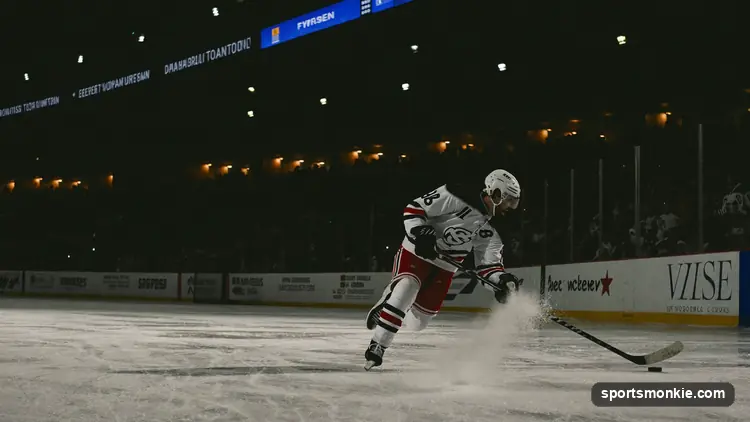
What Is Icing in Hockey?
Icing in hockey explained: NHL Rule 81, why the whistle blows, where the faceoff goes, and why there's no icing while short-handed on a penalty kill.

Power Play in Hockey Explained: The Rule, Simply
What a power play means in hockey, how long minor, double-minor, and major penalties last, and when a power-play goal ends the penalty early.
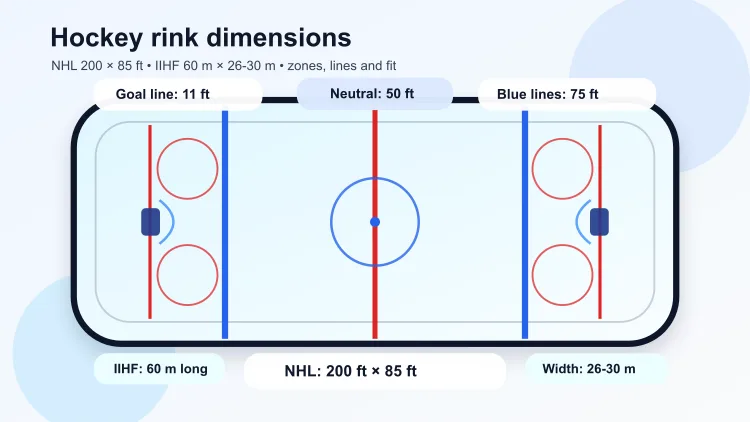
Hockey Rink Dimensions: NHL, IIHF and Youth Sizes
Official hockey rink dimensions for NHL, North American, IIHF and Olympic ice, with rink lines, zones, goal lines, boards and a fit calculator.
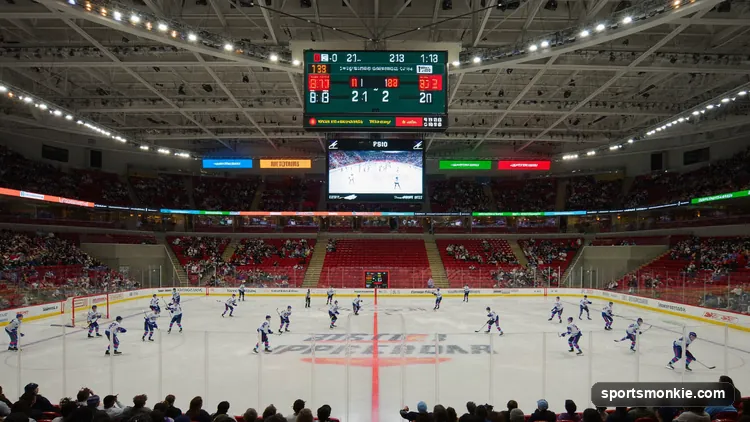
How Many Periods Are in a Hockey Game? NHL Rules Explained
How many periods are in a hockey game: three 20-minute periods, how long intermissions last, and how NHL overtime and shootouts settle ties.
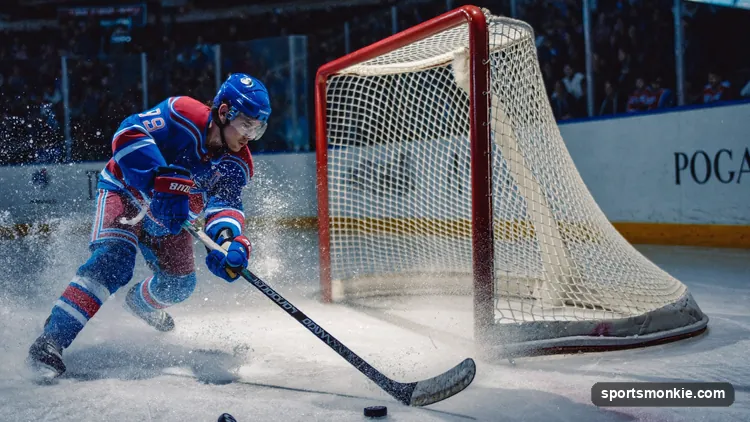
Types of Shots in Ice Hockey: Every Shot Explained
The main types of shots in ice hockey are the wrist shot, slap shot, snap shot, backhand, one-timer, wraparound, and deflection. Full breakdown here.
What Is a Deke in Hockey? Meaning, Types, and Examples
A deke in hockey is a fake move used to skate past a defender or goalie. Learn the term's origin, the main types of dekes, and how they're used.