
Biggest Hockey Hits in NHL History

On this page10
Ranked by a blend of on-ice consequence — did the check swing a game, a series, or a career — how clean and legal it was in its era, and its lasting cultural footprint. Open-ice shoulder and hip checks are weighted above knee-on-knee or elbow shots that landed mostly through injury.
The biggest NHL hits at a glance
| Rank | Hit or player | Why it stands out |
|---|---|---|
| 1 | Scott Stevens on Eric Lindros | Game 7 hit with lasting career consequences |
| 2 | Scott Stevens on Paul Kariya | Kariya returned and scored in the 2003 Final |
| 3 | Cam Neely | Power-forward benchmark before early retirement |
| 4 | Denis Potvin | Open-ice hip-check specialist |
| 5 | Dion Phaneuf | Defining hitter as Rule 48 arrived |
- The benchmark
Scott Stevens on Eric Lindros (2000)
This is the hit every list starts with, and it ranks first because no other check combined this much timing, this big a stage, and this large a consequence. Just 7:50 into Game 7 of the 2000 Eastern Conference Final on May 26, 2000, Flyers captain Eric Lindros carried the puck through the neutral zone with his head down, and Devils captain Scott Stevens stepped up and caught the 6-foot-4, 245-pound center flush.
It sits above the Kariya hit below because of what followed off the ice: it was Lindros' fourth concussion in five months. He missed the entire 2000-01 season and was later traded, while New Jersey won Game 7 2-1 and went on to lift the Stanley Cup. Stevens, nicknamed "Captain Crunch," is the name that anchors most lists of the most dangerous NHL players.
Hit: shoulder to the head · Stage: Game 7, 2000 East Final · Result: Lindros KO'd, out a full season · Legal then? Yes
- The comeback hit
Scott Stevens on Paul Kariya (2003)
Three years later Stevens authored the sequel, and it ranks second only because Kariya's response softened the ending. In Game 6 of the 2003 Stanley Cup Final, Ducks captain Paul Kariya dumped the puck in and never saw Stevens coming; the check laid him out cold, and he lay motionless as the Anaheim crowd fell silent.
What makes the moment legendary is the twist a lesser hit could not produce. Kariya returned later in the period and drilled a slap shot past Martin Brodeur to make it 4-1, drawing the famous "off the floor, on the board" broadcast call. Anaheim won Game 6, though New Jersey took the series in seven. Kariya has since said he has no memory of the rest of that Final.
Hit: shoulder, open ice · Twist: Kariya returned and scored · Series: NJ won in 7 · Legal then? Yes
- Power-forward standard
Cam Neely
Neely earns the top spot among pure hitters because he weaponized bodychecking as a scorer, not an enforcer. At 6-foot-1 and roughly 215 pounds, "Bam-Bam Cam" punished defensemen along the boards and in front of the net while also burying goals, and he still scored 50 goals in 44 games in 1993-94 after injuries had already gutted his mobility.
He ranks above the hip-check specialist below him because his hitting shaped both ends of the ice, but his story also carries the era's cost. A knee-on-knee hit from Penguins defenseman Ulf Samuelsson in the 1991 playoffs led to myositis ossificans in his thigh, a chronic condition that forced him to retire in 1996 at age 31. He won the Bill Masterton Trophy for perseverance and is one of the greatest NHL players whose peak was cut short.
Team: Boston Bruins · Frame: 6-1, ~215 lb · Feat: 50 goals in 44 games (1993-94) · Note: retired at 31 from injury
- Hip-check master
Denis Potvin
Before shoulder checks dominated, the hip check was the connoisseur's bodycheck, and Potvin ranks here as its definitive practitioner. The Islanders' Hall of Fame defenseman was built low and powerful; he could read a puck carrier's path, drop his hips at the last instant, and flip an unsuspecting forward into the air without ever leaving his feet.
He lands below Neely because his hitting was a defensive art rather than a two-way weapon, but the hip check is one of the cleanest hits in hockey — the contact stays low, well away from the head. Potvin won three Norris Trophies and captained the Islanders to four straight Stanley Cups from 1980 to 1983, pairing spectacular open-ice checks with elite production.
Team: New York Islanders · Signature: open-ice hip check · Honors: 3× Norris, 4 Stanley Cups · Legal then? Yes
- Modern open-ice
Dion Phaneuf
Phaneuf represents the last generation of defensemen built around the big open-ice check before Rule 48 narrowed the window. Breaking in with Calgary in the mid-2000s, he timed forwards cutting across the middle and detonated shoulder-first, and for a stretch he was the hardest-hitting blueliner in the league.
He rounds out the list because his hits, while thunderous, rarely carried the game-swinging or career-altering weight of the checks above — and because the sport was already changing around him. Several of his signature open-ice shots came right as the league began writing head contact out of the rulebook, making him a useful bookend between the Stevens era and today's game.
Teams: Flames, Maple Leafs, Senators · Era: 2005-2018 · Style: open-ice shoulder check · Context: hit as Rule 48 took hold
Reader interaction
Build your ranking
Drag the names into the order you think is right — or use the arrows — then submit to see how your list compares with everyone else's.
- Scott Stevens on Eric Lindros (2000)
- Scott Stevens on Paul Kariya (2003)
- Cam Neely
- Denis Potvin
- Dion Phaneuf
Audience ranking
How everyone ranked them
Built from reader rankings using position-based points.
The names above are the answer to “biggest hits in NHL history.” The sections below explain how they were ranked, what actually makes an open-ice check land, and how a decade of rule changes redrew the line between a legendary hit and a suspendable one.
How we ranked these hits
Three factors decided the order. First, consequence: a check that swung a Game 7 or ended a career outranks one that only looked spectacular. Second, cleanliness in its era — hits that were legal shoulder or hip contact rank above knee-on-knee and elbow shots that did their damage through the injury rather than the collision. Third, cultural footprint: the hits people still pull up on video twenty years later carry weight that a one-off regular-season blow does not.
That is why Scott Stevens occupies the top two spots. His checks on Lindros and Kariya scored on all three counts at once — huge stage, legal contact for their time, and permanent place in the highlight canon. Pure hitters like Neely, Potvin, and Phaneuf are ranked on the body of their work rather than a single frame.
What makes an open-ice hit land
A great hockey hit is timed, not just violent. The best open-ice checks catch a puck carrier looking down at the puck or up-ice for a pass, so the target never braces. Leverage matters more than raw size: the hitter drives up through the body and delivers contact with the shoulder or the hip, the two points the rulebook still permits.
The hip check that made Potvin famous is the cleanest version because the contact stays low, nowhere near the head. The shoulder check that defined Stevens is more dangerous precisely because a player exploding upward can catch a bent-over opponent in the head — which is exactly the contact the modern game legislated against.
At-a-glance: the biggest hits
| Hit or hitter | Era | Point of contact | Legal then? |
|---|---|---|---|
| Scott Stevens on Eric Lindros | 2000 playoffs | Shoulder to head | Yes |
| Scott Stevens on Paul Kariya | 2003 Final | Shoulder | Yes |
| Cam Neely | late 1980s–1990s | Shoulder / boards | Yes |
| Denis Potvin | 1970s–80s | Hip | Yes |
| Dion Phaneuf | 2000s–2010s | Shoulder | Mostly |
How concussion rules rewrote the line
The hits that defined earlier eras would be officiated very differently today. For the 2010-11 season the NHL introduced Rule 48, the illegal check to the head, first banning contact to the lateral side of the head and then, in 2011-12, widening it to cover all head contact. It became the rule on which the Department of Player Safety was built, and it is the reason a Stevens-style step-up now carries real risk for the hitter.
The league also adopted a formal concussion evaluation protocol in 2011, requiring players suspected of a concussion to leave the ice and clear a multi-stage return process. Studies since have found that head hits from the newly banned area declined measurably. As of 2026 the clean bodycheck remains legal and celebrated, but the checks on this list are best understood as artifacts of a game that no longer lets its hardest hitters aim where they once did. For the current cost of that physical style, see how teams now manage risk around their highest-paid NHL players.
Frequently asked questions
What is the most famous hit in NHL history?+
Scott Stevens' shoulder check on Eric Lindros in Game 7 of the 2000 Eastern Conference Final is the most-cited hit in NHL history. Lindros cut through the neutral zone with his head down and Stevens caught him flush, ending his night. It was ruled legal at the time. The moment endures because it decided a Game 7 and effectively ended Lindros' prime in Philadelphia, combining stakes, timing, and consequence in one collision.
Would the Stevens hit on Lindros be legal today?+
Almost certainly not. Under the rules in place in May 2000 it was clean, but the principal point of contact was Lindros' head. Today it would likely draw a five-minute major, a game misconduct, and supplemental discipline under Rule 48, the illegal check to the head. That rule did not exist until 2010-11, which is why a hit celebrated in its era would be a suspendable offense in the modern NHL.
Did Paul Kariya really score after being knocked out?+
Yes. In Game 6 of the 2003 Stanley Cup Final, Stevens flattened Kariya, who lay motionless before returning later in the same period. Kariya then beat Martin Brodeur with a slap shot to give Anaheim a 4-1 lead, prompting the famous 'off the floor, on the board' broadcast call. Anaheim won that game, though New Jersey took the series in seven. Kariya has since said he has no memory of the rest of the Final.
Why did Cam Neely retire so early?+
Neely's decline traces to a knee-on-knee hit from Ulf Samuelsson in the 1991 playoffs, which led to myositis ossificans in his thigh. The chronic condition eroded his mobility and forced him to retire in 1996 at age 31, cutting short a great power-forward career. Remarkably, he still scored 50 goals in 44 games in 1993-94 between flare-ups and won the Bill Masterton Trophy for his perseverance through the injury.
What is NHL Rule 48?+
Rule 48, the illegal check to the head, was introduced for the 2010-11 season. It first banned targeting the lateral, or blindside, part of the head, then was widened in 2011-12 to cover contact to all parts of the head. It became the foundation of the NHL's Department of Player Safety and is the rule that reclassified many old open-ice hits from legendary to penalized, changing how defensemen are coached to step up.
Are big open-ice hits still allowed in the NHL in 2026?+
Yes. A clean bodycheck, where the shoulder or hip is the point of contact and the head is not targeted, remains legal and part of the game as of 2026. What changed is that head-targeting, blindside, and charging hits now draw penalties and suspensions. Players are still leveled in open ice every season, but the checks that once ended careers by design are now the ones most likely to bring supplemental discipline.
Sources
Play & tools
Free browser games and tools — no account, no download.
- Play 98-0 — Draft a 12-player all-time NHL roster and chase a perfect 98-0 — 82 regular-season wins plus a swept Cup.
- Explore all our games →
Related ice hockey guides
View all →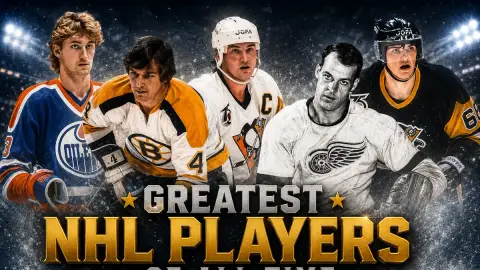
Greatest NHL Players of All Time: The Definitive Ranked List
A ranked list of the greatest NHL players ever, from Wayne Gretzky and Bobby Orr to Mario Lemieux, Gordie Howe, and Sidney Crosby, weighed by the numbers.
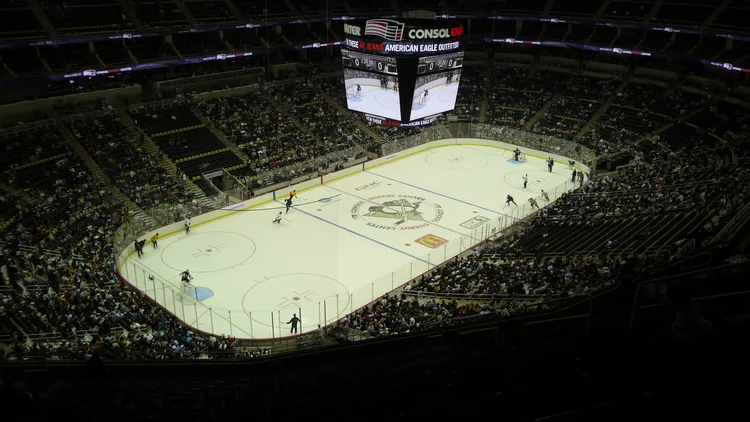
Black, the Tallest Goalie in NHL History, Takes the Loss in a 4-0 Shutout in Pittsburgh
Florida rookie Cooper Black starts in Pittsburgh tonight. At 6-foot-8 he becomes the tallest goalie in NHL history, passing the 6-foot-7 mark five goalies shared.
NHL Pulls 'Hot for Hockey' Romance Audio Series From Spotify Less Than a Week After Launch
The NHL has removed its 'Hot for Hockey' romance-style audio stories from Spotify and will make no more, less than a week after launching the series.
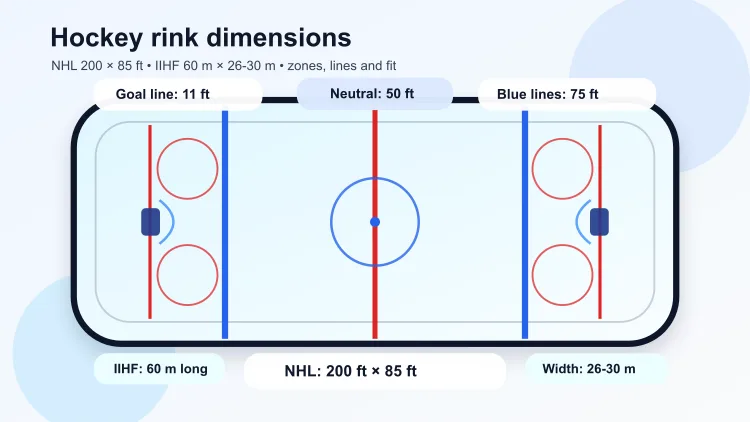
Hockey Rink Dimensions: NHL, IIHF and Youth Sizes
Official hockey rink dimensions for NHL, North American, IIHF and Olympic ice, with rink lines, zones, goal lines, boards and a fit calculator.
Hockey Terminology Glossary: 60+ NHL Terms Explained
A complete hockey terminology glossary covering NHL rules, positions, penalties, and slang terms every fan needs to know.
How Many Periods Are in a Hockey Game? NHL Rules Explained
How many periods are in a hockey game: three 20-minute periods, how long intermissions last, and how NHL overtime and shootouts settle ties.