
Tennis Grips Explained: The 4 Grips and When to Use Each
On this page8
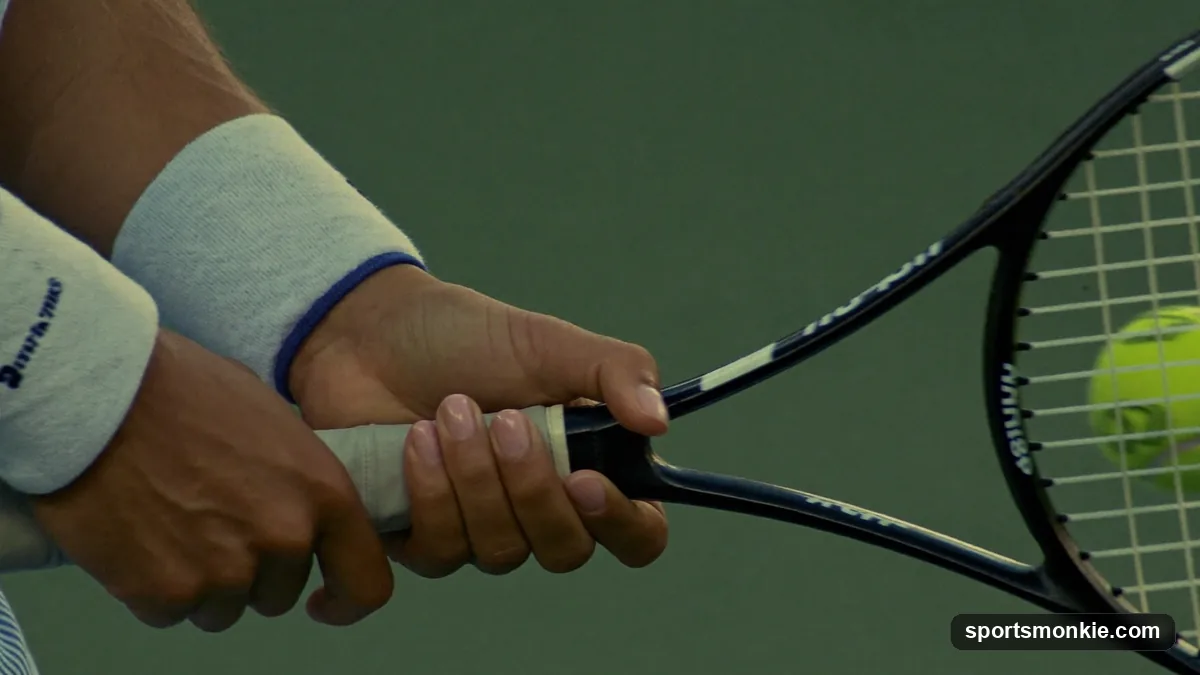
A tennis grip is defined by which of the handle’s eight flat sides, called bevels, sits under the base knuckle of your index finger. There are four main grips: Continental (bevel 2) for serves and volleys, Eastern (bevel 3) for flat forehands, Semi-Western (bevel 4) for modern topspin, and Western (bevel 5) for extreme spin. Good players change between them automatically, choosing the grip that matches the shot they are about to hit.
How the Bevel System Works
Look down the end of your racket handle and you will see an octagon: eight flat faces, or bevels. For a right-handed player they are numbered 1 through 8 clockwise, starting from the top face (a left-hander numbers them counter-clockwise, so the bevel logic mirrors). Your grip is named by which bevel your index-finger base knuckle rests on, with the heel pad of your palm anchoring nearby.
That single reference point is the whole system. Rotate one bevel clockwise and you close the racket face a little more at contact, which trades a flatter, faster ball for more topspin. This is why the progression from Continental to Western is really a spin dial. If you are still getting comfortable with the racket itself, our guide on how to hold a tennis racket walks through the neutral starting position before you rotate to any specific grip.
Continental Grip (Bevel 2)
The Continental grip is the sport’s Swiss Army knife. Put your knuckle on bevel 2 and the hold feels like gripping a hammer, which is why it is nicknamed the “hammer grip.” Every serve, overhead, volley, slice, and drop shot runs on it because the slightly open face lets you cut under the ball and the wrist can pronate freely through a serve.
To find it, hold the racket edge-on like an axe and shake hands with the handle. It feels awkward on a full topspin forehand, and that is expected, the Continental is not a groundstroke weapon in the modern game. It is, however, non-negotiable for serving, so master it alongside our breakdown of how to serve in tennis and the spin variation in how to hit a kick serve. For a deeper single-grip walkthrough, see our dedicated guide to the continental grip in tennis.
Eastern Grip (Bevel 3)
Rotate one bevel clockwise from Continental and your knuckle lands on bevel 3: the Eastern forehand grip. The quickest way to find it is to lay your palm flat against the strings and slide it straight down to the handle without twisting. Because it sits square behind the ball, it drives a clean, flat-to-moderate topspin forehand and handles low balls better than any of the more rotated grips.
That reliability is why coaches almost always teach the Eastern first, and why it pairs naturally with the fundamentals in how to hit a tennis forehand. It is also the most forgiving grip for players still building consistency through tennis drills for beginners. Our full eastern grip in tennis guide covers its strengths and the shots where it starts to run out of spin.
Semi-Western Grip (Bevel 4)
Turn one more bevel clockwise to bevel 4 and you reach the Semi-Western, the default forehand grip across the modern professional tour. Setting the knuckle here closes the racket face a touch at contact, so the strings brush up the back of the ball and impart heavy topspin. That spin is what lets players swing hard and still keep the ball dropping inside the baseline.
The Semi-Western shines on the mid-to-high contact points a topspin rally produces, but it forces you to bend more for low balls. If your goal is a heavier, more aggressive ball, work it together with our guide on how to hit topspin in tennis, and read the full semi-western grip in tennis breakdown for the swing path that gets the most out of it.
Western Grip (Bevel 5)
One more bevel clockwise, to bevel 5, gives you the Western grip, the extreme end of the spin dial. The face is closed so much at rest that players hit with a steep, low-to-high swing and generate the heaviest topspin in the game, ideal on high-bouncing balls and slow clay courts.
The trade-off is real: the Western struggles badly on low balls and fast, skidding surfaces, and it makes the transition to flat volleys harder. It is a specialist’s grip, not a starting point. Most players are better served building from Eastern or Semi-Western and only rotating this far if their game is built around extreme spin.
Which Grip for Which Shot
Because no single grip covers every shot, matching the grip to the stroke is the real skill. Use this as a quick reference:
| Grip | Index Knuckle Bevel | Best Shots | Spin |
|---|---|---|---|
| Continental | Bevel 2 | Serves, volleys, slices, overheads, drop shots | Flat / backspin |
| Eastern | Bevel 3 | All-round forehand, flat drives, low balls | Flat to light topspin |
| Semi-Western | Bevel 4 | Modern topspin forehand, high balls | Moderate to heavy topspin |
| Western | Bevel 5 | Heavy-spin forehand on high, slow balls | Very heavy topspin |
| Eastern Backhand | Bevel 1 | One-handed backhand, backhand topspin | Flat to topspin |
The backhand deserves its own note: a one-handed backhand uses the Eastern backhand grip on bevel 1, while a two-hander keeps the dominant hand near Continental and stacks a non-dominant Eastern forehand grip above it. Our guide on how to hit a tennis backhand covers both wings in detail.
How and When to Switch Grips
Grip changes happen constantly in a rally, and the players who look effortless are simply changing early. The change is driven by your non-dominant hand: it cradles the racket throat and rotates the handle to the new bevel while your dominant fingers relax, then re-settle. Done right, it costs a fraction of a second and needs no glance at your hand.
Time it to your footwork, not the incoming ball. On the split step you read whether the ball is coming to your forehand or backhand side, and you make the grip change during the unit turn, well before the racket swings back. Rushing the change to the last instant is a common cause of shanked shots, so it is worth pairing grip drills with tennis footwork drills so the two habits lock together. Racket choice matters here too; a head-light frame rotates faster in the hand, which our guide on how to choose a tennis racket explains.
Common Grip Mistakes to Avoid
Squeezing too hard. A death grip locks the wrist, kills spin, and is a frequent cause of tennis elbow. Hold loosely through the swing and firm up only at contact. A worn, slick handle makes you squeeze without realizing it, so learn how to regrip a tennis racket and keep a fresh, tacky grip on the frame.
Using one grip for everything. Beginners often try to serve, volley, and drive forehands all from the same hold. That caps both spin and touch. Learn Eastern and Continental as a pair first.
Starting with the Western grip. Its extreme spin is tempting, but it punishes low balls and slows your development. Build outward from Eastern or Semi-Western instead.
Changing grips too late. If you are still rotating the handle as the ball arrives, you will mishit. Make the change on the turn, not at contact.
Grips are the foundation every stroke is built on, so drilling them until they are automatic pays off across your entire game, from the serve to the passing shot. Once the four grips feel natural, the rest of your technique has something solid to stand on.
Frequently asked questions
What are the four main tennis grips?+
The four main grips are Continental, Eastern, Semi-Western, and Western, each defined by where your index knuckle rests on the handle's eight bevels. Continental sits on bevel 2 for serves and volleys, Eastern on bevel 3 for flat forehands, Semi-Western on bevel 4 for topspin, and Western on bevel 5 for extreme spin.
What is the continental grip used for?+
The Continental grip is the all-purpose 'touch' grip. It is used for every serve, the overhead smash, all volleys, slice backhands, drop shots, and defensive lobs. Because the racket face stays slightly open, it lets you cut under the ball for backspin and lets the wrist pronate naturally on serves, which is why coaches teach it first for serving.
Which tennis grip is best for beginners?+
Most coaches start beginners with the Eastern forehand grip because it feels natural, works at any contact height, and hits a clean, flat-to-moderate topspin ball with little wrist strain. Pair it with the Continental grip for serving and volleys. Learn those two solidly before experimenting with the more spin-heavy Semi-Western or Western grips.
How do you change tennis grips during a rally?+
You change grips by loosening your fingers and using your non-dominant hand, which cradles the racket throat, to rotate the handle to the new bevel. The dominant hand just re-settles. It takes a fraction of a second and happens on the split step or during your unit turn, before the racket goes back, not at the last moment.
What grip do professional players use for the forehand?+
Most modern professional baseliners use a Semi-Western forehand grip (bevel 4) because it generates the heavy topspin that keeps hard, fast shots landing inside the court. Some clay-court specialists rotate further to a full Western grip for even more spin, while a few flatter, aggressive hitters stay closer to Eastern for a lower, faster ball.
Does the grip change between a one-handed and two-handed backhand?+
Yes. A one-handed backhand uses an Eastern backhand grip (index knuckle on bevel 1) on the dominant hand. A two-handed backhand keeps the dominant hand near Continental and adds the non-dominant hand in an Eastern forehand grip above it, and that top hand does most of the driving and topspin work through contact.
Sources
Play & tools
Free browser games and tools — no account, no download.
- Play today's Sports Connections — Today's Sports Connections — daily hints, answers, and play the grid.
- Play Guess the NFL Player — A new mystery NFL player every day. Eight guesses, with a clue on each — plus free unlimited mode.
- Explore all our games →
Related tennis guides
View all →
How to Hold a Tennis Racket: 5 Grips Every Player Should Know
How you hold a tennis racket shapes your swing, spin, and reach. The five main grips are Continental, Eastern, Semi-Western, Western, and two-handed.
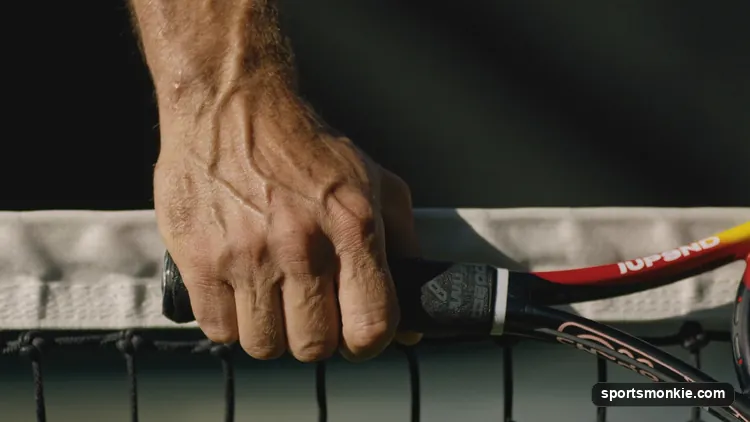
Continental Grip in Tennis: How to Hold It and When to Use It
The continental grip places the base knuckle of your index finger on bevel 2 of the racket handle. It is the grip for serves, volleys, slices, and overheads. Here is how to find it and drill it.
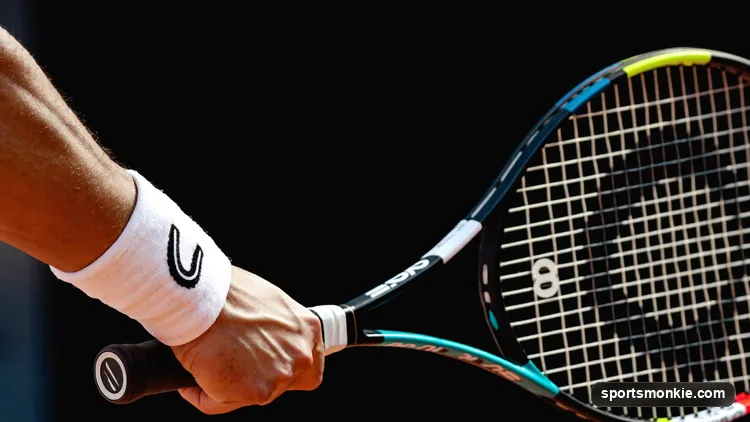
Semi-Western Grip in Tennis: The Modern Topspin Forehand Grip
The semi-western grip places your index knuckle on bevel 4 and is the standard modern topspin forehand grip. Here is how it works, who uses it, and how to switch from an eastern grip.
Tennis Volley Technique: Grip, Punch, and Footwork to Win the Net
Master tennis volley technique with a continental grip, a short punch instead of a swing, a split-step, and contact out in front. Step-by-step form plus drills.

What Is a Volley in Tennis? Grip, Technique, and When to Attack the Net
A volley in tennis is a shot hit before the ball bounces, usually at the net. Learn grip, punch technique, and forehand vs. backhand volley form.
Drop Shot in Tennis: Technique, Timing, and When to Use It
A drop shot in tennis is a soft, backspin-heavy stroke that just clears the net and dies short. Learn the grip, disguise, and when to hit it.