
10 Best Tennis Drills for Beginners to Learn Fast
On this page14
- 01The 10 Best Beginner Tennis Drills at a Glance
- 021. Mini-Tennis (Service-Box Rally)
- 032. Drop-Feed Rally
- 043. Target Cone Drill
- 054. Wall Drill (Backboard Rally)
- 065. Shadow Swing Drill
- 076. Serve Basket Drill
- 087. Split-Step Reaction Drill
- 098. Cross-Court Consistency Drill
- 109. Volley-to-Volley Drill
- 1110. Around-the-World Drill
- 12What Makes a Good Beginner Tennis Drill
- 13How to Build a 30-Minute Beginner Session
- 14Common Mistakes Beginners Make in Practice
The best tennis drills for beginners build control before power, and they start small. Mini-tennis inside the service boxes teaches clean contact, then drop-feed rallies, target cones, and wall drills add accuracy, movement, and reps. Below are 10 drills ranked by what they build, from your very first rally to a reliable serve. Do a handful three times a week and you will rally sooner than lessons alone deliver.
The 10 Best Beginner Tennis Drills at a Glance
| # | Drill | Builds | Solo or Partner |
|---|---|---|---|
| 1 | Mini-Tennis | Contact, control, rally feel | Partner |
| 2 | Drop-Feed Rally | Groundstroke consistency | Partner |
| 3 | Target Cone Drill | Depth and direction | Either |
| 4 | Wall Drill | Solo reps, timing | Solo |
| 5 | Shadow Swing Drill | Stroke path, no pressure | Solo |
| 6 | Serve Basket Drill | Serve toss and contact | Solo |
| 7 | Split-Step Reaction Drill | Movement, first step | Either |
| 8 | Cross-Court Consistency | Rally length, margin | Partner |
| 9 | Volley-to-Volley Drill | Net hands, reflexes | Partner |
| 10 | Around-the-World Drill | Match fitness, variety | Group |
1. Mini-Tennis (Service-Box Rally)
Start here. Stand at your service line, partner at theirs, and rally softly using only the two service boxes with short, compact swings. The shortened court removes the temptation to swing hard, so you learn to watch the ball to the strings, meet it out in front, and control depth. The ITF’s Tennis Play and Stay program uses this exact starting point with slower foam and low-compression balls. Aim for 10 clean rallies before you move back a step.
2. Drop-Feed Rally
The drop-feed teaches a repeatable groundstroke without a moving target. Your partner (or you) drops a ball so it bounces waist-high a stride in front of you, and you drive it back over the net. Feed 10 to the forehand side, then 10 to the backhand. Because the ball arrives the same way every time, you can groove your swing path and grip. Pair it with the mechanics in our guide on how to hit a tennis forehand and how to hit a tennis backhand so each rep reinforces the correct shape.
3. Target Cone Drill
Place two cones (or ball cans) deep in each corner, about a metre inside the baseline and sidelines, and try to land drop-fed or rallied balls near them. This turns “just get it in” into aiming for depth and direction, the two things that pin an opponent back. Count how many of 20 balls land in the target zone and try to beat it each session. As your contact improves, brush up the back of the ball to add margin over the net using the technique in how to hit topspin in tennis.
4. Wall Drill (Backboard Rally)
A hitting wall is the most underrated beginner tool because it never misses and never gets tired. Stand about 6-8 metres back and rally against the wall, letting the ball bounce once between hits. It forces a quick, compact preparation and sharp timing, since the ball comes back faster than off a partner. Start with a soft, looping rally and only speed up once you can string 15-20 hits together. Ten minutes against a wall is worth a full basket of stationary feeds.
5. Shadow Swing Drill
Shadow swings groove the stroke with no ball and no fear of missing. Slowly rehearse your full forehand and backhand motion in front of a mirror or phone camera: unit turn, racket back, low-to-high swing, finish over the shoulder. Check that your non-hitting hand points across for balance and that you rotate your shoulders rather than just swinging the arm. Because there is no ball to react to, you can fix one piece of form at a time. Do 10 reps of each wing before you hit.
6. Serve Basket Drill
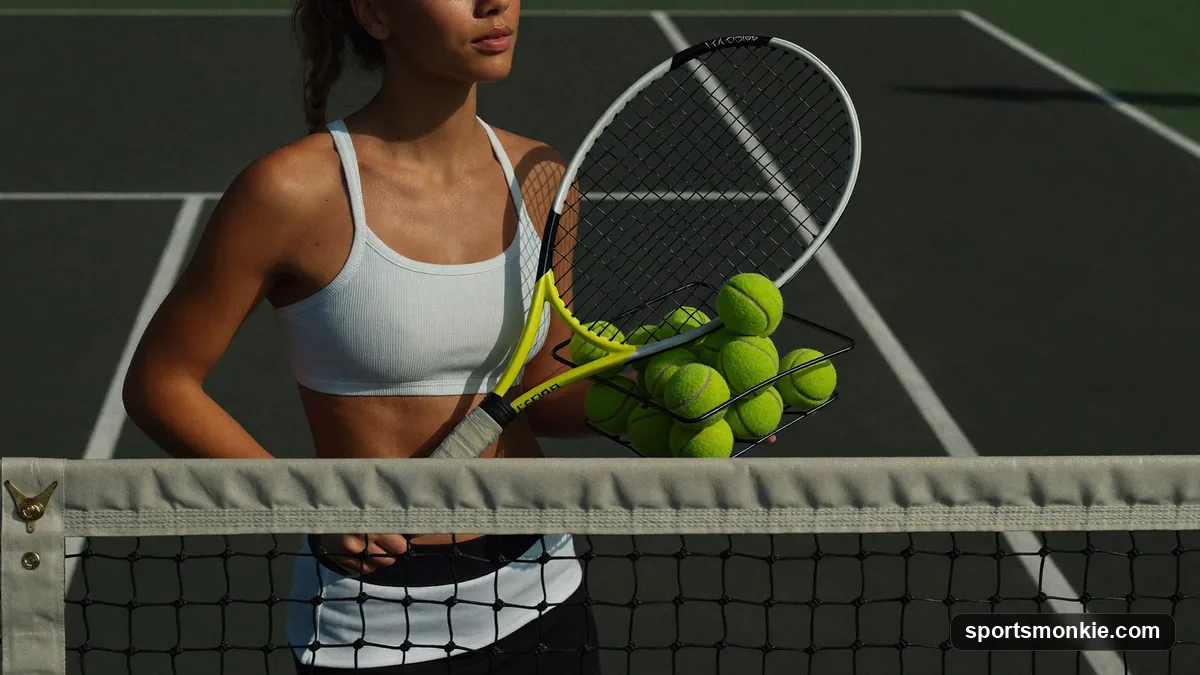
Grab a basket of 20-40 balls and serve them in blocks, no rush, no scoring. Beginners should split the drill: first practise just the toss (release from a straight arm, let it drop untouched, and mark where it lands), then add the strike. Use the continental grip that every server relies on, and build the full motion with our step-by-step guide on how to serve in tennis. Once flat serves land consistently, experiment with brushing up the back of the ball toward a kick serve.
7. Split-Step Reaction Drill
Footwork is what gets you to the ball on balance, and the split-step is its foundation. As your feeder tosses or hits, do a small hop and land on the balls of both feet just as they make contact, then push off toward the ball. Beginners who skip this arrive late and reach, which wrecks their stroke. Drill it with a partner calling “left” or “right” after your split, or work through a full set of tennis footwork drills that isolate the first step, recovery, and side-to-side movement.
8. Cross-Court Consistency Drill
Both players rally cross-court only, forehand to forehand, and count how many balls you keep in before a miss. Cross-court is the higher-percentage shot because the net is lower in the middle and the court is longer diagonally, so it is the pattern to learn first. Set a target, say 12 in a row, and rally at a controlled pace rather than trying to win the point. This drill builds the rally length that turns nervous beginners into steady ones.
9. Volley-to-Volley Drill
Stand at opposite service lines and volley the ball back and forth without letting it bounce, using short punch strokes rather than swings. Keep the racket head up, meet the ball in front, and hold the continental grip for both forehand and backhand volleys. This sharpens hand-eye coordination and soft touch, and it teaches the compact contact that helps every other shot. Start slow and close together, then gradually speed up as your reflexes catch up.
10. Around-the-World Drill
A fun group drill for three or more players: everyone lines up on one side, hits a ball, then runs around to the other side of the net to hit again, keeping one continuous rally going. It blends movement, alertness, and shot-making under mild fatigue, which is why coaches use it to end a session on energy. Miss a shot and you are out, last player standing wins. It quietly builds match fitness while feeling like a game, not a drill.
What Makes a Good Beginner Tennis Drill
A good beginner drill isolates one skill and gives you many clean reps of it. The best ones slow the ball down (short court, foam balls, wall rallies) so you succeed often enough to learn the pattern, then add difficulty in small steps. Prioritise contact and footwork over power, drill both wings evenly, and always tie a stroke drill back to correct grip and swing shape. A drill you can measure, like counting rally length or targets hit, beats aimless hitting because it shows real progress.
How to Build a 30-Minute Beginner Session
Structure beats random hitting. Warm up with 5 minutes of mini-tennis and shadow swings, spend 10 minutes on drop-feeds and target cones for groundstrokes, then 5 minutes on split-step and footwork movement. Give serves a focused 5-minute basket block, and finish with 5 minutes of cross-court rallying to bring it together live. Before any of it, make sure your grip is sound: our guides on how to hold a tennis racket, the beginner-friendly eastern grip, and the modern-topspin semi-western grip explain which bevel your knuckle should sit on for each shot.
Common Mistakes Beginners Make in Practice
Swinging for power too soon. Control comes first; speed is added on top of a repeatable stroke, not before it. Keep mini-tennis in the routine even as you improve.
Skipping footwork. Most missed balls come from arriving late, not a bad swing. Split-step on every shot, even in drills.
Drilling only your strong side. Feed your backhand as many balls as your forehand, or the weakness compounds.
Ignoring grips. A drill cannot fix a stroke built on the wrong grip; learn the eastern grip for forehands and continental for serves and volleys first.
No measurement. Count rallies, count targets hit, track serves in. If a session has no number attached, you cannot tell whether the drill is working. Keep a simple log and beat last week.
Frequently asked questions
What is the best tennis drill for an absolute beginner?+
Mini-tennis is the best starting drill. You and a partner rally softly inside the service boxes using short, controlled swings. The shorter court forces clean contact and control before power, so you learn to watch the ball, meet it in front, and keep a rally going without chasing every shot to the baseline.
How often should a beginner practice tennis drills?+
Three sessions of 20 to 30 minutes a week beats one long weekly hit. Skills like split-step timing and grip changes need frequent, unfatigued repetition to become automatic. Short, focused drilling several times a week grooves the pattern faster than a single exhausting two-hour session where form falls apart late.
Can you practice tennis drills alone without a partner?+
Yes. Wall drills, shadow swings, and serve-basket practice all work solo. A hitting wall gives you endless rally reps and never misses, shadow swings groove your stroke path with no ball, and a basket of balls lets you drill serve toss and contact. Solo work covers most fundamentals except live rally reading.
How long does it take a beginner to rally in tennis?+
Most beginners can sustain a slow 5-to-10-ball rally within four to six weeks of regular practice, usually starting from mini-tennis. Progress depends on frequency, not talent. Players who drill contact and footwork two or three times a week rally consistently far sooner than those who only play occasional matches.
Should beginners learn footwork or strokes first?+
Learn them together, with footwork leading. A good stroke hit from bad position still misses, so beginners should groove the split-step and recovery steps alongside stroke form from day one. Most beginner errors come from arriving late or off-balance, not from a flawed swing, so movement drills pay off quickly.
What equipment do beginners need for tennis drills?+
A racket, a basket of 20 to 40 balls, and a few cones or targets cover almost everything. A hitting wall or backboard adds unlimited solo reps, and low-compression foam or orange dot balls slow the ball down so beginners can control rallies while learning contact and timing.
Sources
Play & tools
Free browser games and tools — no account, no download.
- Play today's Sports Connections — Today's Sports Connections — daily hints, answers, and play the grid.
- Play Guess the NFL Player — A new mystery NFL player every day. Eight guesses, with a clue on each — plus free unlimited mode.
- Explore all our games →
Related tennis guides
View all →
9 Best Tennis Footwork Drills to Move Faster and Hit Cleaner (Ranked)
Nine tennis footwork drills ranked by what they fix: split-step reaction, lateral coverage, explosive change of direction, and recovery. Move faster, hit cleaner.
Tennis Volley Technique: Grip, Punch, and Footwork to Win the Net
Master tennis volley technique with a continental grip, a short punch instead of a swing, a split-step, and contact out in front. Step-by-step form plus drills.
9 Swimming Drills for Beginners That Build Real Technique
Nine beginner swimming drills, ranked easiest to hardest, with cues and rep counts for balance, kicking, breathing, and freestyle you can start today.
9 Best Golf Short Game Drills to Save Strokes Fast
The best golf short game drills, ranked by strokes saved. Nine chipping, pitching, bunker, and putting drills that fix distance control, strike, and speed.

8 Golf Weight Transfer Drills to Fix Your Weight Shift Fast
Eight golf weight transfer drills ranked by how fast they fix your weight shift, each matched to a specific fault: reverse pivot, hanging back, early extension, or a lazy transition.
How to Hit a Tennis Backhand: Grip, Turn, Contact, and Drills
To hit a tennis backhand, turn your shoulders early, load with an Eastern backhand or two-handed grip, swing low-to-high, and make contact out in front of your front hip.