
How to Hit a Tennis Backhand: Grip, Turn, Contact, and Drills
On this page7
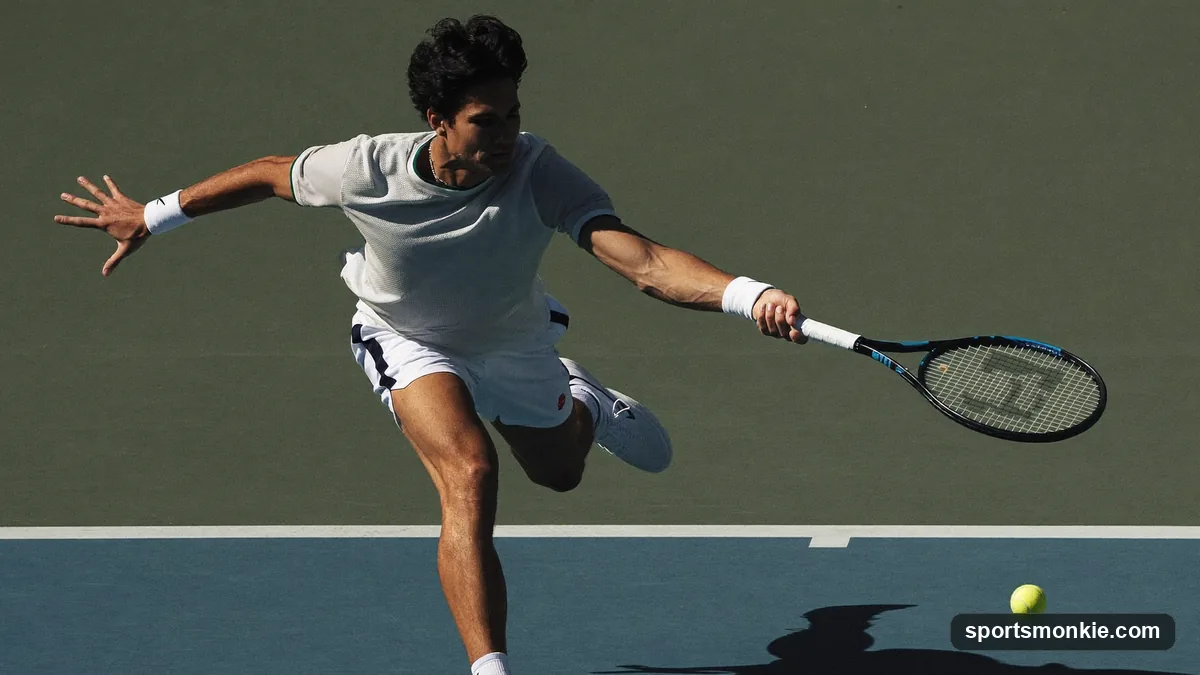
To hit a tennis backhand, turn your shoulders early to take the racket back, load onto your back foot, then swing low-to-high and strike the ball out in front of your front hip with a firm wrist, finishing with the racket up and over your opposite shoulder. The single biggest fix for a weak backhand is making contact in front of your body instead of letting the ball get behind you. Below is the full sequence — grip, turn, contact, follow-through — plus which version to learn first and the drills that groove it.
One-Handed vs Two-Handed Backhand: Which to Learn First
Start with the two-handed backhand if you are a beginner or club player. The second hand shortens the swing, stabilises the racket face against pace and high bounce, and lets you hit cleanly with less strength — which is why most juniors and pros are coached into it first. Learn the one-hander later if you want extra reach on wide balls and a more natural slice, and if your timing and upper-body strength support an earlier contact point.
Neither is “better” in the abstract; they are different tools, a trade-off we break down in full in our companion explainer on the tennis backhand. For most readers the honest answer is: build a reliable two-hander, add a one-handed slice for variety, and only commit to a full one-handed drive if the two-hander feels limiting.
Step 1: Get the Backhand Grip Right
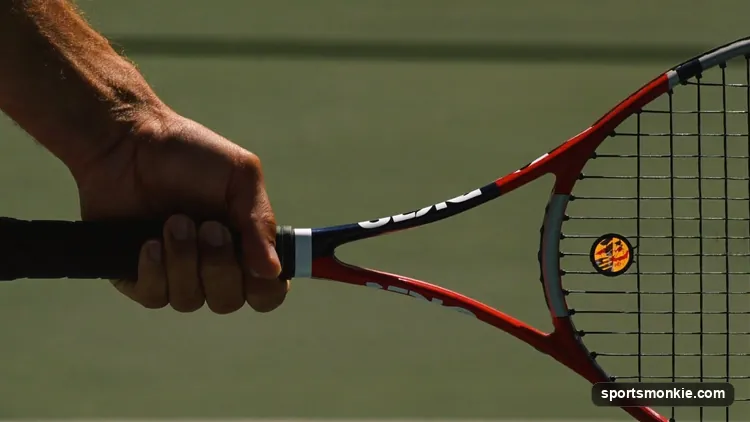
The grip sets the face angle before you even swing, so get it right first. Grips are described by which bevel your base knuckle sits on, using the octagonal handle numbered 1–8 (bevel 1 is the top face for a right-hander). Our pillar guide to tennis grips explained covers all of them; here is what each backhand needs.
Two-handed backhand: Place your dominant hand low on the handle in a Continental grip (base knuckle on bevel 2), then stack your non-dominant hand directly above it in an Eastern grip — effectively an Eastern forehand for that top hand. The top hand does most of the driving; think of the shot as a non-dominant-hand forehand with the other hand along for support and stability.
One-handed backhand: Use a single Eastern backhand grip, rotating your hand so the base knuckle sits on bevel 1, on top of the handle. This closes the face slightly and lets you get on top of the ball for topspin. If you want a heavier, higher-bouncing ball on slow surfaces, some players shade toward a Semi-Western grip, though that makes low balls harder. Your non-dominant hand cradles the throat of the racket during the takeback, then releases before contact.
Step 2: The Unit Turn and Backswing
Take the racket back with your shoulders, not your arm. As soon as you read the ball coming to your backhand side, rotate your shoulders and hips together — the “unit turn” — so your back is nearly facing the net and your non-dominant hand helps carry the racket back. This coils your body and stores the power you will release into the shot; players who “arm” the ball skip this and end up weak and inconsistent.
Keep the backswing compact. The racket head should drop to roughly waist height or just below, set up beneath the incoming ball so you can swing upward through it. Split-step as your opponent hits, then move — getting set early is a footwork problem as much as a stroke problem, and the spacing habits drilled in our tennis footwork drills are what let you take the racket back on time instead of rushing.
Step 3: Load, Step, and Swing Low-to-High
Load your weight onto your back foot during the turn, then transfer it forward as you swing. For a right-hander hitting a backhand, step across with the right foot into a neutral or closed stance and drive off it, letting the hips and shoulders unwind toward the ball.
The swing path is low-to-high: start the racket head below the ball and brush up the back of it to generate topspin. The steeper the upward brush, the more spin and net clearance; a flatter, more forward path produces a driving, penetrating topspin backhand that stays low and hurts your opponent. Keep the wrist firm through the hit — a loose, flipping wrist is the fastest way to spray the ball. This same low-to-high, body-driven engine mirrors the tennis forehand; the difference is which side of the body leads and, on the two-hander, that both hands drive together.
Step 4: Contact Point and Follow-Through
Make contact out in front of your front hip — this is the detail that separates clean backhands from mishit ones. For a two-hander, the ball should meet the strings slightly ahead of your front foot, arms extended but not locked. For a one-hander, contact is even further in front because the hitting arm is straight; letting a one-handed backhand get level with or behind your body collapses it every time.
At contact the racket face should be square (perpendicular to the ground) for a flat or topspin drive. After contact, keep swinging up and let the racket finish high — over your opposite shoulder on a two-hander, or extended out and up with the arm on a one-hander, chest and hips rotated to face the net. A full, balanced finish is not decoration; it is proof the swing accelerated through the ball rather than decelerating into it.
Step 5: Backhand Drills to Groove the Stroke
Repetition at low speed builds the pattern faster than rallying at full pace. Work these in order:
- Shadow swings (no ball): In front of a mirror, rehearse the unit turn, low-to-high swing, and finish over the shoulder. Freeze at the finish and check your contact point was in front. Do 20–30 reps daily.
- Drop feeds: Drop a ball yourself, let it bounce to waist height, and hit a controlled topspin backhand cross-court. This isolates the swing without having to move.
- Wall rally: Hit continuous backhands against a wall, focusing on early racket preparation and a firm wrist. The wall returns the ball fast, forcing you to turn sooner.
- Cross-court consistency: With a partner or ball machine, hit 10 backhands in a row cross-court, resetting the count on any miss. Cross-court is the higher-percentage, larger target and should be your default.
If you are just starting out, fold these into a broader session using our tennis drills for beginners, which sequence the backhand alongside forehand, serve, and movement work so the whole game develops together.
Common Backhand Mistakes to Fix
Late contact. Letting the ball drift behind your front hip is the number-one fault. Prepare earlier — start the unit turn the instant you read the ball to your backhand side.
Arming the ball. Swinging with the arm while the shoulders stay square kills power and consistency. Rotate the body and let the arm(s) come along for the ride.
Loose wrist. A flicking or breaking wrist at contact sprays the ball. Keep it firm and let the low-to-high swing, not the wrist, create spin.
Standing tall. Failing to bend the knees on low balls forces you to scoop with the arm. Get your legs under the ball so the racket can travel from low to high.
Decelerating into the ball. Stopping the swing at contact produces a floating, defensive shot. Accelerate through and let the finish be full and high.
Fix one fault at a time — the same principle behind targeted practice generally — and the backhand becomes a rally-neutral shot rather than a liability opponents attack. Once it holds up under pace, you can start hitting it earlier, flatter, and more aggressively down the line to turn defence into offence.
Frequently asked questions
Is a one-handed or two-handed backhand easier to learn?+
The two-handed backhand is easier for almost every beginner. The second hand adds stability, shortens the swing, and helps control high-bouncing balls, so you make clean contact sooner. The one-handed backhand needs more strength, timing, and an earlier contact point, so it is usually developed later, if at all.
What grip do you use for a tennis backhand?+
For a two-handed backhand, hold a Continental grip (base knuckle on bevel 2) with your dominant hand low on the handle and an Eastern forehand grip with your non-dominant hand above it. For a one-handed backhand, use an Eastern backhand grip, with your dominant-hand base knuckle on the top bevel (bevel 1).
Where should you make contact on a backhand?+
Contact should be out in front of your front hip, not beside your body. For a two-hander that means roughly level with, and slightly ahead of, your front foot; a one-hander contacts even further in front because the arm is straight. Late contact behind the hip is the most common cause of a weak, sliced-off backhand.
Why is the backhand so hard to hit?+
The backhand feels awkward because it is hit on your non-dominant side with the back of the hand leading, which gives less natural leverage and a smaller hitting zone than the forehand. It improves fast once you turn your shoulders early and stop swinging with the arm alone, letting body rotation supply the power.
How do you add topspin to a backhand?+
Start the racket head below the ball and brush up the back of it with a low-to-high swing, finishing high over the opposite shoulder. Keep the wrist firm and let a Semi-Western or Eastern grip square the face. More upward brush equals more spin; a flatter, more forward swing produces a driving, penetrating backhand instead.
What is the best drill to practice a backhand at home?+
Shadow-swing in front of a mirror: take a full shoulder turn, swing low-to-high, and freeze at the finish with the racket over your shoulder, checking your contact point is in front. Drop-feeds against a wall are the next step, letting you groove the same motion with a real ball at low speed before rallying.
Sources
Play & tools
Free browser games and tools — no account, no download.
- Play today's Sports Connections — Today's Sports Connections — daily hints, answers, and play the grid.
- Play Guess the NFL Player — A new mystery NFL player every day. Eight guesses, with a clue on each — plus free unlimited mode.
- Explore all our games →
Related tennis guides
View all →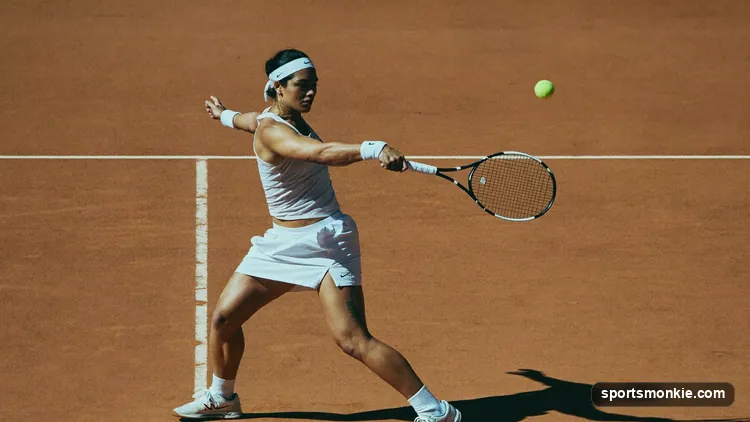
Backhand in Tennis: One-Handed vs Two-Handed, Grips, and Mechanics Explained
The backhand in tennis is a stroke hit on the non-dominant side; here's how one-handed vs two-handed grips, topspin, and slice mechanics differ.
Eastern Grip in Tennis: The Bevel-3 Forehand Explained
The eastern grip in tennis places your index knuckle on bevel 3 for a flat, versatile forehand. Learn how to find it, its pros and cons, and who uses it.
How to Hit Topspin in Tennis: The Low-to-High Swing, Grip, and Drills
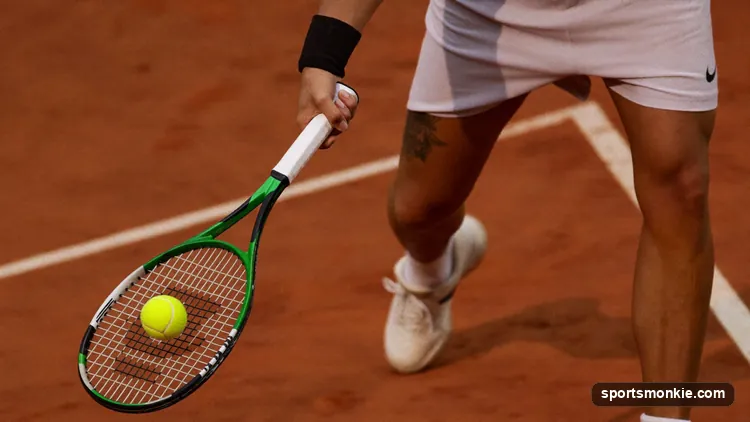
To hit topspin in tennis, use a semi-western grip and swing low-to-high so the racket brushes up the back of the ball. Here is the grip, swing path, contact point, and drills that build heavy spin on both wings.
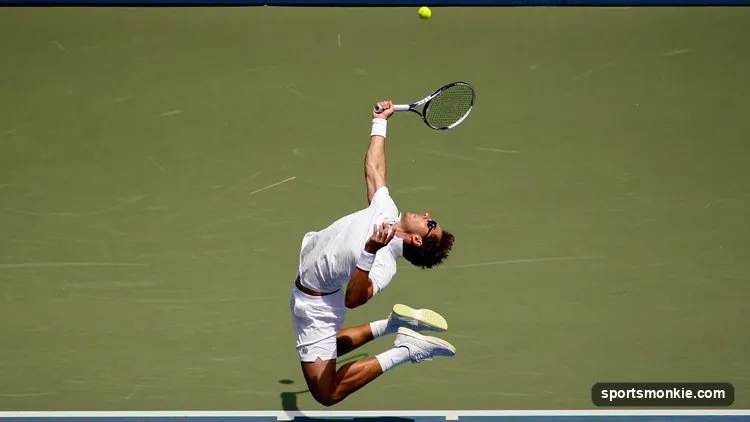
Overhead Shot in Tennis: How to Hit the Smash (Complete Guide)
The overhead shot in tennis is a serve-like swing hit above the head to put away a lob. Learn the technique, footwork, and common errors.
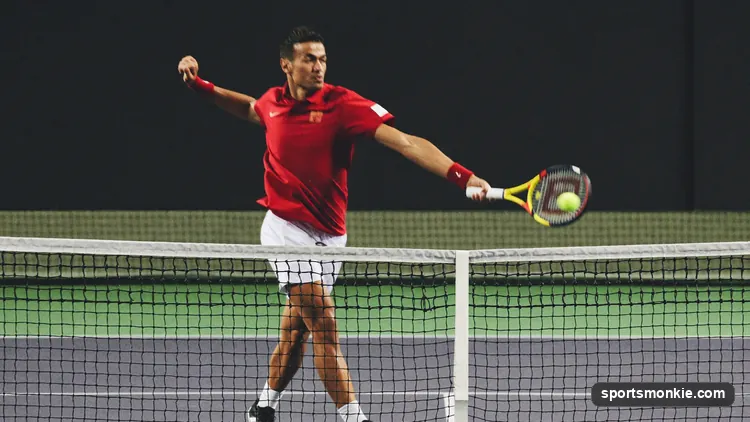
What Is a Volley in Tennis? Grip, Technique, and When to Attack the Net
A volley in tennis is a shot hit before the ball bounces, usually at the net. Learn grip, punch technique, and forehand vs. backhand volley form.
How to Serve in Tennis: Technique, Stance, and Tips
A tennis serve starts with the right grip, ball toss, and swing. This guide breaks down each step so you can build a consistent, powerful serve fast.