
Continental Grip in Tennis: How to Hold It and When to Use It
On this page7
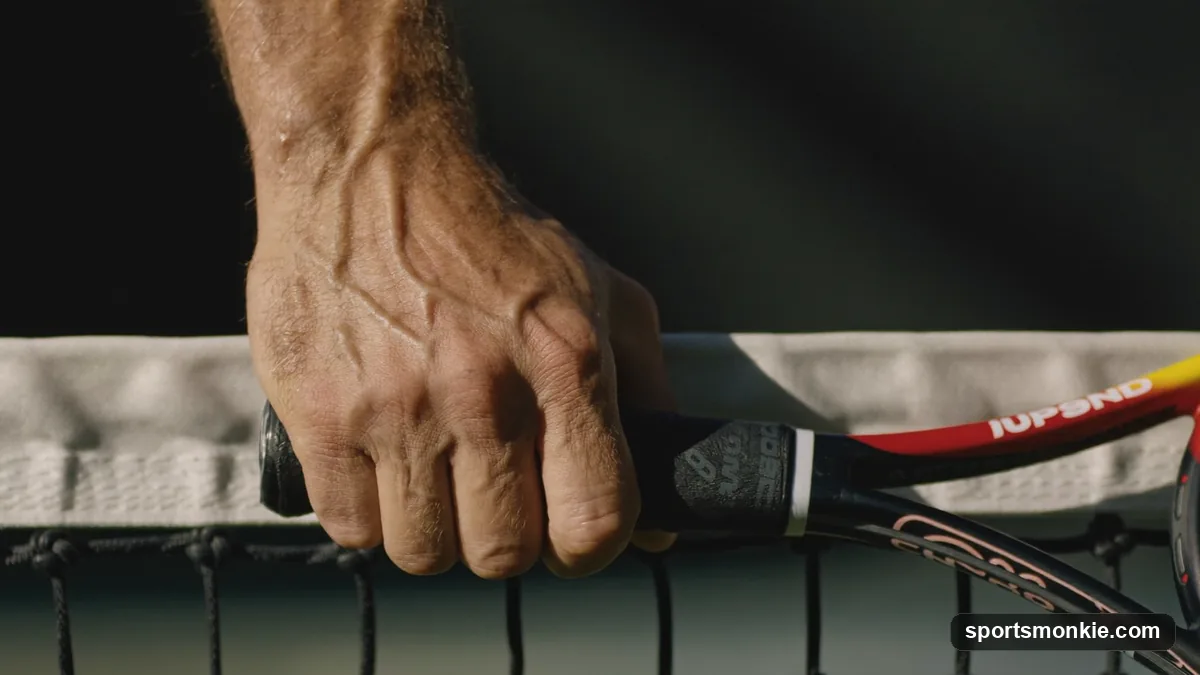
The continental grip means placing the base knuckle of your index finger and the heel pad of your palm on bevel 2 of the racket handle (bevel 8 for lefties) — the position your hand naturally takes when you hold the racket like a hammer. It is the single most important grip in tennis because one hand position covers your serve, every volley, the slice, the overhead, and defensive shots. It feels weak on flat groundstrokes, which is exactly why so many players avoid it and then hit a lifetime of blocked serves and stabbed volleys. Below is how to find bevel 2, why the grip does what it does, and the drills that make it stick.
How to Hold the Continental Grip
Hold the racket in front of you with the frame perpendicular to the ground, as if it were an axe you were about to chop with. Now grab the handle exactly as you would grab a hammer to drive a nail. That is the continental grip. Technically, the base knuckle of your index finger sits on bevel 2 (the top-right slanted edge of a right-hander’s handle) and the heel pad of your hand sits on the same bevel.
The fastest checkpoint: make a “V” with your thumb and index finger and look down at the top of the handle — the V should point toward your right shoulder (right-handers) or left shoulder (left-handers). If you understand where every bevel sits, the whole family of grips gets easier; our overview of tennis grips explained maps all eight bevels and the grips that live on each one. For the raw mechanics of gripping the frame at all, start with how to hold a tennis racket.
What the Continental Grip Is Used For
The continental grip is the workhorse of the net and the service box. Because it keeps the racket face slightly open and the wrist mobile, one grip handles every shot where you need touch, spin variety, or speed of grip-free reaction:
- The serve. Every serve type — flat, slice, and kick — is hit off the continental grip. It lets your forearm pronate through contact, which is where serve power and spin actually come from. You cannot develop a real serve without it, and it is the foundation of a kick serve where the racket brushes up and across the ball.
- Volleys. At the net there is no time to change grips between a forehand and backhand volley. The continental grip covers both and opens the face to add the underspin that makes a volley sit down.
- The slice. Both the slice backhand and the slice forehand use it, since the open face is what creates backspin. It is the grip behind the slice in tennis and the drop shot.
- The overhead smash. The overhead is a serve motion, so it uses the same grip.
- Defensive shots. Lunging gets, half-volleys, and reflex blocks all rely on the neutral, ready-for-anything face the continental gives you.
Why Beginners Struggle With the Continental Grip
Beginners struggle because the continental grip feels genuinely bad on flat groundstrokes. Hold it and try to drive a forehand: the face points slightly up, the ball flies long or floats, and your instinct screams to rotate your hand behind the handle into something stronger. That instinct is correct for groundstrokes and wrong for everything else — which is the whole confusion.
The mistake is treating the continental as an all-purpose grip. It is not. Modern groundstrokes want the eastern grip or the semi-western grip, both of which close the face and let you hit heavy topspin. Coaches teach beginners those grips first for the forehand and backhand, then introduce the continental only for serves and volleys. Players who never make that separation end up “frying-panning” their serves — palm flat behind the handle — and blocking their volleys with a stiff wrist. Accept that the continental is a specialist grip and the awkwardness stops being a problem.
Continental vs. the Other Grips
The clearest way to lock in the continental is to feel where it sits relative to its neighbors on the handle:
| Grip | Base knuckle bevel (right-hander) | Best for | Face at contact |
|---|---|---|---|
| Continental | Bevel 2 | Serve, volley, slice, overhead | Slightly open |
| Eastern | Bevel 3 | Flat/topspin forehand | Square |
| Semi-western | Bevel 4 | Heavy topspin forehand | Closed |
| Western | Bevel 5 | Extreme topspin, high balls | Very closed |
Notice the pattern: as you rotate your hand under the handle from bevel 2 toward bevel 5, the face closes and you trade touch and reach for topspin and power. The continental sits at the “open, versatile, low-margin-on-drives” end. That is why it rules the net and the serve but gets benched for baseline rallies. Understanding this progression is the core idea in our tennis grips explained pillar.
Drills to Learn the Continental Grip
You groove the continental grip by repeating the feel until your hand finds bevel 2 on its own. Work these in order:
1. The hammer-tap drill. Hold the racket in the continental grip and tap the edge of the frame against your palm or a soft surface as if hammering a nail. Ten taps, re-grip, repeat. This burns in the “edge leads” feeling that separates the continental from a frying-pan grip.
2. The edge-serve drill. Stand at the baseline and serve slowly, trying to hit the ball with the edge of the frame on purpose. You will fail — and in failing, your forearm learns to pronate (roll) to square the face at the last instant. That pronation is the entire point of the serve grip.
3. The volley wall drill. Stand 8–10 feet from a wall in the continental grip and volley back and forth without ever changing your hand. Alternate forehand and backhand volleys. If you catch yourself re-gripping, you have found the exact habit the continental exists to eliminate. Pair this with the reaction work in our tennis footwork drills so your split-step and grip fire together.
4. The slice-only rally. Rally from the baseline hitting nothing but slice off the continental grip. The open face will feel natural here because slice wants backspin, and it reinforces the grip without the false alarm you get on flat drives. New players should fold this into a broader session of tennis drills for beginners.
Common Continental Grip Mistakes
Rotating toward bevel 1 or 3. Drift toward the top of the handle (bevel 1) and your volleys pop up; drift toward bevel 3 and you have quietly switched to an eastern grip that kills your serve pronation. Check the V between thumb and index finger points to your dominant shoulder.
Gripping too tightly. A death grip locks the wrist and destroys the touch the continental is meant to give you. Hold at about a 4 out of 10 on volleys and lighten further for drop shots and touch.
Using it on flat groundstrokes. If your forehand keeps sailing long, you are probably still in the continental. Switch to eastern or semi-western for drives and reserve the continental for the shots above.
Choking up or gripping mid-handle. Hold near the butt cap for serves and overheads to get full leverage; only choke up slightly for control on tight volleys.
Putting It Together
Learn the continental grip as the grip that isn’t for groundstrokes and everything clicks: it is the serve grip, the volley grip, the slice grip, and the overhead grip, all in one hand position that never has to change at the net. Spend a week on the four drills above — hammer-tap, edge-serve, wall volleys, and slice rallies — and the awkwardness that stops most players fades into the automatic feel that every complete player relies on. Once bevel 2 feels like home, your serve and net game finally have the foundation they were missing.
Frequently asked questions
What is the continental grip in tennis?+
The continental grip is a way of holding the racket where the base knuckle of your index finger rests on bevel 2 of the octagonal handle, the same position your hand takes if you hold the racket like a hammer. It keeps the racket face slightly open and is used for serves, volleys, slices, overheads, and defensive shots rather than for topspin groundstrokes.
What is the continental grip used for?+
The continental grip is used for the serve, all volleys, the slice backhand and forehand, the overhead smash, drop shots, and defensive gets. Because a single hand position covers every one of these shots, you do not have to change grips at the net, which is why it is essential for doubles and any all-court game.
Why do beginners struggle with the continental grip?+
Beginners struggle because the continental grip feels weak and awkward on flat forehands and backhands, sending balls into the net or long. It is not built for driving groundstrokes — it is built for serves and volleys. Most players resist it and use an easier eastern or western grip, which then blocks their serve and net development for years.
Is the continental grip the same as the hammer grip?+
Yes, the continental grip is often called the hammer grip because you hold the racket exactly as you would hold a hammer to drive a nail — edge of the frame leading, palm on the side of the handle. It is also called the chopper grip for the same reason, since it mimics the motion of chopping with the side of your hand.
Can you hit a forehand with a continental grip?+
You can, and players did in the wood-racket era, but modern flat or topspin forehands are far easier with an eastern or semi-western grip. The continental forehand produces a low, skidding, slice-heavy ball with little topspin, so today it is reserved for slice approaches, defensive shots, and touch, not for driving the ball.
What bevel is the continental grip on?+
The continental grip is on bevel 2 for a right-handed player and bevel 8 for a left-handed player. Bevels are numbered around the octagonal handle starting from the top, so bevel 2 is the top-right slanted edge. You place the base knuckle of your index finger and the heel pad of your palm on that bevel.
Sources
Play & tools
Free browser games and tools — no account, no download.
- Play today's Sports Connections — Today's Sports Connections — daily hints, answers, and play the grid.
- Play Guess the NFL Player — A new mystery NFL player every day. Eight guesses, with a clue on each — plus free unlimited mode.
- Explore all our games →
Related tennis guides
View all →
Tennis Grips Explained: The 4 Grips and When to Use Each
Tennis grips explained simply: the Continental (bevel 2) serves and volleys, Eastern (bevel 3) hits flat forehands, Semi-Western (bevel 4) adds topspin, and Western (bevel 5) is extreme spin. Here is how to form each and when to switch.
Eastern Grip in Tennis: The Bevel-3 Forehand Explained
The eastern grip in tennis places your index knuckle on bevel 3 for a flat, versatile forehand. Learn how to find it, its pros and cons, and who uses it.

Tennis Volley Technique: Grip, Punch, and Footwork to Win the Net
Master tennis volley technique with a continental grip, a short punch instead of a swing, a split-step, and contact out in front. Step-by-step form plus drills.

What Is a Volley in Tennis? Grip, Technique, and When to Attack the Net
A volley in tennis is a shot hit before the ball bounces, usually at the net. Learn grip, punch technique, and forehand vs. backhand volley form.
How to Hold a Tennis Racket: 5 Grips Every Player Should Know
How you hold a tennis racket shapes your swing, spin, and reach. The five main grips are Continental, Eastern, Semi-Western, Western, and two-handed.
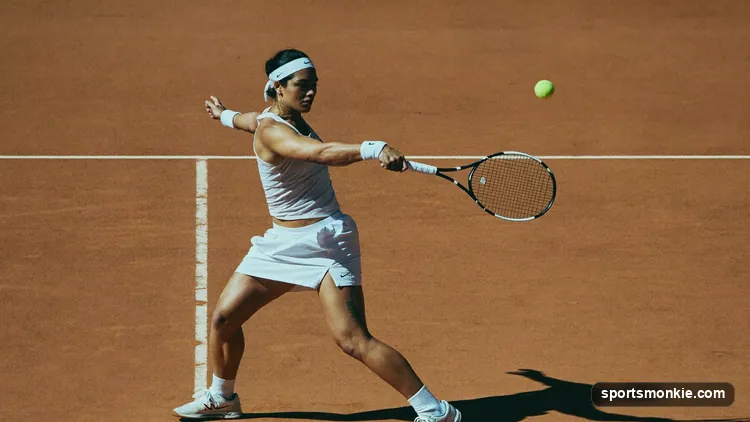
Backhand in Tennis: One-Handed vs Two-Handed, Grips, and Mechanics Explained
The backhand in tennis is a stroke hit on the non-dominant side; here's how one-handed vs two-handed grips, topspin, and slice mechanics differ.