
Eastern Grip in Tennis: The Bevel-3 Forehand Explained
On this page6
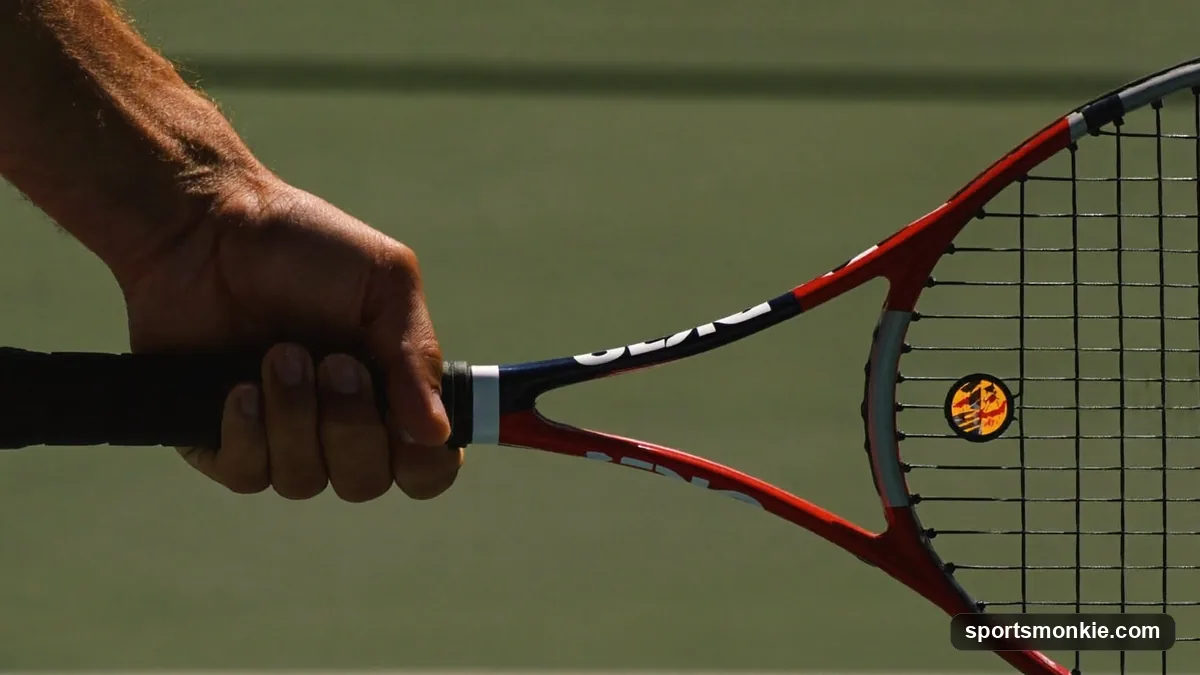
The eastern grip in tennis is the flat, versatile forehand grip you form by placing the base knuckle of your index finger on bevel 3 of the racket handle — the “shake hands with the racket” position that lets the palm sit directly behind the strings. It hits a clean, penetrating, flatter ball, deals easily with low shots, and switches fast to a volley or slice, which is why it is the grip most coaches teach first. It trades away the heavy topspin of the semi-western in exchange for that directness and simplicity.
How to Find the Eastern Grip (Bevel 3)
Hold the racket by the throat with your non-dominant hand so the handle points at you and the strings are perpendicular to the ground. A tennis handle is an octagon with eight flat panels called bevels; number them 1 (top) through 8, going clockwise for a right-hander. Place the base knuckle of your index finger and the heel pad of your palm flat on bevel 3 — the panel facing the same direction as your palm when you reach out to shake hands. Your palm now sits behind the handle, so the racket face and your palm point the same way.
A quick self-check: lay your open palm flat against the strings, then slide it straight down onto the grip without rotating. That is a textbook eastern. If you’re still getting comfortable with the handle itself, our guide on how to hold a tennis racket walks through the heel pad, finger spread, and grip pressure that every grip position builds on.
Eastern Grip vs the Other Forehand Grips
The eastern sits between the continental and the semi-western on the bevel map, and that one notch of rotation changes everything about ball flight. The continental grip (bevel 2) is the serve-and-volley grip and is poor for driving a forehand; rotate one bevel toward your palm and you reach the eastern (bevel 3); one more brings the semi-western grip (bevel 4), the tour’s topspin standard; and bevel 5 is the full western. The full picture of how these connect lives in our pillar on tennis grips explained.
| Grip | Bevel (RH) | Spin | Best contact height | Best for |
|---|---|---|---|---|
| Continental | 2 | Very low | Low | Serves, volleys, slice |
| Eastern | 3 | Low–moderate | Low to waist | Flat drives, low balls, net rushing |
| Semi-western | 4 | Moderate–high | Waist to shoulder | All-court topspin baseline |
| Western | 5 | Very high | Shoulder and above | High-bouncing clay-court loops |
Pros and Cons of the Eastern Grip
The eastern grip’s biggest strength is directness. Because the racket face is roughly square to the ball at a natural contact point, aiming feels intuitive and the ball comes off flat and fast — a genuine attacking shot rather than a heavy rally ball. It excels on low balls, where semi-western and western players have to bend and manipulate the face to avoid netting the shot. It also transitions instantly to a continental for a volley or drop shot, making it the natural choice for anyone who likes coming forward, as many of the types of tennis shots an attacking player relies on flow straight out of this grip.
The trade-off is topspin ceiling and high balls. You can absolutely brush up the back of the ball with an eastern grip — learning how to hit topspin in tennis is a swing-path skill, not just a grip choice — but you will never match the effortless heavy spin a semi-western produces. Shoulder-high balls are the eastern’s weak spot: the flat face wants to send them long, so you either take the ball earlier on the rise or roll the wrist over more aggressively to keep it in.
Who Uses the Eastern Forehand Grip
The eastern is the grip of the flat, aggressive baseliner. Roger Federer is its most famous modern practitioner, using an eastern (edging toward semi-western) to redirect pace and flatten out winners with disguise. Juan Martin del Potro built one of the biggest flat forehands in history on an eastern grip, and Pete Sampras used a near-eastern forehand to complement his serve-and-volley game. On the current tour the grip is less common because high-bouncing hard and clay courts reward spin, but it remains a proven weapon for players who want to take time away and hit through the court rather than loop over it.
The lesson for club players: grip choice should follow playing style, not fashion. If you like flat power, quick net approaches, and low, skiddy contact, the eastern still holds up. To see how the grip fits into the whole stroke — take-back, contact point, and finish — pair this with our full walkthrough on how to hit a tennis forehand, which is where the grip becomes an actual shot.
When to Choose the Eastern Grip
Choose the eastern grip if you are new to the game, if you play a flatter attacking style, or if you spend a lot of time on faster, lower-bouncing surfaces like grass or quick indoor hard courts. It is the safest starting point precisely because it does not commit you to a spin-heavy style before you have grooved contact — you can migrate a notch to semi-western later if your game drifts toward heavy topspin baseline rallies. It also keeps your backhand transition simple, since many players run a continental or eastern base into their tennis backhand as well.
Stick with the semi-western instead if your rallies are dominated by high, heavy balls you want to answer with margin and shape, or if you are building a modern grinding baseline game. There is no wrong answer — only a grip that matches how you want to play. Grab a basket of balls and hit twenty forehands on each grip back to back; the one that produces the cleaner, more repeatable strike for your swing is the one to keep, and it costs nothing but court time to find out.
Drills to Groove the Eastern Grip
Building an eastern forehand is mostly repetition with a consistent grip. Start by dropping and hitting balls to yourself from waist height, checking that your index knuckle stays on bevel 3 every rep — an inconsistent grip is the single most common cause of erratic contact. Progress to low, fed balls near your ankles, where the eastern grip’s low-ball advantage becomes obvious, before working up to rally height. A few structured tennis footwork drills alongside this matter more than they look: the eastern grip rewards getting your body to the ball early so you can take it at a comfortable low-to-waist contact point rather than reaching. If you are just starting out, fold these into a broader set of tennis drills for beginners so grip, swing path, and movement develop together rather than in isolation.
Frequently asked questions
What is the eastern grip in tennis?+
The eastern grip is a forehand grip where the base knuckle of your index finger and the heel pad of your palm rest on bevel 3 of the racket handle — the flat panel facing the same way as your palm. It is often taught as 'shaking hands with the racket' and produces a flat, controlled, versatile forehand that is easy to learn.
What bevel is the eastern forehand grip?+
The eastern forehand grip sits on bevel 3 for a right-handed player (bevel 7 for a left-hander), counting bevels clockwise from the top of an octagonal handle held on edge. Continental is bevel 2, semi-western is bevel 4, and full western is bevel 5, so eastern sits one notch of rotation toward flatter contact than semi-western.
Is the eastern grip good for beginners?+
Yes. The eastern grip is the most beginner-friendly forehand grip because the flat racket face naturally points where you aim, contact feels intuitive, and it handles low balls without awkward wrist angles. Most coaches start players here before introducing the semi-western grip once topspin and higher contact points become the priority.
Can you hit topspin with an eastern grip?+
Yes, but less than a semi-western or western grip. With an eastern grip you generate topspin through a low-to-high swing path and a brushing, upward finish rather than a closed face at rest. It is enough for a controlled, penetrating rally ball, but it will not produce the heavy, high-bouncing loop that semi-western and western grips create.
Eastern vs semi-western grip: which is better?+
Neither is better outright. The eastern grip favors flat, low, fast shots and quick net transitions, so it suits attacking and serve-volley styles. The semi-western favors heavy topspin and comfortable high contact, so it suits baseline grinding and higher-bouncing surfaces. Choose eastern for flatter aggression and easier low balls, semi-western for spin and margin.
Which pro players use the eastern forehand grip?+
Roger Federer is the most famous eastern-grip forehand of the modern era, using it for flat, redirected power. Juan Martin del Potro's crushing flat forehand and, historically, Pete Sampras also used eastern or near-eastern grips. The grip has become less common on the topspin-heavy pro tour but remains effective for flatter, aggressive baseliners.
Sources
Play & tools
Free browser games and tools — no account, no download.
- Play today's Sports Connections — Today's Sports Connections — daily hints, answers, and play the grid.
- Play Guess the NFL Player — A new mystery NFL player every day. Eight guesses, with a clue on each — plus free unlimited mode.
- Explore all our games →
Related tennis guides
View all →
Forehand in Tennis Explained: Grips, Swing Path, and Technique
The forehand in tennis is the groundstroke hit on a player's dominant-hand side. Learn grips, swing mechanics, topspin, and common mistakes.
How to Hit a Tennis Forehand: Grip, Swing, and Topspin
How to hit a tennis forehand: use a Semi-Western or Eastern grip, turn your shoulders early, drop the racket below the ball, and swing low-to-high to contact out front.
Backhand in Tennis: One-Handed vs Two-Handed, Grips, and Mechanics Explained
The backhand in tennis is a stroke hit on the non-dominant side; here's how one-handed vs two-handed grips, topspin, and slice mechanics differ.
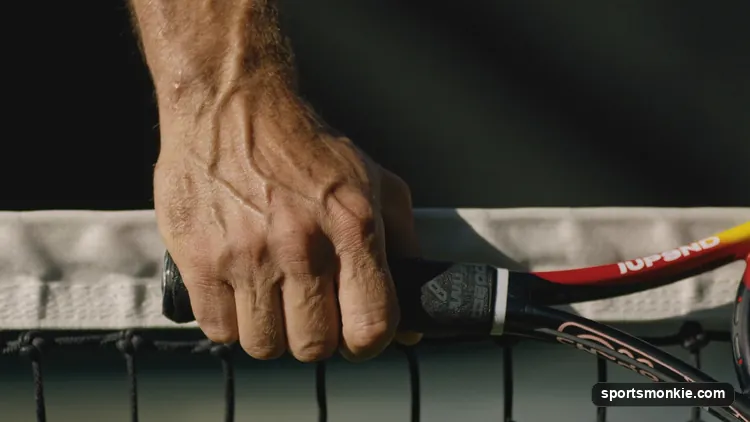
Continental Grip in Tennis: How to Hold It and When to Use It
The continental grip places the base knuckle of your index finger on bevel 2 of the racket handle. It is the grip for serves, volleys, slices, and overheads. Here is how to find it and drill it.
How to Hit a Tennis Backhand: Grip, Turn, Contact, and Drills
To hit a tennis backhand, turn your shoulders early, load with an Eastern backhand or two-handed grip, swing low-to-high, and make contact out in front of your front hip.
What Is a Volley in Tennis? Grip, Technique, and When to Attack the Net
A volley in tennis is a shot hit before the ball bounces, usually at the net. Learn grip, punch technique, and forehand vs. backhand volley form.