
How to Hit a Tennis Forehand: Grip, Swing, and Topspin
On this page8
- 01What Grip Should You Use for a Forehand?
- 02The Unit Turn: Preparing Early
- 03Drop and Lift: The Low-to-High Swing Path
- 04Contact Point: Meet the Ball Out Front
- 05Weight Transfer, Stance, and Rotation
- 06The Follow-Through and Finish
- 07Common Forehand Mistakes and How to Fix Them
- 08Drills to Groove Your Forehand
To hit a tennis forehand, set your grip, turn your shoulders early, drop the racket below the ball, and swing low-to-high to a contact point out in front of your lead hip. The single move that separates a solid forehand from a weak one is the unit turn: rotating your shoulders and hips together the instant you read the ball, so the stroke is powered by your body’s coil rather than your arm alone. Everything below builds on that.
What Grip Should You Use for a Forehand?
Use an Eastern or Semi-Western grip for the forehand — these two cover almost every player. Grip is defined by which handle bevel sits under your index knuckle, and the tennis grips explained pillar breaks down all eight bevels if you want the full map.
The Eastern grip (index knuckle on bevel 3) is the “shake hands with the racket” position. It hits a flatter, more penetrating ball, handles low balls comfortably, and is the easiest starting point — see the dedicated Eastern grip in tennis guide for the exact hand placement. The Semi-Western grip (bevel 4, one bevel further round) closes the face slightly and makes topspin almost automatic; it is the dominant forehand grip on the modern tour, covered in full in our Semi-Western grip in tennis breakdown.
Save the Continental grip for serves and volleys — it is far too closed for a forehand and forces an awkward, low-power swing. If you are unsure which forehand grip to commit to, start Eastern to feel clean contact, then rotate to Semi-Western once your swing path is reliable.
The Unit Turn: Preparing Early
Start the stroke by turning your shoulders and hips together the moment the ball leaves your opponent’s racket. This is the unit turn, and it is where power is stored. Your non-dominant hand points across your body or lightly cradles the racket throat, which guarantees your shoulders rotate rather than just your arm swinging back.
Preparing early is the fix for the most common amateur problem — hitting late. Split-step as your opponent strikes the ball, then get the racket back before the ball crosses the net, not after it bounces on your side. Good preparation is inseparable from movement, so if your setup feels rushed, the real culprit is usually spacing: drill your tennis footwork drills so you arrive at the ball with time to spare.
Drop and Lift: The Low-to-High Swing Path
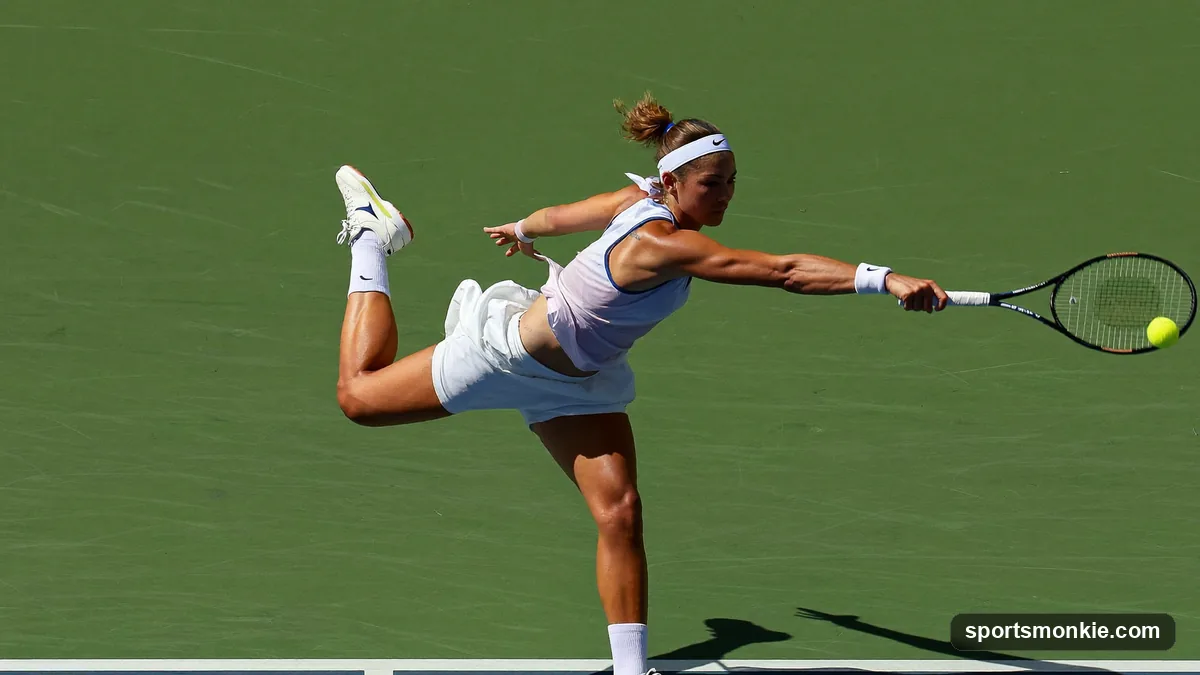
Swing from low to high — this single path is what creates topspin and control. From the top of your takeaway, let the racket head drop so it sits below the height of the incoming ball. From there, accelerate upward and forward, brushing up the back of the ball so the strings roll over it.
Picture the swing as the bottom half of a “C”: the racket drops, swings under and up, then finishes high. A flat, level swipe sends the ball on a straight line with nothing to bring it down inside the baseline, which is why so many flat forehands sail long. The steeper and faster your upward brush, the more topspin you generate — the mechanics we cover in depth in how to hit topspin in tennis. Keep the racket face slightly closed (pointing a touch downward) as you brush up; an open face plus a low-to-high swing floats the ball long.
Contact Point: Meet the Ball Out Front
Make contact out in front of your body, roughly level with or just ahead of your lead hip, arm extended but not rigidly locked. This is the non-negotiable checkpoint of the whole stroke. Hitting the ball late — beside or behind your hip — collapses your power and sprays the ball off-line, and it is the number-one fault coaches correct.
At contact your wrist should be firm, not flicking, and your eyes fixed on the contact zone rather than tracking where you hope the ball goes. Meeting the ball early, while it is still rising or at the peak of its bounce, lets you drive through it and take time away from your opponent. If you consistently reach contact late, the problem is upstream: prepare the unit turn sooner and move your feet earlier.
Weight Transfer, Stance, and Rotation
Drive the shot with your legs and core, not your arm. In a square (neutral) stance, step toward the net with your lead foot and let your weight move from your back foot into the shot as you swing — this is the easiest way to feel forward drive and the best starting point for beginners. In an open stance, common on tour, your feet stay more parallel to the baseline and your power comes from explosive hip and shoulder rotation, which is ideal for wide, fast balls and quick recovery.
Whichever stance you use, the sequence is the same: legs push, hips rotate, shoulders follow, arm delivers last. Uncoil in that order and the racket arrives at the ball with the whole body behind it. This full-body groundstroke is the foundation of the baseline game, and it pairs directly with its mirror image — see how to hit a tennis backhand to build both wings evenly rather than leaning on one.
The Follow-Through and Finish
Finish with the racket swinging up and across, ending over your opposite shoulder or wrapping toward your non-dominant side. A complete follow-through is not decoration — it proves you accelerated through contact instead of decelerating into it, the hidden cause of forehands that dump into the net.
Let the momentum of the swing carry the racket to a natural, balanced finish rather than stopping the arm abruptly. Some modern players finish lower, with a “windshield-wiper” motion across the body on heavy-topspin shots, but the over-the-shoulder finish is the reliable default while you are grooving the stroke. Hold your finish for a beat on practice swings; if you can’t balance there, your feet or body rotation were out of sequence.
Common Forehand Mistakes and How to Fix Them
Hitting late. The most frequent fault. Fix it by starting the unit turn as your opponent strikes and getting the racket back before the ball crosses the net.
All-arm swinging. If only your arm moves, you lose power and strain your elbow. Force your shoulders to turn by using your non-dominant hand on the racket throat during preparation.
Flat, level swing. No topspin means no margin — the ball either clips the net or flies long. Commit to the low-to-high path and let the racket drop below the ball first.
Death grip. Squeezing the handle through the whole swing kills racket-head speed and tires your forearm. Stay relaxed, firming up only at contact.
Stopping at contact. Decelerating into the ball nets shots and robs pace. Always swing to a full finish.
Drills to Groove Your Forehand
Build the forehand in isolation before you rally. Start with shadow swings: no ball, just repeat the unit turn, drop, low-to-high swing, and over-the-shoulder finish until the sequence flows. These pattern reps belong in any beginner’s routine — our tennis drills for beginners set sequences them alongside grip and footwork so the pieces come together.
Next, drop-feed your own ball: bounce it to waist height beside your lead hip and hit relaxed forehands, focusing purely on contact point out front. Then progress to a coach or partner feeding balls, then to live rallying. A useful topspin check is the net-clearance drill — aim to send every forehand at least a metre over the net so you trust the spin to bring it down. Once the stroke holds up in rallies, weave it into full-court movement patterns from your tennis footwork drills so you can hit it on the move, not just from a standstill.
Groove these fundamentals and the forehand becomes the shot you build points around — the reliable weapon that lets you dictate from the baseline.
Frequently asked questions
What grip should I use for a tennis forehand?+
Most players are best served by an Eastern (index knuckle on bevel 3) or Semi-Western grip (bevel 4). Eastern is easier for flatter, low balls and beginners; Semi-Western is the modern topspin standard on tour. Start Eastern, then rotate to Semi-Western once your low-to-high swing is grooved.
Where should I make contact on a forehand?+
Contact should be out in front of your body, roughly level with or just ahead of your lead hip, with your arm extended but not locked. Hitting late, next to or behind your hip, is the most common amateur fault. Meeting the ball early lets you drive through it and control direction.
How do I add topspin to my forehand?+
Topspin comes from a low-to-high swing path: drop the racket head below the ball, then brush up the back of it at contact so the strings roll over the ball. Keep the racket face slightly closed and accelerate upward. A Semi-Western grip makes this brushing action far more natural.
Why does my forehand keep going long or into the net?+
Balls sailing long usually mean a flat, level swing with no topspin to pull the ball down, or an open racket face. Netted balls often come from decelerating into contact or dropping your head. Commit to a full low-to-high swing and a complete follow-through to fix both.
Should I hit an open or square stance forehand?+
Both have a place. A square (neutral) stance, stepping in with your lead foot, is easier to learn and transfers weight forward. An open stance, common on tour, lets you handle wide, fast balls and recover quickly using hip rotation. Beginners should master the square stance first.
How do I stop hitting the forehand late?+
Prepare earlier. Start your shoulder turn and racket takeaway the instant you see the ball leave your opponent's strings, not after it bounces. Split-step as they hit, move your feet to set up the spacing, and aim to have the racket back before the ball crosses the net.
Sources
Play & tools
Free browser games and tools — no account, no download.
- Play today's Sports Connections — Today's Sports Connections — daily hints, answers, and play the grid.
- Play Guess the NFL Player — A new mystery NFL player every day. Eight guesses, with a clue on each — plus free unlimited mode.
- Explore all our games →
Related tennis guides
View all →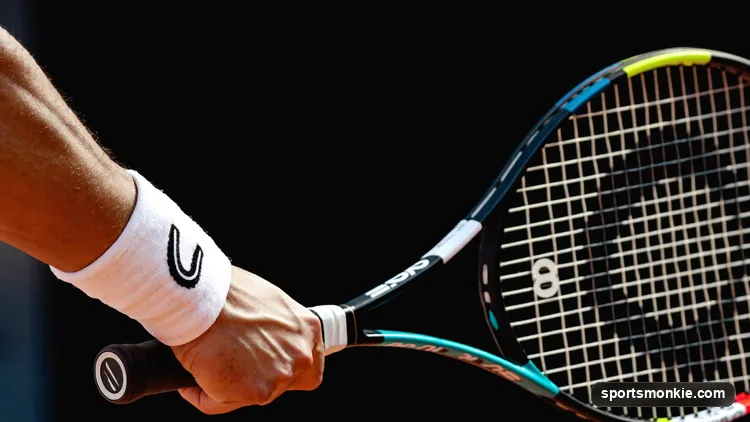
Semi-Western Grip in Tennis: The Modern Topspin Forehand Grip
The semi-western grip places your index knuckle on bevel 4 and is the standard modern topspin forehand grip. Here is how it works, who uses it, and how to switch from an eastern grip.
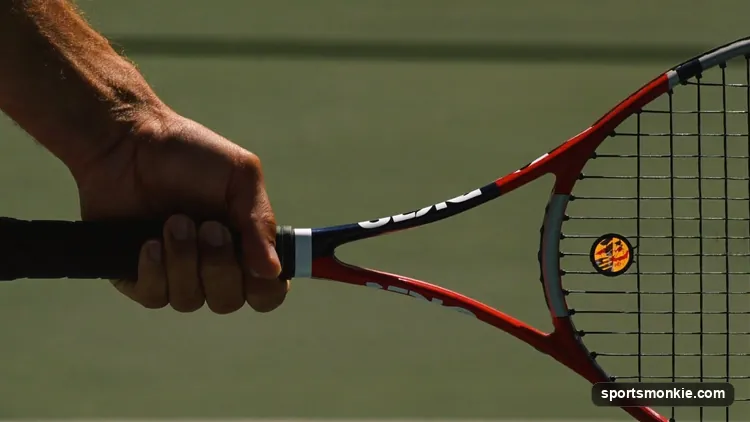
Eastern Grip in Tennis: The Bevel-3 Forehand Explained
The eastern grip in tennis places your index knuckle on bevel 3 for a flat, versatile forehand. Learn how to find it, its pros and cons, and who uses it.
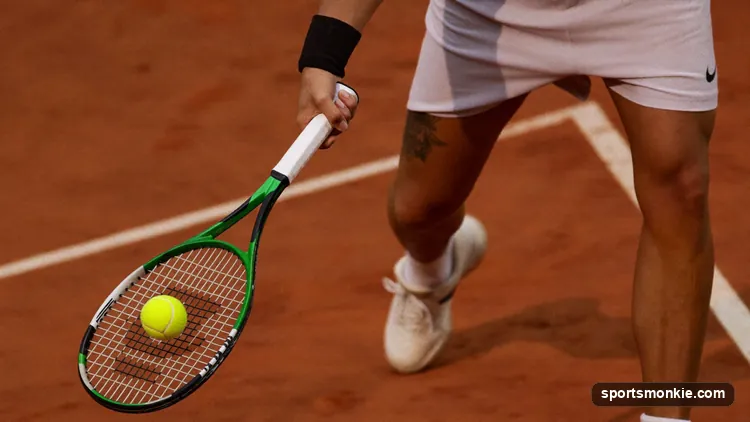
How to Hit Topspin in Tennis: The Low-to-High Swing, Grip, and Drills
To hit topspin in tennis, use a semi-western grip and swing low-to-high so the racket brushes up the back of the ball. Here is the grip, swing path, contact point, and drills that build heavy spin on both wings.
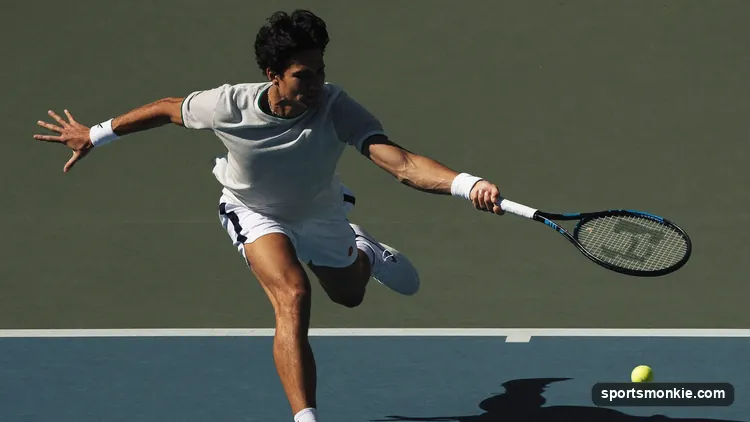
How to Hit a Tennis Backhand: Grip, Turn, Contact, and Drills
To hit a tennis backhand, turn your shoulders early, load with an Eastern backhand or two-handed grip, swing low-to-high, and make contact out in front of your front hip.
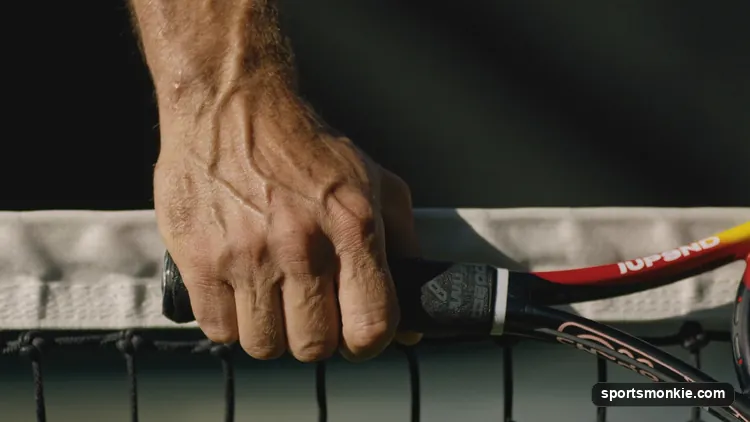
Continental Grip in Tennis: How to Hold It and When to Use It
The continental grip places the base knuckle of your index finger on bevel 2 of the racket handle. It is the grip for serves, volleys, slices, and overheads. Here is how to find it and drill it.
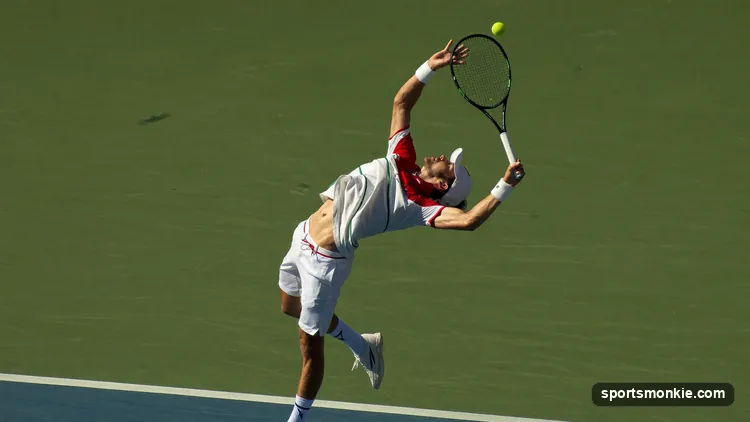
How to Hit a Kick Serve: Grip, Toss, and Brush-Up Technique
To hit a kick serve, use a continental grip, toss the ball over your head and slightly left, and brush the racket up the back of the ball from 7 to 1 o'clock while driving with your legs. Here is the full step-by-step.