
Semi-Western Grip in Tennis: The Modern Topspin Forehand Grip
On this page7
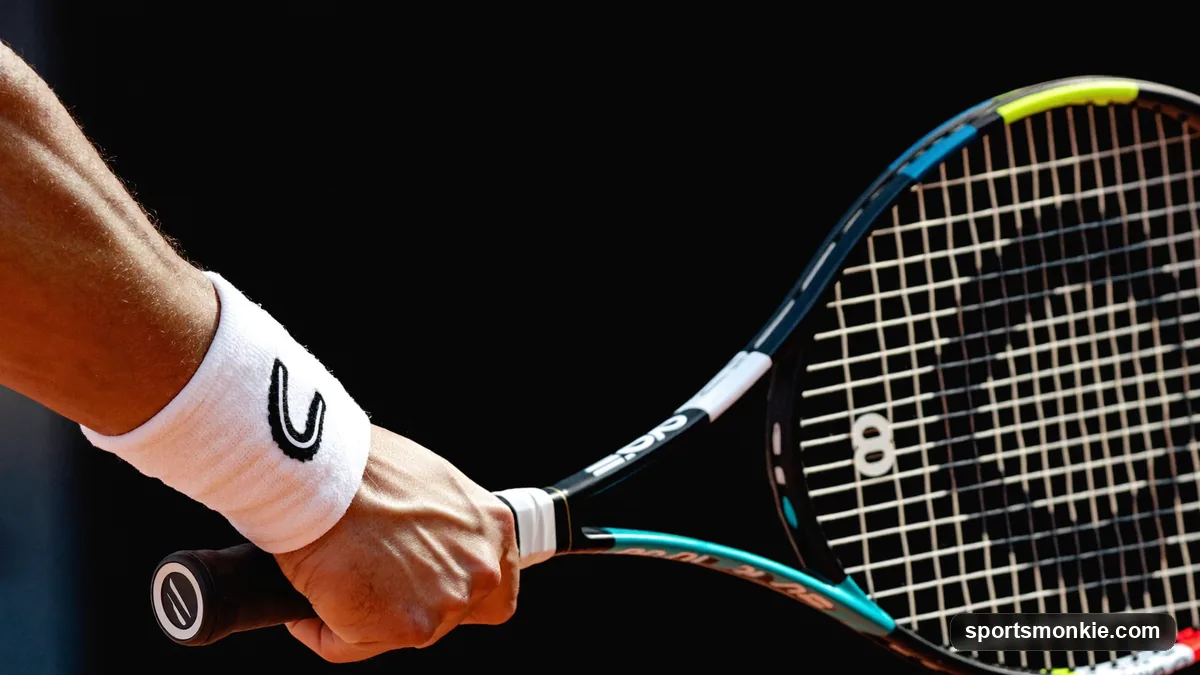
The semi-western grip is the modern topspin forehand grip, and you form it by placing the base knuckle of your index finger on bevel 4 of the racket handle. That single bevel of rotation from an eastern grip closes the racket face slightly at contact, so a low-to-high swing brushes up the back of the ball and produces the heavy topspin that defines today’s baseline game. It is the grip most professional baseliners use, and it is the natural next step once a flatter forehand stops giving you enough margin over the net.
What the Semi-Western Grip Is (Bevel 4)
A tennis handle has eight flat sides called bevels, numbered 1 to 8 for a right-handed player. Your grip is named by which bevel sits under the base knuckle of your index finger, a system covered in full in our pillar on tennis grips explained. The semi-western sits on bevel 4 — one bevel clockwise from the eastern grip on bevel 3, and one bevel short of the full western grip on bevel 5.
The quickest way to find it: lay your palm flat against the strings, slide your hand down to the handle, and then rotate it a touch further under the grip until the pad below your index finger settles on the fourth bevel. Your palm should feel like it is slightly beneath the handle rather than directly behind it. That “under” feeling is the whole point — it pre-sets the racket face to close at a normal contact height.
Why the Semi-Western Produces Topspin
At a standard waist-to-chest contact point, the semi-western grip angles the racket face slightly downward, or “closed.” To send the ball forward instead of into the court, you swing from low to high and brush up the back of the ball. That upward brushing is what generates spin.
The result is exactly the shot the modern game is built around: a ball that clears the net by several feet, then dips sharply back inside the baseline because of the topspin. That combination of net clearance plus dip is why the grip pairs so naturally with a full, whippy swing — the mechanics we break down in our guide on how to hit topspin in tennis. If your flat forehand keeps clipping the tape or flying long, the fix is often the grip, not the swing.
The Ideal Contact Point
The semi-western rewards a contact point that is out in front of your body and roughly between waist and chest height. Meet the ball there, with your arm extended and the racket head brushing upward, and the grip does most of the spin work for you.
That contact window is also the grip’s biggest demand. Because the face is closed, a ball taken too low or too far back tends to fly long or catch the frame. This is why footwork matters so much with a semi-western: you constantly adjust your feet to turn low balls into waist-high ones. Drilling that spacing through tennis footwork drills does more for a semi-western forehand than any grip tweak, and it is worth grooving the base stroke first with a round of tennis drills for beginners before you add spin. Fold the grip into your full swing using our walkthrough on how to hit a tennis forehand.
Semi-Western Pros and Cons
Advantages:
- Heavy topspin with margin. The default modern forehand — high net clearance that still lands in.
- Attacks high balls. Shoulder-high shots that jam an eastern grip are comfortable strike zones here.
- Angles and dip. Topspin lets you pull the ball sharply cross-court and open up the court.
- Kind on hard courts. The high-bouncing ball a semi-western produces is a weapon on today’s slower hard courts.
Trade-offs:
- Low balls are hard. Anything below the knees forces you to bend deep and swing sharply up.
- Fast, flat courts. On grass and low skids, the extra grip rotation can feel late and awkward.
- Not for serves or volleys. You must switch to a continental grip for anything at the net or overhead, including the kick serve, so grip changes have to become automatic.
Who Uses the Semi-Western Grip
The semi-western is the standard forehand grip across the professional tour. Most modern baseliners — men and women — sit at or near bevel 4 because the game rewards heavy topspin, high bounces, and the ability to defend from well behind the baseline. Rafael Nadal famously runs a grip between semi-western and western for his extreme spin; many other top players sit closer to a textbook semi-western.
For a recreational player, the grip is a sign you have outgrown “just get it over.” If you already generate racket-head speed and want to hit with more shape and safety, the semi-western is almost always the grip your coach will move you toward. It also pairs cleanly with a two-handed backhand, since the off hand does the heavy lifting there — see our breakdown of how to hit a tennis backhand for the other wing.
How to Transition from an Eastern Grip
Most players arrive at the semi-western by rotating out of an eastern grip. Do it in stages:
- Find bevel 4. From your eastern grip, rotate your hand one bevel clockwise (righties) so the index knuckle moves to the fourth bevel. Take a mental snapshot of how it feels.
- Shadow swing. Make 20 to 30 slow low-to-high swings with no ball, feeling the face close and the racket brush upward.
- Feed yourself waist-high balls. Drop-hit or have a partner feed mid-height balls. Let the contact point drift forward and up compared with your old grip.
- Expect early misses. For a week or two the ball will sail long — that is the closed face plus your old flatter swing path. Trust the topspin to bring it down; do not open the face to compensate.
- Add the finish. Let the swing finish high, over your shoulder or wrapping across your body, which lengthens the upward brush and adds spin.
Reset your grip between every point by cradling the racket throat with your non-dominant hand — the habit that keeps grip changes fast in a live rally. For the underlying setup that makes any grip repeatable, revisit how to hold a tennis racket.
Common Mistakes to Avoid
Over-rotating to western. Sliding past bevel 4 to bevel 5 buries you in a western grip that can’t handle low balls. If your knuckle is fully under the handle, back off a bevel.
Contact too low or too late. The most common semi-western fault is meeting the ball late, which dumps it into the net. Move your feet so the ball is always waist-to-chest high and in front.
Fighting the topspin. New converts panic at the extra net clearance and flatten the swing to “aim lower.” Keep the low-to-high path and let spin do the work — the ball will drop.
Forgetting the grip change. A semi-western is useless at the net. Drill the switch to continental for volleys and serves until it needs no thought, exactly the way you would drill any part of how to serve in tennis.
Master the contact point and the grip change, and the semi-western becomes the most versatile forehand grip in the modern game — enough spin to be safe, enough pace to hurt, and the default choice of nearly every player you watch on tour.
Frequently asked questions
What bevel is the semi-western grip?+
The semi-western forehand grip is bevel 4. On a right-handed player, the base knuckle of your index finger and the heel pad of your hand sit on the fourth bevel, one bevel clockwise from the eastern grip (bevel 3) and one bevel counter-clockwise from the full western grip (bevel 5). Left-handers count bevels the other way.
Is the semi-western grip good for beginners?+
It can be, once contact-point basics are in place. The semi-western produces easy topspin and net clearance, but it needs a higher contact point and stronger legs to handle low balls. Many coaches start beginners on an eastern grip, then shift them to semi-western as their swing speed and topspin develop.
What pros use a semi-western forehand grip?+
The semi-western is the default forehand grip on the modern tour. Rafael Nadal uses a grip between semi-western and western for his signature heavy spin, while Novak Djokovic and many WTA baseliners sit closer to a classic semi-western. It is the standard grip for a topspin-driven baseline game.
How do I switch from eastern to semi-western?+
Start in your eastern grip, then rotate your hand one bevel clockwise (for a righty) so the index knuckle moves onto bevel 4. Hit shadow swings, then feed yourself waist-high balls and let the contact point move forward and up. Expect a week or two of shots sailing long before the topspin settles the ball down.
Does the semi-western grip cause more topspin?+
Yes. The semi-western closes the racket face slightly at a normal contact point, so a low-to-high swing path brushes up the back of the ball more aggressively than an eastern grip does. That extra brushing motion is what generates the heavy topspin, higher net clearance, and sharp dip that define the modern forehand.
What is the difference between semi-western and western grip?+
The difference is one bevel. Semi-western sits on bevel 4; the full western grip is on bevel 5, rotated further under the handle. Western produces even more topspin and thrives on very high balls, but it struggles badly with low shots and fast, flat courts. Semi-western is the more versatile all-surface compromise.
Sources
Play & tools
Free browser games and tools — no account, no download.
- Play today's Sports Connections — Today's Sports Connections — daily hints, answers, and play the grid.
- Play Guess the NFL Player — A new mystery NFL player every day. Eight guesses, with a clue on each — plus free unlimited mode.
- Explore all our games →
Related tennis guides
View all →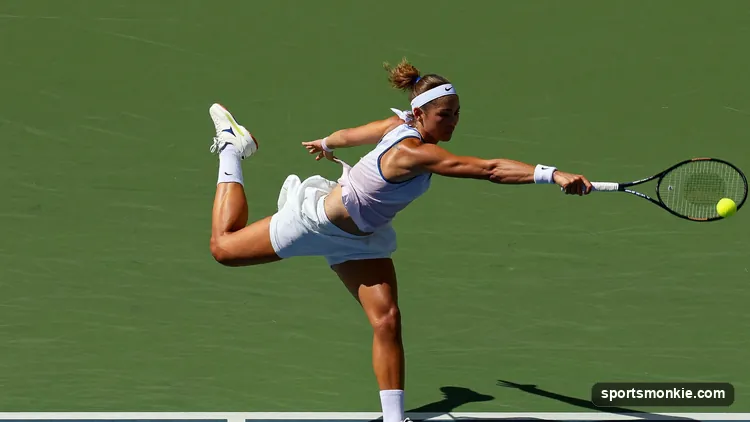
How to Hit a Tennis Forehand: Grip, Swing, and Topspin
How to hit a tennis forehand: use a Semi-Western or Eastern grip, turn your shoulders early, drop the racket below the ball, and swing low-to-high to contact out front.
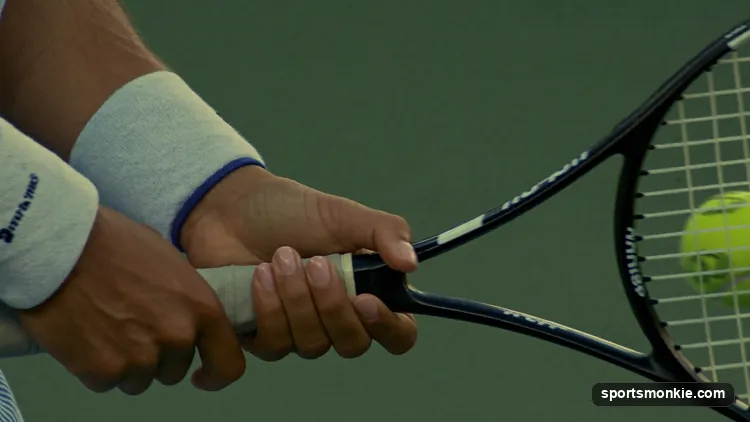
Tennis Grips Explained: The 4 Grips and When to Use Each
Tennis grips explained simply: the Continental (bevel 2) serves and volleys, Eastern (bevel 3) hits flat forehands, Semi-Western (bevel 4) adds topspin, and Western (bevel 5) is extreme spin. Here is how to form each and when to switch.
How to Hold a Tennis Racket: 5 Grips Every Player Should Know
How you hold a tennis racket shapes your swing, spin, and reach. The five main grips are Continental, Eastern, Semi-Western, Western, and two-handed.
Eastern Grip in Tennis: The Bevel-3 Forehand Explained
The eastern grip in tennis places your index knuckle on bevel 3 for a flat, versatile forehand. Learn how to find it, its pros and cons, and who uses it.
How to Hit Topspin in Tennis: The Low-to-High Swing, Grip, and Drills
To hit topspin in tennis, use a semi-western grip and swing low-to-high so the racket brushes up the back of the ball. Here is the grip, swing path, contact point, and drills that build heavy spin on both wings.
Continental Grip in Tennis: How to Hold It and When to Use It
The continental grip places the base knuckle of your index finger on bevel 2 of the racket handle. It is the grip for serves, volleys, slices, and overheads. Here is how to find it and drill it.