
Indian Wells Masters Tickets: Prices and How to Buy Them

On this page9
- 01How much do Indian Wells Masters tickets cost?
- 02Grounds Pass vs. stadium ticket: what’s the real difference?
- 03Should you buy a single session or a Series Package?
- 04Why do players and fans call Indian Wells tennis’s “fifth major”?
- 05Did Indian Wells change Grounds Pass access to Stadium 2?
- 06When do tickets go on sale, and how do you buy them?
- 07Is it safe to buy Indian Wells tickets on resale sites?
- 08Buying Indian Wells tickets from the UK, Australia, or Canada
- 09Which ticket should you actually buy?
Indian Wells Masters tickets — officially for the BNP Paribas Open, the ATP Masters 1000 and WTA 1000 tennis tournament, not a golf event — start at $10 for a qualifying-day Grounds Pass, according to the tournament’s own pricing. Main-draw Grounds Passes and early Stadium 1 sessions typically run $30 to $90, climbing past $400 for a reserved seat at the singles finals, and a full-tournament Series Package in Stadium 1 starts at $875. Everything is sold direct through bnpparibasopen.com and the tournament’s ticketing partner AXS. Here’s what each ticket type actually gets you, what it costs by round, and why players keep voting this Masters 1000 their favorite stop on tour.
How much do Indian Wells Masters tickets cost?
Unlike Wimbledon or the US Open, Indian Wells doesn’t publish one fixed price chart — tickets are dynamically priced through AXS and move with demand, day of the week, and how far out you buy. That said, real listings cluster into predictable bands by round and stadium.
| Ticket type | Round / stadium | Typical price | Notes |
|---|---|---|---|
| Qualifying Grounds Pass | Feb 28–Mar 2 | $10 flat | Official price; all-day access, benefits a tournament charity |
| Grounds Pass | Main draw, Stadiums 3–9 | roughly $30–$90/day | No Stadium 1 or 2 access |
| Stadium 1, early rounds | Round of 64/32 | from ~$32 | Cheapest reserved stadium seat |
| Stadium 1, second week | Round of 16 / quarterfinals | roughly $100–$250 | Prices jump once seeds start clashing |
| Stadium 1, semifinals | Men’s/Women’s semis | from ~$200 | Two singles semis plus doubles finals |
| Stadium 1, final | Championship Sunday | from ~$420, averaging well over $1,000 on resale | Highest-demand session of the event |
| Series Package (Stadium 1) | Full tournament, same seat | starts at $875 | Best value only if attending most sessions |
Those Stadium 1 figures reflect marketplace listings tracked by Vivid Seats closer to the tournament, and the qualifying and Series Package numbers come straight from the tournament’s own site. If you want the cheapest real day at the Indian Wells Tennis Garden, a qualifying Grounds Pass is it — you’ll see rising pros and, most years, a handful of seeded players sneaking in practice sets on outer courts for a tenth of what a main-draw ticket costs.
Grounds Pass vs. stadium ticket: what’s the real difference?
A Grounds Pass buys full-day, non-reserved access to Stadiums 3 through 9, every practice court, and the grounds themselves — dining, shopping, and the general buzz that makes Indian Wells feel more like a tennis festival than a stiff formal event. It does not include Stadium 1 or Stadium 2.
A stadium ticket is a reserved seat for one session in Stadium 1, 2, or 3, and it also folds in Grounds Pass-level access to the smaller courts on that same day. So a Stadium 1 ticket effectively includes a Grounds Pass, but a Grounds Pass never includes a Stadium 1 seat. If watching a specific top-10 player on the main court is the point of your trip, you need the stadium ticket, not the grounds-only option.
Should you buy a single session or a Series Package?
A Series Package locks in the same Stadium 1 seat for every session of the main draw, from the first Wednesday through the championship match, and starts at $875 per the tournament’s official package page. Package holders also skip resale fees on sessions they can’t attend and get general admission to every other stadium for the full two weeks.
Here’s the honest math: if you’re only in town for a long weekend, single sessions almost always cost less in total than a package, even stacking three or four premium days. The Series Package earns its price only for fans who are actually there most of the fortnight — locals, retirees on a long desert stay, or anyone building a trip entirely around the tournament. For a first visit, buy one or two single sessions in the second week, when the draw has thinned and the tennis is sharper, rather than paying for ten days you’ll only use for three.
Why do players and fans call Indian Wells tennis’s “fifth major”?
Indian Wells isn’t officially a major — it’s a joint ATP Masters 1000 and WTA 1000 event, one tier below the four Grand Slams, per ATP Tour’s own tournament listing. But the nickname sticks for real reasons. Stadium 1 seats 16,100, the second-largest purpose-built outdoor tennis stadium anywhere after Arthur Ashe Stadium at the US Open, and the grounds sprawl across nine show courts instead of two or three.
Access is the bigger draw. Practice courts sit close enough to the walkways that you can hear a coach calling out footwork drills, and outer-court sessions put you within a few rows of players you’d never get near at a Slam. The 2025 edition drew a record 504,268 fans through the gates, according to the tournament’s own recap — more than any non-Slam event on either tour, and players have voted it their favorite Masters 1000 stop for over a decade running. The atmosphere backs up the marketing, which is rarer than it sounds in tennis.
Did Indian Wells change Grounds Pass access to Stadium 2?
Yes, and it’s the one thing most ticket guides skip. For years, a Grounds Pass or a Stadium 1 ticket also got you into the upper bowl of Stadium 2. That changed: Stadium 2 is now fully reserved seating, and neither a Grounds Pass nor a Stadium 1 ticket grants entry anymore, per the tournament’s current FAQ. Fans noticed immediately — Yahoo Sports reported visible backlash after night sessions in Stadium 2 played to sparsely filled seats while Grounds Pass holders were turned away at the door.
The practical takeaway: if a specific Stadium 2 match matters to you — and Stadium 2’s lower bowl often hosts genuinely good tennis on quieter days — you now need a Stadium 2 ticket specifically. Don’t assume your Grounds Pass covers it the way it used to, and don’t plan a day around “we’ll just wander into whichever court looks good,” because that no longer works for Stadium 2.
When do tickets go on sale, and how do you buy them?
Series Packages go on sale first, typically months before the tournament. Single Session and Daily Double tickets follow, going on sale in September for the following March’s event, per the tournament’s official ticket announcement. Qualifying Grounds Passes at $10 usually open up closer to the event itself. All tickets are digital, issued through AXS, and accessed via the BNP Paribas Open mobile app rather than a printed ticket.
Buy direct at bnpparibasopen.com/tickets or by calling the box office at 1-800-999-1585 (Monday–Friday, 10am–5pm PST). There’s no ballot or lottery system like Wimbledon’s — it’s straightforward first-come, first-served sale, which makes Indian Wells noticeably easier to plan around than a Grand Slam.
Is it safe to buy Indian Wells tickets on resale sites?
Safer than most tournaments, with one catch. AXS runs the tournament’s official verified resale, so tickets bought through AXS.com or the AXS app carry the same guarantee as a first sale. Third-party marketplaces like StubHub, Vivid Seats, or Gametime also sell real inventory, since they source from AXS listings, but prices there move with demand and can run well above face value for marquee sessions.
The one policy to know: the tournament’s weather-exchange protection, which lets you swap a rained-out or heat-delayed session for a Grounds Pass, only applies to tickets bought through official channels. Buy on a third-party site and you lose that safety net if a session gets cut short.
Buying Indian Wells tickets from the UK, Australia, or Canada
There’s no residency requirement on any Indian Wells ticket — you set up the same AXS account a Southern California local would use, and tickets deliver through the tournament app regardless of where you live. The friction is entirely logistical: flights and a Palm Springs-area hotel during a two-week event that regularly pulls half a million fans book up and price up fast, so lock accommodation as soon as you’ve settled on dates.
Every price above is in US dollars, and the pound, Australian dollar, and Canadian dollar all move against it throughout the year. Check the live rate before comparing an Indian Wells session to a home-market event, and remember that March in the Coachella Valley means daytime heat — pack for desert sun, not a typical tennis-season forecast.
Which ticket should you actually buy?
For a first trip, skip the Series Package and buy one strong single session in Stadium 1 during the second week, when the draw has narrowed and every match matters. Pair it with a Grounds Pass day earlier in the tournament to see more courts and more players for less money — just don’t expect that Grounds Pass to open Stadium 2 anymore.
Once your tickets are sorted, brush up on the basics before you go: our guide to how tennis scoring works covers the format you’ll see across all nine courts, and our breakdown of what counts as a Grand Slam in tennis explains exactly where a Masters 1000 event like this sits below the four majors. If Indian Wells is one stop on a bigger tennis trip, see our guides to Wimbledon tickets and Cincinnati Masters tickets for how the buying process compares at the other big stops on tour.
Frequently asked questions
How much do Indian Wells Masters tickets cost?+
A qualifying-day Grounds Pass runs $10, per the tournament's own pricing. Main-draw Grounds Passes and early Stadium 1 seats typically start in the $30–$90 range on the official site and resale marketplaces, climbing past $400 for semifinal and final sessions and into four figures for Series Packages and hospitality.
What's the difference between a Grounds Pass and a stadium ticket?+
A Grounds Pass gets you all-day, non-reserved access to Stadiums 3 through 9, practice courts, and the grounds, but not Stadium 1 or Stadium 2. A stadium ticket is a reserved seat for one session in Stadium 1, 2, or 3, and it also includes Grounds Pass-level access to the smaller courts that day.
Is an Indian Wells Series Package worth it?+
Only if you're attending most of the tournament. A Series Package locks the same Stadium 1 seat for every session from the first Wednesday through the final and starts at $875, with no per-session resale fee if you skip a day. For a one- or two-day trip, single sessions cost far less overall.
When do Indian Wells tickets go on sale?+
Series Packages typically go on sale first, months ahead of the tournament, followed by Single Session and Daily Double tickets in September for the following March event. Qualifying-day Grounds Passes at $10 usually become available closer to the tournament, all through the official site and AXS.
Does a Grounds Pass still get me into Stadium 2 at Indian Wells?+
No. Stadium 2 moved to fully reserved seating, so Grounds Pass and even Stadium 1 ticket holders no longer walk into its upper bowl the way they could for years. If Stadium 2's schedule interests you, you need a Stadium 2 ticket specifically, not just a Grounds Pass.
Can I buy Indian Wells tickets from the UK, Australia, or Canada?+
Yes, there's no residency requirement — you buy through the same official site and AXS account as a US fan, with tickets delivered digitally via the tournament app. Budget for a California trip on top of the ticket, and check the live USD exchange rate before comparing prices to home events.
Sources
- BNP Paribas Open – Visit FAQs (Grounds Pass access, Stadium 2 policy, qualifying pricing)
- BNP Paribas Open – 2026 Series Packages
- BNP Paribas Open – 25 Takeaways From the 2025 BNP Paribas Open (attendance record)
- ATP Tour – ATP Masters 1000 Indian Wells overview
- Yahoo Sports – Tennis fans hit out at Indian Wells over ticketing change
- Vivid Seats – BNP Paribas Open ticket marketplace
Play & tools
Free browser games and tools — no account, no download.
- Play today's Sports Connections — Today's Sports Connections — daily hints, answers, and play the grid.
- Play Guess the NFL Player — A new mystery NFL player every day. Eight guesses, with a clue on each — plus free unlimited mode.
- Explore all our games →
Related tennis guides
View all →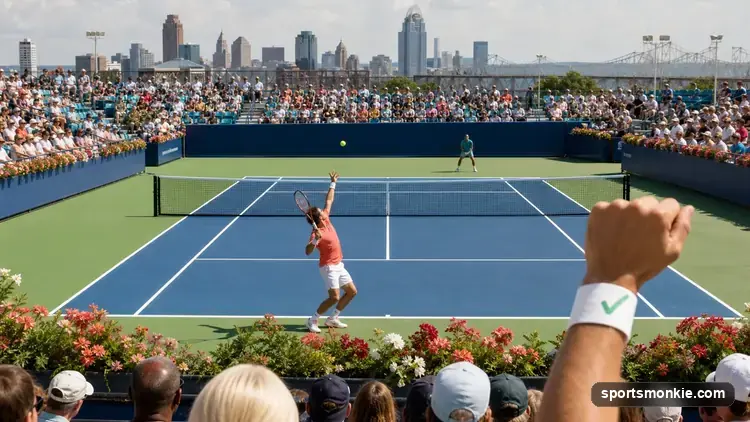
Cincinnati Masters Tennis Tickets: Prices and How to Buy Them
Cincinnati Masters tickets run about $9 for early rounds to $300+ for Center Court finals. Real 2026 session prices, packages, and how to buy them.
Canadian Grand Prix F1 Tickets: Prices and How to Buy
Canadian Grand Prix F1 tickets run $300 to $1,150+ by tier. Real prices, the 2027 on-sale date, and how safe resale actually is.

NHL Eastern Conference Finals Tickets: Prices & How to Buy
How NHL Eastern Conference Finals tickets are sold, real 2026 price ranges by round, and how to buy safely on the resale market.
Masters Tickets at Augusta: Real Cost and How to Get Them
Official Masters tickets run $125-$525, but the patron waitlist has been closed since 1978. Real lottery odds, resale prices, and honest expectations for 2027.
Ryder Cup 2027 Tickets: Prices and How to Get Them
Ryder Cup 2027 tickets run €89 to €1,999 at Adare Manor, Ireland. Real prices, ballot status, hospitality tiers, and why SeatGeek/TickPick resale is risky.
Wimbledon Tennis Tickets: How Much They Cost and How to Get Them
Wimbledon tickets run £21 for a Grounds Pass to £315+ for Centre Court finals. Here is how the public ballot, The Queue, and official resale actually work.