
Types of Tennis Shots: The Complete Guide to Every Stroke
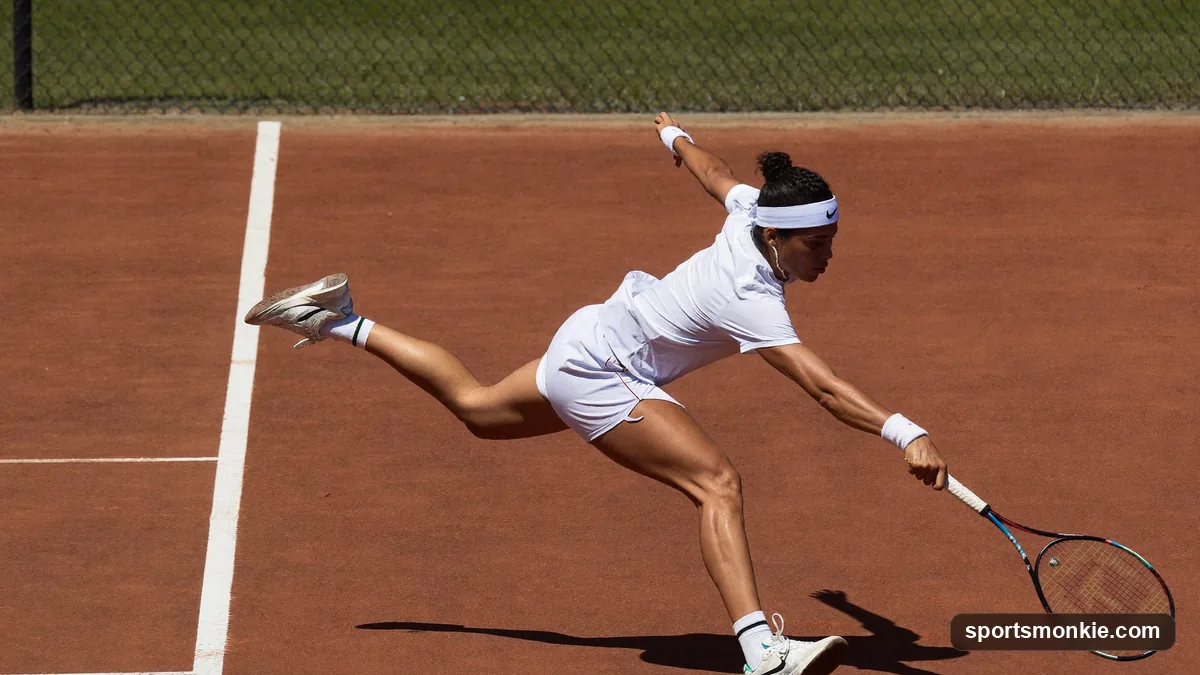
On this page7
The main types of tennis shots fall into three groups: groundstrokes (forehand and backhand), the serve, and net or specialty shots (volley, overhead smash, slice, lob, and drop shot). Every point in tennis, from a beginner’s rally to a Grand Slam final, is built from some combination of these strokes. Knowing what each shot does and when to use it is the fastest way to understand the sport — and it is the foundation every player, from a first lesson at the local club to a tour pro like Carlos Alcaraz, builds on.
This guide covers all the essential shots, how they differ, and links out to a full technique breakdown for each one, including how tennis scoring works so the shots make sense in context.
Groundstrokes: Forehand and Backhand
Groundstrokes are the backbone of tennis. They are hit after the ball bounces once on the court, typically from the baseline, and they make up the majority of shots in any given rally.
- Forehand — struck on the dominant-hand side of the body, the forehand is usually the first stroke a player learns because its motion resembles a natural throw. Most modern pros hit it with heavy topspin from an open or semi-open stance for extra power and faster recovery back to the center of the court. For the full mechanics, grip options, and common mistakes, see our tennis forehand explained guide.
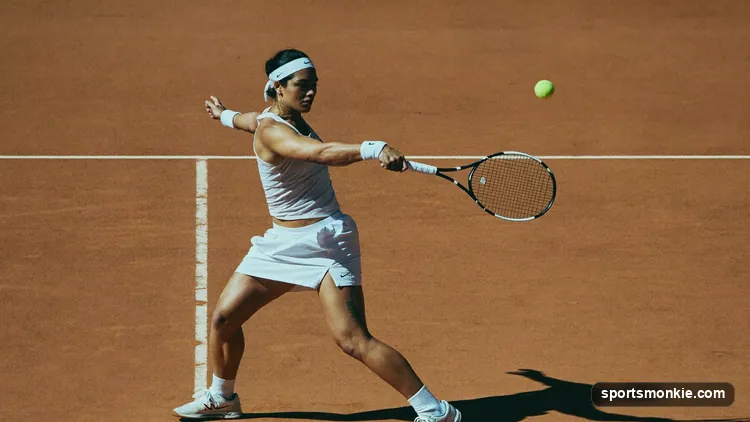
- Backhand — hit on the non-dominant side, the backhand can be one-handed or two-handed. The two-handed version, popularized by players like Novak Djokovic and Rafael Nadal, generally offers more control and power on returns, while the one-handed backhand (Roger Federer’s signature shot) allows greater reach and slice variation. Our tennis backhand explained breakdown covers both styles in detail.
Both groundstrokes can also be hit flat (minimal spin, maximum pace) or with slice (backspin that keeps the ball low), which is why the slice deserves its own category below.
The Serve
The serve is unique: it is the only shot in tennis that a player controls completely, tossing the ball themselves rather than reacting to an opponent. It starts every single point, which is why coaches consider it the single most important stroke to develop.
A serve can be hit several ways:
- Flat serve — minimal spin, maximum speed, used mostly on first serves for direct winners or weak returns.
- Slice serve — spins sideways off the bounce, often used to pull an opponent wide off the court.
- Kick (topspin) serve — bounces high off the court, a common and safer choice for second serves.
- Underarm serve — a low-percentage, tactical serve hit with an underhand motion to catch an opponent standing far behind the baseline off guard.
Because the serve directly sets up the score of every point, pairing this shot with an understanding of how tennis scoring works makes the tactics behind serving location and spin much clearer.
Net and Volley Shots
Once a player approaches the net, groundstrokes give way to volleys — shots hit out of the air before the ball bounces. Volleys use a short, compact “block” motion rather than a full swing, which makes them technically simpler to learn even though positioning and reflexes are harder to master.
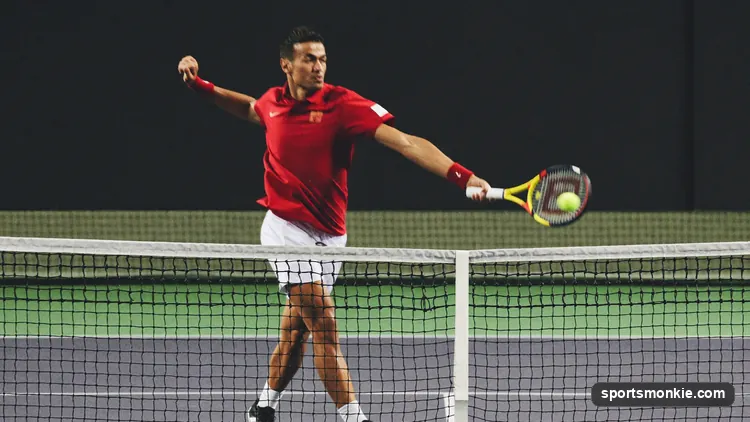
- Volley — hit with a short punch near the net, essential in doubles and a strong offensive weapon in singles when a player closes in behind a deep approach shot. See our full what is a volley in tennis guide for grip and footwork tips.
- Half-volley — a variation where the ball is struck the instant it bounces, right at the player’s feet. Many coaches call it the hardest shot in tennis because of the split-second timing it demands.
- Overhead smash — the shot used to finish a point after an opponent’s lob sits up in the air, struck with a serve-like motion but aimed for placement over raw power. Our overhead shot in tennis guide covers technique and common errors.
Specialty Shots: Slice, Lob, and Drop Shot
Beyond the standard groundstroke-serve-volley trio, several specialty shots change the pace, height, or direction of a rally to create an advantage.
- Slice — a groundstroke hit with backspin instead of topspin, which flattens the ball’s trajectory and makes it skid low after the bounce. It is used to change rhythm, approach the net behind a low ball, or neutralize an aggressive opponent. Full details are in our slice in tennis guide.
- Lob — a high, arcing shot hit deep over an opponent’s head, either to buy time to recover court position or to set up a passing shot when the opponent is at net. Learn the mechanics in our lob in tennis explainer.
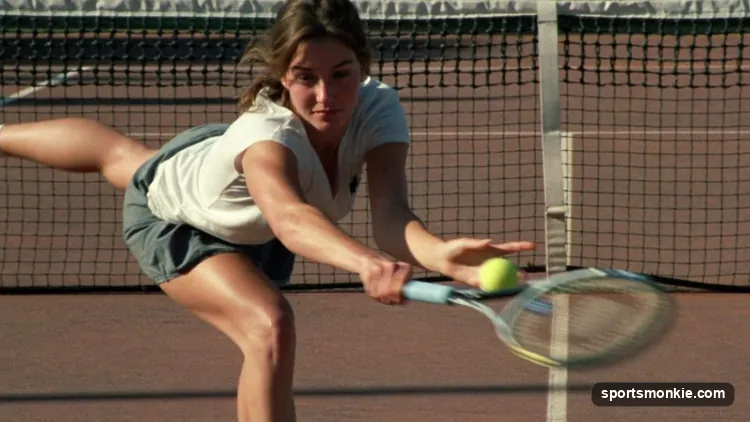
- Drop shot — a delicately underspun shot that barely clears the net and dies quickly, forcing an opponent who is out of position or deep behind the baseline to sprint forward. It is one of the highest-risk, highest-reward shots in the sport. See our dedicated drop shot in tennis guide for when and how to use it.
Shots Comparison Table
| Shot | Category | Where hit from | Primary purpose |
|---|---|---|---|
| Forehand | Groundstroke | Baseline, after bounce | Rally building, offense |
| Backhand | Groundstroke | Baseline, after bounce | Rally building, defense/control |
| Serve | Serve | Baseline, to start point | Point initiation |
| Volley | Net shot | Near net, before bounce | Finishing points, doubles |
| Half-volley | Net shot | Near feet, at the bounce | Defensive net play |
| Overhead smash | Net shot | Above the head, near net | Finishing a lob |
| Slice | Specialty | Baseline or approach | Changing pace, low bounce |
| Lob | Specialty | Baseline or defensive | Resetting the point, passing at net |
| Drop shot | Specialty | Baseline or mid-court | Exploiting poor positioning |
Groundstroke vs. Net vs. Specialty Shots
The easiest way to categorize tennis shots is by where and when they are hit:
- Groundstrokes (forehand, backhand) happen after the bounce, from the back of the court, and form the majority of any rally.
- Net shots (volley, half-volley, overhead smash) happen before the bounce, close to the net, and are designed to finish points quickly.
- Specialty shots (slice, lob, drop shot) can be hit from almost anywhere and exist to change the shape of a point rather than simply extend it — slowing the ball down, lifting it over an opponent, or dropping it just out of reach.
Every player, from beginners working through their first racket sports lessons to touring professionals, mixes these three families constantly within a single point. A typical rally might open with a serve, continue through several forehands and backhands, and end with a volley, overhead, or drop shot once one player gains the advantage.
Putting It All Together
Understanding these shot categories is the first step to reading any tennis match intelligently. Once the basic groundstrokes and serve are second nature, the specialty shots — slice, lob, drop shot, and volley — become the tactical variety that separates a one-dimensional rally from a genuinely strategic point. Each individual guide linked above breaks down grip, footwork, and common technical mistakes in far more depth, so use this page as the map and dig into whichever shot needs the most work.
Frequently asked questions
What are the main types of tennis shots?+
The main types of tennis shots are the forehand and backhand groundstrokes, the serve, the volley, and specialty shots including the slice, lob, overhead smash, and drop shot. Some coaches also list the half-volley and approach shot as separate categories.
What is the most important shot in tennis?+
The serve is generally considered the most important shot because it is the only stroke a player fully controls and it starts every single point. Coaches often say players should serve for double the time they spend on any other shot in practice.
What is the difference between a groundstroke and a volley?+
A groundstroke (forehand or backhand) is hit after the ball has bounced once on the court, while a volley is hit out of the air before it bounces, usually near the net with a short, blocking swing.
What is the easiest tennis shot to learn?+
The forehand is typically the easiest and first shot beginners learn because its natural swing path mirrors a throwing motion. The volley is also considered simple technically, since it uses a short punch rather than a full swing.
What is the hardest tennis shot to master?+
The half-volley, where the ball is struck the instant it bounces near the feet, is widely regarded as the hardest shot in tennis because of the split-second timing required. The serve is the hardest to master for consistency and power together.
What shot do you use to return a lob?+
An overhead smash is the standard shot used to punish a lob that lands short, while a player can also let a deep lob bounce and hit a regular groundstroke if there is time to reset.
Is a slice a type of groundstroke?+
Yes, a slice is a variation of the forehand or backhand groundstroke that uses backspin instead of topspin, causing the ball to skid low and slow rather than bounce up.
When should a player use a drop shot?+
A drop shot works best when the opponent is well behind the baseline, out of position side to side, or tired, since it forces them to sprint forward and rarely gives them time to reach the net before a second bounce.
Sources
Play & tools
Free browser games and tools — no account, no download.
- Play today's Sports Connections — Today's Sports Connections — daily hints, answers, and play the grid.
- Play Guess the NFL Player — A new mystery NFL player every day. Eight guesses, with a clue on each — plus free unlimited mode.
- Explore all our games →
Related tennis guides
View all →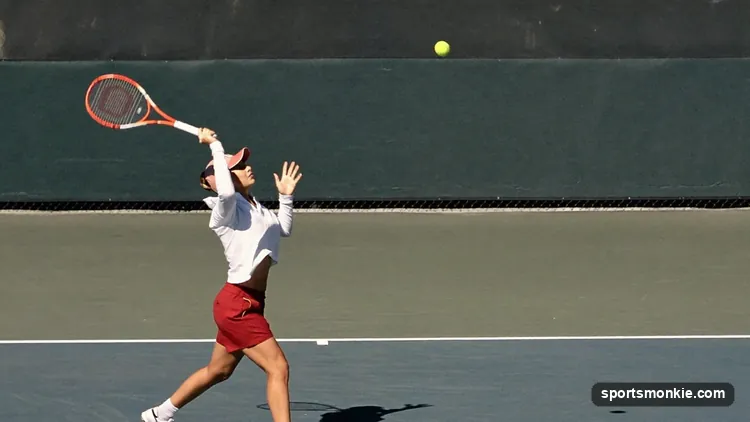
Lob in Tennis: Definition, Technique, and When to Use It
A lob in tennis is a high, arcing shot hit over an opponent at the net. Learn the offensive vs. defensive lob, technique, and its counter, the smash.
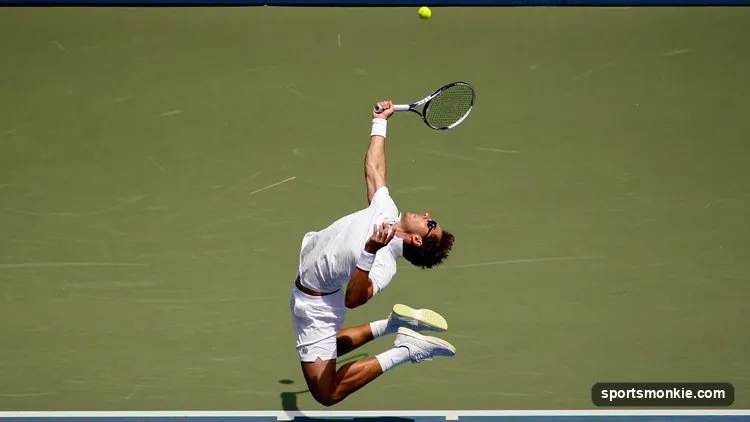
Overhead Shot in Tennis: How to Hit the Smash (Complete Guide)
The overhead shot in tennis is a serve-like swing hit above the head to put away a lob. Learn the technique, footwork, and common errors.
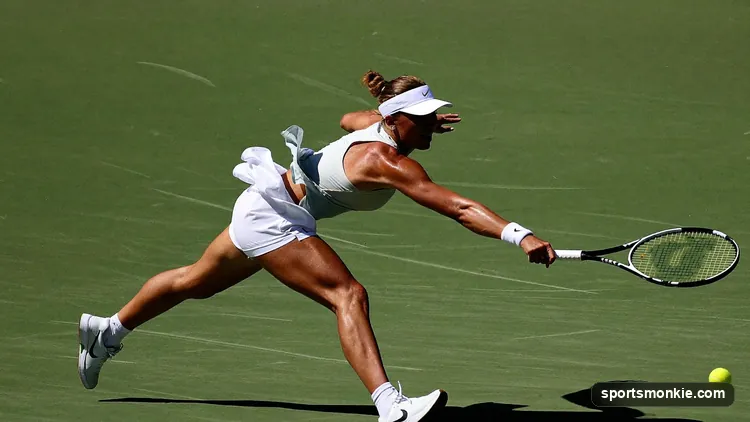
Forehand in Tennis Explained: Grips, Swing Path, and Technique
The forehand in tennis is the groundstroke hit on a player's dominant-hand side. Learn grips, swing mechanics, topspin, and common mistakes.
Drop Shot in Tennis: Technique, Timing, and When to Use It
A drop shot in tennis is a soft, backspin-heavy stroke that just clears the net and dies short. Learn the grip, disguise, and when to hit it.
Backhand in Tennis: One-Handed vs Two-Handed, Grips, and Mechanics Explained
The backhand in tennis is a stroke hit on the non-dominant side; here's how one-handed vs two-handed grips, topspin, and slice mechanics differ.
What Is a Volley in Tennis? Grip, Technique, and When to Attack the Net
A volley in tennis is a shot hit before the ball bounces, usually at the net. Learn grip, punch technique, and forehand vs. backhand volley form.