
Lob in Tennis: Definition, Technique, and When to Use It
On this page6
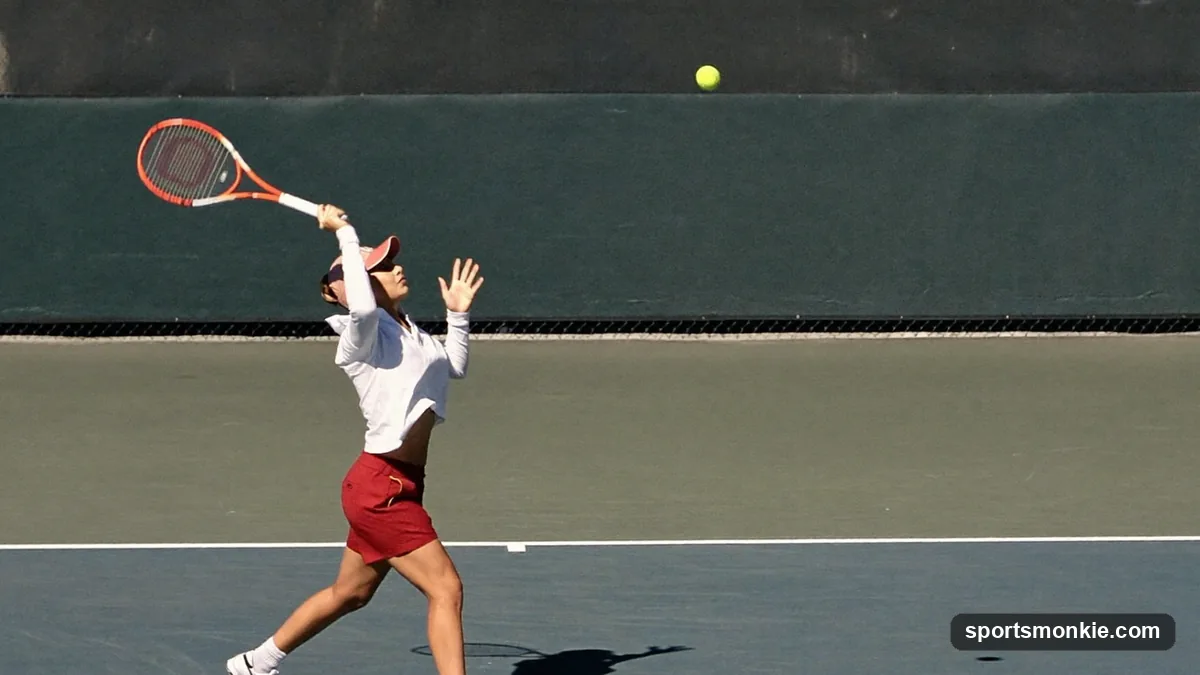
A lob in tennis is a high, arcing shot hit over an opponent standing near the net, designed to either win the point outright (offensive lob) or buy time to recover court position (defensive lob). It’s one of the oldest shots in the sport, dating back to the earliest Wimbledon champions, and it remains one of the most effective ways to punish a player who crowds the net too aggressively.
What Is a Lob in Tennis?
A lob is a shot hit with a steep, upward trajectory that carries the ball well above net height and drops it deep in the opponent’s court, often landing close to the baseline. Unlike a groundstroke or a drive volley, the goal isn’t pace — it’s height and depth, timed to sail over an opponent who has moved forward to volley or smash.
The lob is one of the many entries in a player’s toolkit alongside groundstrokes, volleys, and drop shots — see our full breakdown of the types of tennis shots for how it fits into the bigger picture. Historically, the lob is credited to Frank Hadow, the second Wimbledon champion, who reportedly used it to defeat serve-and-volley specialist Spencer Gore in the 1878 Wimbledon final, proving from the sport’s earliest days that a shot over an opponent’s head could beat a shot hit past them.
Offensive Lob vs. Defensive Lob
Not all lobs serve the same purpose. Understanding the difference is the key to using the shot correctly instead of just as a panic button.
- Offensive lob: Hit with pace, disguise, and often topspin against an opponent who has closed in confidently at the net. The goal is a clean winner — the ball clears the opponent’s reach but doesn’t sail so long that it lands out or gives them time to retreat and track it down.
- Defensive lob: Hit higher, slower, and usually with slice or underspin, purely to buy time. This version is used when a player is stretched wide, pulled off the court, or badly out of position, and needs extra seconds to scramble back and reset the point rather than concede it.
Both versions share the same core mechanics but differ in trajectory, spin, and intent — offense looks to end the point, defense looks to survive it.
| Lob Type | Trajectory | Typical Spin | Primary Goal | Risk |
|---|---|---|---|---|
| Offensive (topspin) lob | Lower arc, more pace | Heavy topspin | Win the point outright | Can be smashed if too short |
| Defensive lob | High, floating arc | Slice/underspin | Buy time, reset position | Can sit up and invite an easy smash |
| Flat lob | Moderate arc, minimal spin | Little to none | Simple over-the-top clear | Tends to sail long or land short |
How to Hit a Topspin Lob (Technique)
The topspin lob is the hardest version to execute but the most rewarding, since the added spin makes the ball dip sharply after clearing the net player, keeping it in the court even when hit with real pace.
- Disguise the preparation. Start your swing exactly as you would for a normal topspin groundstroke or passing shot — any early tell (opening the racket face, slowing the backswing) lets the net player read the lob and retreat in time.
- Steepen the swing path late. Instead of the flatter, forward path of a drive, brush up and over the back of the ball with a pronounced low-to-high motion, similar in spirit to other shots that rely on racket-face angle and touch, like the drop shot in tennis, but inverted in trajectory.
- Accelerate through contact. A tentative topspin lob just floats and sits up; real racket-head speed through the ball is what generates the dip that keeps it in bounds.
- Aim for the back third of the court. The deeper the lob lands, the less time an opponent has to run it down or set up a comfortable smash.
- Use a crossover step, not a back-pedal, when defending. If you’re hitting the lob from a defensive scramble, pivot and cross-step backward rather than back-pedaling flat-footed, which keeps balance and racket control intact through contact.
A flatter, slower defensive lob follows the same setup but favors slice: an open racket face and a gentle, carrying motion rather than an aggressive brushing action, prioritizing height and hang time over pace.
When to Use a Lob (and When Not To)
The lob earns its place in a player’s game plan in a handful of clear situations:
- When an opponent closes in tight on the net, especially confidently or predictably, such as after a serve-and-volley or aggressive approach shot.
- After a drop shot pulls the opponent forward, the lob is the natural follow-up if they get to the ball but are now caught deep in no-man’s-land.
- When you’re stretched or off-balance, a defensive lob is often the only shot that buys enough time to scramble back into rally position.
- As a change-of-pace surprise in the middle of a fast, flat rally, disrupting rhythm and forcing an opponent to adjust their footwork and timing.
- In doubles, where net players crowd the middle far more than in singles, a well-placed lob over one net player can flip momentum by pushing both opponents back to the baseline. It’s a strategy that translates across the wider world of racket sports, where net pressure and the shots that punish it follow similar logic.
Avoid lobbing against players with a dominant overhead smash, in windy conditions that make trajectory hard to control, or indoors under a low ceiling where a truly high lob simply isn’t an option.
The Overhead Smash: The Lob’s Counter
Every lob carries risk, and that risk has a name: the overhead smash, covered in full in our guide to the overhead shot in tennis. When a lob is hit too short, too low, or without enough disguise, the net player has time to turn side-on, track the ball like a serve toss, and crush an overhead winner.
This is exactly why depth and disguise matter so much more than raw height. A lob that clears an opponent by only a foot or two but lands short in the court is an invitation to get smashed; a lob that clears them by the same margin but lands deep near the baseline is far harder to punish, even for a player with a strong overhead. The smash-versus-lob exchange is one of the sport’s oldest cat-and-mouse dynamics, dating back to the shot’s origins in the 1870s.
Common Mistakes to Avoid
Even experienced club players misuse the lob in predictable ways:
- Hitting it too short. A lob that lands in the service box, rather than deep near the baseline, is essentially a setup for the opponent’s smash.
- Telegraphing the shot. Opening the racket face early or slowing down the backswing tips off the opponent, who can simply retreat and let the ball bounce before playing a routine overhead or groundstroke.
- Overhitting a defensive lob. When under pressure, the priority is height and safety margin over the net, not pace — a rushed, flat defensive lob that doesn’t clear high enough gets punished immediately.
- Using it as a last resort only. Treating the lob purely as a panic shot, instead of a planned weapon against a predictable net-rusher, wastes one of the more effective tools against modern serve-and-volley and doubles net play.
Mastering when — not just how — to lob is what separates a shot that occasionally saves a point from one that regularly wins them.
Frequently asked questions
What is a lob in tennis?+
A lob in tennis is a shot hit high into the air so it arcs over an opponent positioned at or near the net, landing deep in the court behind them. It's used either to win the point outright (offensive lob) or to buy time and reset a rally when a player is out of position (defensive lob).
What is the difference between an offensive and defensive lob?+
An offensive lob is hit with pace and often topspin to fly just out of an opponent's reach and win the point, usually against a player who has moved in confidently to volley. A defensive lob is hit higher and slower, often with slice, purely to gain time to recover court position when a player is stretched, off-balance, or in trouble.
How do you hit a topspin lob?+
Prepare as if hitting a normal topspin groundstroke to disguise the shot, then swing low-to-high with a steeper path and accelerate through contact, brushing up the back of the ball. The topspin makes the ball dip quickly after clearing the net player, so it lands in bounds even with real pace on it, unlike a flat lob that tends to sail long.
When should you use a lob in tennis?+
Use a lob when an opponent has closed in tight on the net, when you're pulled wide or off-balance and need time to recover, after a drop shot draws your opponent forward, or as a change-of-pace surprise to break up a fast rally. Avoid lobbing against a player with a dominant overhead smash or in windy/indoor conditions with a low ceiling.
What is the counter to a lob in tennis?+
The overhead smash is the direct counter to a lob. When a lob is hit too short or too low, the net player can turn, track the ball like a serve, and hit an overhead smash for a winner. A well-disguised, deep, or topspin lob minimizes this risk by staying out of comfortable smash range.
Is a lob a legal shot in tennis?+
Yes. A lob is a completely legal, standard tennis shot, no different in rule terms from a groundstroke or volley. It has been part of the sport since the earliest days of lawn tennis and is a core part of singles and doubles strategy today.
Who is known for having a great lob in tennis?+
Players known for exceptional lobs include Andre Agassi and Lleyton Hewitt, both praised for disguised topspin lobs that punished net rushers, and Andy Murray, who has used the lob as a reliable weapon against serve-and-volley and doubles-style net pressure throughout his career.
Does the lob work in doubles too?+
Yes, the lob is arguably even more valuable in doubles, where both opponents often play close to the net. A well-placed lob over one net player forces a scramble, can draw a weak smash, or flips momentum by pushing both opponents back to the baseline.
Sources
Play & tools
Free browser games and tools — no account, no download.
- Play today's Sports Connections — Today's Sports Connections — daily hints, answers, and play the grid.
- Play Guess the NFL Player — A new mystery NFL player every day. Eight guesses, with a clue on each — plus free unlimited mode.
- Explore all our games →
Related tennis guides
View all →
Drop Shot in Tennis: Technique, Timing, and When to Use It
A drop shot in tennis is a soft, backspin-heavy stroke that just clears the net and dies short. Learn the grip, disguise, and when to hit it.
Overhead Shot in Tennis: How to Hit the Smash (Complete Guide)
The overhead shot in tennis is a serve-like swing hit above the head to put away a lob. Learn the technique, footwork, and common errors.
Forehand in Tennis Explained: Grips, Swing Path, and Technique
The forehand in tennis is the groundstroke hit on a player's dominant-hand side. Learn grips, swing mechanics, topspin, and common mistakes.

Types of Tennis Shots: The Complete Guide to Every Stroke
The main types of tennis shots are groundstrokes, the serve, volleys, and specialty shots like the slice, lob, smash, and drop shot.

What Is a Volley in Tennis? Grip, Technique, and When to Attack the Net
A volley in tennis is a shot hit before the ball bounces, usually at the net. Learn grip, punch technique, and forehand vs. backhand volley form.
Backhand in Tennis: One-Handed vs Two-Handed, Grips, and Mechanics Explained
The backhand in tennis is a stroke hit on the non-dominant side; here's how one-handed vs two-handed grips, topspin, and slice mechanics differ.