
Drop Shot in Tennis: Technique, Timing, and When to Use It
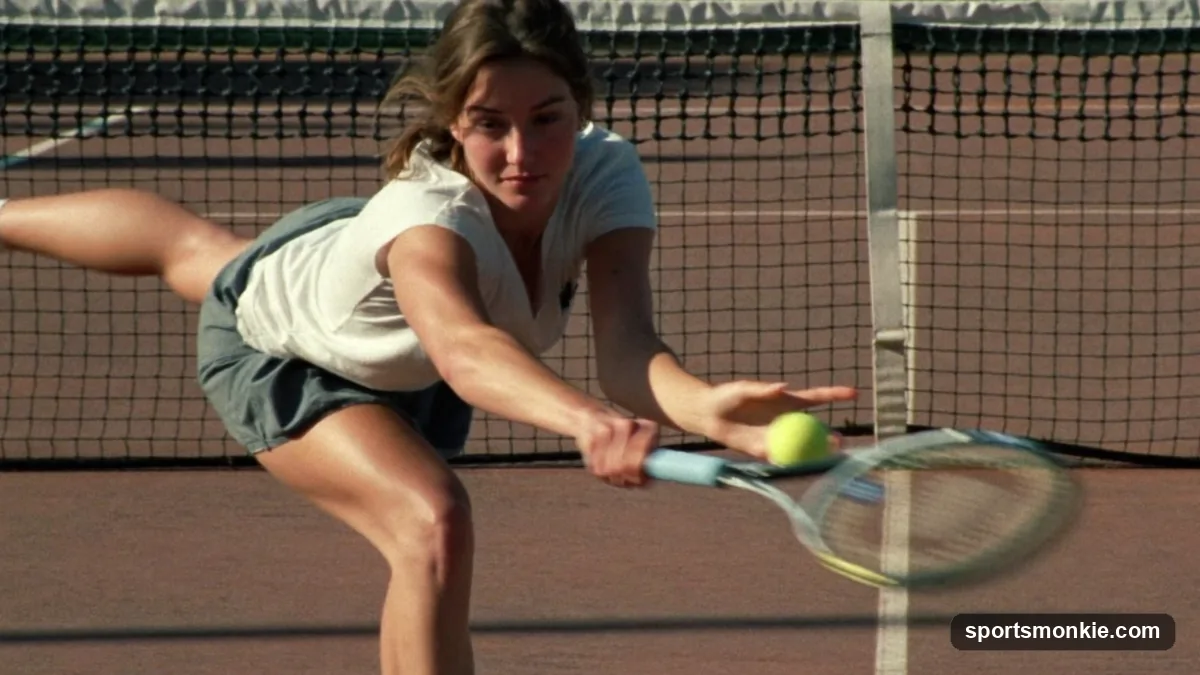
On this page8
- 01What Is a Drop Shot in Tennis?
- 02The Technique: Grip, Backswing, and Contact
- 03How to Disguise a Drop Shot
- 04When to Use a Drop Shot (and When Not To)
- 05The Risks of Hitting a Drop Shot
- 06Drop Shot vs. Slice: Key Differences
- 07Pairing the Drop Shot With the Lob
- 08Pro Examples: Who Hits the Best Drop Shots
A drop shot in tennis is a deliberately soft, underspin shot hit with an open racquet face so the ball just clears the net and dies short, often bouncing twice before a deep-positioned opponent can reach it. It’s one of the shots covered in our broader guide to the types of tennis shots, but because timing and disguise matter so much, it deserves a closer look on its own.
What Is a Drop Shot in Tennis?
The drop shot is a change-of-pace stroke, not a power shot. Instead of driving the ball deep, you take pace off, add backspin, and aim for a spot just over the net so the ball lands in the front third of the opponent’s court and stays low. Done well, it either wins the point outright or forces a defensive lunge that sets up your next shot. Done poorly, it sits up in the middle of the court and turns into a free winner for the other side — which is exactly why coaches teach it as a situational weapon, not a routine reply.
The Technique: Grip, Backswing, and Contact
Most instruction converges on the same fundamentals:
- Grip: Use a continental grip, the same one used for slices and volleys. It naturally opens the racquet face without you having to manipulate your wrist.
- Backswing: Keep it short. A big backswing generates power, which is the opposite of what a drop shot needs. A compact, controlled backswing gives you better feel and touch.
- Contact: Come under and slightly across the back of the ball, opening the racquet face more than you would for a normal slice. This produces the backspin — and often a touch of sideways spin — that makes the ball skid low and die on the bounce instead of kicking forward.
- Follow-through: Finish softly and low. A long, aggressive follow-through defeats the purpose and tends to send the ball deeper than intended.
The stroke is essentially a miniature, softened version of the slice in tennis: same grip, same underspin principle, but with the swing shortened and the pace deliberately drained out of it so the ball dies rather than skids through the court.
How to Disguise a Drop Shot
Disguise is what separates a drop shot that wins points from one that gets punished. The goal is to make the shot look identical to your normal groundstroke until the very last fraction of a second:
- Use the same stance, footwork, and initial racquet takeback you’d use for a topspin drive.
- Delay the change in swing path — the shortening and face-opening — until just before contact.
- Avoid any obvious “loading up” or slowing down that tips off the opponent early.
- Vary when you use it. If it becomes predictable, opponents will simply anticipate and camp closer to the baseline.
Top disguise artists can hit a drop shot from what looks like full backswing preparation for a topspin forehand, which is exactly why the shot still works even against players who are actively watching for it.
When to Use a Drop Shot (and When Not To)
A drop shot is a situational tool tied to court position, not a shot you reach for on a whim.
Good moments to hit it:
- Your opponent is pushed several feet behind the baseline after a deep, heavy shot from you.
- They’re scrambling wide and out of position, especially on their weaker side.
- You’ve noticed fatigue — a long point or a long match where recovery speed has dropped.
- The opponent has settled into a pattern of standing deep and grinding from the back of the court.
Poor moments to hit it:
- You’re off balance, stretched, or hitting on the run yourself.
- The opponent is already inside the baseline or approaching the net.
- You’ve used it recently and it’s no longer a surprise.
The Risks of Hitting a Drop Shot
The drop shot carries real downside if it’s mishit or mistimed. A ball that floats too high over the net gives a fast opponent time to sprint in and angle a winner past you. A drop shot hit from your own defensive position, rather than in response to their poor position, can strand you at the baseline with no time to cover the net. And overusing it removes the element of surprise that makes the shot dangerous in the first place — once an opponent expects it, they simply creep forward and take it away from you before it bounces twice.
Drop Shot vs. Slice: Key Differences
| Feature | Drop Shot | Slice |
|---|---|---|
| Grip | Continental | Continental |
| Backswing | Very short | Short to medium |
| Racquet face | Wide open | Moderately open |
| Intent | End the point short, pull opponent in | Push opponent back, approach net, change rhythm |
| Ball trajectory | Low, just clears net, dies on bounce | Flatter, skids through the court |
| Best used | Opponent deep or out of position | Any point, as a rhythm or approach shot |
Pairing the Drop Shot With the Lob
The drop shot’s most effective tactical partner is the lob in tennis. The two shots pull an opponent in opposite directions: the drop shot drags them forward to the net, and once they start anticipating more drop shots and creeping in early, a well-timed lob over their head becomes far more dangerous than it would be against a player parked on the baseline. Mixing the two — short then long, or long then short — is a staple pattern across every level of the sport, from club matches to the ATP and WTA tours, and it’s one of the core tactical building blocks covered across racket sports more broadly, from tennis to pickleball and badminton.
Pro Examples: Who Hits the Best Drop Shots
Carlos Alcaraz has become the modern benchmark for the shot, using it as an outright attacking weapon rather than a last-resort escape from a deep rally — he’ll hit one from well inside the baseline off a heavy topspin shot, catching opponents who assume he’s driving through the ball. Roger Federer built his own reputation on disguised, precisely placed drop shots throughout his career, often as a change-up after a string of deep, flat drives had pinned an opponent behind the baseline. Both examples underline the same lesson: the shot works best as a surprise, set up by the shots that came before it, not as a stand-alone trick.
Frequently asked questions
What is a drop shot in tennis?+
A drop shot is a softly struck shot, usually hit with underspin, designed to just clear the net and land short in the opponent's court with minimal forward bounce. It's meant to pull an opponent forward and either win the point outright or draw a weak reply.
What grip should you use for a drop shot?+
Most coaches recommend the continental grip, the same grip used for slices and volleys. It naturally opens the racquet face and makes it easier to slide the strings underneath the ball to produce backspin.
When is the best time to hit a drop shot?+
The best windows are when your opponent is pushed well behind the baseline, stuck on their weaker side, moving the wrong direction, or visibly tired. Hitting it from a neutral or defensive position of your own is far riskier.
How do you disguise a drop shot?+
Keep your stance, backswing, and racquet prep identical to your normal groundstroke for as long as possible, then shorten the swing and open the face only at the last moment. Many players also step in slightly, as if approaching to hit with pace, before softening the contact.
Is the drop shot the same as a slice?+
No. Both use backspin and a continental grip, but a slice is hit with a fuller swing to push an opponent back or approach the net, while a drop shot uses a short, soft swing specifically to make the ball die short in the court.
Why do drop shots fail so often at lower levels?+
They fail because the racquet face opens too much, the ball floats high over the net, or the player telegraphs the shot with an obvious change in backswing — any of which gives the opponent time to sprint in and punish it.
Does the drop shot work well with the lob?+
Yes. The two shots are a classic tactical pair: a drop shot pulls an opponent forward to the net, and if they anticipate more drop shots and creep in, a lob over their head becomes far more effective — and vice versa.
Which pro players are known for great drop shots?+
Carlos Alcaraz is widely regarded as the best drop-shot player in the current men's game, using it as a genuine attacking weapon rather than a defensive escape. Roger Federer also built a reputation for disguised, precisely placed drop shots throughout his career.
Sources
Play & tools
Free browser games and tools — no account, no download.
- Play today's Sports Connections — Today's Sports Connections — daily hints, answers, and play the grid.
- Play Guess the NFL Player — A new mystery NFL player every day. Eight guesses, with a clue on each — plus free unlimited mode.
- Explore all our games →
Related tennis guides
View all →
Lob in Tennis: Definition, Technique, and When to Use It
A lob in tennis is a high, arcing shot hit over an opponent at the net. Learn the offensive vs. defensive lob, technique, and its counter, the smash.
What Is a Volley in Tennis? Grip, Technique, and When to Attack the Net
A volley in tennis is a shot hit before the ball bounces, usually at the net. Learn grip, punch technique, and forehand vs. backhand volley form.
Overhead Shot in Tennis: How to Hit the Smash (Complete Guide)
The overhead shot in tennis is a serve-like swing hit above the head to put away a lob. Learn the technique, footwork, and common errors.
Forehand in Tennis Explained: Grips, Swing Path, and Technique
The forehand in tennis is the groundstroke hit on a player's dominant-hand side. Learn grips, swing mechanics, topspin, and common mistakes.
Tennis Volley Technique: Grip, Punch, and Footwork to Win the Net
Master tennis volley technique with a continental grip, a short punch instead of a swing, a split-step, and contact out in front. Step-by-step form plus drills.
Slice in Tennis: How the Underspin Shot Works and When to Use It
A slice in tennis is a backspin shot hit with a high-to-low swing and open racket face that stays low and skids. Grip, technique, and tactics explained.