
What Is Deuce in Tennis? Score, Advantage, and Tiebreaks
On this page6
TL;DR
Deuce is the 40–40 score in a tennis game. From deuce, a player needs two consecutive points: the first creates advantage and the second closes the game. If the player with advantage loses the next point, the score goes back to deuce.
How deuce works
Tennis points normally progress 15, 30, 40 and game. When both players reach 40, the game is tied at deuce rather than ending. The next point is called advantage to the winner, not game point yet.
Advantage in and advantage out
If the server wins the point after deuce, the score is advantage in; if the receiver wins it, the score is advantage out. The player with advantage must win the following point. Otherwise the game returns to deuce.
Why long games happen
There is no fixed number of deuce cycles. Players can trade points repeatedly until one wins two in a row. A tiebreak is a separate scoring format used at the set level, not the normal way to resolve every deuce game.
Deuce compared with a tiebreak
A deuce decides one game using advantage points. A tiebreak usually decides a set after a specified game score, with points counted 0, 1, 2 and so on. See how tennis scoring works and what is a tiebreak in tennis.
Common questions
Is deuce always 40–40?
In standard tennis terminology, yes: deuce is reached when each player has won at least three points and the game score is 40–40.
How many points win after deuce?
Two consecutive points win the game from deuce. The first gives advantage and the second gives the game.
Can a tiebreak happen at deuce?
Not inside the game. A tiebreak is a separate set-level procedure, while deuce is the game-level tie.
Does the server always have an advantage?
The server has a tactical benefit from serving, but either player can reach advantage. The rules do not award an automatic advantage to the server.
What does ad mean on a scoreboard?
“Ad” is short for advantage. “Ad in” means the server has advantage; “ad out” means the receiver has advantage.
Is deuce used in every tennis format?
Most traditional formats use deuce, but some shortened competitions use no-ad scoring. The event regulations specify which system applies.
Related rules
For the adjacent situations, read fault versus double fault, what is a break point and why players change ends.
Sources
Play & tools
Free browser games and tools — no account, no download.
- Play today's Sports Connections — Today's Sports Connections — daily hints, answers, and play the grid.
- Play Guess the NFL Player — A new mystery NFL player every day. Eight guesses, with a clue on each — plus free unlimited mode.
- Explore all our games →
Related tennis guides
View all →
What Is Deuce in Tennis? Scoring Rules Fully Explained
Deuce in tennis is the 40-40 score where both players are tied and one must win two straight points to win the game. It repeats until someone leads by two.

What Does Ad Mean in Tennis? Advantage Scoring Explained
Ad in tennis means advantage, the point after deuce when one player needs one more to win. Win it to take the game; lose it and the score returns to deuce.

What Is a Break Point in Tennis?
A break point is a point that, if won by the returner, wins the game against the server. Here is what it means, why it matters so much, and related terms.

How Does a Tiebreak Work in Tennis?
A tennis tiebreak decides a set locked at 6-6. First to 7 points wins, but you must lead by two. Here's scoring, serving order, and when tiebreaks happen.
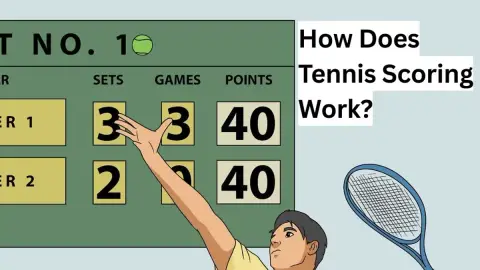
How Does Tennis Scoring Work? Points, Games, Sets Explained
Tennis scoring runs 15, 30, 40, game; games build into sets and sets into a match. See a clear breakdown of how tennis scoring works at every level.
What Is Hawk-Eye in Tennis? How Electronic Line Calling Works
Hawk-Eye uses multiple cameras and ball-tracking software to judge whether a tennis shot landed in or out.