
What Is a Break Point in Tennis?

In tennis, the player serving has a built-in edge. They start each point, they control the pace, and at the top level they are expected to win most of their service games comfortably. So the whole rhythm of a match is really a question of one thing: can the returner steal a game against the serve? The moment that becomes possible is the break point, and it is where matches are won and lost.
What a break point is
A break point is any point where the returner is one point away from winning the game. Since the server is trying to “hold” their serve, winning their game away from them is called a “break of serve.” The point that would complete that break is the break point.
In tennis scoring, a game runs 15, 30, 40, game. A break point exists whenever the returner reaches game point on the server’s delivery. The most common break-point scores are:
| Score (server’s first) | Break points for returner |
|---|---|
| 30-40 | 1 (single break point) |
| 15-40 | 2 (double break point) |
| 0-40 | 3 (triple break point) |
| 40-Ad (deuce, returner ahead) | 1 (advantage returner) |
At deuce, a break point appears whenever the returner wins the next point to reach advantage, because they are then one point from the game.
Why it matters so much
Holding serve is the baseline expectation, especially in the men’s game where big serving dominates. A whole set can go by with both players comfortably holding, and the outcome then hinges on a single break. Convert one break point across an entire set and you may win it 6-4 without ever being seriously threatened on your own serve.
That is why commentators obsess over break-point conversion. A player who creates ten break points but converts only one is leaving the door open; an opponent who saves nine of those is doing the hard defensive work that keeps them in the match.
Related terms
A few phrases sit close to break point and are worth knowing:
- Break back: immediately breaking your opponent right after being broken yourself, undoing their advantage.
- On serve: when neither player has an extra break, so the score reflects each player simply holding.
- Saving a break point: the server winning the point to erase the threat and stay in the game.
- Double break: being two service breaks ahead, a much safer cushion than a single break.
Break point as a pressure moment
Break points are as much mental as technical. The server feels the game slipping and the returner senses a rare opening, so nerves spike on both sides. Some of the sport’s most memorable rallies are break points saved with a bold second serve or a fearless return, precisely because the stakes are compressed into one point.
If you are still getting comfortable with the numbers behind all this, our guide to how tennis scoring works walks through the full 15-30-40 system that makes break points possible. Once the scoring clicks, break points become the easiest way to read the tension in any match: watch for 30-40 or 0-40 on the scoreboard, and you know the game is on the line.
Frequently asked questions
What is the difference between a break point and a set point?+
A break point wins the current game for the returner if converted. A set point wins the whole set for whoever holds it. They can overlap: if a returner is serving-side down and one point from taking the set by breaking, that point is both a break point and a set point at once.
What does double break point or triple break point mean?+
These describe how many break points a returner holds at once. At 15-40 the returner has two chances to break (double break point); at 0-40 they have three (triple break point). Missing the first still leaves the others, so more break points mean better odds of breaking.
What is a break back?+
A break back is when a player who just lost their serve immediately breaks their opponent's serve in the next game to level the score. It cancels out the earlier break and restores serve, or 'gets back on serve.'
Sources
Play & tools
Free browser games and tools — no account, no download.
- Play today's Sports Connections — Today's Sports Connections — daily hints, answers, and play the grid.
- Play Guess the NFL Player — A new mystery NFL player every day. Eight guesses, with a clue on each — plus free unlimited mode.
- Explore all our games →
Related tennis guides
View all →
What Is a Match Point in Tennis? Rules Explained
A match point in tennis is when the leading player needs one more point to win. It can come on serve or return, and several may occur before one is won.

How Does a Tiebreak Work in Tennis?
A tennis tiebreak decides a set locked at 6-6. First to 7 points wins, but you must lead by two. Here's scoring, serving order, and when tiebreaks happen.
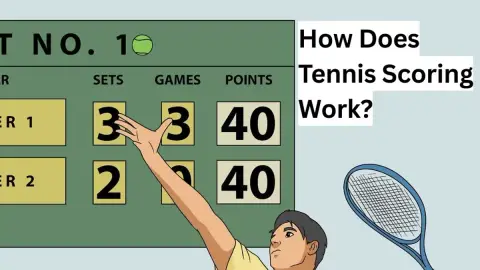
How Does Tennis Scoring Work? Points, Games, Sets Explained
Tennis scoring runs 15, 30, 40, game; games build into sets and sets into a match. See a clear breakdown of how tennis scoring works at every level.

What Is Deuce in Tennis? Scoring Rules Fully Explained
Deuce in tennis is the 40-40 score where both players are tied and one must win two straight points to win the game. It repeats until someone leads by two.

What Is a Walkover in Tennis? Rules and Examples
A walkover in tennis happens when a player wins without playing because the opponent withdraws before the match starts. It differs from a retirement.
What Is Deuce in Tennis? Score, Advantage, and Tiebreaks
Deuce in tennis means both players have reached 40, so one player must win two straight points to take the game.