
What Is a Match Point in Tennis? Rules Explained
On this page6
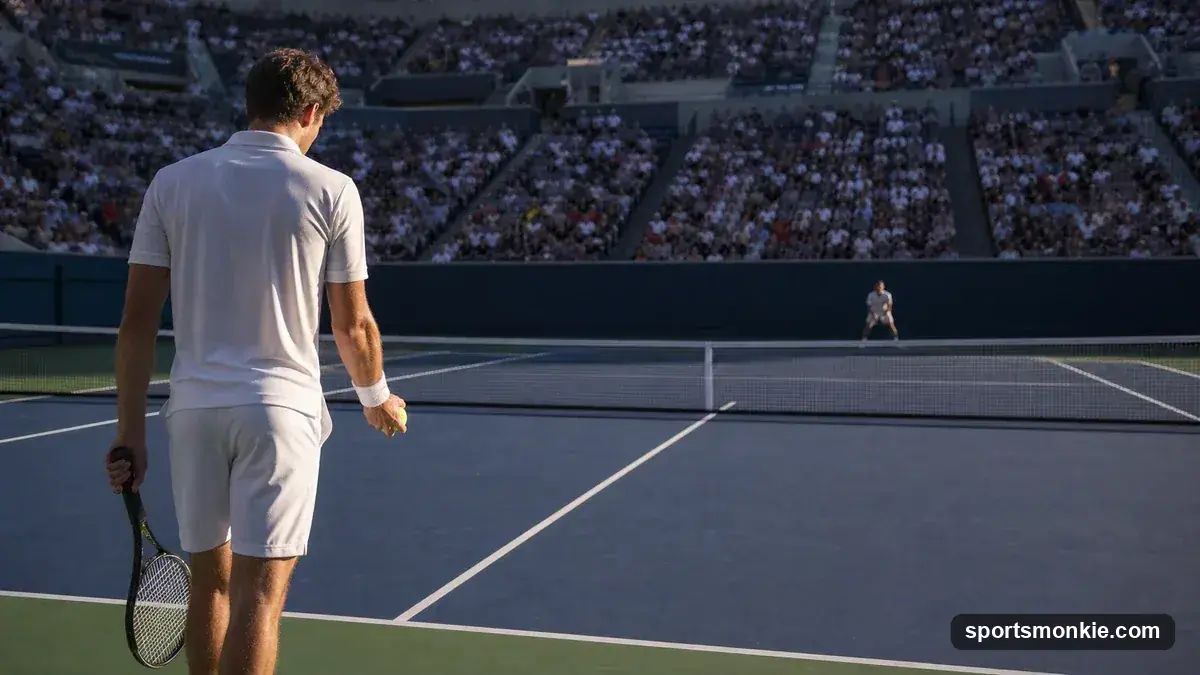
Watch a tennis crowd during a close match and you can usually tell when a match point arrives before the scoreboard confirms it. The chatter drops, phones come up, and everyone leans forward for one shot. That single point carries more weight than any other in the match: win it and the match is over, lose it and the player has to find a way to earn the moment again.
How Match Point Arises in Scoring
Tennis scoring stacks in layers. Points build into games, games build into sets, and sets decide the match. Each layer has its own name for the same idea: one point away from winning that layer.
| Scoring Level | Term Used |
|---|---|
| One point from winning a game | Game point |
| One point from winning a set | Set point |
| One point from winning the match | Match point |
| One point from breaking serve | Break point |
Match Point on Serve vs. Match Point on Return
- Match point on serve: The leading player is serving and needs just one more point. Serving usually carries an edge since the server dictates the first shot of the point.
- Match point on return: The leading player is receiving. It’s harder to close out a match from the return side, but the point still ends things just the same if it’s won.
Multiple Match Points
Converting a match point on the first try isn’t guaranteed. A player can rack up several match points in one game or tiebreak and let most of them slip before finally closing it out, or blow all of them and watch the opponent claw back into the match. Some of tennis’s most talked-about matches turned on a player who couldn’t convert an early match point and paid for it.
What Happens During a Tiebreak at Match Level?
When a tiebreak decides the final set, match point shows up the moment a player is one point from winning the tiebreak itself. In a standard tiebreak, first to 7 and win by 2, a player serving at 6-5 is already sitting on match point. Miss it, and the tiebreak keeps going.
Championship Point
At a Grand Slam final or another major title match, broadcasters often swap “match point” for championship point when describing the moment for whoever is about to become champion. It’s not an official term in the rulebook, just commentary shorthand that’s stuck around because it fits the occasion.
Why Match Points Feel Different
The pressure runs both directions. The player facing match point knows a single mistake ends things; the player holding it knows the finish line is one shot away, which can be its own kind of nerve-wracking. That tension, more than any rally length or shot quality, is often what makes the closing moments of a match unforgettable.
Frequently asked questions
What is a match point in tennis?+
A match point is when the player or pair who is ahead needs only one more point to win the match. If that point is won, the match is over; if it is lost, the match continues.
What is the difference between a match point and a set point?+
A set point means a player needs one more point to win the current set. A match point means one more point wins the entire match. A match point is the final, decisive version — it can also coincide with a set point.
Can there be more than one match point?+
Yes. If a player reaches match point but loses the point, the match continues. The opportunity may arise again — there can be several match points across a tiebreak or a game before one is finally converted or the opponent fights back.
What does it mean to save a match point?+
Saving a match point means the player facing elimination wins that point, keeping the match alive. Some of tennis's most famous comebacks came from players who saved multiple match points before going on to win, turning near-certain defeat into victory.
Can you win a match on the return of serve?+
Yes. A match point can fall on either the serve or the return. Closing out on serve is usually easier because the server controls the first shot, but winning the deciding point as the receiver ends the match exactly the same way.
What is the difference between match point and championship point?+
They describe the same moment: one point from winning. 'Championship point' is commentary shorthand used in finals, when winning that point also captures the title. It is not a separate term in the official rules of tennis.
What is match point in a tiebreak?+
In a tiebreak, match point arrives when a player is one point from winning it and thereby the match. In a standard first-to-7 tiebreak, a player leading 6-5 in the deciding set is on match point; miss it and the tiebreak continues until someone leads by two.
Sources
Play & tools
Free browser games and tools — no account, no download.
- Play today's Sports Connections — Today's Sports Connections — daily hints, answers, and play the grid.
- Play Guess the NFL Player — A new mystery NFL player every day. Eight guesses, with a clue on each — plus free unlimited mode.
- Explore all our games →
Related tennis guides
View all →
What Is a Break Point in Tennis?
A break point is a point that, if won by the returner, wins the game against the server. Here is what it means, why it matters so much, and related terms.
Walkover vs Retirement in Tennis: What Is the Difference?
A walkover happens before a match begins; a retirement happens after play starts. The distinction affects results, records and tournament administration.

What Is an Ace in Tennis? Definition and Why It Matters
An ace in tennis is a legal serve that lands in the service box untouched by the receiver, winning the point outright. It is a server's top weapon.

What Is Deuce in Tennis? Scoring Rules Fully Explained
Deuce in tennis is the 40-40 score where both players are tied and one must win two straight points to win the game. It repeats until someone leads by two.
Why Do Tennis Players Change Ends?
Tennis players change ends to keep conditions fair when sun, wind, court wear and other environmental factors affect play.
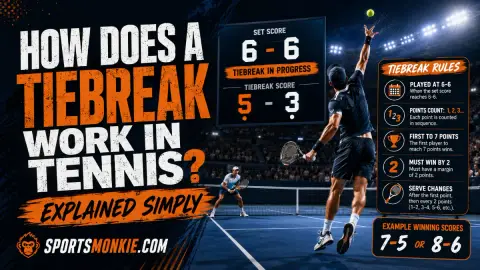
How Does a Tiebreak Work in Tennis?
A tennis tiebreak decides a set locked at 6-6. First to 7 points wins, but you must lead by two. Here's scoring, serving order, and when tiebreaks happen.