
Fastest Football Goals in History: Records by League

On this page17
- 01The fastest football goals by competition at a glance
- 02Serie A — Rafael Leão (6.76s)
- 03MLS — Mike Grella (7.00s)
- 04Premier League — Shane Long (7.69s)
- 05La Liga — Joseba Llorente (7.8s)
- 06Ligue 1 — Michel Rio / Kylian Mbappé (8.0s)
- 07Bundesliga — Karim Bellarabi / Kevin Volland (9.0s)
- 08UEFA Champions League — Roy Makaay (10.12s)
- 09UEFA Europa League — Jan Sýkora (10.69s)
- 10FIFA World Cup — Hakan Şükür (11.0s)
- 11FA Cup Final — Ilkay Gündoğan (~12s)
- 12Women's Super League — Jane Ross (12.0s)
- 13UEFA European Championship — Nedim Bajrami (23.0s)
- 14How we ranked these records
- 15At a glance: every competition record
- 16Why tournament goals run slower than league goals
- 17The disputed cases we left out
Each entry is the officially recognized fastest goal for one specific competition — not a single global leaderboard — so the ranking is strictly by verified time. A goal earns a high placement only when continuous broadcast footage and each competition's own statisticians agree on it; unverifiable viral clips are excluded.
The fastest football goals by competition at a glance
| Rank | Competition and scorer | Time |
|---|---|---|
| 1 | Serie A — Rafael Leão | 6.76 seconds |
| 2 | MLS — Mike Grella | 7.00 seconds |
| 3 | Premier League — Shane Long | 7.69 seconds |
| 4 | La Liga — Joseba Llorente | 7.8 seconds |
| 5 | Ligue 1 — Michel Rio / Kylian Mbappé | 8.0 seconds |
| 6 | Bundesliga — Bellarabi / Volland | 9.0 seconds |
- Fastest in Europe's top five
Serie A — Rafael Leão (6.76s)
Leão needed 6.76 seconds against Sassuolo on December 20, 2020 — the fastest goal Guinness has certified in any Serie A match, and the quickest in Europe's top five leagues by nearly a full second. It ranks above Shane Long's Premier League mark because Hakan Çalhanoğlu's kickoff pass and Leão's first-time finish shaved almost a second off the next-fastest league record.
The goal nearly didn't stand: Leão drifted marginally over the halfway line before the whistle, an infringement the officials missed. Because they let play run, both the goal and the record held.
Team: AC Milan · Beat: Paolo Poggi's 8.9s (2001) · Result: Milan won 2–1
- Fastest in North America
MLS — Mike Grella (7.00s)
Grella pounced on a botched Philadelphia Union kickoff at Red Bull Arena on October 18, 2015 and scored in exactly seven seconds — Guinness's MLS record. That places MLS ahead of every European top-five league except Serie A, which underlines the point that these goals hinge on one defensive lapse, not league pedigree.
He beat a mark set two years earlier by Tim Cahill (8 seconds) — also, oddly, for the New York Red Bulls.
Team: New York Red Bulls · Beat: Tim Cahill's 8s (2013) · Trigger: misplayed opponent kickoff
- England's top flight
Premier League — Shane Long (7.69s)
Long intercepted Craig Cathcart's weak clearance and beat goalkeeper Ben Foster at Vicarage Road on April 23, 2019 — 7.69 seconds, the Premier League record. Unlike the goals above him, this one came from pressing the opponent's first pass rather than a team's own kickoff routine.
It erased Ledley King's 9.82-second mark, which had stood since 2000. Watford equalized late for a 1–1 draw, so Long's record arrived in a game Southampton didn't even win. Our fastest goal in Premier League history page tracks the full top flight list.
Team: Southampton · Beat: Ledley King's 9.82s (2000) · Result: 1–1 draw
- Spain's record
La Liga — Joseba Llorente (7.8s)
Valladolid's Joseba Llorente struck 7.8 seconds into a match against Espanyol on January 20, 2008 — Guinness's La Liga record. It sits a fraction behind Shane Long's Premier League time, close enough that timing precision, not the play itself, separates them.
The strike has outlasted a generation of quicker, flashier La Liga attacks without being beaten, a reminder that the record rewards opportunism at kickoff over sustained brilliance.
Team: Real Valladolid · Opponent: Espanyol · Venue: José Zorrilla
- France, tied 30 years apart
Ligue 1 — Michel Rio / Kylian Mbappé (8.0s)
Two players share France's eight-second record three decades apart. Michel Rio set it for Caen against Cannes in 1992; Kylian Mbappé matched it for PSG at Lille in 2022, lobbing home a Lionel Messi assist inside a 7–1 rout.
That 30-year gap is the story: even at PSG's attacking peak, a clean kickoff chance this fast surfaced only once, and only tied — it didn't beat — a mark from the early 1990s.
Teams: Caen (1992) / PSG (2022) · Mbappé assist: Lionel Messi · Result: Lille 1–7 PSG
- Germany, tied
Bundesliga — Karim Bellarabi / Kevin Volland (9.0s)
Karim Bellarabi set Germany's nine-second mark for Bayer Leverkusen at Borussia Dortmund on August 23, 2014. Almost to the day one year later, Kevin Volland equalled it exactly for Hoffenheim against Bayern Munich.
Both goals opening the season within 12 months of each other, then nothing quicker in the decade since, shows how firmly nine seconds sits as the Bundesliga floor.
Teams: Leverkusen (2014) / Hoffenheim (2015) · Both: opening exchanges vs a title contender
- Europe's premier club cup
UEFA Champions League — Roy Makaay (10.12s)
Makaay buried Hasan Salihamidžić's cross 10.12 seconds into Bayern Munich's last-16 tie against Real Madrid on March 7, 2007 — and UEFA confirms it still stands nearly two decades later. The detail that seals its place: Real Madrid, not Bayern, had kicked off.
Bayern won the leg 2–1 and advanced on away goals. The next-fastest Champions League goal, Jonas's 10.96 seconds for Valencia in 2011, has never seriously threatened it.
Team: Bayern Munich · Opponent: Real Madrid · Note: Real kicked off
- Second-tier European cup
UEFA Europa League — Jan Sýkora (10.69s)
Sýkora scored 10.69 seconds into Slovan Liberec's trip to Qarabağ in September 2016 — Guinness's Europa League record — despite the Azerbaijani hosts being the side that kicked off, the same quirk that defines Makaay's Champions League mark one place above.
It beat Vitolo's 13.21-second strike for Sevilla from 2015, cutting more than two and a half seconds off the previous best.
Team: Slovan Liberec · Opponent: Qarabağ · Beat: Vitolo's 13.21s (2015)
- International football's biggest stage
FIFA World Cup — Hakan Şükür (11.0s)
Şükür scored the fastest goal in World Cup history for Turkey against South Korea in the 2002 third-place playoff, and FIFA and Guinness both log it at 11 seconds. It is slower than every club-league record above because a one-off knockout fixture is defended far more cautiously than a routine league kickoff.
Some broadcast stopwatches read a sharper 10.8 seconds off the same strike, but the round-number figure is the official one. Our fastest goal in World Cup history guide has the full breakdown.
Team: Turkey · Opponent: South Korea · Stage: 2002 third-place playoff
- England's showpiece final
FA Cup Final — Ilkay Gündoğan (~12s)
Gündoğan volleyed home a deflected clearance roughly 12 seconds into the 2023 final against Manchester United — the fastest goal in an FA Cup final in the competition's history. It is slower than the league records because a Wembley final tightens every early touch.
He beat Louis Saha's 25-second mark from 2009, cutting the final record roughly in half. Gündoğan added a second, and City won 2–1 to seal the Double.
Team: Manchester City · Beat: Louis Saha's 25s (2009) · Result: City won 2–1
- England's top women's flight
Women's Super League — Jane Ross (12.0s)
Ross scored 12 seconds into Manchester City's win over Doncaster Rovers Belles on August 11, 2016 — the fastest goal in Women's Super League history. It shares the 12-second slot with Gündoğan's FA Cup goal directly above, but arrived in open, timed league play rather than a one-off final.
The strike opened a comfortable 4–0 win that stretched City's lead at the top, and it has stood as the WSL benchmark for nearly a decade.
Team: Manchester City · Opponent: Doncaster Rovers Belles · Result: 4–0 win
- Continental championship
UEFA European Championship — Nedim Bajrami (23.0s)
Bajrami punished Federico Dimarco's loose throw-in to score after 23 seconds for Albania against Italy at Euro 2024 — the fastest goal in European Championship history. It is the slowest entry here because the trigger was a throw-in error rather than a kickoff routine, costing several seconds.
It obliterated Dmitri Kirichenko's 67-second record from 2004 — a 44-second improvement, the single biggest jump on this list. Italy still recovered to win 2–1.
Team: Albania · Opponent: Italy · Beat: Kirichenko's 67s (2004)
Reader interaction
Build your ranking
Drag the names into the order you think is right — or use the arrows — then submit to see how your list compares with everyone else's.
- Serie A — Rafael Leão (6.76s)
- MLS — Mike Grella (7.00s)
- Premier League — Shane Long (7.69s)
- La Liga — Joseba Llorente (7.8s)
- Ligue 1 — Michel Rio / Kylian Mbappé (8.0s)
- Bundesliga — Karim Bellarabi / Kevin Volland (9.0s)
- UEFA Champions League — Roy Makaay (10.12s)
- UEFA Europa League — Jan Sýkora (10.69s)
- FIFA World Cup — Hakan Şükür (11.0s)
- FA Cup Final — Ilkay Gündoğan (~12s)
- Women's Super League — Jane Ross (12.0s)
- UEFA European Championship — Nedim Bajrami (23.0s)
Audience ranking
How everyone ranked them
Built from reader rankings using position-based points.
“Fastest goal in football” is not one record. It is a different name and stopwatch reading for every league, cup, and tournament that keeps its own books. The cards above rank the verified fastest-goal mark competition by competition, from Rafael Leão’s 6.76-second Serie A strike down to the slower one-off tournament records. This section explains how we ranked them, why some competitions run slower than others, and which claims we deliberately left out.
How we ranked these records
Every entry is the officially recognized fastest goal for one specific competition, ordered strictly by verified time. Competitions measure goals differently: some use broadcast-clock precision to hundredths of a second, which is the Guinness World Records standard, while others round to the nearest whole second — which is why a few entries share a time. We required at least two independent confirmations for each figure: Guinness World Records, the relevant league or confederation, and contemporary match reports. Where a competition has never produced a consistently timed record, we left it off rather than force a guess into the ranking. For goals faster than anything certified here, including amateur and youth strikes, see our companion guide to the fastest goal in soccer history.
At a glance: every competition record
| Rank | Competition | Player | Time | Match | Year |
|---|---|---|---|---|---|
| 1 | Serie A | Rafael Leão | 6.76s | AC Milan vs. Sassuolo | 2020 |
| 2 | MLS | Mike Grella | 7.00s | New York Red Bulls vs. Philadelphia Union | 2015 |
| 3 | Premier League | Shane Long | 7.69s | Southampton vs. Watford | 2019 |
| 4 | La Liga | Joseba Llorente | 7.8s | Real Valladolid vs. Espanyol | 2008 |
| 5 | Ligue 1 | Michel Rio / Kylian Mbappé (tied) | 8.0s | Caen vs. Cannes / Lille vs. PSG | 1992 / 2022 |
| 6 | Bundesliga | Karim Bellarabi / Kevin Volland (tied) | 9.0s | Leverkusen vs. Dortmund / Hoffenheim vs. Bayern | 2014 / 2015 |
| 7 | UEFA Champions League | Roy Makaay | 10.12s | Bayern Munich vs. Real Madrid | 2007 |
| 8 | UEFA Europa League | Jan Sýkora | 10.69s | Slovan Liberec vs. Qarabağ | 2016 |
| 9 | FIFA World Cup | Hakan Şükür | 11.0s | Turkey vs. South Korea | 2002 |
| 10 | FA Cup Final | Ilkay Gündoğan | ~12.0s | Manchester City vs. Manchester United | 2023 |
| 11 | Women’s Super League | Jane Ross | 12.0s | Manchester City vs. Doncaster Rovers Belles | 2016 |
| 12 | UEFA European Championship | Nedim Bajrami | 23.0s | Albania vs. Italy | 2024 |
Why tournament goals run slower than league goals
There is a clear pattern in the ranking: domestic-league records cluster between 6.76 and 9 seconds, while continental and international records sit at 10 seconds and above. The reason is context, not quality. League kickoffs are routine, and over a 34-to-38-game season a team will occasionally gamble on a kickoff routine or switch off defending one. Knockout fixtures — a Champions League last-16 leg, a World Cup match, an FA Cup final — carry far higher stakes, so teams defend the opening seconds with extra discipline. That caution is exactly why Makaay’s 10.12 seconds and Şükür’s 11 seconds have survived for the better part of two decades: the situations that produce sub-10-second goals almost never occur when a single mistake can end a campaign.
The disputed cases we left out
Not every competition has a clean answer, so some are absent from the ranking by design. Copa América’s early decades predate consistent broadcast timing: Darío Franco’s roughly 50-second strike for Argentina against Brazil in 1991 is the most-cited modern claim, while older reports point to a less-documented 1945 goal, and no single figure clears the evidence bar UEFA or Guinness would require. Africa Cup of Nations claims are similarly inconsistent across sources. Where the footage and official timing do not exist, this guide says so rather than crown a winner on a contested number.
Frequently asked questions
Is the fastest professional goal ever the same as the fastest goal in top-flight league play?+
No. Guinness World Records' overall fastest men's professional goal is Damian Mori's 3.69-second strike for Adelaide City in Australia's National Soccer League on December 6, 1995 — quicker than anything in this ranking. Mori shot from the halfway line the moment a teammate tapped him the ball off the kickoff. That competition sits outside Europe's top five leagues, which is why Leão's 6.76-second Serie A goal leads our league-by-league list instead.
Can a goal be scored directly from the kickoff?+
Yes. The Laws of the Game allow a goal to be scored directly against the opponents straight from the kick-off, which is why training-ground routines like Leão's and Mbappé's count as legitimate records. Most sub-10-second goals, though, come from pressing the opponent's first pass or punishing an early error, because putting the ball in your own net directly from kickoff would gift a corner rather than a goal.
Which of these competition records has fallen most recently?+
The two newest marks on the list are Nedim Bajrami's 23-second Euro 2024 goal for Albania, set on June 15, 2024, and Ilkay Gündoğan's roughly 12-second FA Cup final goal from June 2023. Both replaced records that had stood for over a decade. By contrast, the Champions League (Makaay, 2007) and World Cup (Şükür, 2002) marks have gone untouched for close to 20 years.
How does Guinness decide a fast-goal claim counts as an official record?+
Guinness World Records and each league's statisticians time from the referee's kickoff whistle to the ball fully crossing the goal line, cross-checked against continuous broadcast footage. A claim becomes an official record only when timestamped video and a standing match result both exist. That evidence bar is why several viral clips of apparently quicker goals — often from amateur or untelevised games — never get certified.
Is Şükür's World Cup goal officially 11 seconds or the 10.8 seconds sometimes quoted?+
FIFA and Guinness World Records both list the official time as 11 seconds, and that is the figure the record stands on. The sharper 10.8-second reading comes from broadcast stopwatch estimates of the same strike against South Korea in 2002. Because the governing bodies use the rounded 11-second mark, treat 10.8 seconds as an informal approximation rather than the certified record.
Why do so many of these goals come from a kickoff or a defensive mistake?+
Every record here depends on the same rare event: a defense caught unprepared the instant play resumes. A team that keeps its shape after kicking off, or one that clears its lines cleanly, gives an opponent no chance to shoot inside 10 seconds. The records fall only when a kickoff routine catches a defense upfield or a first clearance goes straight to an alert striker — which is why they cluster around opening exchanges.
Sources
- Guinness World Records — Fastest Goal in a Serie A Match
- Guinness World Records — Fastest Goal in a FIFA World Cup Match
- UEFA.com — Fastest Champions League Goal: Roy Makaay Still Holds Record
- Premier League — Long Scores Fastest Goal in Premier League History
- Guinness World Records — Fastest Goal in a Major League Soccer Match
Play & tools
Free browser games and tools — no account, no download.
- Play 38-0 — Sign a 4-4-2 of all-time football legends and chase a perfect 38-0 league season — perfect, not just unbeaten.
- Explore all our games →
Related football guides
View all →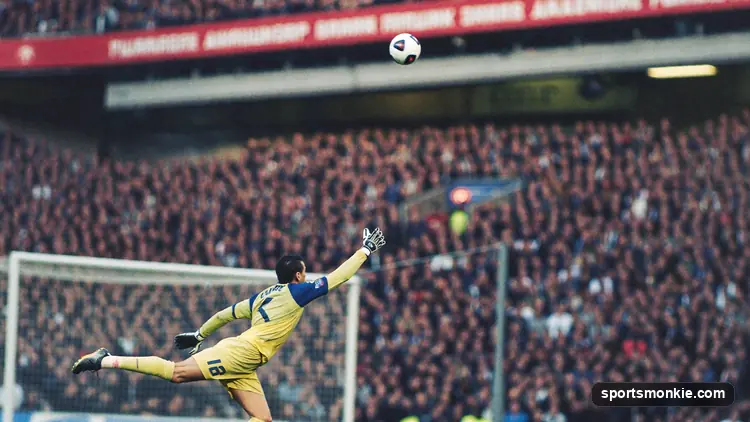
Most Goals by a Goalkeeper in Football
Rogério Ceni scored 131 career goals, the record for a goalkeeper. How he did it, the top-scoring keepers behind him, and why keepers rarely score.
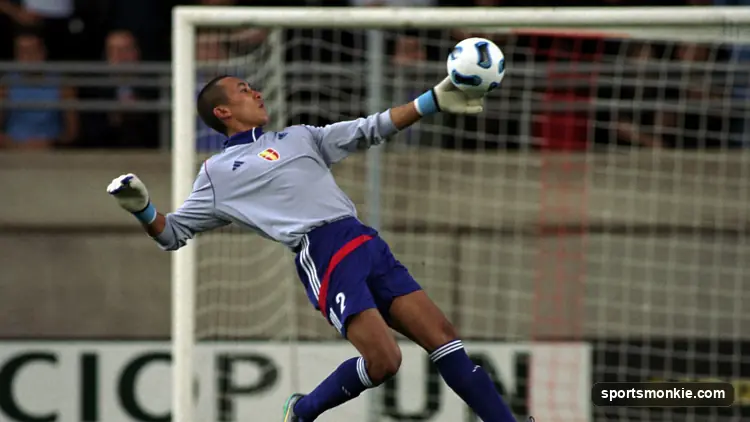
Tallest Goalkeeper in Football History
Kristof van Hout is the tallest goalkeeper and footballer at 2.08 m (6 ft 10 in). The tallest keepers ranked, and why extra height helps and hurts.
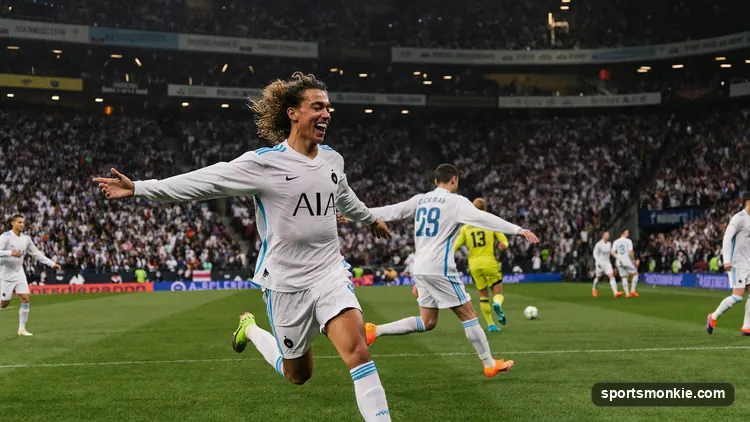
Most Goals in a Bundesliga Season: Lewandowski's 41
Robert Lewandowski holds the Bundesliga single-season goal record with 41 in 2020-21, breaking Gerd Müller's 40 that stood 49 years. Full record table.
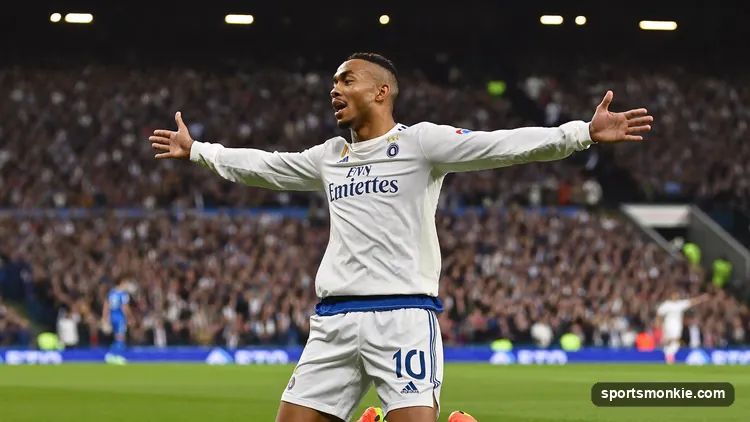
Messi's Most Goals in a Season: 73 in 2011-12
Lionel Messi's best season was 73 goals for Barcelona in 2011-12, a European record. He also scored 91 in the 2012 calendar year. Season vs year explained.

PFA Players' Player of the Year Winners
Mohamed Salah is the only three-time PFA Players' Player of the Year (2018, 2022, 2025). Full winners list and how it differs from the FWA award.
Arsenal's Invincibles Season Explained
Arsenal went the entire 2003-04 Premier League season unbeaten, 26 wins and 12 draws. The Invincibles story and where it ranks, explained.