
Most Goals by a Goalkeeper in Football
On this page4
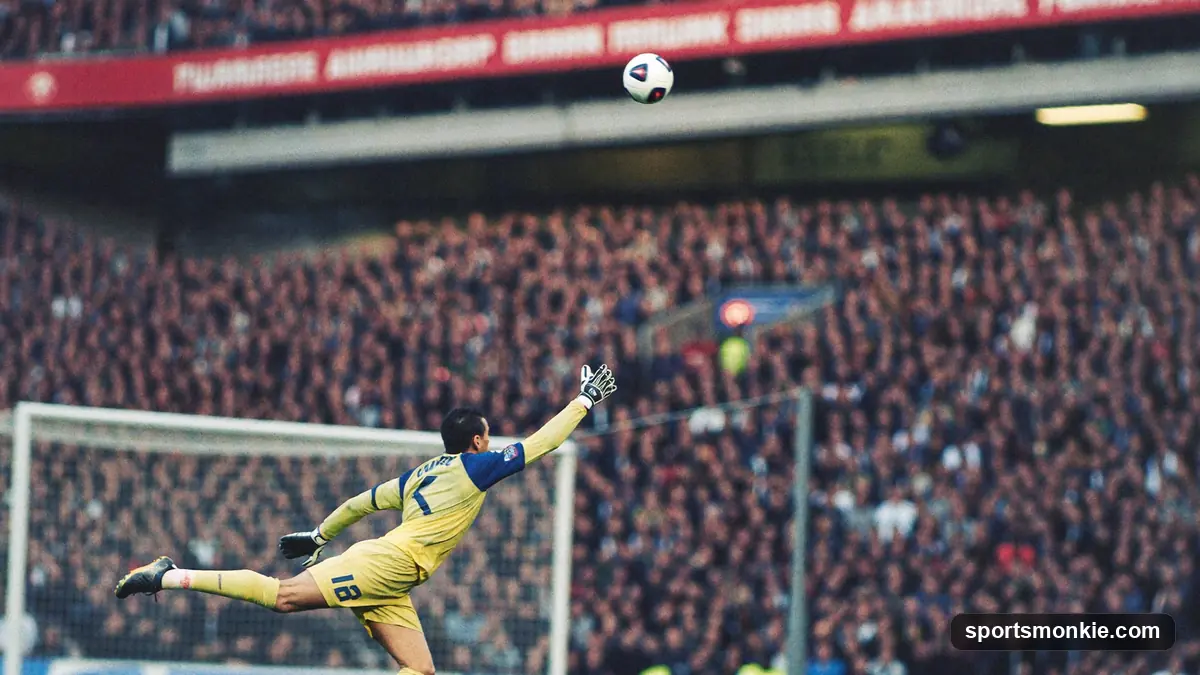
Rogério Ceni scored 131 goals in his career, by far the most of any goalkeeper in football history, a total recognised by Guinness World Records. The Brazilian spent his entire senior career at São Paulo and doubled as the club’s set-piece specialist, which is the only way a keeper reaches a number like that.
The record is not close. Second place sits at roughly 67, which means Ceni scored nearly twice as many goals as any goalkeeper who has ever played. Almost none of his came from the run of play. He was, in effect, a dead-ball forward who also kept goal. Here is how the top-scoring keepers rank, and why this is a record built on set pieces rather than open-play chaos.
The top-scoring goalkeepers
The table ranks the goalkeepers most associated with scoring. Ceni and Chilavert are firmly documented; the totals below them are career figures across club and country that vary by source, so treat them as approximate.
| Goalkeeper | Career goals | Country | Notes |
|---|---|---|---|
| Rogério Ceni | 131 | Brazil | 61 free kicks, 70 penalties, 1 open play |
| José Luis Chilavert | ~67 | Paraguay | Free kicks and penalties; scored for country too |
| René Higuita | ~40 | Colombia | Penalties and free kicks; the “scorpion kick” showman |
| Jorge Campos | ~35 | Mexico | Sometimes played outfield as well as in goal |
| Hans-Jörg Butt | ~32 | Germany | Penalty specialist across the Bundesliga |
The gap between first and second is the headline. When Ceni retired in 2015, no active or retired keeper was within 60 goals of him, and the tactical trends since have pushed the number further out of reach.
How Ceni built 131 goals
Ceni’s total breaks down almost entirely into two categories: 70 penalties and 61 direct free kicks, with a single open-play goal across a 25-year career. That split tells you everything about how it happened. He was not stealing goals in scrambles; he was São Paulo’s trusted taker, striking free kicks from 20 to 30 yards with the technique of a specialist outfielder.
That arrangement is what makes the record so strange and so safe. A club has to hand its keeper the dead-ball duties for years, trusting him over every attacker on the roster. São Paulo did, season after season, and Ceni rewarded them by becoming a genuine scoring threat every time his team won a free kick in range.
Chilavert and the art of the scoring keeper
Before Ceni, the definitive scoring goalkeeper was José Luis Chilavert. The Paraguayan took free kicks and penalties for club and country, scored in international competition, and once converted three penalties in a single league match for Vélez Sarsfield, a hat-trick no other keeper has matched. His total of around 67 held as the benchmark until Ceni blew past it.
Chilavert and Ceni overlapped, and between them they defined an era, roughly the 1990s into the 2000s, when a handful of clubs were willing to let their keeper double as a dead-ball weapon. That window has largely closed.
Why the record is essentially frozen
Modern football has quietly legislated this record out of existence. Teams now want their goalkeeper deep, calm and involved in building attacks from the back, not sprinting upfield to take free kicks. Penalty and free-kick duties belong to specialist forwards and midfielders on every serious team. The structural reason Ceni scored 131 is exactly the reason no current keeper will: nobody is being given the job any more.
That is what separates a hard-to-break record from an impossible one. Reaching 131 would require a club to reverse two decades of tactical orthodoxy and trust a keeper with its set pieces for a full career. For more on the keepers who defined the position through shot-stopping rather than scoring, see our roundup of the most successful goalkeepers, and for a different physical outlier at the position, the tallest goalkeepers in the game. Ceni’s 131 is the ceiling, and the game has moved on from the only method that could ever build it.
Frequently asked questions
How did Rogério Ceni score so many goals as a goalkeeper?+
Ceni was São Paulo's designated free-kick and penalty taker for most of his career, an arrangement almost unheard of for a keeper. Of his 131 goals, the large majority came from direct free kicks and spot-kicks rather than open play. He practised set pieces like an outfield specialist, which is why his total dwarfs every other goalkeeper's.
Who is the second-highest scoring goalkeeper?+
José Luis Chilavert of Paraguay is second with around 67 career goals, including several for his national team. Like Ceni, he took his club's free kicks and penalties, and he once scored a hat-trick of penalties in a single league match for Vélez Sarsfield, a feat no other keeper has managed.
Can a goalkeeper take penalties and free kicks in a match?+
Yes. Nothing in the laws stops a goalkeeper from taking a penalty, free kick or any other kick. It is simply rare, because leaving the goal empty to attack is a risk. Ceni and Chilavert are the famous exceptions who were trusted as their team's primary set-piece takers.
Have goalkeepers scored from open play?+
Occasionally, and usually by accident of distance or desperation. Long clearances have bounced or carried into the far net, and keepers pushing up for a last-minute corner have scored headers. These moments are memorable precisely because they are flukish; only one of Ceni's 131 goals came from open play.
Why don't more goalkeepers score today?+
Modern tactics discourage it. Teams prefer keepers to stay back and build play from deep, and specialist outfield free-kick and penalty takers are the norm. The set-piece experiments that let Ceni and Chilavert rack up goals in the 1990s and 2000s have largely disappeared from the top level.
Which goalkeepers scored dramatic last-minute goals?+
Several keepers are remembered for buzzer-beaters: they charge upfield for a stoppage-time corner or free kick and head or bundle the ball in. Peter Schmeichel, Jimmy Glass and others scored season-defining late goals this way. These are one-off moments rather than the systematic set-piece scoring that built Ceni's record.
Sources
Play & tools
Free browser games and tools — no account, no download.
- Play 38-0 — Sign a 4-4-2 of all-time football legends and chase a perfect 38-0 league season — perfect, not just unbeaten.
- Explore all our games →
Related football guides
View all →
Tallest Goalkeeper in Football History
Kristof van Hout is the tallest goalkeeper and footballer at 2.08 m (6 ft 10 in). The tallest keepers ranked, and why extra height helps and hurts.
Most Goals in a Bundesliga Season: Lewandowski's 41
Robert Lewandowski holds the Bundesliga single-season goal record with 41 in 2020-21, breaking Gerd Müller's 40 that stood 49 years. Full record table.

Messi's Most Goals in a Season: 73 in 2011-12
Lionel Messi's best season was 73 goals for Barcelona in 2011-12, a European record. He also scored 91 in the 2012 calendar year. Season vs year explained.

Fastest Football Goals in History: Records by League
Rafael Leão's 6.76-second strike is the fastest goal in Europe's top five leagues. See the verified fastest-goal record for every major league, cup, and tournament.

PFA Players' Player of the Year Winners
Mohamed Salah is the only three-time PFA Players' Player of the Year (2018, 2022, 2025). Full winners list and how it differs from the FWA award.
Arsenal's Invincibles Season Explained
Arsenal went the entire 2003-04 Premier League season unbeaten, 26 wins and 12 draws. The Invincibles story and where it ranks, explained.