
Fault vs Double Fault in Tennis: What's the Difference?
On this page5
Every service point in tennis carries a small built-in safety net: you get two chances to start it. Understanding what turns one missed serve into a lost point is the difference between watching tennis and actually following the pressure a server feels on a second delivery.
What a fault is
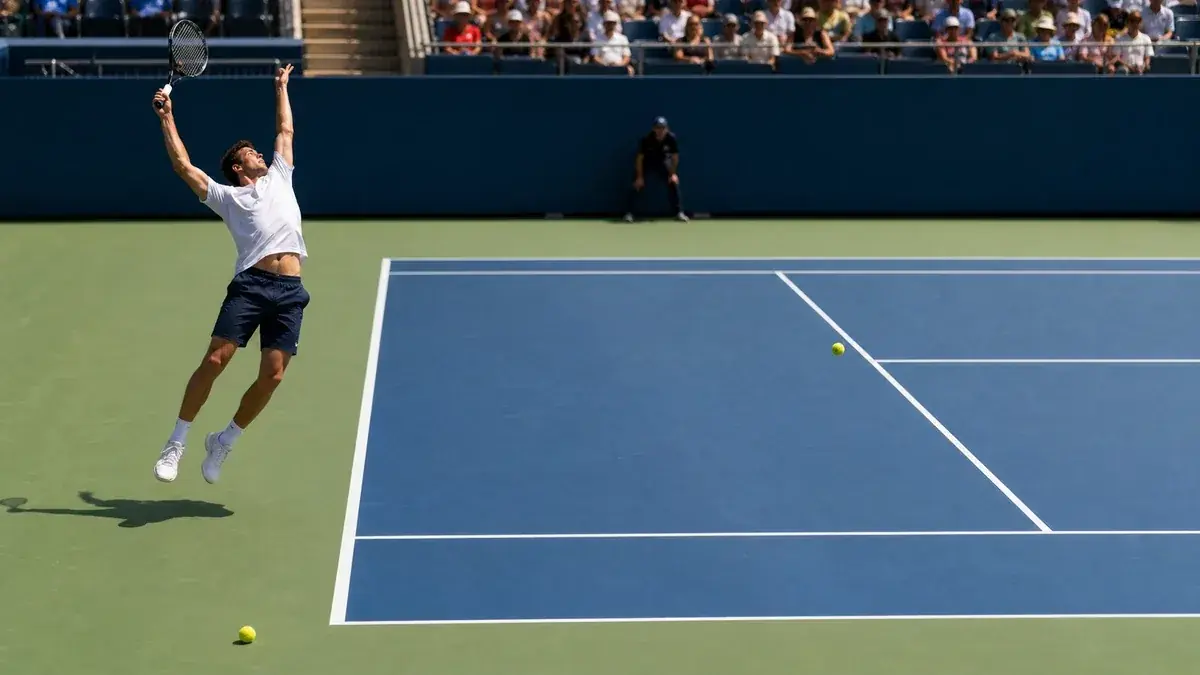
A fault is a serve that fails to count. The most common cause is the ball missing the correct service box, either landing long, wide, or in the net. When that happens on your first serve, nothing bad happens yet. You simply get a second serve.
A serve can be a fault for reasons beyond where the ball lands:
- The ball lands outside the correct service box.
- The ball hits the net and lands outside the box (if it clips the net and lands in, that is a let, not a fault).
- The server commits a foot fault by stepping on or over the baseline before contact.
- The server misses the ball completely while trying to hit it (in most rulings a whiffed toss they swing at counts as a fault).
What a double fault is
A double fault is two faults on the same point. Miss the first serve, then miss the second, and the point is over. It goes straight to the receiver with no rally. This is why the second serve is one of the most pressured shots in the sport: there is no third chance.
Because of that pressure, most players hit a safer, spin-heavy second serve rather than risk a big flat delivery twice. A cautious second serve trades some free power for a much lower chance of handing away the point.
Fault vs double fault at a glance
| Term | What happens | Result |
|---|---|---|
| Fault (first serve) | One serve missed | Server gets a second serve |
| Fault (second serve) | Second serve also missed | Becomes a double fault |
| Double fault | Both serves missed | Receiver wins the point |
| Foot fault | Server steps over the line | Counts as a fault |
Foot faults explained
Foot faults trip up club players more than they realize. Before striking the ball, the server must keep both feet behind the baseline and inside the imaginary extensions of the sidelines and center mark. Touching the line early, or the court beyond it, is a foot fault and is treated exactly like any other fault. At the professional level line officials or electronic systems watch for this closely.
Why the two-serve system exists
Giving servers two attempts keeps rallies alive and rewards aggressive first serves without punishing every small miss. It is a balance: the first serve can be a weapon, and the second is the insurance. A player’s second-serve reliability often tells you more about their nerve than their flashiest winners.
If you are new to tennis scoring, faults sit alongside a few other must-know serve terms. Learn how a clean, unreturnable serve becomes an ace, and the full picture of what can happen on a single serve starts to come together.
Frequently asked questions
What is the difference between a fault and a double fault?+
A fault is a single illegal or missed serve, which gives the server a second attempt. A double fault is two faults in a row on the same point, which loses the server the point immediately.
Does a double fault give away a point?+
Yes. When a server misses both the first and second serve, the point is awarded to the receiver with no rally played.
What counts as a foot fault?+
A foot fault happens when the server steps on or over the baseline or center mark before striking the ball. It counts as a fault, the same as missing the service box.
Sources
Play & tools
Free browser games and tools — no account, no download.
- Play today's Sports Connections — Today's Sports Connections — daily hints, answers, and play the grid.
- Play Guess the NFL Player — A new mystery NFL player every day. Eight guesses, with a clue on each — plus free unlimited mode.
- Explore all our games →
Related tennis guides
View all →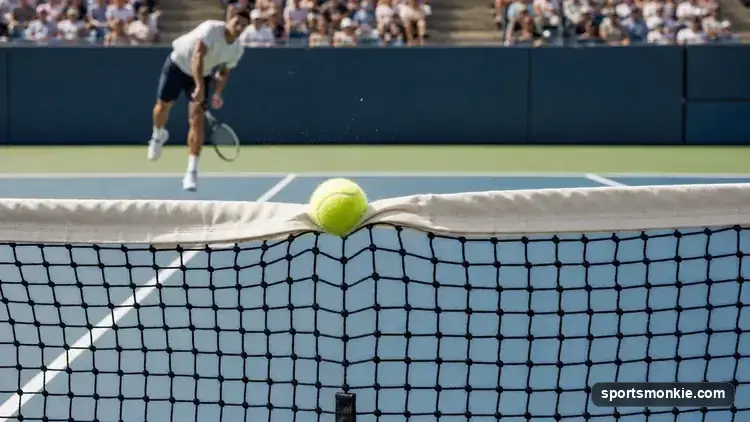
What Is a Let in Tennis? Rules and When It's Replayed
A let in tennis replays a serve or point. Learn when it applies, how first and second serves restart, and when a net cord stays live.
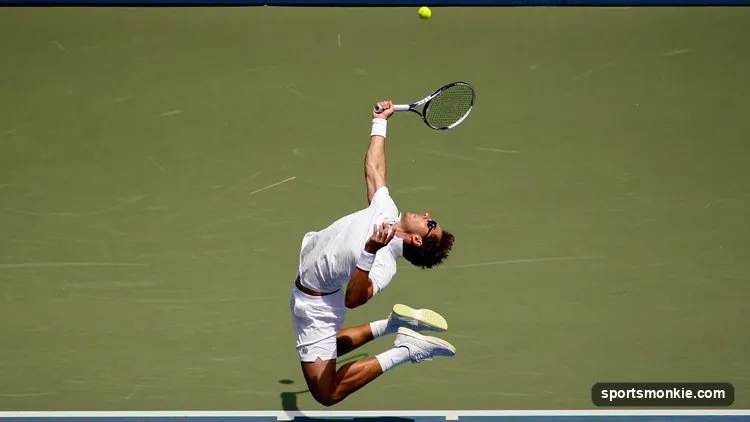
Overhead Shot in Tennis: How to Hit the Smash (Complete Guide)
The overhead shot in tennis is a serve-like swing hit above the head to put away a lob. Learn the technique, footwork, and common errors.
Pickleball Spin Serve: What's Legal and How to Add Spin
The pickleball spin serve explained: the pre-release hand spin is banned, but legal paddle spin is allowed. How to add safe spin the right way.

Maryland Suspends Its Club Tennis Team Over Racist Imagery Sent to Howard and Other Teams
The University of Maryland suspended its entire club tennis team indefinitely after a tournament document emailed to visiting teams, including Howard, contained KKK imagery in an altered state flag.
Lob in Tennis: Definition, Technique, and When to Use It
A lob in tennis is a high, arcing shot hit over an opponent at the net. Learn the offensive vs. defensive lob, technique, and its counter, the smash.
Forehand in Tennis Explained: Grips, Swing Path, and Technique
The forehand in tennis is the groundstroke hit on a player's dominant-hand side. Learn grips, swing mechanics, topspin, and common mistakes.