
How to Regrip a Tennis Racket: A Step-by-Step Guide
On this page7
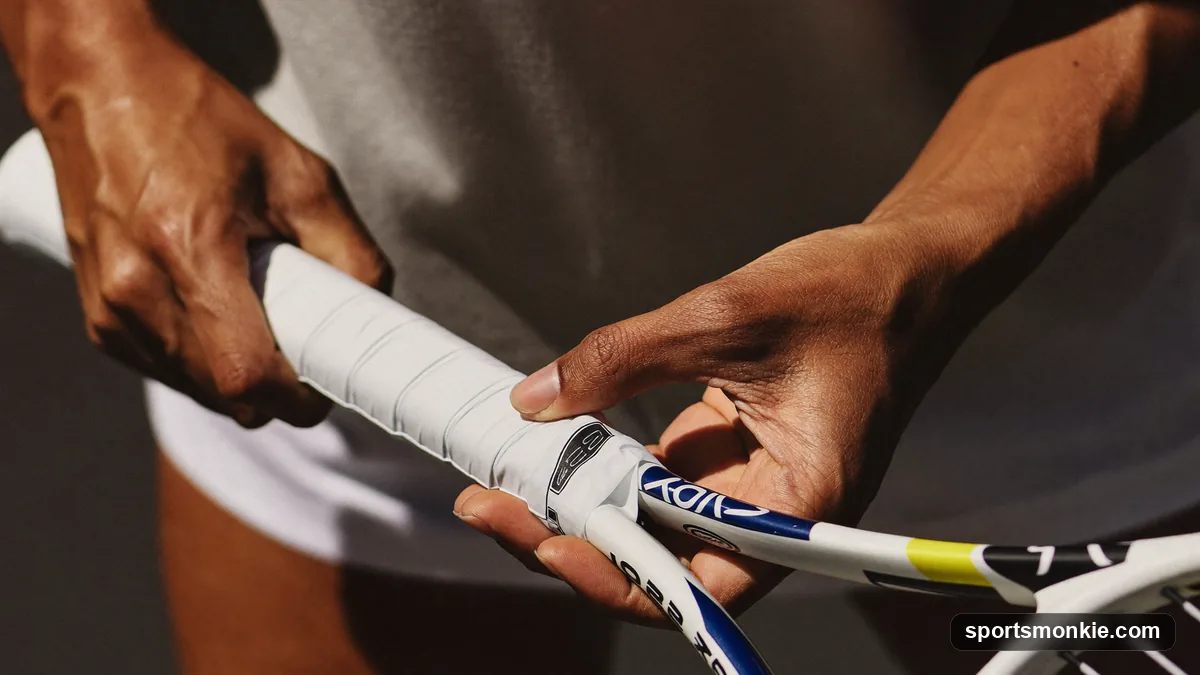
To regrip a tennis racket, peel off the old grip, start the new one at the butt cap with the tacky side facing out, and wrap upward toward the throat at a slight angle, overlapping each turn by about a sixteenth of an inch. Keep the tension steady and finish with the adhesive tape at the top. The one decision that changes everything first is whether you are replacing the base grip or just adding an overgrip on top, because they are wrapped the same way but used for completely different reasons.
Overgrip vs Replacement Grip: What’s the Difference?
A replacement grip is the thick cushioned band wrapped directly onto the bare handle; an overgrip is a thin, tacky layer you add on top of it. They look similar off the roll, but they do different jobs. The base grip provides the handle’s core cushioning and shape and is peeled off entirely when it wears out. The overgrip is a consumable top layer that gives you fresh tack and soaks up sweat, and you swap it far more often.
Most players leave the base grip on for months and add a fresh overgrip every week or two. Because an overgrip builds up the handle, it also nudges your effective grip size larger, so check our tennis grip size guide before you commit to stacking several. If the handle already feels right in a neutral hold, as described in how to hold a tennis racket, a single overgrip usually keeps it there.
| Feature | Replacement (base) grip | Overgrip |
|---|---|---|
| Where it sits | Directly on the bare handle | On top of the base grip |
| Thickness | ~1.75 mm, cushioned | ~0.5 mm, thin and tacky |
| How often changed | 1–2 times a year | Every 6–15 hours of play |
| Held at butt cap by | Staple + finishing tape | Finishing tape only |
| Main job | Cushion, shape, core feel | Tack, sweat absorption |
What You Need to Regrip a Racket
You need very little: the new grip itself, a pair of scissors, and a few minutes. For a replacement grip, add pliers or a flathead screwdriver to remove the butt-cap staple, and keep the small finishing tape that comes in the packet. For an overgrip, you only need the grip and its tape, since most rolls include a strip of tape and sometimes a starter sticker.
Work on a clean, dry handle. If you are peeling an old base grip, wipe any leftover adhesive residue off the bare handle before you start so the new grip lies flat. A smooth foundation is the difference between a wrap that lasts a season and one that bubbles up after a week.
How to Replace a Replacement Grip (Step by Step)
Replacing the base grip means stripping the handle bare and rebuilding from the butt cap up. Follow these steps in order:
- Remove the staple. Find the small staple at the butt cap holding the old grip’s end and pry it out with pliers or a flathead screwdriver. Skipping this tears the new grip.
- Peel the old grip. Unwind it from the top down. If adhesive residue stays behind, wipe it clean so the new base sits flat.
- Find the tapered end. New replacement grips have one angled starting edge. Line that taper up with a bottom bevel at the butt cap.
- Anchor the start. Staple or tape the tapered end to the butt cap so it cannot slip as you pull.
- Wrap upward. Pull the grip up the handle at a slight diagonal, keeping firm, even tension. Overlap each turn by roughly a sixteenth of an inch, no gaps.
- Finish and tape. When you reach the throat, cut the grip at an angle so the end lies flush, then wrap the finishing tape over the top edge to lock it down.
The handle shape you rebuild here feeds straight into your strokes, so a grip wrapped evenly makes it easier to find the bevels described in tennis grips explained without hunting for them mid-rally.
How to Add an Overgrip
Adding an overgrip is faster because you leave everything underneath in place. Do not remove the base grip or its staple. Peel the backing off the overgrip, find the tapered starting end, and hold it against the butt cap with the tacky side facing out toward your hand. If a starter sticker came in the packet, use it to pin the end down.
Now wrap upward exactly as with a base grip: slight angle, steady tension, small overlap. Because the overgrip is thin, it stretches, so pull just firmly enough to remove wrinkles without tearing it. Finish at the throat, trim at an angle, and seal with the tape. A fresh overgrip also cures a slippery handle fast, which quietly improves your how to hit a tennis forehand contact because you are no longer squeezing to stop the racket turning.
Which Way and What Angle to Wrap
Wrap so the grip spirals up and away from your palm, with the tacky side out. For a right-handed player, that means wrapping up and to the right as you look down the handle; a left-hander mirrors it. Get this backward and the overlapping edges catch your fingers instead of lying smooth, and a tacky-side-in wrap simply feels slick.
The angle matters as much as the direction. Hold the grip at a slight diagonal, not straight across, so each pass climbs the handle while overlapping the one below by about a sixteenth of an inch. Too steep an angle leaves gaps of bare handle; too shallow wastes grip and builds unwanted thickness. Keep the tension constant the whole way up. A grip that starts firm and goes loose near the throat will bunch and roll, and a wandering overlap is the usual reason a wrap looks lumpy. This even, deliberate wrap gives your hand a stable base for the grip changes covered in how to hit a tennis backhand.
When to Change Your Grip
Change an overgrip the moment it turns slick, hardens, darkens with sweat, or starts to unravel at the edges. For most club players that is every 6 to 15 hours of play; heavy sweaters change it every match. Waiting too long forces you to squeeze harder to keep the racket steady, which tightens your wrist and drains touch from every shot.
The base grip lasts far longer but still wears out. Replace it once or twice a year, or sooner if it flattens, cracks, loses its cushion, or holds an odor no wipe removes. A dead base grip transmits shock to your arm and muddies your feel for the handle. Fresh grips are cheap insurance against both a sore elbow and the mishits that come from a hand that cannot trust its hold, which matters on precision shots like how to hit a kick serve where a stable, tacky handle lets the wrist snap freely through contact.
Common Regripping Mistakes to Avoid
Starting at the top. Always begin at the butt cap and wrap up. Start at the throat and the tapered end sits exposed where your hand rubs it, and the grip peels within a session.
Wrapping too loosely. A slack wrap slides and bunches under pressure. Pull steady tension the whole way, firm enough that the grip conforms to the handle’s bevels.
Overlapping unevenly. Drifting overlaps leave bald patches or lumps. Keep the same small overlap, about a sixteenth of an inch, on every turn.
Stacking too many overgrips. Each layer adds roughly half a grip size. Pile on three and the handle is a full size too big, which strains your grip and can bring on tennis elbow. If you love a padded feel, size the base grip down first.
Leaving the tacky side in. Wrap with the smooth side against the handle and the tacky side out. Reverse it and the grip feels slippery no matter how new it is.
Regripping is a five-minute skill that pays back on every swing, so learn to do it yourself rather than paying a shop each time. Keep a spare overgrip in your bag, change it before it dies rather than after, and your hand will always have the confident, sweat-free hold that good technique depends on.
Frequently asked questions
What is the difference between an overgrip and a replacement grip?+
A replacement grip is the thick base layer wrapped directly on the bare handle, and it is peeled off and swapped when worn. An overgrip is a thin, tacky layer wrapped on top of the base grip to add feel and absorb sweat. Most players add overgrips often and replace the base grip only once or twice a year.
Do you start a tennis grip at the top or the bottom?+
You start at the bottom, at the butt cap, and wrap upward toward the throat. Begin by aligning the grip's tapered starting edge with the bottom bevel, secure it with the small finishing tape or a staple, then wrap up the handle. Starting at the top leaves the tapered end exposed and the grip peels off quickly.
Which way do you wrap a tennis overgrip, tacky side in or out?+
Wrap with the tacky side facing out, toward your hand. The smooth or logo side sits against the handle. If your overgrip feels slippery after wrapping, you likely put it on inside out. For a right-handed player, wrap so the grip spirals up and to the right; a left-hander mirrors it, spiraling up and to the left.
How often should you regrip a tennis racket?+
Replace an overgrip every 6 to 15 hours of play, or whenever it feels slick, hardens, or unravels. Replace the base grip once or twice a year for a regular club player, or sooner if it flattens, cracks, or smells. Competitive players who sweat heavily change overgrips almost every match.
Does adding an overgrip change the grip size?+
Yes. Each overgrip adds roughly 1/16 inch, about half a grip size, to the handle. If you already use the correct base size, one overgrip usually still feels fine, but stacking two or three overgrips can push the handle a full size too large. If you like several overgrips, consider starting one base size smaller.
Do you need to remove the staple when regripping?+
For a replacement grip, yes. A small staple usually holds the base grip at the butt cap, and you should pry it out with pliers or a flathead screwdriver before peeling. For an overgrip, no. You leave the base grip and its staple in place and simply wrap the overgrip on top, securing it only with the finishing tape.
Sources
Play & tools
Free browser games and tools — no account, no download.
- Play today's Sports Connections — Today's Sports Connections — daily hints, answers, and play the grid.
- Play Guess the NFL Player — A new mystery NFL player every day. Eight guesses, with a clue on each — plus free unlimited mode.
- Explore all our games →
Related tennis guides
View all →
Tennis Grip Size Guide: How to Measure and Choose (US Sizes)
A tennis grip size guide: measure with the index-finger test or a ruler, match it to the US L0–L5 scale (4 to 4-5/8 in), and size down when you plan to add an overgrip.
How to Hold a Tennis Racket: 5 Grips Every Player Should Know
How you hold a tennis racket shapes your swing, spin, and reach. The five main grips are Continental, Eastern, Semi-Western, Western, and two-handed.

Terence Atmane Apologizes After Racket Throw Nearly Brings a Default in Shanghai Qualifying
Terence Atmane threw his racket toward the side fence in Shanghai qualifying, retired against Bernard Tomic, then apologized and said he will step back.
Continental Grip in Tennis: How to Hold It and When to Use It
The continental grip places the base knuckle of your index finger on bevel 2 of the racket handle. It is the grip for serves, volleys, slices, and overheads. Here is how to find it and drill it.
Eastern Grip in Tennis: The Bevel-3 Forehand Explained
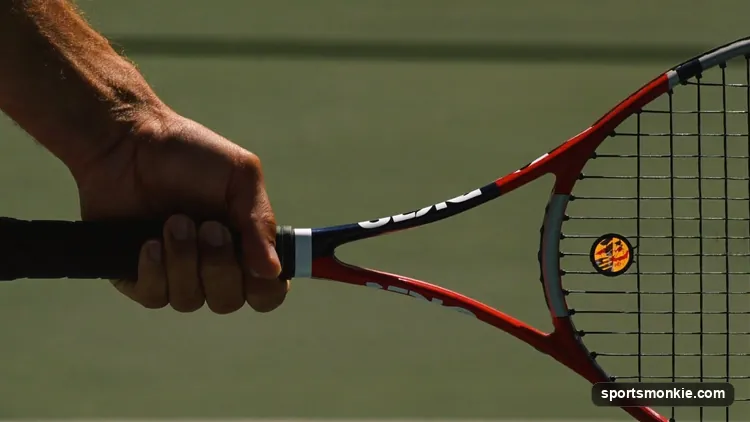
The eastern grip in tennis places your index knuckle on bevel 3 for a flat, versatile forehand. Learn how to find it, its pros and cons, and who uses it.
How to Hit a Tennis Backhand: Grip, Turn, Contact, and Drills
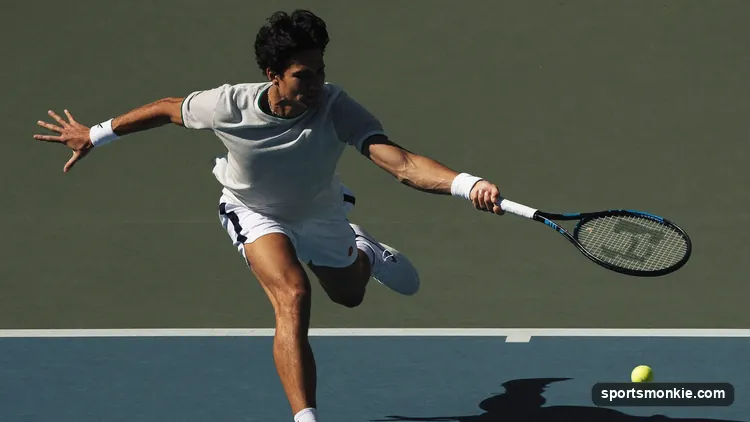
To hit a tennis backhand, turn your shoulders early, load with an Eastern backhand or two-handed grip, swing low-to-high, and make contact out in front of your front hip.