
How to Breathe While Swimming: Rhythmic Breathing Guide
On this page8
- 01The One Rule That Fixes Most Breathing Problems
- 02Exhale Underwater, Inhale at the Surface
- 03Rhythmic Breathing: Tie Every Breath to Your Stroke
- 04Freestyle: Rotate, Don’t Lift
- 05Breaststroke and Butterfly: Breathe With the Stroke, Not Against It
- 06Drills to Groove the Habit
- 07Common Mistakes and Quick Fixes
- 08Building Comfort Over Time
Breathe out slowly and continuously through your nose and mouth the whole time your face is submerged, then turn your head just enough to sip air the instant your mouth clears the surface. The one habit that fixes most breathing panic is exhaling underwater instead of holding your breath. Do that, build a steady rhythm tied to your strokes, and you will swim relaxed for far longer.
The One Rule That Fixes Most Breathing Problems
If you take away a single idea, make it this: never hold your breath underwater. Holding your breath is the root cause of almost every breathing struggle new swimmers face.
Here is why it matters. Your urge to breathe is not triggered by a lack of oxygen but by rising carbon dioxide in your blood. When you hold air in your lungs, that carbon dioxide climbs fast. You surface already desperate, snatch a shallow gulp, and dive back down still in oxygen debt. The cycle compounds until you are winded after one length.
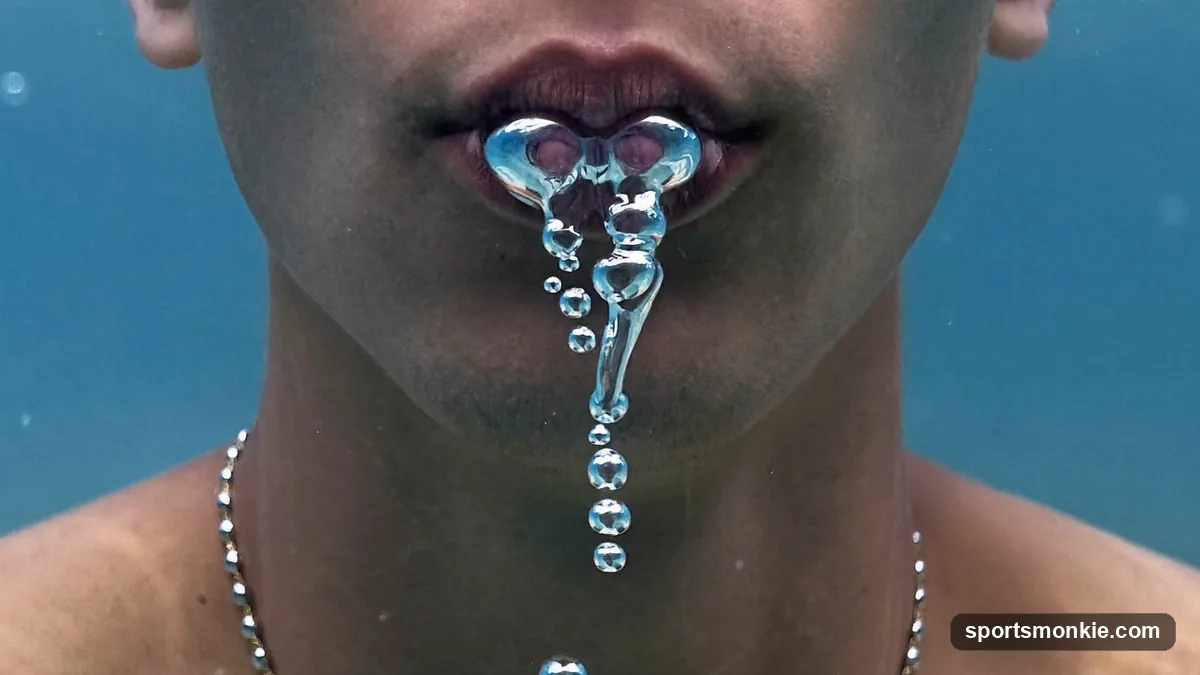
The fix is a continuous exhale. From the moment your face enters the water, let air trickle out through your nose and mouth in a steady stream. By the time your mouth reaches the surface your lungs are nearly empty and ready for a full, easy inhale. This is the foundation every drill in our swimming technique guide builds on, and it is the first thing to master when you learn to swim as an adult.
Exhale Underwater, Inhale at the Surface
Think of breathing as two clearly separated jobs that never overlap.
- Exhale (face down): Blow a slow, controlled stream out through your nose and mouth. Humming a low note is a great cue because you physically cannot hum and hold your breath at the same time.
- Inhale (mouth clear): Take one quick, deep sip through your mouth. Do not sip through your nose; your mouth moves far more air in the fraction of a second you have.
A useful ratio is a long, unhurried exhale that lasts roughly two to three times as long as the inhale. The inhale is fast and sharp; the exhale is patient and complete. If you feel rushed at the surface, you are not emptying your lungs enough underwater. Slow the exhale down and let it run the entire submerged phase.
Rhythmic Breathing: Tie Every Breath to Your Stroke
Rhythmic breathing means your breaths follow a fixed, repeating count instead of arriving whenever panic strikes. A predictable loop keeps carbon dioxide from ever building up and calms your nervous system because your body knows exactly when the next breath is coming.
For freestyle, the pattern is described by how many arm strokes pass between breaths:
| Pattern | Strokes per breath | Best for |
|---|---|---|
| Every 2 | Breathe each cycle, one side | Beginners, easy warm-ups |
| Every 3 (bilateral) | Alternate sides | Balanced technique, distance |
| Every 4 | Same side, longer holds | Relaxed cruising |
| Two-three mix | Alternating rhythm | Racing, adaptable pacing |
Start at every two strokes so you never feel starved while learning. Once the timing is automatic, graduate to bilateral breathing every three, which alternates sides and evens out your stroke. You can drill these counts inside a set of swimming drills for beginners and layer them into a session from our beginner swimming guide.
Freestyle: Rotate, Don’t Lift
Freestyle breathing fails most often because swimmers crane their head up and forward. That drops your hips, buries your legs, and stacks on drag. The correct move is rotation, not elevation.
- Keep your head still and neutral as you swim, eyes looking down at the pool floor, waterline across the crown of your head.
- Rotate from your core, letting your whole body roll toward the breathing side as your arm recovers. Your head turns with the body as one unit.
- Leave one goggle in the water. You are not lifting your face clear; you are turning it into the trough, or bow wave, that your head pushes ahead of it. That pocket sits below the surface, which is all the clearance you need.
- Sip and return. Take your quick breath, then rotate your face back down and immediately begin exhaling again.
A classic self-check: if both goggles break the surface, you lifted too far. Press the leading arm forward and keep your bottom eye pointed at the wall. For the full stroke breakdown, work through our freestyle technique and dedicated freestyle breathing guides, and see the deeper walkthrough on how to breathe while swimming freestyle cues within your regular sets.
Breaststroke and Butterfly: Breathe With the Stroke, Not Against It
Every stroke has a natural window where your head rises on its own. Fighting that timing is what makes breathing feel hard.
Breaststroke hands you the easiest breath in swimming. As your arms sweep in and press down, your upper body lifts and your mouth clears the surface automatically. Inhale in that lift, then drive your head and arms forward into the glide and exhale through your nose and mouth during the streamline. One breath per full stroke cycle. Keep the lift compact so you knife forward rather than popping straight up. Our breaststroke technique and breaststroke kick guides show how the timing links to the leg drive.
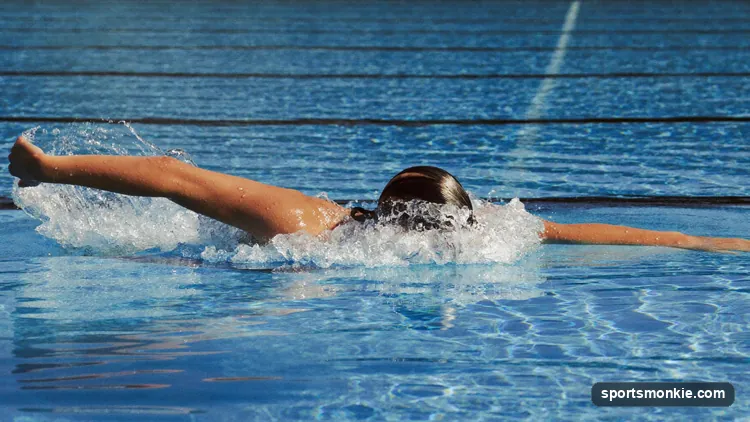
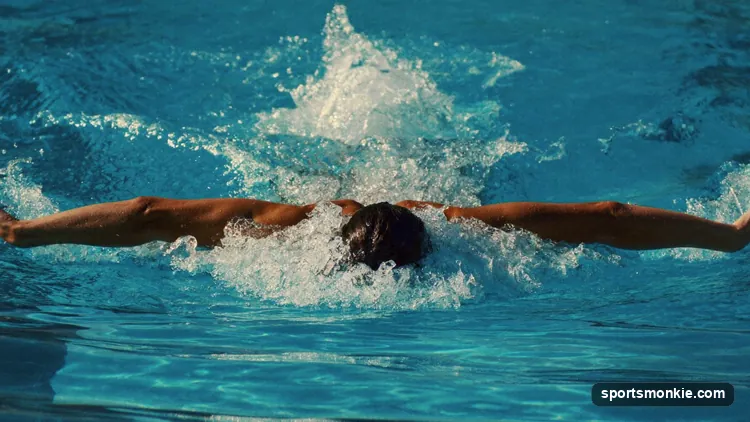
Butterfly works on the same principle but demands sharper timing. Your head lifts forward, chin low and skimming, as your arms finish the underwater pull and begin the recovery. Sneak the breath fast and low, then punch your face back down ahead of your arms. Breathing every stroke is fine while learning; many swimmers settle into every second stroke to protect their rhythm. Study the sequence in our butterfly stroke technique guide.
Drills to Groove the Habit
Technique sticks faster when you isolate the breathing itself. Rotate these into your warm-up:
- Bubble blowing: Stand in the shallow end, take a breath, dunk your face, and hum out a steady stream of bubbles until your lungs empty. Repeat 10 to 15 times. This trains a complete, relaxed exhale before you add any swimming.
- Bobbing: In chest-deep water, sink down and exhale fully underwater, then rise and inhale at the surface in a smooth loop. It builds the exhale-inhale rhythm without stroke distractions.
- Single-arm freestyle: Swim with one arm while the other rests extended forward. Removing half the stroke gives you time to nail the rotate-and-breathe timing on each side.
- Bilateral counting: Swim easy freestyle counting strokes out loud in your head, breathing exactly every third. Consistency is the goal, not speed.
Fold these into a broader routine when you want to swim faster, because efficient breathing is what lets you hold pace instead of blowing up mid-lap.
Common Mistakes and Quick Fixes
| Problem | Cause | Fix |
|---|---|---|
| Gasping at every breath | Holding breath underwater | Exhale continuously, face down |
| Water up the nose | No nasal exhale | Hum out through your nose the whole submerged phase |
| Legs sinking on the breath | Lifting the head instead of rotating | Keep one goggle down, rotate from the core |
| Dizzy or lightheaded | Over-breathing or breath-holding | Steady the rhythm; breathe every 2 to 3 strokes |
| Rushed, shallow inhale | Lungs still full at the surface | Empty the lungs sooner and slower underwater |
Building Comfort Over Time
Breathing comfort is a skill you rehearse, not a talent you are born with. Give yourself a few weeks of short, frequent sessions rather than one exhausting marathon. Spend the first minutes of every swim on bubble blowing and bobbing so the exhale becomes automatic before you push the pace.
As your rhythm settles, you will notice you can hold longer sets without stopping at the wall. That endurance opens up distance goals, whether you are curious how long it takes to swim a mile or working out how many laps make a mile. Even small housekeeping habits help you stay relaxed; a well-fitted cap keeps water out of your ears and hair from your eyes, so learn how to put on a swim cap properly. For a step-by-step look at coordinating the whole thing, revisit our guide on how to breathe while swimming alongside the core breathing fundamentals.
Master the exhale, trust the rhythm, and rotate instead of lift. Do those three things and breathing stops being the thing that ends your swim and becomes the thing that keeps it going.
Frequently asked questions
Why do I run out of breath so fast when swimming?+
You are almost certainly holding your breath underwater instead of exhaling. When you hold your breath, carbon dioxide builds up in your lungs and triggers the urge to breathe, so you surface already starved for air and gasp. On top of that, full lungs make you buoyant and tense. Exhale slowly and continuously the whole time your face is submerged, and you will surface calm with room to inhale fresh air.
Should I breathe through my nose or mouth when swimming?+
Exhale through both your nose and mouth while your face is underwater, and inhale through your mouth when it clears the surface. Nose exhalation helps keep water out of your nose and lets you release air steadily. Some swimmers exhale through the nose only, but a combined nose-and-mouth exhale empties the lungs faster, which matters at higher effort. Always inhale through the mouth because it moves far more air in the split second you have.
What is rhythmic breathing in swimming?+
Rhythmic breathing means tying your breaths to a steady, repeating count of strokes rather than grabbing air whenever you panic. In freestyle you might breathe every third arm stroke; in breaststroke you breathe once per stroke cycle. The rhythm keeps a constant loop of exhale-underwater, inhale-at-the-surface running so carbon dioxide never accumulates. A predictable pattern also calms your nervous system, which is why coaches drill it from day one.
How often should I breathe when swimming freestyle?+
Beginners should breathe every two strokes to the same side until the timing feels automatic. As you relax, progress to bilateral breathing every three strokes, which balances your stroke and alternates sides. Distance swimmers often settle on every three or a two-three pattern. Sprinters breathe as little as every two or even hold across short bursts. There is no single correct number, but never go so long that you feel oxygen-starved.
How do I stop water going up my nose while swimming?+
Hum or blow a slow stream of air out through your nose the entire time your face is in the water. As long as air is flowing outward, water cannot travel up your nose. Most nose flooding happens because swimmers hold their breath and then tilt their head, letting water rush in. If it persists, a soft nose clip works for backstroke and breaststroke, but exhaling steadily fixes the problem for the vast majority of people.
Why should I not lift my head to breathe?+
Lifting your head drops your hips and legs, wrecking your body line and creating drag that makes every stroke harder. Instead, rotate your head with your body so one goggle stays in the water and you breathe into the small pocket, or bow wave, your head pushes ahead of you. Keeping one eye down maintains a flat, streamlined position. Think rotate, not lift, and press the crown of your head gently forward.
Sources
Play & tools
Free browser games and tools — no account, no download.
- Play today's Sports Connections — Today's Sports Connections — daily hints, answers, and play the grid.
- Play Guess the NFL Player — A new mystery NFL player every day. Eight guesses, with a clue on each — plus free unlimited mode.
- Explore all our games →
Related guides
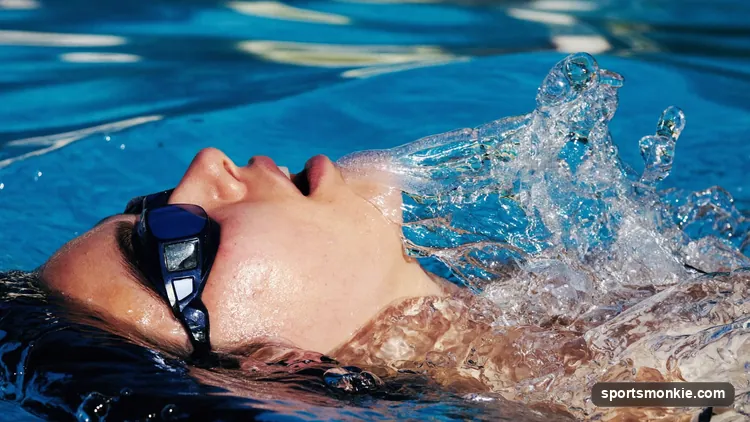
Freestyle Breathing Technique: Breathe Without Sinking
Master freestyle breathing with head-position, exhale-underwater, and bilateral breathing cues. Fix the lift-and-sink habit and swim relaxed for longer, faster laps.
Tips to Start Swimming: A Beginner's Complete Guide
To start swimming as an adult, build water confidence first, then master freestyle breathing, kick, and arm technique. Here's a step-by-step plan.
How to Swim for Beginners: First Steps in the Water
Learn how to swim as a beginner with a step-by-step plan: get comfortable, float, blow bubbles, kick, and swim your first freestyle strokes safely.

How to Breathe While Running: Rhythmic Patterns That Work
How to breathe while running: use rhythmic belly breathing timed to your steps — a 3:2 pattern (inhale 3 steps, exhale 2) for easy runs and 2:1 for hard efforts — breathing through both nose and mouth.
How to Swim: Complete Technique Guide for All 4 Strokes
Learn how to swim with correct technique for freestyle, breaststroke, backstroke, and butterfly. Body position, breathing, kick, and drills to swim farther and faster.
Breaststroke Technique: Pull, Breathe, Kick, Glide Timing
Master breaststroke technique with the pull-breathe-kick-glide sequence, body undulation, and timing cues that fix common mistakes and make you faster.