
How to Swim Faster: Streamline, Stroke & Turn Tips
On this page5
To swim faster you cut drag first, then add power. Hold a tight streamline off every wall, make each stroke travel farther through a clean catch and full finish, tighten your turns, and only then push your tempo. Speed is efficiency multiplied by effort, so a longer, quieter stroke almost always beats thrashing harder.
Most swimmers try to get faster by working harder against the water. The water always wins. The swimmers who drop time chase the opposite goal: give the water less to grab. This guide walks through the four levers that actually move the clock, in the order that pays off fastest. If you are still building the basics, start with the complete swim technique guide and come back once your stroke feels stable.
Cut Drag Before You Add Effort
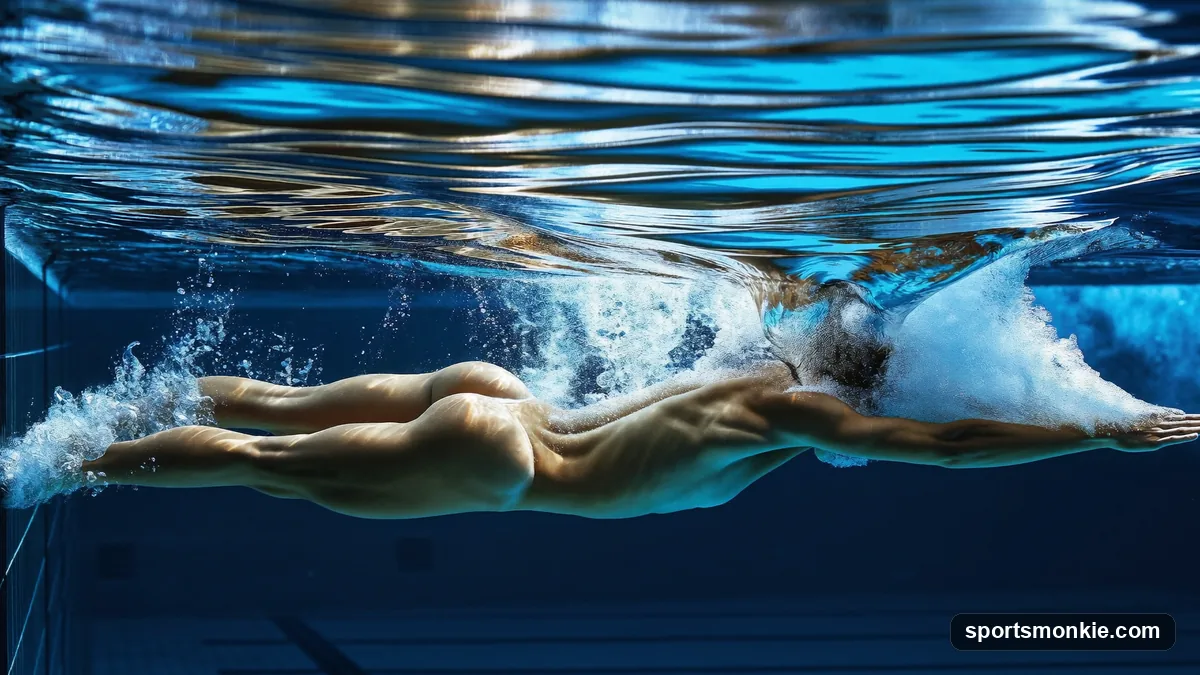
Water is roughly 800 times denser than air, so drag is your biggest enemy. At the speeds you swim, drag rises sharply as you go faster, which means a small posture fix returns a large payoff. Chase a clean body line before you chase fitness.
Focus on three things:
- Head position. Look mostly down, not forward. A lifted head sinks your hips and turns your body into a plow.
- Hips high. Press your chest slightly and engage your core so your legs ride near the surface instead of dragging behind you.
- Long body. Reach forward on every stroke so you are as long and narrow as possible in the water.
If your legs sink the moment you stop kicking hard, your line is the problem, not your engine. Fixing it makes every other change below work better. Beginners rebuilding posture from scratch will get more from swimming for beginners first.
Build Distance Per Stroke
Distance per stroke (DPS) is how far you travel with each pull. It is the clearest single number for efficiency, and raising it is usually faster money than raising your turnover.
The engine of DPS is the catch. Instead of pushing your hand straight down, reach forward, then bend at the elbow so your fingertips point at the bottom while your elbow stays high near the surface. Now your hand and forearm form one big paddle. Anchor that paddle and pull your body past it, finishing the stroke all the way back to your thigh. A short finish throws away free distance.
Rotation multiplies this. Let your body roll toward each pulling arm so your back and core drive the stroke, not just your shoulder. For a full breakdown of the pull path, see freestyle swimming technique, and to stop losing your line every breath, drill freestyle breathing technique.
How to measure it: count your strokes per length (SPL) at an easy, controlled pace. Then try to hold the same pace with one or two fewer strokes. When you can, you have made every lap cheaper.
| Pool length | Efficient SPL (freestyle) | What it signals |
|---|---|---|
| 25 yards | 14–18 | Strong catch and long body line |
| 25 yards | 19–24 | Average; look for a fuller finish |
| 25 meters | 16–20 | Efficient for the longer length |
| 50 meters | 32–40 | Good rhythm over distance |
These are rough targets for adult recreational swimmers, not elite marks. Taller swimmers naturally take fewer strokes, so track your own number over time rather than comparing to a friend.
Turn Every Wall Into Free Speed
Every wall is speed you already paid for. Waste it and you have to rebuild it with effort; keep it and it is free. This is why turns are one of the biggest overlooked gains for lap swimmers.
A strong push-off starts in a tight streamline: arms squeezed behind your head, one hand over the other, biceps hugging your ears, whole body rigid like a torpedo. Push off around a foot below the surface, hold the line, and let the wall’s momentum carry you two to four feet before your first stroke. Surfacing instantly wastes the fastest part of every length.
For the turn itself:
- Flip turn: approach without stalling, tuck into a fast somersault, plant both feet, and drive off. Do not glide into the wall.
- Open turn: touch, tuck your knees under you quickly, rotate, and push. Keep it compact instead of standing up.
Add just a foot of streamline to each wall of a 500 and you can save several seconds without getting one bit fitter.
Layer In Tempo Last
Once your stroke is long and your walls are tight, tempo is the multiplier. Raise your stroke rate too early and you just splash faster; raise it after fixing length and you convert efficiency into real speed.
The pro move is to lift tempo while holding your stroke count steady. If your SPL climbs as you speed up, your stroke is shortening and slipping, so you are working harder for less. A cheap tempo trainer that beeps at a set interval helps you feel this, but a stopwatch and stroke counting work fine.
Train speed with short, fast repeats: 25s or 50s with generous rest so you can hold near-top speed and clean form. This teaches your body to move fast without falling apart, which steady mileage never does. For a full progression, follow the tips to swim faster over distance alongside your regular sets. If you are returning to the pool after years away, learning to swim as an adult covers pacing your comeback so speed work does not wreck your form.
Put It Together in a Weekly Plan
Speed is built with a handful of focused sessions, not endless tired laps. Two quality swims a week beat five sloppy ones. A simple structure:
- Warm up 300–500 easy, mixing swim, kick, and drill so your catch wakes up.
- Technique block: 4–6 drills targeting one weakness, such as catch-up or single-arm freestyle for DPS. New swimmers can pull from swimming drills for beginners.
- Speed block: 8–12 x 25 or 6–8 x 50 fast, with rest long enough to hold form. Count strokes on every rep.
- Turn practice: a few lengths where the only goal is a tight streamline and a clean wall.
- Cool down 200 easy while you mentally review what felt fast.
Keep one metric per session. One week, chase a lower stroke count. The next, chase a faster 50 at the same count. Because you are measuring, you will know a change worked instead of guessing.
Speed rewards patience. Cut drag, lengthen the stroke, own the walls, and add tempo in that order, and the clock moves on its own. If breathing is what breaks your rhythm when you push the pace, fix that foundation with how to breathe while swimming before you chase another second.
Frequently asked questions
Why am I not getting faster even though I swim a lot?+
Volume alone reinforces whatever technique you already have, good or bad. If your stroke leaks speed through drag, a dropped elbow, or a weak push-off, more laps just make those habits stronger. Faster swimmers improve by fixing one thing at a time: streamline, catch, body line, or turns. Add short, fast repeats with full rest so you practice speed, not just endurance, and measure the change with a stopwatch.
What matters more for speed, stroke rate or stroke length?+
Both, but most adult swimmers should chase stroke length first. Distance per stroke reflects how well you hold water and how little you drag. Once your stroke is long and clean, raising your stroke rate multiplies that efficiency into real speed. If you increase turnover before fixing length, you usually just splash faster and tire out. Build a long stroke, then add tempo gradually while keeping your stroke count stable.
How much faster does a good streamline make me?+
A tight streamline off each wall is often the single biggest free gain in the pool. Underwater, a rigid, aligned body meets far less drag than a swimmer who surfaces immediately in a loose position. Over a race with multiple walls, holding streamline two to four extra feet each time can drop several seconds with zero added fitness. Squeeze your arms behind your head, lock your hands together, and hide your ears.
Do faster turns really make a difference for lap swimmers?+
Yes. Every wall is a chance to carry speed instead of stalling. A sloppy open turn where you stand or glide loses momentum you paid for with effort. A tight flip turn or a quick, compact open turn plus a strong push-off resets your speed for free. Across a 500 with many walls, better turns and push-offs can save more time than a whole extra training session of steady swimming.
How do I increase distance per stroke without slowing down?+
Focus on a high-elbow catch and a full finish past your hip, not on gliding longer. Reach forward, anchor your hand and forearm, and press water back all the way to your thigh. Rotate your body so your core drives the pull. Count strokes per length and try to shave one or two off while holding the same pace. Drills like catch-up and single-arm freestyle build the feel.
How often should I do speed work to actually get faster?+
Two focused sessions a week is plenty for most recreational swimmers. Spend part of each on short, fast repeats, 25s or 50s, with enough rest to hold near-top speed and clean form. The rest can be technique drills and steady aerobic swimming. Speed comes from quality, not from grinding tired laps. Warm up well, keep the fast reps short at first, and let form break signal when to stop.
Sources
Play & tools
Free browser games and tools — no account, no download.
- Play today's Sports Connections — Today's Sports Connections — daily hints, answers, and play the grid.
- Play Guess the NFL Player — A new mystery NFL player every day. Eight guesses, with a clue on each — plus free unlimited mode.
- Explore all our games →
Related guides
How to Do the Butterfly Stroke: Technique Guide
Learn how to do the butterfly stroke with dolphin kick drills, two-kick timing, arm recovery cues, and breathing tips to swim fly smoothly and without exhaustion.
How to Put On a Swim Cap Without Tearing or Slipping
Learn how to put on a swim cap the easy way: silicone vs latex, keeping long hair tucked in, avoiding tears, and stopping it from sliding off mid-swim.
How to Swim for Beginners: First Steps in the Water
Learn how to swim as a beginner with a step-by-step plan: get comfortable, float, blow bubbles, kick, and swim your first freestyle strokes safely.
How to Learn to Swim as an Adult: A Step-by-Step Guide
Learn to swim as an adult with a fear-first, step-by-step progression: water comfort, breathing, floating, and your first strokes. Confidence-building drills that actually work.

How to Run Faster: 7 Proven Ways to Build Real Speed
To run faster, sharpen your form and cadence, add interval and tempo sessions, build a strength base, and keep most miles easy. Here are 7 proven levers, drills, and a 4-week speed block.
Climbing Tips for Beginners: What Actually Helps You Improve
Real climbing tips for beginners: footwork over arm strength, reading routes, grip types, falling safely, and pacing to avoid forearm pump.