
Freestyle Swimming Technique: Body Position, Catch & Pull
On this page8
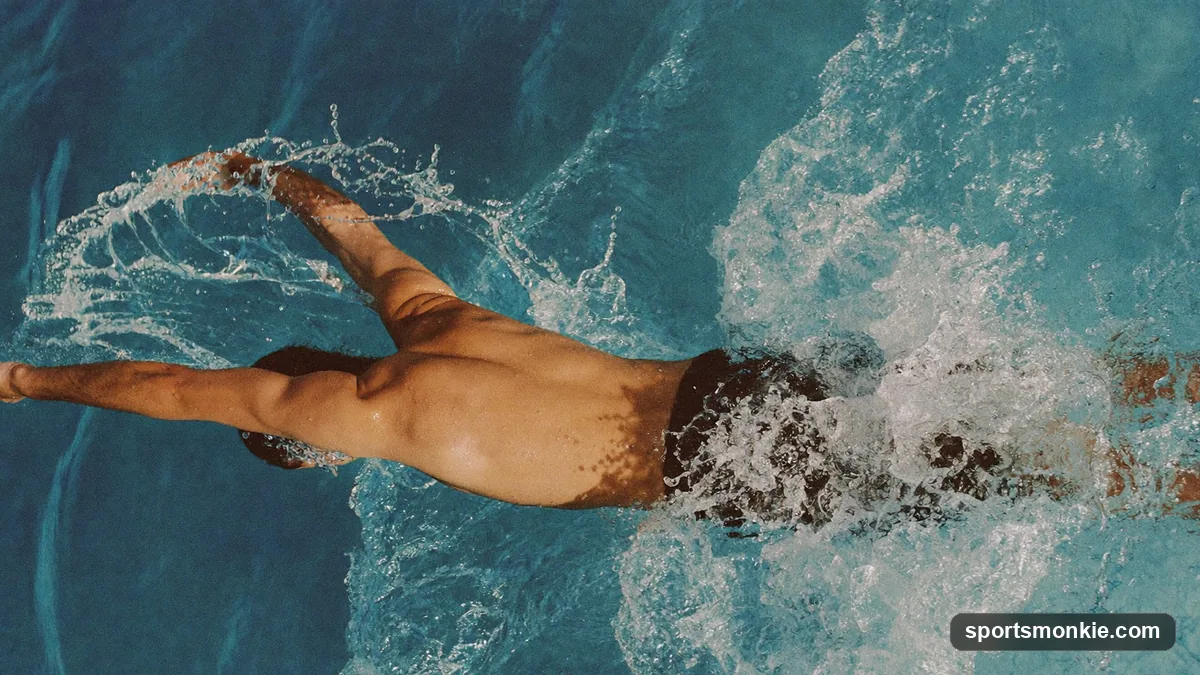
Freestyle, also called the front crawl, is fastest when it is built on three things: a flat, horizontal body position, an early high-elbow catch, and hip-driven rotation. Nail those and the arm-pulling almost takes care of itself. This guide breaks each phase down with the exact cues coaches use on deck, so you can stop fighting the water and start gliding through it.
If you are brand new to the pool, start with our beginner swimming walkthrough first, then use this page to refine the front crawl. Freestyle is one of the four strokes covered in the complete swim technique guide, and it is the stroke most worth mastering because you will use it for laps, fitness, and open water.
Start With Body Position and Balance
Everything in freestyle begins with how you float. Your body should sit high and horizontal, just beneath the surface, forming one long line from your fingertips to your toes.
- Head neutral. Look straight down at the pool floor, not forward. The waterline should cross the crown of your head. A lifted head is the number-one cause of sinking hips.
- Press the chest. Lean your weight slightly onto your sternum, like pressing a buoy into the water. This subtle downward pressure floats your hips and legs to the surface.
- Long spine. Imagine someone pulling a string from the top of your head. Lengthen through the neck and reach the lead arm forward.
When your posture is right, you reduce frontal drag dramatically, which matters because water is roughly 800 times denser than air. Every degree your legs sink adds resistance you then have to overcome with your arms.
Master the Catch: The Early Vertical Forearm
The catch is where you first grip the water, and it separates efficient swimmers from splashers. After your hand enters the water fingertips-first, extend it forward under the surface. Then, without dropping your elbow, tip your fingers down and bend the elbow so your forearm rotates to face straight backward.
Coaches call this the early vertical forearm, or EVF. The mental image that works best is reaching your hand and forearm over a barrel at the front of the stroke. Your elbow stays high and close to the surface while your hand presses down and back.
A strong catch turns your hand and forearm into a single paddle. Instead of slipping through the water, you anchor against it and pull your body past that fixed point. Getting the catch right is also the foundation for learning how to swim faster once your base technique is solid.
Drive the Pull From Catch to Hip
Once the forearm is vertical, you pull. The path is not a straight line down the middle. Follow this sequence:
- Catch — forearm vertical, high elbow, hand just past your head.
- Insweep — press the water back and slightly inward toward your chest.
- Push — accelerate the hand back past your hip and thigh.
- Exit — let the elbow lead the recovery as your hand releases near the hip.
The single biggest cue: accelerate through the pull. Your hand should be moving fastest as it passes your hip, not as it enters. Finish every stroke long; a shortened pull that exits at the ribs throws away free propulsion. Keep the fingers relaxed and slightly spread to catch more water.
Use Hip Rotation, Not Just Your Arms
Freestyle is a rotational stroke. Your body should turn along its long axis roughly 30 to 45 degrees to each side, and that rotation is driven from the hips and core.
Rotation does three things at once:
- Lengthens your reach so each stroke covers more distance.
- Recruits big muscles — your lats and back do the work instead of just your shoulders.
- Protects your shoulders by keeping the joint in a safe, powerful position.
Time it so your body rotates toward the arm that is pulling underwater, then rotates the other way as that arm recovers. Think of your torso as a rolling log with the arms bolted on. Do not over-rotate past 60 degrees, which stalls your rhythm and flattens your kick.
Kick From the Hips, Not the Knees
A good flutter kick keeps your legs afloat and adds thrust without draining your energy. The motion starts at the hip, travels through a slightly bent knee, and snaps through a loose ankle with pointed toes.
| Kick style | Kicks per arm cycle | Best for |
|---|---|---|
| Two-beat | 2 | Distance and open water; energy saving |
| Four-beat | 4 | Middle-distance balance |
| Six-beat | 6 | Sprinting and maximum propulsion |
Common mistakes to avoid:
- Bending the knees too much turns your legs into brakes. Keep them relatively straight with a small, quick motion.
- Kicking too wide — your feet should stay inside the silhouette of your body.
- Stiff ankles kill propulsion. Loose, floppy ankles let your feet act like fins.
For distance swimming, a relaxed two-beat kick is mostly about balance and body position, not power.
Time Your Breathing Into the Rotation
Breathing is where most freestyle falls apart, because swimmers lift the head instead of rotating. Let your body rotation carry your mouth to the air. As you turn toward your breathing side, keep one goggle in the water and breathe from the trough that forms beside your face.
Exhale steadily through your nose and mouth while your face is down, so you only need to inhale when you turn. Most swimmers develop bilateral breathing every three strokes to stay symmetrical, though breathing every two strokes to one side works for hard efforts. For a deeper look at exhale timing and head position, see our full guide on how to breathe while swimming.
Drills to Groove Each Piece
Isolating each phase builds the stroke faster than swimming endless laps with flaws baked in. Rotate through these:
- Catch-up drill — one arm waits extended out front until the other hand touches it. Builds a patient, front-quadrant stroke.
- Fingertip drag — drag your fingertips along the surface during recovery to train a high elbow.
- 6-3-6 kick — six kicks on your side, three strokes, six on the other side. Trains balance and rotation.
- Fist swim — swim with closed fists to feel your forearm doing the catching, then open your hands and feel the extra grip.
Layer these into every warm-up. A broader menu of technique-building sets lives in our swimming drills for beginners collection, and adult learners will find pacing help in the learn to swim as an adult guide.
Put the Full Stroke Together
Once each element feels natural, combine them into one smooth, quiet stroke. A good freestyle looks almost effortless: little splash, long reach, steady rhythm.
Run this checklist on every length:
- Head neutral, eyes down, chest pressed.
- Hand enters fingertips-first and extends forward.
- High-elbow catch, forearm vertical.
- Accelerate the pull past the hip.
- Rotate hips 30 to 45 degrees each side.
- Light, hip-driven kick.
- Breathe by rotating, not lifting.
Chase distance-per-stroke over sheer arm speed. Count your strokes per length and try to reduce the number while holding pace; fewer, more powerful strokes almost always means better technique. Once freestyle feels dialed in, branch out to the other strokes such as breaststroke technique to become a more complete, balanced swimmer.
Frequently asked questions
What is the correct body position for freestyle?+
Aim for a horizontal line just under the surface. Keep your head neutral, eyes down toward the pool floor, with the waterline crossing the crown of your head. Press your chest slightly downward so your hips and legs float up behind you. When your head lifts, your hips sink and drag increases, so hold a long, streamlined spine from fingertips to toes and let a steady kick keep the legs high.
How do I do the high-elbow catch?+
After your hand enters and extends forward, tip your fingertips down and bend the elbow while keeping it high and near the surface. The goal is a vertical forearm that faces straight back before you pull. This is the early vertical forearm, or EVF. Think of reaching over a barrel. A good catch anchors your hand and forearm against the water so the pull moves you forward instead of just pushing water down.
How much should my body rotate in freestyle?+
Rotate roughly 30 to 45 degrees to each side along your long axis, driven from the hips and core rather than the shoulders alone. Rotation lengthens your reach, engages your powerful back and lat muscles, and takes strain off the shoulder joint. Avoid over-rotating past 60 degrees, which stalls your rhythm and flattens your kick. Time the rotation so your body turns toward the arm that is pulling underwater.
Should I breathe every stroke in freestyle?+
Most swimmers use bilateral breathing every three strokes to keep the stroke balanced and symmetrical. For hard efforts or racing, breathing every two strokes to your dominant side delivers more oxygen. Practice both. The key is to rotate to breathe rather than lifting your head. Turn your head with your body until your mouth clears the surface in the trough beside your face, then return your gaze downward quickly.
Why do my legs sink when I swim freestyle?+
Sinking legs almost always trace back to head and chest position. If you look forward or lift your head to breathe, your hips drop like a seesaw. Press your chest and keep your head neutral so your lower body rises. A too-large, knee-driven kick also creates drag and fatigue. Kick from the hips with relatively straight legs, pointed toes, and a compact up-and-down motion no wider than your body line.
How many kicks per stroke should I use in freestyle?+
Distance swimmers often use a relaxed two-beat kick, meaning two kicks per full arm cycle, to conserve energy. Sprinters use a fast six-beat kick for maximum propulsion. Beginners should default to a steady flutter that keeps the legs afloat without exhausting them. The kick's biggest job in distance freestyle is balance and body position, not thrust, so keep it light, quick, and driven from the hips.
Sources
Play & tools
Free browser games and tools — no account, no download.
- Play today's Sports Connections — Today's Sports Connections — daily hints, answers, and play the grid.
- Play Guess the NFL Player — A new mystery NFL player every day. Eight guesses, with a clue on each — plus free unlimited mode.
- Explore all our games →
Related guides
Breaststroke Technique: Pull, Breathe, Kick, Glide Timing
Master breaststroke technique with the pull-breathe-kick-glide sequence, body undulation, and timing cues that fix common mistakes and make you faster.
Freestyle Breathing Technique: Breathe Without Sinking
Master freestyle breathing with head-position, exhale-underwater, and bilateral breathing cues. Fix the lift-and-sink habit and swim relaxed for longer, faster laps.
Freestyle Swimming: Technique, Drills, and Common Mistakes Explained
Freestyle swimming (front crawl) is the fastest competitive stroke. Learn the arm pull, flutter kick, breathing, and drills that fix common mistakes.

Heptathlon Technique Guide: Hurdles, Jumps, Throws and 800m
A heptathlon technique guide for all seven events, including hurdles, high jump, shot put, 200m, long jump, javelin and 800m pacing.
Breaststroke Kick Technique: Whip Kick, Faults & Drills
Master the breaststroke kick with a step-by-step whip kick sequence, ankle flexion cues, whip vs frog kick differences, and fixes for the most common faults.
How to Do the Butterfly Stroke: Technique Guide
Learn how to do the butterfly stroke with dolphin kick drills, two-kick timing, arm recovery cues, and breathing tips to swim fly smoothly and without exhaustion.