
Freestyle Breathing Technique: Breathe Without Sinking
On this page7
Breathe in freestyle by rotating your head with your body roll, not lifting it, and by exhaling steadily underwater so you only ever have to inhale at the surface. Keep the lower goggle in the water, turn your face just far enough for your mouth to clear, and sip a quick breath in the trough your head creates. Fix those two habits and breathing stops feeling like an emergency.
The Single Biggest Fix: Exhale Underwater
Most struggling swimmers hold their breath the entire time their face is down. They arrive at the surface with full lungs, then have to exhale and inhale in one panicked instant. That never works, and it is the root of the gasping, choppy feeling that ruins freestyle for beginners.
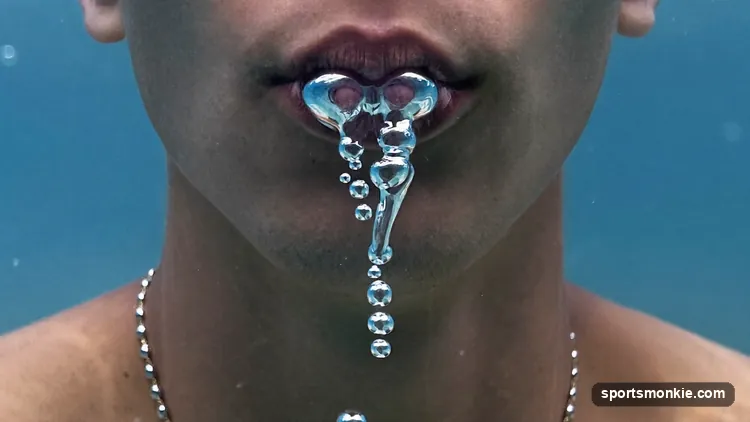
The fix is continuous exhalation. The moment your face returns to the water after a breath, start letting air out through your nose and mouth in a slow, steady stream of bubbles. Hum a low note if it helps you keep it constant. By the time you rotate to breathe again, your lungs are nearly empty and inhaling is a fast, natural reflex.
Think of the ratio: you inhale for roughly a quarter of a second, but you should be exhaling for the two to three seconds your face is submerged. This is the cornerstone of the full swim technique guide, and it underpins every other cue below.
Head Position: Rotate, Don’t Lift
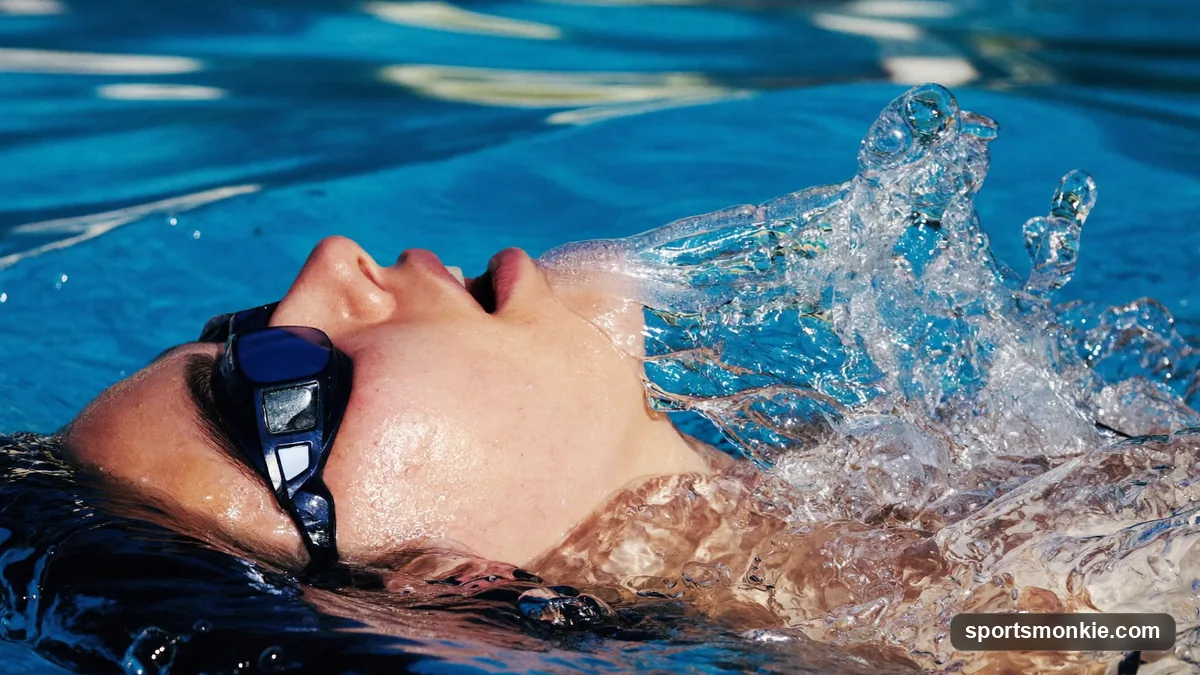
Your head should stay in a neutral line with your spine, eyes looking down and slightly forward at the bottom of the pool. The waterline sits around the crown of your head, and a small bow wave forms off your head as you move forward.
When it is time to breathe, you rotate your head as part of your body roll. You do not crane your neck up or forward. Lifting the head is the most common error in the sport: it pushes your hips and legs down, wrecks your streamline, and makes your kick fight to keep you afloat.
Keep these checkpoints in mind:
- One goggle stays in the water during every breath. If both eyes clear the surface, you have turned too far.
- Breathe into the trough. The bow wave leaves a small pocket of air beside your head, so you do not need to lift to reach it.
- Your head returns to neutral the instant you finish inhaling.
Nailing head position is closely tied to good body roll, which you can drill further in the freestyle swimming technique breakdown.
Time the Breath to Your Body Roll
Freestyle is a rotational stroke. Your body rocks along its long axis, and the breath rides that rotation for free. As one arm finishes its pull and exits the water for the recovery, that same side of your body rolls up toward the surface. That roll is your invitation to breathe.
The sequence looks like this:
- Your right arm finishes the pull and begins to exit near your hip.
- Your body rolls onto its left side, lifting your right shoulder.
- Your head rotates with that roll until your mouth clears the surface.
- You sip air quickly through your mouth.
- Your head rotates back to neutral before your right arm re-enters the water.
Because the roll does the work, the breath should feel effortless. If you are muscling your neck around, you are fighting the stroke instead of using it. Building this timing is a core part of learning how to breathe while swimming across any stroke.
Bilateral Breathing: Build a Symmetrical Stroke
Bilateral breathing means alternating sides, most often by breathing every three strokes. Breathe right, take three strokes, breathe left, repeat. It forces your stroke to stay symmetrical and stops one shoulder from dominating, and in open water it lets you sight and spot hazards on both sides.
Do not try to master both sides at once. Isolate your weaker side first with single-arm or kickboard drills, breathing only to the side that feels awkward. Once that side feels tolerable, blend it into an every-three-strokes rhythm. Give it a few weeks; a new breathing side feels alien before it feels automatic.
| Breathing pattern | Best for | Air intake | Rhythm effect |
|---|---|---|---|
| Every 2 strokes (one side) | Sprints, hard efforts | High | Can create imbalance |
| Every 3 strokes (bilateral) | Distance, open water | Moderate | Balanced and symmetrical |
| Every 4 strokes | Advanced control drills | Low | Trains breath economy |
| Every stroke (one side) | Max-effort sprinting | Highest | Least streamlined |
For most swimmers building fitness, every three strokes is the sweet spot. When you push the pace and want to swim faster, dropping to every two strokes on your strong side delivers the extra oxygen a hard effort demands.
Drills That Fix Breathing Fast
You cannot think your way to a good breath at race pace, so isolate the skill with drills at slow speed.
- Bubble ladder. Stand in the shallow end, submerge, and hum a long, steady exhale. Repeat until continuous exhalation feels automatic. This kills breath-holding.
- Kickboard side breathing. Hold a board, kick gently, and practice rotating your face to breathe while keeping the lower goggle wet. No arm stroke to distract you.
- Single-arm freestyle. Swim with one arm while the other rests ahead. Breathe to the working side to lock in the roll-and-turn timing.
- Six-kick switch. Push off on your side, kick six times, take one stroke, and roll to the other side. It trains rotation and patient breathing in one move.
These fit naturally into a session of swimming drills for beginners, and they pay off whether you are just starting out or learning to swim as an adult. If you are brand new to the water, pair them with the fundamentals in the beginner swimming guide.
Common Mistakes and Quick Corrections
A few recurring errors account for most breathing struggles. Match your symptom to its fix:
- Lifting the head. You sink and your legs drop. Correction: rotate, keep one goggle in the water, look at the pool bottom, not the far wall.
- Holding your breath. You gasp at the surface. Correction: exhale continuously the instant your face goes back down.
- Over-rotating. You swallow water or lose balance. Correction: turn only until your mouth clears, then return to neutral.
- Breathing late. Water pours in as your arm re-enters. Correction: start the breath as the recovering arm passes your shoulder, not after.
- Crossing over. Your lead arm sweeps across your centerline, wrecking balance during the breath. Correction: extend each arm straight forward from its own shoulder.
Fixing the exhale and the head lift usually solves eighty percent of breathing problems on its own. Once air feels dependable, the rest of your freestyle, from catch to kick, gets easier, and you can turn your attention to pace, distance, and getting genuinely faster in the water.
Build the Rhythm and Trust It
Good freestyle breathing is not about lung capacity; it is about timing and relaxation. Exhale the whole time your face is down. Rotate with your body instead of lifting your head. Breathe into the trough beside you, keeping one goggle wet. Alternate sides to stay symmetrical.
Drill it slow, breathe often enough that you never panic, and let the roll carry the breath for you. Do that consistently and the moment of breathing stops being a interruption and becomes just another beat in a calm, repeatable stroke.
Frequently asked questions
How do you breathe properly in freestyle swimming?+
Rotate your head with your body roll instead of lifting it. As one arm exits the water, turn your face to that side until your mouth clears the surface, keeping the lower goggle in the water. Sip a quick breath, then rotate your face back down. The key is exhaling continuously underwater so you only need to inhale when you turn, never rushing a combined exhale-and-inhale in one motion.
Why do I keep sinking when I breathe in freestyle?+
Sinking happens when you lift your head instead of rotating it. Raising your head drives your hips and legs down, breaking your streamline and forcing your legs to work harder. You also sink if you hold your breath underwater, because you arrive at the surface needing to both exhale and inhale in a rushed instant. Keep your head aligned with your spine, rotate from the core, and exhale the whole time your face is down.
Should you breathe out through your nose or mouth when swimming?+
Exhale through both your nose and mouth while your face is in the water. Nose exhalation keeps water from flooding your sinuses, while mouth exhalation empties your lungs faster for a full breath. Many swimmers hum or blow a steady stream of bubbles to keep exhalation continuous. When you turn to breathe, inhale only through your mouth, since it is faster and takes in more air in the brief window your mouth is clear.
What is bilateral breathing and why does it matter?+
Bilateral breathing means breathing to both sides, most commonly every three strokes so you alternate left and right. It builds a symmetrical stroke, prevents one shoulder from over-rotating, and lets you see traffic or waves on both sides in open water. It also spaces breaths evenly to steady your rhythm. Start by practicing your weaker side in isolation, then blend it into a comfortable every-three-strokes pattern over several sessions.
How often should you breathe in freestyle?+
For distance and endurance, breathing every two or three strokes works best because it keeps oxygen steady without disrupting your rhythm. Every three strokes builds bilateral symmetry; every two strokes delivers more air for hard efforts and sprints. Sprinters may breathe every stroke to one side or hold a breath for short bursts. Choose the pattern that keeps you relaxed and never leaves you gasping, and adjust it as your fitness improves.
How do I stop swallowing water when I breathe?+
Swallowing water usually means you are turning your head too far or too late. Rotate only until your mouth clears the surface, not past it, and breathe into the small trough your head and bow wave create, not straight up. Time your inhale to the moment your recovering arm passes your shoulder. Make sure you have fully exhaled underwater first so you inhale air, not water, and keep the motion smooth rather than snatching at it.
Sources
Play & tools
Free browser games and tools — no account, no download.
- Play today's Sports Connections — Today's Sports Connections — daily hints, answers, and play the grid.
- Play Guess the NFL Player — A new mystery NFL player every day. Eight guesses, with a clue on each — plus free unlimited mode.
- Explore all our games →
Related guides
How to Breathe While Swimming: Rhythmic Breathing Guide
Learn how to breathe while swimming with rhythmic breathing, correct exhale timing, and stroke-by-stroke cues so you stop gasping and swim relaxed for longer.
Breaststroke Technique: Pull, Breathe, Kick, Glide Timing
Master breaststroke technique with the pull-breathe-kick-glide sequence, body undulation, and timing cues that fix common mistakes and make you faster.
Freestyle Swimming Technique: Body Position, Catch & Pull
Master freestyle swimming technique with coaching cues for body position, the catch, high-elbow pull, hip rotation, and a two-beat kick that saves energy.

Heptathlon Technique Guide: Hurdles, Jumps, Throws and 800m
A heptathlon technique guide for all seven events, including hurdles, high jump, shot put, 200m, long jump, javelin and 800m pacing.
Breaststroke Kick Technique: Whip Kick, Faults & Drills
Master the breaststroke kick with a step-by-step whip kick sequence, ankle flexion cues, whip vs frog kick differences, and fixes for the most common faults.
How to Do the Butterfly Stroke: Technique Guide
Learn how to do the butterfly stroke with dolphin kick drills, two-kick timing, arm recovery cues, and breathing tips to swim fly smoothly and without exhaustion.