
Fly Fishing Trips for Beginners: What They Cost

On this page6
- 01What does a guided fly fishing trip actually cost?
- 02What’s included in the price, and what isn’t?
- 03How do you pick a good beginner destination or outfitter?
- 04Stocked stream or technical tailwater: which is better for a first trip?
- 05What should you expect on your first guided day?
- 06Which trip should you book first?
A half-day guided fly fishing trip for one or two beginners costs $280 to $625 in the US in 2026, and a full day runs $400 to $1,010, according to current pricing from Davidson River Outfitters in North Carolina and Bighorn Angler in Montana. Most of that price already covers the guide, rods, and flies; lunch is usually a full-day-only extra. Outside the US, a guided chalk-stream day in the UK runs about £300 through Hookafly, and a Canadian float on Alberta’s Bow River with Squatchy Waters runs about CAD 575 for two anglers. The single biggest price driver isn’t the river, it’s whether you’re on shared water or a guide’s private stretch.
What does a guided fly fishing trip actually cost?
Prices swing on three variables: half-day versus full-day, wade versus drift-boat float, and private water versus a shared public stretch. The table below uses named, current 2026 rates rather than averages, so you can see the actual range.
| Trip Type | Typical Price (2026) | Anglers | What’s Usually Included |
|---|---|---|---|
| Beginner casting-only lesson | $50-$150/hour | 1-2 | Casting instruction, no river time |
| Half-day wade trip, private guide | $280-$625 | 1-2 | Guide, rod/reel, flies, waders |
| Full-day wade trip, private guide | $400-$725 | 1-2 | Above, plus lunch |
| Full-day float trip (drift boat) | $625-$1,010+ | 2 per guide | Boat, guide, gear, lunch, drinks |
| Adding a 3rd angler to a trip | +$75-$125 | — | Same gear, guide split across group |
At the cheap end, Visit Mammoth lists Eastern Sierra beginner trips starting at $280 for one or two anglers, with extra guests added at $75 each. At the pricier end, The Little Nell in Aspen charges $840 per guide for a half day and $1,010 for a full day, both covering two guests, reflecting resort-town overhead rather than better fishing. Davidson River Outfitters splits its pricing by water type: a half day on a regular Pisgah National Forest stream runs $300 for one angler or $400 for two, while the same half day on the outfitter’s private Davidson River water costs $350 and $550. That $50-$150 premium buys fewer other anglers on the water and, usually, bigger fish.
What’s included in the price, and what isn’t?
Rods, reels, flies, and waders come standard at nearly every beginner-focused outfitter. Bighorn Angler’s listing spells it out clearly: an experienced guide, fly rods, tippet, leader, and flies, waders and boots if you need them, plus water and soda, all bundled into the base rate. Lunch is the line that trips people up. It’s typically bundled only into full-day trips, not half-days, so check before you assume a midday meal is coming.
Two costs are almost never included anywhere: your fishing license and the guide’s tip. A Montana nonresident needs a one-day license plus conservation and invasive-species fees, which totals roughly $31.50. North Carolina doesn’t sell single-day licenses at all; nonresidents need the shortest option, a 10-day inland license at $28. On tipping, Orvis’s published gratuity guidelines put a reasonable full-day tip at roughly 20-25% of the trip cost, which works out to about $100 on a typical guided day. Bring cash; most guides would rather not run a tip through a card machine.
How do you pick a good beginner destination or outfitter?
Start with fish density before you start with scenery. A river holding thousands of fish per mile forgives a sloppy first cast in a way a low-density trophy river never will. Ask an outfitter directly how many fish per rod their average beginner trip produces; a guide who dodges the question is optimizing for their Instagram, not your first afternoon.
Group size matters just as much as the water. A guide taking one or two anglers can stand behind you and correct your cast in real time. The moment a trip grows to three or four rods per guide, that individual coaching shrinks fast, even though the per-person price drops. If you’re truly new, pay for the smaller group.
Finally, check whether the outfitter runs beginner-specific trips rather than folding you into a generalist booking. Davidson River Outfitters, for instance, offers a distinct 101 introduction class before its guided wade trips, which is a useful signal the operation actually thinks about first-timers rather than just experienced repeat clients.
Stocked stream or technical tailwater: which is better for a first trip?
Both work, but for different reasons, and the two most-cited beginner rivers in the US make the contrast obvious. North Carolina’s Davidson River, inside Pisgah National Forest, mixes stocked and wild trout in clear, approachable water, which means a beginner’s imperfect drift still gets eaten reasonably often. Montana’s Bighorn River is a different animal on paper, a technical tailwater below Yellowtail Dam, but according to RiverReports, it holds trout density up to 6,000 fish per mile in its first few miles, making it, in their words, “Montana’s closest thing to a sure bet.” Guides there put beginners into fish constantly, not despite the technical reputation but because the sheer number of trout compensates for an imperfect nymph rig.
The honest takeaway: skip water that’s technical and sparse. A gin-clear spring creek with picky, educated trout and low numbers is genuinely hard even for guided intermediates, let alone a first-timer. Pick either a forgiving stocked stream or a high-density tailwater, and let the guide handle whichever technical demands the water adds.
What should you expect on your first guided day?
Plan to meet at the outfitter’s shop or a boat ramp around sunrise or mid-morning, depending on season and hatch timing. Most guides spend the first 15-20 minutes on dry land: fitting waders, checking your grip, and running a few practice casts in a parking lot or open bank before ever wetting a line. That warm-up isn’t wasted time; it’s the guide diagnosing your casting stroke before the pressure of an actual fish is on the line.
Once you’re in the water, the guide reads the river for you, pointing out seams, riffles, and likely holding spots rather than expecting you to identify them yourself. Expect a lot of short, specific coaching, “ten feet upstream, mend now,” rather than a lecture. On a full-day trip, lunch usually happens streamside around midday, often included in the price as noted above. Most beginners land their first fish within the first hour or two on a well-chosen, high-density river; if you’re two hours in without a bump, that’s worth flagging to your guide rather than assuming it’s normal.
Which trip should you book first?
If budget is tight and you just want to know whether you like fly fishing before spending real money, book a casting-only lesson or the cheapest half-day wade trip you can find with a small group cap. If you’re committed and want the best odds of a genuinely good first day, pay for the smaller group and, where it’s offered, the higher-density or private water, even at a $50-$150 premium. That upgrade buys attention and fish, and both matter more on day one than they will once you’ve got twenty trips behind you.
Before you book, pair this with our guides to fly fishing for beginners for the fundamentals you’ll want walking in, and fly fishing gear for beginners if you’re deciding whether to rent or buy your own kit afterward. If you’re weighing a fly fishing trip against another guided outdoor weekend, our breakdowns of sailing lesson costs by location and horseback riding lesson pricing use the same real-quote approach so you can compare apples to apples.
Ready to book? Call or email two outfitters in your target region, ask each the same three questions, fish-per-rod average on beginner trips, group size cap, and whether lunch and license info are included, and pick the one that answers clearly. A guide who won’t give you straight numbers on the phone won’t give you straight coaching on the water either.
Frequently asked questions
How much does a half-day guided fly fishing trip cost for beginners?+
$280-$625 in the US for one or two anglers with a private guide, according to pricing from Davidson River Outfitters and Bighorn Angler. Eastern Sierra beginner trips through Visit Mammoth start around $280. UK chalk-stream guided days run about £300 through operators like Hookafly.
Is a private guide better than a group trip for a first-timer?+
Yes, if the budget allows it. A private or two-angler guide gives you the instructor's full attention on grip, casting, and reading water, which matters more on day one than fish count. Group trips or casting-only lessons cost less but split that attention across everyone booked.
Do I need my own gear for a first guided fly fishing trip?+
No. Nearly every beginner-friendly outfitter, including Davidson River Outfitters and Bighorn Angler, includes rods, reels, flies, and waders in the trip price. Buy your own setup only after a guided day confirms you want to keep fly fishing; a basic starter rig runs $200-$400.
How much should I tip a fly fishing guide?+
Plan on 20-25% of the trip cost, roughly $100 for a full day, per Orvis's published gratuity guidelines. Half-day trips warrant less, usually $50-$100. Tip in cash directly to the guide at the end of the day rather than adding it to a card payment.
What's the difference between a stocked trout stream and a technical river for beginners?+
A stocked or high-density stream, like North Carolina's Davidson River, forgives casting mistakes because so many fish are present. A technical tailwater like Montana's Bighorn still holds huge trout numbers but demands more precise presentation, which is why a guide matters more there than the fish count alone.
Do I need a fishing license for a guided trip?+
Yes, almost everywhere, and it's usually not included in the guide's price. A Montana nonresident one-day license runs about $31.50 total. North Carolina doesn't sell single-day licenses; nonresidents need the $28 ten-day inland option. Ask your guide before booking which license you need.
Sources
- Davidson River Outfitters — Guided Trout Fishing Wade Trips
- Bighorn Angler — Guided Fly Fishing
- Visit Mammoth — Guided Fishing Trips for Beginners
- RiverReports — Best Trout Rivers in the US
- Orvis — Gratuity Guidelines for Fishing Guides and Staff
- Sportfish UK — Fly Fishing Lessons and Courses
- Hookafly — Guided Days
- Clearwater Fly Fishing Guides — Snowy Mountains, Australia
- Squatchy Waters Fly Fishing — Services and Rates
- Montana Fishing License Cost 2026
- North Carolina Fishing License Cost 2026
Play & tools
Free browser games and tools — no account, no download.
- Play today's Sports Connections — Today's Sports Connections — daily hints, answers, and play the grid.
- Play Guess the NFL Player — A new mystery NFL player every day. Eight guesses, with a clue on each — plus free unlimited mode.
- Explore all our games →
Related guides
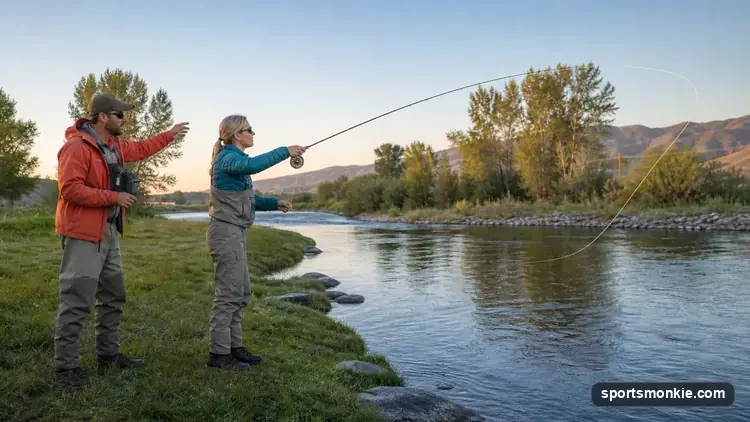
Fly Fishing for Beginners: How to Actually Get Started
Fly fishing for beginners explained: how it differs from spin fishing, why casting is the real learning curve, where to practice, costs, and etiquette.
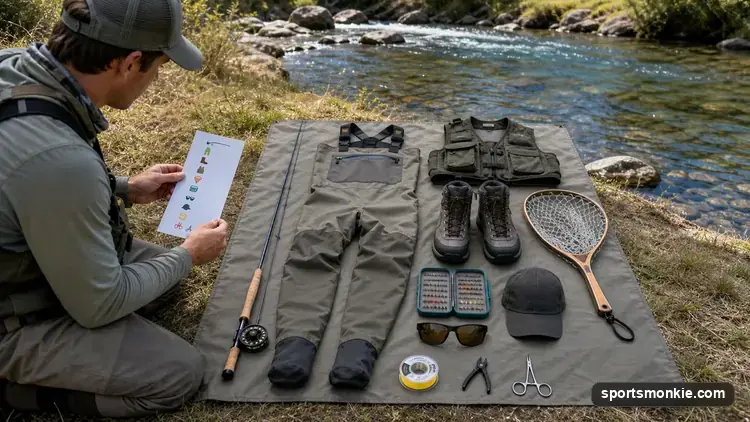
Fly Fishing Gear for Beginners: What You Actually Need
Fly fishing gear for beginners beyond the rod: waders, boots, tools, and a 4-fly starter kit, with real combo prices for the US, UK, AU, and CA.
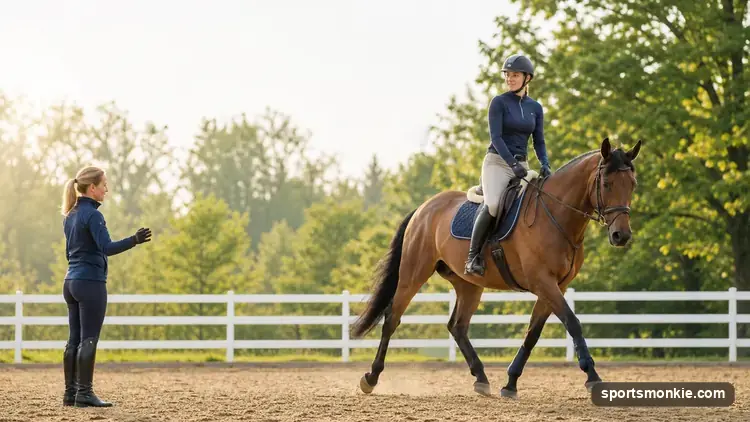
Horseback Riding Lessons: What They Cost and What to Expect
Horseback riding lessons cost $40-$150+ an hour by group size and region. See what a first lesson involves, real 2026 prices, and how to vet an instructor.
How to Swim for Beginners: First Steps in the Water
Learn how to swim as a beginner with a step-by-step plan: get comfortable, float, blow bubbles, kick, and swim your first freestyle strokes safely.
Marathon Training Plan for Beginners: A 16-Week Schedule
A beginner marathon training plan runs 16 to 18 weeks, builds from about 15 to 40 weekly miles, and peaks with a 20-mile long run before a 3-week taper. Here is the full week-by-week schedule.
Running Strides Explained: What They Are and How to Do Them
Running strides are short 15-30 second accelerations to about 85-95% of top speed, done relaxed with full recovery. They sharpen form, running economy, and leg speed without adding hard training.