
Climbing Shoes for Beginners: What to Buy and How They Should Fit

On this page7
- 01Why should beginners avoid aggressive, downturned climbing shoes?
- 02How should climbing shoes fit on a beginner?
- 03Should beginners rent or buy climbing shoes?
- 04Do beginners need different shoes for bouldering vs. route climbing?
- 05Best climbing shoes for beginners in 2026
- 06Common beginner mistakes with climbing shoes
- 07The short version
Buy a flat, neutral-profile climbing shoe, sized close to your regular street shoe size (or up to half a size down), not the downturned, banana-shaped shoes you see advanced climbers wearing. A good beginner pair costs $85-$140 in the US in 2026, and the same shoe works whether you’re bouldering or on top-rope, since the split between bouldering-specific and route-specific shoes only matters once your footwork gets precise. Rent for your first couple of sessions before you commit to buying.
Most first-time climbers get this backwards. They walk into a gym, see the pros’ aggressive downturned shoes on the wall of rentals, and assume tighter and curlier is better. It isn’t, not yet.
Why should beginners avoid aggressive, downturned climbing shoes?
Downturned shoes curl your toes into a claw shape to concentrate power on tiny holds, which is exactly what you don’t have the technique to use yet. On a neutral, flat-lasted shoe your toes sit in something closer to their natural position, so you can stand on holds all evening without your feet screaming at you by climb three.
Neutral shoes also have thicker, stiffer soles (roughly 4-5.5mm of rubber) that support the foot rather than demanding you already have strong, trained toes. According to REI’s climbing shoe guide, rock shoes “do not need to fit painfully,” and pushing beginners into a tight, downturned shoe is the single most common reason new climbers quit early: their feet hurt more than their arms do.
The trade-off is real. A flat shoe won’t hook a tiny edge as precisely as a downturned one. But at V0-V2 or 5.6-5.9, the grades almost every beginner starts on, footwork technique matters more than shoe aggression, and a comfortable foot lets you actually practice that technique.
How should climbing shoes fit on a beginner?
Snug through the whole foot with no dead space, toes gently touching or slightly curled at the first knuckle, and no pinching at the widest part of the foot. That’s different from a street shoe fit, closer to a snug sock, but it should never be the toe-curling, wince-through-every-step fit that experienced climbers chase in performance shoes.
A few fitting rules that actually hold up:
- Go sockless. Climbing shoes are designed to work against bare skin for feel and grip; wearing socks changes the fit you’re testing.
- Try shoes in the afternoon. Feet swell through the day, and REI notes this can shift sizing by up to a full size, so morning try-ons run small.
- Match material to your size math. REI explains unlined leather stretches up to a full size as it breaks in, lined leather about half a size, and synthetic barely stretches at all. If you’re between sizes in a synthetic shoe, size up; in unlined leather, you can size down slightly and let it mold.
- Brands don’t share a last. A size 8 in one brand is not a size 8 in another. Use your street size as a rough starting point, not a rule, and try the specific model before buying online.
If a shoe leaves you limping to the car, it’s too small, full stop. That’s not “breaking it in,” that’s the wrong size.
Should beginners rent or buy climbing shoes?
Rent for your first 2-3 sessions, then buy once you know you’re sticking with it. Gym rental shoes run $5-7 a visit, and most beginner day passes bundle a rental pair in anyway.
Here’s the actual math: a $99 beginner shoe pays for itself against $6 rentals in about 16-17 visits, roughly two months of climbing twice a week. Buy earlier than that and you’re gambling on a sport you haven’t confirmed you like; wait much longer and you’re paying more in rentals than the shoes would have cost, on top of wearing communal shoes that never fit you as well as your own.
There’s a technique argument for buying sooner too. Rental shoes are usually broken-in, stretched-out, and a size or two off from ideal, which makes it harder to feel what proper footwork is supposed to feel like. Once you’ve decided this is a hobby, your own correctly-sized pair will noticeably improve how holds feel underfoot.
Do beginners need different shoes for bouldering vs. route climbing?
Not at first. Bouldering shoes trend softer and more curved, and route shoes trend stiffer and flatter once climbers reach an intermediate level, because bouldering rewards feel on short, powerful moves while long routes reward support over hours on the wall. But a neutral, flat shoe sits in the middle of that spectrum and performs adequately at both, which is exactly why every beginner-focused shoe on the market, from the Tarantulace to the Scarpa Origin, is built neutral rather than picking a side.
Most new climbers start indoors bouldering anyway, since it needs no harness or partner, then add top-rope or lead climbing later. Buy one neutral pair, use it for both, and revisit the bouldering-vs-route split only once you’re climbing V3-V4 or 5.10 and can feel the difference a softer or stiffer sole makes. If the outdoor side of the sport appeals to you down the line, our look at the greatest mountaineers of all time is a good next read for where gym footwork eventually leads.
Best climbing shoes for beginners in 2026
Five neutral, beginner-appropriate models cover almost every budget and foot shape. Prices are US retail; UK and Australian buyers should expect roughly 20-30% more once import costs are factored in.
| Model | Price (USD) | Closure | Fit type | Best for |
|---|---|---|---|---|
| La Sportiva Tarantulace | $99 | Lace-up | Neutral, flat | The default first shoe; best-selling beginner model in the US |
| Scarpa Origin | $129 | Dual power strap (velcro) | Neutral, leather | Widest, most forgiving fit; used by many climbing guides for clients |
| Evolv Defy | $109 | Velcro strap (lace version also sold) | Neutral, synthetic | Tightest budget; vegan synthetic upper, quick on/off |
| Butora Endeavor | $119.95 | Velcro | Neutral/moderate | Narrow and wide-fit versions, good if standard lasts don’t fit your foot |
| La Sportiva Finale | $139 | Lace-up | Slight downturn | Step-up shoe once you outgrow a pure-flat beginner model |
My take: for almost anyone walking into their first gym session, the Tarantulace is the safe default. It’s flat, cheap enough that outgrowing it in six months doesn’t sting, and it’s what most gym staff will point you toward. If you have a wide or unusually shaped foot and the Tarantulace pinches, the Scarpa Origin’s leather upper and velcro straps are more forgiving, and its guide pedigree tells you it’s built to be comfortable across a full day, not just a photo. Save the Finale for later, once a flat shoe starts feeling too soft for the grades you’re climbing.
Common beginner mistakes with climbing shoes
- Sizing down like an advanced climber. That advice is for people already climbing 5.11+ who need every millimeter of precision. On your first pair it just gives you blisters and a reason to quit.
- Buying online without trying the specific model. Even within one brand, a Tarantulace and a Finale fit differently. Try in-store or buy from a retailer with a real return policy.
- Ignoring closure type for your use case. Velcro speeds up gym sessions where you pull shoes off between climbs; laces suit long outdoor days where you want to adjust tension mid-route.
- Renting indefinitely out of indecision. Past 3-4 months of regular rentals, you’ve already spent more than a pair would have cost, with worse fit the whole time.
- Chasing a pro’s shoe. The shoe on your favorite climber’s feet is tuned for moves you can’t yet make. A flat neutral shoe will get you up more routes, faster, in month one.
Once your feet are sorted, the rest of your beginner kit matters too. Our guide to best push-up exercises for climbers covers the antagonist strength training that keeps your shoulders healthy as your climbing volume goes up.
If you’re weighing whether to rent, buy, or even commit to a gym membership at all, book one intro session first. Most climbing gyms bundle a day pass, harness, and shoe rental together for less than $30, which is the cheapest way to test the sport before you spend a cent on gear of your own.
The short version
Flat, neutral, snug but not painful, sized close to your street shoe with material stretch factored in. Rent for your first 2-3 visits, then buy once you’re sure you’ll keep climbing. The Tarantulace, Origin, or Defy will all serve you well past your first year, and you don’t need separate bouldering and route shoes until you’re climbing well past beginner grades.
Frequently asked questions
Are bouldering shoes and climbing shoes for beginners the same thing?+
For a first pair, yes. Bouldering and route climbing both reward a flat, neutral shoe when you're new, so one pair covers both. The split only matters once you're comfortably climbing V3-V4 or 5.10 and want a softer, more curved shoe for bouldering or a stiffer one for long routes.
Should climbing shoes hurt when they're new?+
No. Mild snugness with your toes gently curled is normal; sharp pain, numbness, or curled-under toes is not. That old advice to size down until it hurts applies to advanced performance shoes, not a first pair. A beginner shoe should feel like a snug sock you can climb an hour in.
What size climbing shoe should a beginner buy?+
Start close to your street shoe size, or up to a half size down in a neutral model, and always try before you buy if you can. Unlined leather stretches up to a full size with wear, lined leather about half a size, and synthetic barely stretches at all, so factor material into the size you pick.
Should a total beginner rent or buy climbing shoes?+
Rent for your first 2-3 sessions. Gym rentals run $5-7 a visit, and most gyms include them in a beginner package. Once you've climbed 5-6 times and know you're sticking with it, buy: at $5-7 a rental, you break even on a $99 pair within about 15 visits, and your own shoes fit better.
Do beginners need lace-up or velcro climbing shoes?+
Velcro, for most beginners in a gym. You'll pull them off between climbs to rest your feet, and straps take seconds versus re-lacing. Laces win if you plan to climb outdoors or want to fine-tune tightness across a long session, since you can adjust pressure zone by zone.
How much do beginner climbing shoes cost?+
Expect $85 to $140 in the US for a reputable first pair in 2026, with $99-$129 covering most solid neutral options. UK buyers pay roughly £75-£115, and Australian climbers around A$150-A$220. Skip anything under $50 online; the rubber and last quality are usually too poor to learn proper footwork on.
Sources
- REI Expert Advice — How to Choose Rock Climbing Shoes (sizing and stretch guidance)
- La Sportiva USA — Finale climbing shoe specs and price
- REI Co-op — La Sportiva Tarantulace product listing
- Scarpa — Origin climbing shoe specs and price
- Evolv Sports — Defy climbing shoe specs and price
- IndoorClimbingGym.com — climbing gym cost and rental fee breakdown
Play & tools
Free browser games and tools — no account, no download.
- Play today's Sports Connections — Today's Sports Connections — daily hints, answers, and play the grid.
- Play Guess the NFL Player — A new mystery NFL player every day. Eight guesses, with a clue on each — plus free unlimited mode.
- Explore all our games →
Related guides
Bouldering Shoes for Beginners
How to choose beginner bouldering shoes: why a flat, comfortable, moderately snug shoe beats an aggressive one, plus sizing, fit and material tips.
Lacrosse Rebounders: Are They Worth It and Which to Buy
A lacrosse rebounder returns your passes for solo stick-skills practice. Whether one is worth it, how the top models compare, and the free alternative.
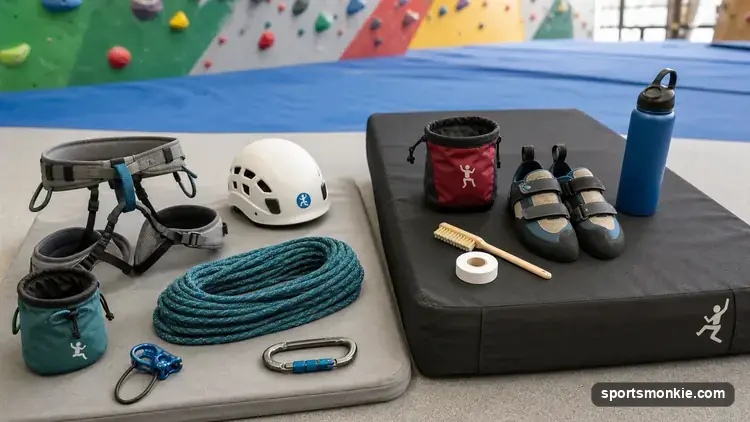
Climbing and Bouldering Gear for Beginners: What You Need
Bouldering gear for beginners: what to rent at the gym, what's worth buying on day one, and a real starter budget from chalk bags to crash pads.

Best track spikes for heptathlon: what to buy first
Best track spikes for heptathlon athletes, from a one-pair beginner setup to specialist sprint, jump, distance and replacement-pin options.
Best Disc Golf Discs for Beginners
The best beginner disc golf discs are slow, understable putters and midranges. How to choose by flight numbers, plus a simple 3-disc starter setup.
Bouldering Gear for Beginners
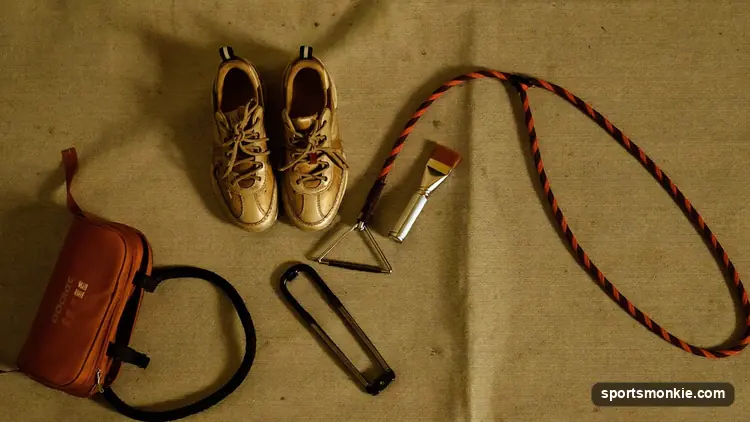
The bouldering gear beginners actually need: climbing shoes, chalk and a brush for the gym, plus a crash pad and more for outdoor bouldering.