
Best Scuba Diving Destinations for Beginners

On this page7
- 01What makes a destination good for beginner divers?
- 02Which Caribbean destination is best for beginners?
- 03What’s the cheapest place to get scuba certified as a beginner?
- 04Is Key Largo a good no-passport option for US beginners?
- 05Where should Australian and UK divers start?
- 06What does a full beginner dive trip actually cost, all-in?
- 07Which beginner destination should you actually pick?
Bonaire, Cozumel, Key Largo, Koh Tao, and Cairns are the five most beginner-friendly scuba diving destinations in the world, and they earn the label for the same four reasons every time: warm water, high visibility, mild or no current, and a dense cluster of dive shops built around training first-timers. Bonaire is the pick for shore-diving practice, Koh Tao is the cheapest place on Earth to get certified, and Key Largo is the only one of the five a US diver can reach without a passport.
What makes a destination good for beginner divers?
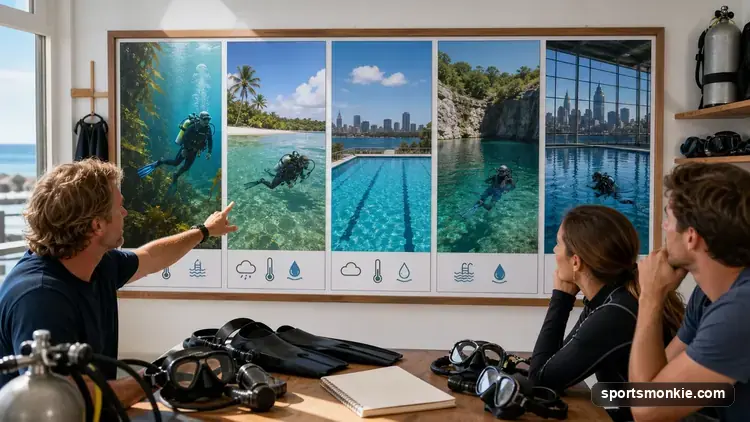
Four things, in order of how much they matter to someone who has never breathed underwater before. Warm water first: below about 75°F (24°C) you need a thick wetsuit, and fighting cold and buoyancy at the same time is a lot to manage on your first dives. Clear water second, because low visibility turns basic navigation and buddy contact into a stressful skill instead of a background task. Shallow, sheltered reef depth third: Open Water training tops out at 60 feet (18m) for adults, and the best beginner sites keep most of the action in the 20-40 foot range, where light and color are still strong. Dive shop infrastructure last but not least: PADI describes ideal beginner locations as offering “warm water, colourful marine life, shallow bays and the very best diving tuition,” and that tuition piece is what separates a destination with a couple of dive boats from one with dozens of instructors running daily Discover Scuba and Open Water courses.
Currents are the wild card most guides skip. A site can be warm, clear, and shallow and still be a bad first dive if it has a ripping current, which is why Bonaire and Cozumel, both nearly current-free or gently drifting, outrank technically prettier reefs with stronger water movement.
| Destination | Water temp | Visibility | Best for | Typical trip cost |
|---|---|---|---|---|
| Bonaire (Dutch Caribbean) | 78-83°F (25-28°C) | 65-100+ ft | Solo shore-diving practice, no boat needed | $265-430 for certification; unlimited shore diving after |
| Cozumel, Mexico | 78-86°F (26-30°C) | 80-100+ ft | Easy drift diving, minimal effort | $350-500 certification; $80-110 per 2-tank boat dive |
| Key Largo, Florida Keys (USA) | 72-85°F seasonal | 60-100 ft | No-passport US trip, quick weekend | $250 Discover Scuba; $695 2-day Open Water course |
| Koh Tao, Thailand | 82-86°F (28-30°C) | 50-100 ft | Cheapest certification in the world | ~$300-360 (9,900-12,000 THB) all-inclusive Open Water |
| Cairns / Great Barrier Reef, Australia | 75-84°F seasonal (24-29°C) | 50-100+ ft | AU/UK/NZ divers, bucket-list reef | AUD $960-1,480 (~$665-1,030) for 4-5 day Open Water course |
Which Caribbean destination is best for beginners?
Bonaire, and it is not close. Buddy Dive Bonaire and other island operators point to one number: 88% of Bonaire’s roughly 90 dive sites are reachable straight from shore, which makes it the only destination on this list where a nervous first-timer can wade in, practice a skill, stand up, and try again without waiting on a boat schedule. Water stays 78-83°F year-round, visibility regularly clears 65 feet and often tops 100, and the fringing reef sits close enough to the beach that most entries are a short surface swim. A full Open Water certification runs $375-430 on island, or $265-335 if you complete the e-learning portion at home first, according to InfoBonaire.
Cozumel is the near-equal alternative, and for some beginners the better one. Instead of shore entries, most Cozumel diving is gentle drift diving along the Mesoamerican Barrier Reef: you drop in, get neutrally buoyant, and let a mild current carry you past coral walls without much finning effort, per Island Life Mexico’s dive guide. Certification costs $350-500, and once you’re certified, a two-tank boat dive runs $80-110. If the idea of managing your own entries and exits sounds like more task-loading than you want on day one, Cozumel’s guided drift format does more of the work for you.
What’s the cheapest place to get scuba certified as a beginner?
Koh Tao, Thailand, and it isn’t marginal. Big Blue Diving puts a full PADI Open Water course, gear, e-learning manual, insurance, and certification fee included, at 9,900-12,000 THB, roughly $300-360. Compare that to $600-900 for the same certification in the Caribbean or AUD $700-plus in Australia, and Koh Tao is less than half the price almost everywhere else. The island earns that price through sheer volume: it certifies more PADI Open Water divers every year than anywhere else on the planet, and that competition keeps every dive shop’s pricing honest. Water runs 82-86°F with 50-100 foot visibility depending on season, comfortably warm and clear enough for training, even if it doesn’t quite match Bonaire’s best days.
The trade-off is travel time. Koh Tao sits on a small Gulf of Thailand island reachable by ferry from Chumphon or Surat Thani, so budget an extra travel day each way that Caribbean or Florida trips don’t require. For our full breakdown of what certification costs at home versus abroad, see our scuba diving certification cost guide.
Is Key Largo a good no-passport option for US beginners?
Yes, and it’s the most practical starting point for most US-based readers simply because there’s no flight abroad involved. Rainbow Reef Dive Center charges $99 for a standard two-location dive trip once you’re certified, and Sea Dwellers Dive Center runs a $250 all-inclusive Discover Scuba Diving experience, pool session, boat trip, two guided dives, and rental gear included, for anyone who wants to try diving before committing to a full course. A two-day Open Water certification at BlueWater Divers runs $695.
Water temperature is the honest weak point: the Keys run 72-85°F depending on season, cooler than the tropical destinations on this list, so winter trips call for a full wetsuit rather than a rash guard. Visibility (60-100 feet) and shallow, current-light reefs like Molasses Reef and Grecian Rocks still make it a legitimate beginner spot, which is why it comes up constantly in r/scubadiving threads as the go-to first stop for East Coast divers who don’t want to fly internationally for their first certification.
Where should Australian and UK divers start?
Cairns, gateway to the Great Barrier Reef, for two different reasons depending on where you live. For Australian and New Zealand divers, it’s simply the nearest world-class reef, a domestic or short international flight instead of a long-haul trip. For UK divers, it’s less about convenience and more about combining a bucket-list reef with certification: about 22 hours of flying via a Middle East hub, but the only destination here that pairs beginner training with genuinely famous diving.
Divers Den prices a four-day Open Water course, two days of pool and classroom work plus two day trips to the outer reef, from AUD $960 (roughly $665 USD). A longer five-day, two-night liveaboard version with extra fun dives runs AUD $1,480 (about $1,030 USD). Water stays 75-84°F depending on season, visibility is generally strong at 50-100-plus feet on the outer reef, and current is mild on the training sites operators choose for first-timers. It’s worth noting that “best place on Earth to learn to dive” is dive-shop marketing language, not an independent ranking, but the underlying conditions genuinely support it: warm water, protected training sites, and reef life dense enough to make the extra flight time worth it.
What does a full beginner dive trip actually cost, all-in?
Course price alone undersells the real number. Add three to four nights of lodging, gear rental if you don’t own your own, and food, and the gap between destinations widens. A rough, all-in estimate for a first-time diver, excluding international airfare:
- Koh Tao: $345 course + $150 lodging (4 nights, budget guesthouse) + $60 food = ~$555
- Key Largo: $695 course + $400 lodging (2 nights, no flight needed for most East Coast US divers) + $80 food = ~$1,175
- Bonaire: $430 course + $500 lodging (4 nights, dive resort) + $150 food = ~$1,080
- Cairns: AUD $1,480 course + AUD $300 lodging + AUD $150 food ≈ ~$1,340 USD
Gear rental typically adds $25-50 a day everywhere on this list if you don’t own a mask, fins, and wetsuit yet. If you’re deciding whether to rent or buy before your trip, our beginner scuba gear cost guide breaks down the math on when a starter kit pays for itself.
Which beginner destination should you actually pick?
Pick Bonaire if you want to build confidence at your own pace with shore access and no boat schedule. Pick Cozumel if you’d rather let a gentle drift current do the work while you focus on breathing and buoyancy. Pick Koh Tao if budget is the deciding factor and you can spare the extra travel day. Pick Key Largo if a passport and a long flight aren’t in the plan. Pick Cairns if you’re already in Australia or want to pair your first certification with the Great Barrier Reef specifically. None of these is wrong: every one of them was built, deliberately, around making a diver’s first ten dives easier than their next fifty.
If a trip abroad isn’t in the cards yet, the other beginner-friendly outdoor sports we cover, like sailing lessons, follow a similar pattern of calm water, short courses, and low-pressure first sessions worth comparing before you commit a vacation and a few hundred dollars to diving specifically.
Before you book anything, do two things: price your Open Water certification against our scuba diving certification cost breakdown so you know whether the destination price is actually competitive, and decide whether you’re renting or buying your own mask, fins, and wetsuit using our beginner scuba gear cost guide. Getting both of those numbers straight before you land is the difference between a trip that costs what you planned and one that doesn’t.
Frequently asked questions
What is the best scuba diving destination for a total beginner?+
Bonaire, for calm, shallow, shore-accessible reefs with almost no current. Cozumel is a close second if you want gentle drift diving instead of shore entries. Both stay warm enough that you dive in a rash guard or thin wetsuit, and both have dense clusters of PADI dive shops used to training first-timers.
Where is the cheapest place to get scuba certified?+
Koh Tao, Thailand. A full PADI Open Water course, including all equipment, e-learning, and boat dives, runs roughly 9,900-12,000 THB (about $300-360), versus $600-900 for the same certification in the Caribbean. Koh Tao certifies more Open Water divers per year than anywhere else on Earth, which keeps competition and prices low.
Do I need to be a certified diver to try scuba on vacation?+
No. Every destination in this guide offers a Discover Scuba or Try Dive program, a half-day, instructor-supervised introduction that requires no prior certification. Key Largo's runs about $250. It's a low-cost way to confirm you like diving before paying $300-700 for a full Open Water certification course.
Is Bonaire or Cozumel better for beginners?+
Bonaire wins on ease: 88% of its dive sites are shore-accessible, so you can wade in, practice, and exit whenever you want. Cozumel wins on scenery: warm drift diving along the Mesoamerican Reef with less physical effort than finning. Pick Bonaire to build confidence solo; pick Cozumel for a guided boat-dive vacation.
Can UK or Australian divers reach these destinations easily?+
Yes, though flight time varies. UK divers reach Bonaire via Amsterdam or the US in under 12 hours total, and Cairns via the Middle East in about 22 hours. Australian and New Zealand divers have it easiest with Cairns and the Great Barrier Reef a direct domestic or short international flight away.
How many dives does it take before you feel confident underwater?+
Most instructors put the number around 10-20 dives past your Open Water certification, roughly what a week-long trip to Bonaire, Cozumel, or Koh Tao delivers if you dive twice a day. Confidence comes from repetition in calm conditions, which is exactly why these destinations are recommended for new divers in the first place.
Sources
- PADI Travel — Best for Beginners
- Scuba Diving magazine — Best destinations for beginner divers
- Buddy Dive Bonaire — Dive courses and certification prices
- Big Blue Diving — Koh Tao diving and certification cost guide
- Rainbow Reef Dive Center — Key Largo dive prices
- Divers Den Cairns — Beginner dive course pricing
- Island Life Mexico — Cozumel scuba diving guide
Play & tools
Free browser games and tools — no account, no download.
- Play today's Sports Connections — Today's Sports Connections — daily hints, answers, and play the grid.
- Play Guess the NFL Player — A new mystery NFL player every day. Eight guesses, with a clue on each — plus free unlimited mode.
- Explore all our games →
Related guides
Scuba Certification by City: San Diego, NYC, Austin & More
Scuba certification runs $525-$1,200 by city. San Diego and Florida use real open water; Chicago, Austin and NYC need a separate quarry or lake trip.
Scuba Diving Certification Cost: The Real Price Breakdown
Scuba certification costs $350-$900+ in the US, £190-£600 in the UK, AU$399-$700 in Australia, and C$700-$995 in Canada. Full course-by-course breakdown.
What Does SCUBA Stand For? Meaning and Diving Basics
What does scuba stand for? Learn the five-letter meaning, how divers breathe underwater, the word's history, and how scuba differs from snorkeling.
How to Swim for Beginners: First Steps in the Water
Learn how to swim as a beginner with a step-by-step plan: get comfortable, float, blow bubbles, kick, and swim your first freestyle strokes safely.

Marathon Training Plan for Beginners: A 16-Week Schedule
A beginner marathon training plan runs 16 to 18 weeks, builds from about 15 to 40 weekly miles, and peaks with a 20-mile long run before a 3-week taper. Here is the full week-by-week schedule.
Climbing Tips for Beginners: What Actually Helps You Improve
Real climbing tips for beginners: footwork over arm strength, reading routes, grip types, falling safely, and pacing to avoid forearm pump.