
Scuba Certification by City: San Diego, NYC, Austin & More

On this page8
- 01What does every scuba certification actually include, no matter the city?
- 02How does certification work, city by city?
- 03Is San Diego the easiest of these five cities to get certified in?
- 04Florida: springs, or the Keys?
- 05Why do Chicago divers have to drive to a quarry?
- 06Where do Austin divers do their checkout dives?
- 07Why is New York City certification split into two separate purchases?
- 08Which of these five cities is genuinely the easiest place to get certified?
Scuba certification costs $525 to $1,200 depending on which of these five cities you train in, and the price gap isn’t really about instructor quality. It’s about geography. San Diego and Florida sit next to real open water, so a shop bundles the ocean or spring dives straight into the course price. Chicago, Austin and New York City don’t have that, so certification there means a dedicated trip to a quarry or lake, usually priced and scheduled as its own separate step.
For the national baseline, agency fees and what a typical course includes wherever you take it, see our full scuba diving certification cost breakdown. This piece is about what changes when you pick a specific city.
What does every scuba certification actually include, no matter the city?
Every open water course, regardless of agency or location, has the same three parts: online or classroom knowledge development, confined-water skill practice in a pool, and a minimum of four open water dives to pass. The first two parts look almost identical whether you’re in Manhattan or San Diego. The third part is where these five cities genuinely diverge, because “open water” means the Pacific Ocean in one city and a rented afternoon at a flooded quarry two states away in another.
How does certification work, city by city?
| City/region | Nearest open water | Typical total cost | What’s different |
|---|---|---|---|
| San Diego, CA | Pacific Ocean (La Jolla Shores/Cove), in-city | $750-$900 | Checkout dives happen where you train; cold water needs a thick wetsuit |
| Florida (statewide) | Freshwater springs (Devils Den, Ginnie, Blue Grotto) or Keys ocean reefs | $525-$1,200 | Springs stay 72°F year-round; Keys shops offer separate ocean referral dives |
| Chicago, IL | Haigh Quarry, Kankakee (~60 mi south) | $725, plus daily site fee | Landlocked; open water dives are a structured two-day quarry trip |
| Austin, TX | Lake Travis or Spring Lake, San Marcos (~30-50 mi) | $595, plus lake entry | Landlocked; a single day trip usually covers all four dives |
| New York City | Regional quarry lakes (NY/NJ/PA) or a referral trip elsewhere | $1,150-$1,200 bundled, or ~$679 pool-only | Pool training and open water dives are commonly sold as two separate purchases |
Is San Diego the easiest of these five cities to get certified in?
For divers who live there, yes. Scuba San Diego runs a $750 NAUI course that includes gear rental, six evening classroom sessions, shallow-water skills at Mission Point, and four ocean dives split between La Jolla Shores and La Jolla Cove, all inside the city. Nothing about the certification requires leaving San Diego County. The trade-off is water temperature: the Pacific here runs 58-68°F depending on season, so expect a 6.5-7mm wetsuit, hood and gloves as standard kit, not an optional add-on. Established alternatives in the area include North County Scuba Center and Ocean Enterprises, plus House of Scuba, which markets itself as a PADI 5-Star IDC facility offering the full range from Open Water through Divemaster.
Florida: springs, or the Keys?
Florida is the only region on this list where you genuinely choose your training environment. Most inland shops certify divers entirely in freshwater springs. Black Flag Dive Center in Tampa starts its course at $550, with checkout dives at Blue Grotto and Devils Den, while Gainesville-area operators like Spring Run Diving run comparable spring-based courses at Ginnie, Fanning and Manatee Springs. If you’d rather train in salt water, several Key Largo shops run standalone referral checkout dives on the reefs for divers who’ve already finished classroom and pool work at a hometown shop: Quiescence starts at $230 per student. No other region on this list lets you pick between freshwater and ocean for the same certification.
Why do Chicago divers have to drive to a quarry?
Because Lake Michigan’s visibility and cold-water conditions make it a poor training environment for a first-time diver, and the city has no other natural open water. Local shops route almost every student to Haigh Quarry in Kankakee, about an hour south of the city, where an Open Water course runs $725 and includes the required four checkout dives, typically completed over a Saturday and Sunday. Shops generally add their own daily site-entrance charge on top, commonly cited around $30 a day, since the quarry itself is a separate business from the dive school. Learn Scuba Chicago, Underwater Safaris and Dive Right In Scuba all run comparable programs through the same quarry system, at similar price points. Budget the better part of a weekend, not an afternoon, if you’re certifying in Chicago.
Where do Austin divers do their checkout dives?
Most commonly Lake Travis, right at the edge of the city. Dive World Austin charges $595 for its Open Water course, with open water sessions run out of Mansfield Dam Park on Lake Travis or, depending on scheduling, Spring Lake in San Marcos, about 45 minutes south. A typical open water day starts around 8 a.m. and wraps by early afternoon, closer to a day trip than the two-day commitment Chicago divers make. Site entrance fees are billed separately from the course price. Divers who’d rather skip the lake entirely sometimes use the Quarry Lake at Reveille Peak Ranch or Blue Lagoon near Huntsville, both popular regional alternatives to a beach checkout dive.
Why is New York City certification split into two separate purchases?
Because most NYC shops don’t own or control a nearby open water site, so they sell the classroom-and-pool portion and the open-water dives as two distinct products. Rey Diving charges $679 total for registration and PADI eLearning plus pool training, but that price stops there. Its own course page states dives can be completed “at any PADI dive center worldwide” using a referral form, meaning the checkout dives are genuinely on you to arrange and pay for separately. Gotham Divers is more explicit about it: Part 1 (classroom and pool) runs $650-$695, and Part 2 (open water checkout dives, described as happening at regional quarry lakes) is a separate $500 charge that excludes site entrance fees. Add the two together and a New York certification realistically runs $1,150-$1,200, the highest total of any city on this list, and the only one where you’re writing two checks instead of one.
Which of these five cities is genuinely the easiest place to get certified?
San Diego and Florida, and it isn’t close. Both let you finish the entire certification, classroom through open water, without leaving the region or scheduling a second trip. Chicago and Austin are a step down in convenience but still manageable: one dedicated weekend (Chicago) or one long day (Austin) covers it. NYC is the outlier. The training itself isn’t harder there, but the logistics and total cost are, since you’re effectively booking two separate services from two different calendars. If you live in New York and dive only once or twice a year afterward, it’s worth pricing a PADI referral against a Caribbean trip instead, since finishing your open water dives on vacation can end up cheaper than Gotham Divers’ local quarry package once flights are already booked for other reasons.
Before you book anything, confirm exactly what a quoted price includes, gear rental, agency fee, site entrance, and certification card, since that’s where two similarly priced courses in the same city can end up with very different real costs. Our scuba diving certification cost guide breaks down what a fair national price looks like for each piece. If you’re still building general water confidence before committing to a course, our guide to starting swimming and sailing for beginners cover two lower-commitment ways to get comfortable on and in open water first.
Frequently asked questions
How much does scuba certification cost in San Diego?+
Roughly $750-$900. Scuba San Diego charges $750 for its NAUI course, which bundles gear rental, six evening lectures and four ocean dives at La Jolla Shores and La Jolla Cove. Because the Pacific is right there, San Diego shops don't need to add a separate travel day for open water dives the way landlocked cities do.
Do San Diego and Florida checkout dives require a wetsuit?+
Yes, both do, for different reasons. San Diego's Pacific water runs 58-68°F, so shops typically rent a 6.5-7mm wetsuit, hood and gloves. Florida's springs stay a constant 72°F year-round, so a 3mm or 5mm suit is standard, and Keys ocean water often needs no more than a rash guard in summer.
Can I get scuba certified in Florida without doing ocean dives?+
Yes. Most Florida shops certify divers entirely in freshwater springs like Ginnie, Devils Den or Blue Grotto, never touching the ocean. If you'd rather train in salt water, Key Largo shops run dedicated referral checkout-dive packages on the reefs, from $230 at Quiescence up to $275 at Rainbow Reef, for divers who've already finished classroom and pool portions elsewhere.
Where do Chicago divers do their open water checkout dives?+
Almost always Haigh Quarry, a flooded former quarry in Kankakee, about 60 miles south of the city. Local shops build the four required dives into two structured quarry days, usually a Saturday and Sunday, and add a separate daily site-entrance fee on top of the course price, since none of it happens inside city limits.
Is it worth getting scuba certified in Austin, or should I wait for a trip?+
Get certified in Austin if you dive more than once a year; the classroom and pool work is identical everywhere, and Lake Travis or Spring Lake are a short drive away. If you're only diving on one upcoming vacation, a PADI referral lets you finish the open-water dives at your destination instead, which can save a weekend.
Why is scuba certification more expensive in NYC than other cities?+
Because it's usually sold in two separate pieces instead of one package. NYC shops like Gotham Divers charge roughly $650-$695 for classroom and pool training, then another $500 for the open-water checkout dives at a quarry outside the city, pushing the real total closer to $1,150-$1,200 once travel and site fees are added.
Sources
- Scuba San Diego - Basic Scuba Certification page
- House of Scuba (San Diego) - Scuba lessons and credentials
- Haigh Quarry (Kankakee, IL) - Open Water Diver course pricing
- Dive World Austin - Open Water Diver course page
- Black Flag Dive Center (Tampa) - Open Water Scuba Diver course
- Rey Diving (NYC) - Open Water course pricing
- Gotham Divers (NYC) - Open Water Part 2 Checkout Dives
- Quiescence (Key Largo) - Open Water Referral / Checkout Dives pricing
Play & tools
Free browser games and tools — no account, no download.
- Play today's Sports Connections — Today's Sports Connections — daily hints, answers, and play the grid.
- Play Guess the NFL Player — A new mystery NFL player every day. Eight guesses, with a clue on each — plus free unlimited mode.
- Explore all our games →
Related guides
Scuba Diving Certification Cost: The Real Price Breakdown
Scuba certification costs $350-$900+ in the US, £190-£600 in the UK, AU$399-$700 in Australia, and C$700-$995 in Canada. Full course-by-course breakdown.
Best Scuba Diving Destinations for Beginners
The best scuba diving destinations for beginners, compared on water temp, visibility, and real cost: Bonaire, Cozumel, Key Largo, Koh Tao, and Cairns.
PADI vs. SSI vs. NAUI: Which Scuba Certification Should You Get?
SSI vs PADI vs NAUI compared: are the cards actually interchangeable, real course and cost differences, and which agency to pick for 2026.
Sailing Lessons by Location: Annapolis, San Diego, LA
Real 2025-2026 beginner sailing lesson prices at named schools in Annapolis, San Diego, and Marina del Rey/LA, plus what makes each hub different.
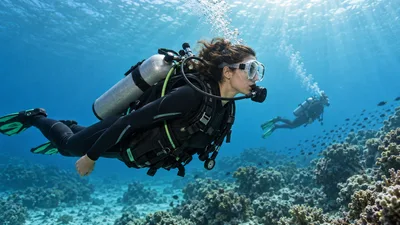
What Does SCUBA Stand For? Meaning and Diving Basics
What does scuba stand for? Learn the five-letter meaning, how divers breathe underwater, the word's history, and how scuba differs from snorkeling.
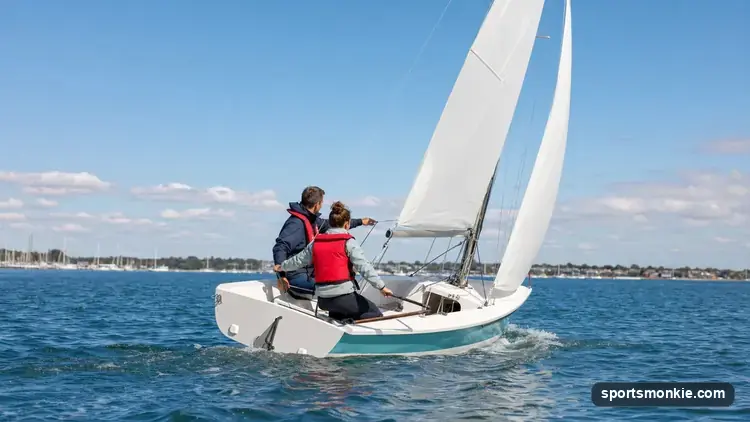
Sailing Lessons: Cost, Certification, and What to Expect
Sailing lessons explained: US Sailing vs ASA vs RYA certification, real 2026 group and private costs, and how many lessons you need before sailing solo.