
Sailing Lessons: Cost, Certification, and What to Expect

On this page7
- 01US Sailing or ASA: which certification actually matters?
- 02How much do sailing lessons cost, group vs private?
- 03Sailing course comparison: hours and price by region
- 04What actually happens during a beginner sailing course?
- 05How many lessons before you can sail on your own?
- 06Day-sailing course or live-aboard course, which should you book?
- 07How do you find an accredited sailing school?
Book a multi-day certified course, not a single drop-in lesson. Sailing skill builds across several days on the water, and a proper course also leaves you certified, which matters the moment you want to charter a boat. In the US, a US Sailing Basic Keelboat or ASA 101 course costs about $275 to $1,295 for 10 to 22 hours spread over two or three days. In the UK, RYA courses run roughly £250 to £900, and in Australia, a Start Crewing course from Australian Sailing costs AUD $345 to $375. Most people who complete one beginner course can skipper a small keelboat on their own in light-to-moderate wind.
US Sailing or ASA: which certification actually matters?
This is the question every American beginner trips over, and almost no article answers it directly. The US has two separate, competing certification bodies, and neither one is “the” official license.
US Sailing is the sport’s national governing body, recognized by the US Olympic Committee, and it runs its own network of accredited schools teaching the Basic Keelboat standard: a 16-to-22-hour course, usually over two or three days, with no prerequisites. The American Sailing Association (ASA) is a separate, privately owned company with its own numbered course ladder that starts at ASA 101, Basic Keelboat Sailing 1, and continues through ASA 103 (coastal cruising) and ASA 104 (bareboat chartering).
Neither outranks the other. Charter companies worldwide accept both, and most instructors are only certified through one system, so in practice your choice comes down to which accredited school is nearest, not which body is “better.” If you already know you want to charter yachts abroad someday, ASA’s 101-103-104 ladder maps cleanly onto that goal. If you just want to sail dinghies or small keelboats at a local club, US Sailing’s Basic Keelboat is the more common route. If you’re still deciding whether sailing is for you at all, our guide to sailing for beginners is the place to start before you commit to a course.
Outside the US, the equivalent body is the Royal Yachting Association (RYA) in the UK, whose certifications are recognized across Europe, Australia and much of the Commonwealth.
How much do sailing lessons cost, group vs private?
Group certification courses are the standard product in sailing, more than single drop-in lessons. A US Sailing Basic Keelboat course at The Center for Wooden Boats in Seattle costs $650 to $950 depending on membership and season, for 22 hours split across five 4-hour on-water sessions plus a 2-hour shore class, textbook, logbook and a year of US Sailing membership included. ASA 101 courses elsewhere in the country range from $495 to $1,295 depending on the school, plus a $39 ASA registration fee and a $30 certification fee.
Private instruction costs more per hour but compresses the timeline. The same Seattle school charges $120 an hour for members and $150 for non-members for one-on-one lessons, and other US schools charge similarly, around $95 to $150 an hour. Private tuition earns its price when you want a flexible schedule, sail with a partner who wants to split the cost, or need remedial help after a group course, not as the default starting point.
A worked example: two friends splitting a $650 member-rate group Basic Keelboat course pay $325 each for 22 hours of instruction. The same 22 hours booked privately at $120 an hour costs $2,640 total, or $1,320 each. The group course isn’t a slightly cheaper option here; it’s roughly a quarter of the price for the same certification.
Sailing course comparison: hours and price by region
| Course | Region | Format | Length | Typical price |
|---|---|---|---|---|
| US Sailing Basic Keelboat | United States | Day course (no overnight) | 16-22 hrs over multiple sessions | $275-$950+ |
| ASA 101 Basic Keelboat | United States | Day course | 10-16 hrs over 2-3 days | $495-$1,295 (+$39 reg, +$30 cert) |
| Private one-on-one lesson | United States | On-demand | Per hour | $95-$150/hr |
| RYA Dinghy Levels 1 & 2 | United Kingdom | Day course | ~4 days (2 weekends) | £250-£500 |
| RYA Start Yachting | United Kingdom | Live-aboard | 2 days | From £299 |
| RYA Competent Crew | United Kingdom | Live-aboard | 5 days | £550-£900 |
| Australian Sailing Start Crewing | Australia | Day course | Four 3.5-hr sessions | AUD $345-$375 |
Sources for these figures: US pricing from The Center for Wooden Boats and ASA’s own course listings; UK pricing from Commodore Yachting’s 2026 price guide; Australian pricing from Newcastle Cruising Yacht Club’s Start Crewing course.
What actually happens during a beginner sailing course?
Day one is mostly vocabulary and boat prep on dry land or at the dock: parts of the boat, points of sail, how to rig the mainsail and jib, and safety briefings on life jackets and man-overboard procedure. You’ll also cover the basics of right-of-way, which boat gives way to which, since that’s tested knowledge, not just deck skill.
Once you’re on the water, instructors build skills in a fixed order: steering a straight course, then tacking (turning through the wind), then jibing (turning away from the wind), then reefing and heaving-to to slow the boat down in a hurry. Somewhere in the second or third day, most courses run a deliberate capsize drill, tipping the boat on purpose so you learn to right it and climb back aboard before you ever face it by accident.
By the final session, a Basic Keelboat or ASA 101 course expects you to sail a simple lap, dock the boat, and demonstrate a man-overboard recovery without step-by-step coaching. That’s the bar for certification: not racing skill, but the ability to responsibly skipper a basic daysailer in familiar water and moderate wind.
How many lessons before you can sail on your own?
One course is usually enough for independence in easy conditions. The US Sailing and ASA standards are explicitly written around producing a sailor who can handle “light to moderate wind and sea conditions” solo by the end of the course, and RYA Dinghy Level 2 uses almost the same language: capable of sailing without an instructor aboard in reasonable winds.
What one course doesn’t give you is confidence in a blow. Fifteen-plus knots of wind, a crowded marina, or a boat bigger than what you trained on all reset the learning curve partway. My rule of thumb: budget one certification course to sail solo in gentle conditions, then a season of practice, plus a second course if you want to handle bigger boats or worse weather, before you’d call yourself genuinely independent.
Day-sailing course or live-aboard course, which should you book?
This is the split that trips up UK and Australian readers especially, because RYA and Australian Sailing offer both formats side by side.
A day-sailing course, like US Sailing Basic Keelboat, ASA 101, or RYA Dinghy Levels 1 and 2, has you show up at a dock or beach each morning and go home each night. It’s cheaper, easier to fit around a job, and the right choice if your goal is sailing dinghies or small keelboats at a local lake or club.
A live-aboard course, like RYA Start Yachting or Competent Crew, puts you on a cruising yacht for the full course, sleeping aboard and standing night watches. It costs more and eats a full block of your calendar, but it’s the only format that teaches passage-making, overnight navigation and life aboard, skills a day course never touches. If chartering a yacht in the Mediterranean or the Caribbean is the actual goal, skip straight to a live-aboard course rather than stacking day courses first.
How do you find an accredited sailing school?
Go through the certifying body’s own directory rather than a general search, since accreditation standards vary between schools even within the same organization. US Sailing publishes a searchable school finder filtered by location and course type, and the RYA runs an equivalent centre finder for the UK and its international training centres. Both list instructor-to-student ratios and boat types up front, which is worth comparing before you book, since a 1:6 ratio on a 22-foot boat is a very different experience from 1:3.
For US and UK readers weighing options by city, our companion guide to sailing lessons by location breaks down specific schools and prices in major sailing hubs. And if cost comparisons across outdoor sports help you budget, our guide to beginner ski lessons covers a similarly structured group-versus-private breakdown for the slopes.
Once you’ve shortlisted two or three accredited schools near you, call and ask two questions before booking: the instructor-to-student ratio for your specific course date, and whether the quoted price includes the certification fee. Those two answers cut through most of the price variation in the table above.
Frequently asked questions
Are sailing lessons worth it for beginners?+
Yes. A structured course teaches you to tack, reef and recover from a capsize in a fraction of the time it takes to work it out alone, and it is the safest way to learn right-of-way rules before you are responsible for other people on the water. Sailors who skip lessons tend to plateau earlier and pick up expensive habits to unlearn.
How much do sailing lessons cost?+
A US Sailing or ASA 101 course runs about $275 to $1,295 for 10 to 22 hours over two or three days. RYA courses in the UK cost roughly £250 to £900, depending on whether you pick a day-sailing dinghy course or a live-aboard Competent Crew course. Private one-on-one instruction adds up fast at $95 to $150 an hour.
What is the difference between US Sailing and ASA certification?+
US Sailing is the sport's national governing body and runs its own school-accreditation and certification system, including Basic Keelboat. The American Sailing Association (ASA) is a separate, privately run certifier with its own numbered course ladder, starting at ASA 101. Both are widely recognized by charter companies, so choose whichever accredited school is closer to you.
How many sailing lessons do I need before I can sail alone?+
Most beginners can skipper a small keelboat independently in light-to-moderate wind after one certification course, typically 16 to 22 hours spread across two or three days. Handling stronger wind, tighter marinas, or bigger boats takes more practice, usually a second course or several supervised outings over a season.
Should I book a day-sailing course or a live-aboard course?+
Book a day-sailing course, like US Sailing Basic Keelboat or RYA Dinghy Levels 1 and 2, if you want to sail small boats locally and go home each night. Choose a live-aboard course, like RYA Competent Crew, if your goal is crewing or chartering yachts, since it adds overnight passages and night-sailing hours a day course skips entirely.
Do I need a license to sail my own boat?+
In most of the US, UK and Australia, you do not need a license to sail a private, engine-free sailboat, though some US states require a boating safety card for boats with motors. Bareboat charter companies almost always require a recognized certification, such as US Sailing Basic Keelboat, ASA 104, or RYA Day Skipper, before they will hand over the keys.
Sources
- US Sailing — Basic Keelboat certification standard
- The Center for Wooden Boats — US Sailing Basic Keelboat course and private lesson rates
- American Sailing Association — ASA 101 Keelboat Sailing 1
- RYA — Sail Cruising Courses (Start Yachting to Yachtmaster)
- Commodore Yachting — 2026 RYA Sailing Course Price Guide
- Newcastle Cruising Yacht Club — Australian Sailing Start Crewing course
Play & tools
Free browser games and tools — no account, no download.
- Play today's Sports Connections — Today's Sports Connections — daily hints, answers, and play the grid.
- Play Guess the NFL Player — A new mystery NFL player every day. Eight guesses, with a clue on each — plus free unlimited mode.
- Explore all our games →
Related guides
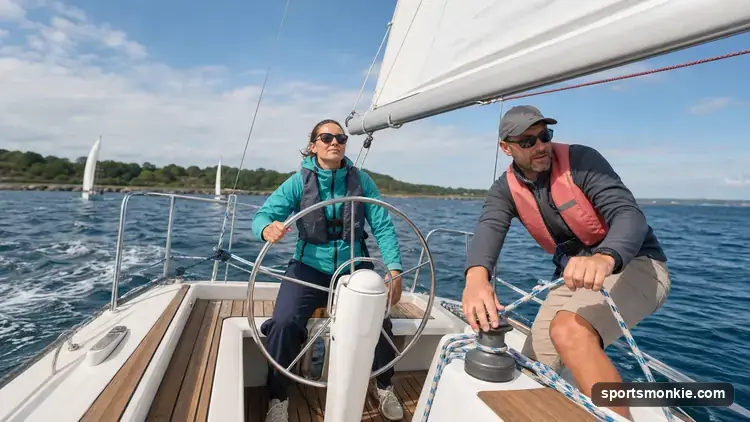
Sailing for Beginners: Where to Start
Sailing for beginners: what a first lesson covers, gear you actually need, safety basics, and how beginner sailing lessons compare to a learn-to-sail vacation.
Horseback Riding Lessons: What They Cost and What to Expect
Horseback riding lessons cost $40-$150+ an hour by group size and region. See what a first lesson involves, real 2026 prices, and how to vet an instructor.

Kids' Horse Riding Lessons: Cost, Age & What to Expect
Children's horse riding lessons: real starting ages, 2026 costs for US, UK, Australia and Canada, required safety gear, and what a kids' lesson looks like.
Scuba Diving Certification Cost: The Real Price Breakdown
Scuba certification costs $350-$900+ in the US, £190-£600 in the UK, AU$399-$700 in Australia, and C$700-$995 in Canada. Full course-by-course breakdown.
Snowboard Lessons for Beginners: Cost and What to Expect
Snowboard lessons for beginners: 2026 group vs private prices in the US, UK and Australia, how many lessons to link turns, and why day one is hardest.
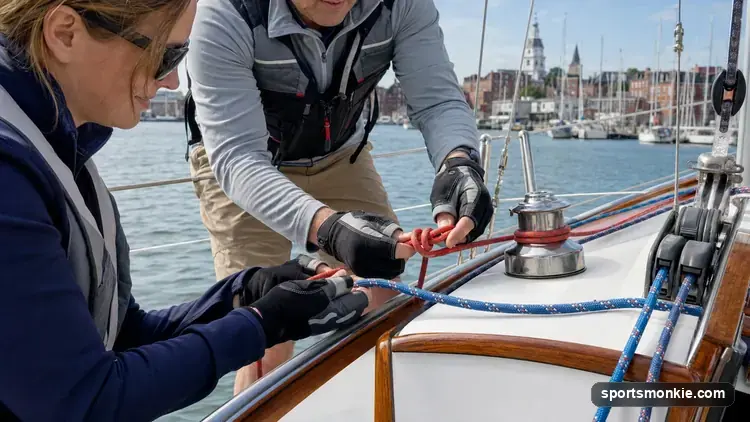
Sailing Lessons by Location: Annapolis, San Diego, LA
Real 2025-2026 beginner sailing lesson prices at named schools in Annapolis, San Diego, and Marina del Rey/LA, plus what makes each hub different.